In the school register for March, 1993, next to my surname stood a neat note: paid. With initials that werent my mums.
For March, 1993, the register had it clear as daypaid next to my name, but the initials were nothing like my mothers. I was fourteen then, and stood in the lunch queue, tray in handa green plastic tray that held not a single thing.
Every day, the routine played on repeat. The lunch rush, the smell of stodgy stew that made your stomach twist in knots. Breaded fish, always with some overcooked peas. Ribena in thick, dimpled glasses. It all cost little more than a few pence, but even those pennies were elusive. Mum did dress alterations at home, restitching old coats people had outgrown, but the money came rarely, in awkward dribbles, always barely enough for tea and potatoes.
So Id learned to stand in line then slip away, acting like Id forgotten my purse, pretending I wasnt famished, pretending I lunched at home. No one asked. Or, perhaps, they chose not to see.
The other girls would sit raucously clanking cutlery, chattering. Jenny Cartwright dipped her bread into her gravy and licked her fingers. Olivia Parker elegantly picked at her fish fingers like she was somewhere posh. Id shuffle by, clutching my dog-eared geography book, trying not to stare at their plates.
By the cloakroom corridor, it was quiet. Id perch on a ledge, waiting for the bell, stomach rumbling, pressing my satchel close, hoping no one could hear. Some days, in the depths of my jacket pocket, Id find a single boiled sweet Mum had tucked in that morning, if there was change. One sweet for a whole day. Id suck it until only a sharp sliver of sugar was left.
But once a week, maybe twice, things took an unexpected turn. There Id be, about to do my usual vanishing act, when the canteen lady muttered under her breath, not meeting my eyes:
Yours has been paid. Go on.
I took it. My tray finally got loaded: soup, a main, a glug of juice. I sat at the far table by the window and ate, forcing myself to slow downhurrying would be a dead giveaway. The first mouthful always burned, but that fiery rush spread down my arms; like being plugged into a radiator from the inside.
Who paid? No clue. I was too scared to ask. It felt as though if I asked, it would all evaporatelike those fairy tales where you mustnt look backwards.
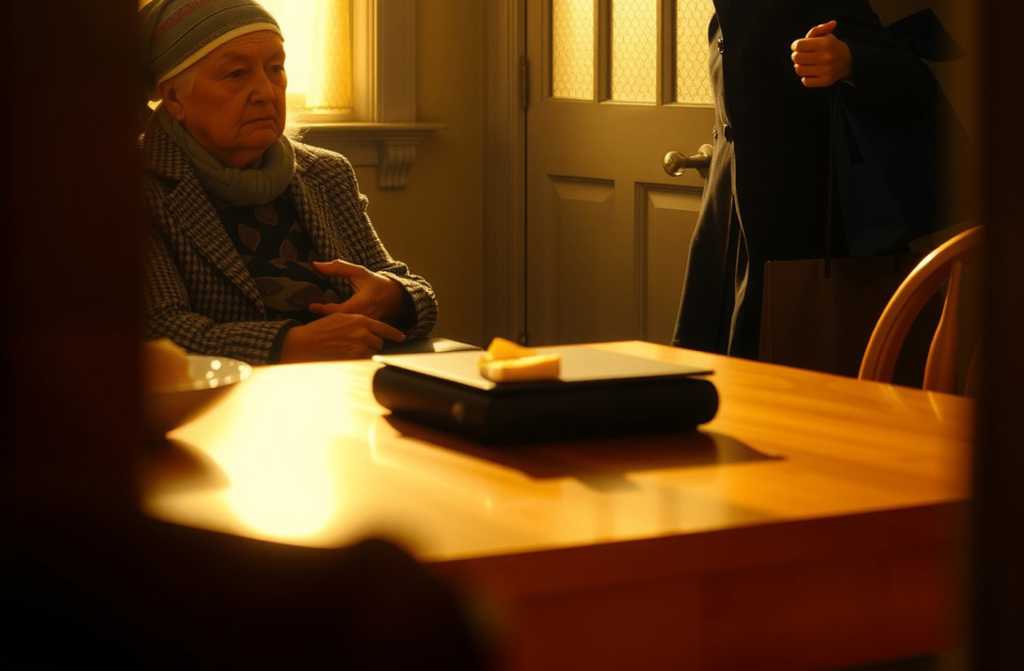
Mum never asked, either. She never brought up the school dinner situation, as though the very words hurt more than she could say. Evenings, shed sit at the Singer sewing machine, hands and fabric caught in yellow lamplight, and nothing more. Id do my homework at the kitchen table; wed sit in silence. That was our shared hobby: not talking. Not anger, not sulksjust too tired for words.
Looking back, I see it plainly: Mum knew her daughter was hungry and couldnt change it. That was her own private defeat, carried daily, unvoiced.
She died in 2019, and I never managed to ask her about it. I always meant to. Maybe she knew who paid. Maybe she guessed. But it never got spoken, and that silence stayed.
Thirty-three years have trundled by. I’m Grace Ashworth, maths teacher at the selfsame school, now forty-eight. Hazel eyes with flecks of gold near the pupil, like Dads, Mum always saidthough I dont remember Dad, he left when I was barely three. And suddenly, I found out whod paid.
***
February, 2026, school canteen finally got itself a proper refurbthe first major one since I could remember. Builders ripped tiles off, replaced pipes, carted out age-old kitchen gear. The larderlittle more than a cupboard behind the kitchens that had become a dumping ground for everything too good to throw awaywas next.
I pitched in on habit. Twenty-six years in this school, ever since I came straight from teacher training in 2000. Room 17 on the third floor, exercise books stacked to teetering, tests on Thursdays. My life neatly fits between the bells, and Im fine with it. Not because I never dreamed of more, but because anything else seems less dependable. Schools dependable. The walls stand, the bell rings, children arrive. Every Septembers new faces, every Mayleavers. Its like your own heartbeat.
We actually had to prise the larder door open with a crowbar. The door was warped, hinges all orange with rust. Inside: the whiff of mice and paper, with a dash of something sour. Boxes of plates, bundles of menus from the 70s, invoices, rolls of faded brown paper. My foot crunched through dust thicker than an old Oxford dictionary. Steve the caretaker, whod forced the door, sneezed three times and joked, Theres probably a mummy in there, while Mrs. Townsend, the office manager, shot back, Wish there wasa mummy would be easier to deal with than the fire inspector!
I stood on the threshold, oddly drawn inmaybe the scent. That mix of paper, dust, and the unmistakable canteen tang from childhood.
I poked about. A box of the old iron traysgreen, scratched, weighty. I took one, ran my finger round the rim. Same ones we had back in 1993.
Then, among it all, a chunky brown ledger.
I picked it up. Cell squares on every page, all handwritten. Ink faded rusty, but the lines still legible: columns for names, dates, sums. Ten years of dinner money accounts1988 to late 1990s.
I let the pages flick bya roll-call of months like stations seen from a train. September, October, November. Pupils names, ticks, dashes. Seemed dull, unless you were searching.
I was searching. Though I didnt know it.
March 1993. The column was neat, orderly. Names in alpha order: Adams, Briggs, Ashworth. And next to mine: paid. Alongside, tiny: J.H.R.
Next page: April. Ashworth paid J.H.R. May: same again. I thumbed backwardsYear Four, Year Seven. Not every month, but there it was, regular as clockwork. Always those three initials.
Someone, J.H.R., paid for my lunch. Not Mumwrong letters. Not a teachermy mind zipped through the staff from then, no matches. Not a charityno such thing in our town back in 1993.
Steve called from the corridor:
Miss Ashworth, youve got lost in the larder? Its lunch!
Be there, I said.
But I stayed put, the old tray suddenly weighing heavy in my hands, as if time itself had a physical heft.
I took the ledger home.
That night at the kitchen table, I combed through every line. Pulled a fresh sheet, made lists. Tallied every month with my name. Ten years, about a hundred and twenty instances. Not every day. Sometimes thrice per week; other spells, daily for a solid month. As though whoever-it-was knew when things were truly tough. December was worstMum took on extra work for Christmas, but money never arrived till January. In Decembers, my surname filled line after line.
J.H.R. Julia? Jane? James? The H for Helen, Harcourt? Then R for the surname.
I didnt know. Not really.
But then, I noticed theirs werent the only names. Nearby: Barnes, Evans, Shipley. Three or four each year, also marked paid and always the same initials. I wasnt alone. Someone quietly fed several children, for a decade straight.
That night, sleep was a lost cause. I lay there, pondering how someone could quietly pay so many childrens dinners, asking nothing, expecting no thanks, no certificate, no assembly applause. Just paying. And silence.
***
The former Deputy Head, Mrs. Fothergill, lived across the road, in an old red-brick Victorian with high ceilings and a certain air. She was past seventy, walked with a stick, chin up as though still lording it over assembly. Always a swallow-shaped gold brooch on her lapel. Years ago, Id askedshe said, From my husband for our twentieth wedding anniversary. His last present. She didnt elaborate.
I called ahead. Found an old dinner accounts book, wondered if you knew whose hand it was There was a pause, then: Come by.
She greeted me with teathe proper kind, in china cups with blue cornflowers, sugar pot, matching spoons. Still did things like a host, retirement be damned. I slid the ledger over.
Any idea whose this is?
Mrs. Fothergill popped on reading specs, leafed through. I watched her finger drift line-by-line over the surnames. Something shifted in her face, like memories coming loose that shed packed away decades ago.
Thats Janets handwriting, she said quietly.
Janet?
Janet Helen Robinson. Was our canteen cashier here, 1982 through 2003, over twenty years.
I nodded, ransacking memory. Didnt recall her facejust a sense. A shortish woman behind the till in a white coat and hair nether face a polite, blank wall. Shed stamp meal tickets, say, Next! But once shed said something very different to me.
She paid for our dinners? I asked.
Mrs. Fothergill took off her glasses, massaged her nose, weighing how much to divulge.
Every month, a stash from her own wages, as much as she could manage. More in some months, less in othersdepended on prices, how many children needed help. Always out of her own pocket. Four or five, sometimes more per year.
Out of her actual pay?
Quite right, said Mrs. Fothergill, shifting her brooch as though it might have wandered off. I only found out by accident. 1991, a mum came in, crying, asked who was helping her sonthought it was a school charity. I sniffed around, checked the paperwork, asked the dinner ladies. One said, Ask Janet, she keeps her own book. So I did.
She paused, glanced at the window, where a large tabby smushed itself across the radiator, unimpressed with the world.
Janet didnt deny it. Just said, Yes, I pay. Its my business. I asked why. She said, Because someone should. And begged me not to tell anyone.
Why so quiet about it?
Mrs. Fothergill peered over her glasses.
Said exactly this: A child shouldnt feel indebted. Food isnt charity. Let them think its just how it works. I offered to make it an official project. She refused. Official means lists and meetings. The children will find out which ones are free school meals. Kids arent thick. Theyll know.
A lump rose in my throathot and unwelcome. I sipped tea until my voice steadied.
You agreed?
What else could I do? Tell her not to use her money how she wished? She did it quietly. No child knew, no parent save for one guessing mother. I promised to keep shtum. And I did, thirty-five years.
Is she still around?
She is. Nearly eighty now. Lives alone, little bungalow near the ring road. Husband passed in the 90s. No children.
I need her address.
Mrs. Fothergill hesitated, twisting the teaspoon in her hands.
Grace, she doesnt want to be found. Every Christmas I call, she says not to fuss. Dislikes gratitude. Truly doesnt understand what for.
I need the address.
Mrs. Fothergill eventually tore off a slip from an address book. Handed it over.
Dont be cross if she sends you away. And dont push. That generationshowing sentiment isnt their forte.
I slipped the note into my pocket, drained my cup, stood.
Did you ever say thank you? I asked at the door.
She leaned on the jamb, cane tapping.
Once. When she retired, 2003. I said, Janet, thank you for everything. She looked up and said, No need. I cant cook to save my lifeI just counted coins. And left. No cake, no speeches. As if twenty years was a mere blink.
I headed down the stairs, the address paper nearly burning a hole in my coat.
***
Her bungalow sat at the edge of Greenwell Lane, where the road petered out into damp, ragged fields. Timber, dark from decades, fence low, gate without a latch. Three apple trees hung heavy in the bare March sky. Wellies and a broom sat on the step.
I arrived Sunday midday, clutching a carrier bagno idea what to bring, settled for safe: a loaf, butter, cheese, a jar of honey, some biscuits.
Seven paces from the gate to the door. I counted.
I knocked. Silence. At length, faint shuffling, slippers. A voice, gravelly and deliberate:
Who is it?
Grace Ashworth. From St. Marys. I teach maths.
Long pause, a floorboard creaked.
I didnt invite anyone.
I know. I found your logbook, Janet. In the canteen, during the refurb.
Another hush, only a clock ticking behind the doorsteady, unhurried.
Liz told you, didnt she?
She did.
Go on. Dont fuss. No thanks needed. Thats not why I did it.
The wind brought earthy spring whiffs, while a magpie clattered in the apple branches above.
I might have left. Shed asked. Generosity with no name wants its privacy; who was I to break someones spell?
But thirty-three years is a long wait for a thank you never spoken.
Mrs. Robinson, I called out, reading flaking paint on the doorstep. I was always the kid with the empty tray. Youd say, Paid for, love. Go on. I was fourteen, and ten, and twelve. I recognise your voice, even now. Didnt know whom to thank for not fainting with hunger in Latin.
Silence. Even the magpie piped down.
Im not here to thank you if you dont want itI just want you to open the door.
A minute, maybe more. I could hear my own heartbeat, the wind, distant rumble of the bypass.
The lock clicked. The door opened a crack.
Janet Robinson was tinybarely above five foot, narrow-shouldered. A dark headscarf, an old cotton housecoat, cardigan pulled over. Her face, all soft wrinkles, baked-apple brown, but her eyes sharp and dark, wary. She gave me an appraising lookreserved, not outright hostile.
You best come in, then. Shoes off.
Inside was spotless and almost bare. Kitchen, front room, neat hallway. Wallpaper with faded roses, a cuckoo clock, oilcloth across the table. A geranium on the windowsill, the only flash of colour. Floorboards, no carpet. The air held something herbalmint, maybe, or camomile.
I set my bag down.
Brought you some shopping.
Why? she frowned. Im not short.
Because years ago, you fed melet me feed you. Go on.
She sat stiff in her chair, hands laced on her lap. Her gaze drifted, not to me, but out at the skeleton apples.
Im no saint. Dont make me a bleeding saint. Did what I could. I went hungry as a child, is all.
Her words landed flat and spare, each precise, not extravaganteconomising even breath itself.
You too, then?
Janet nodded, after weighing whether the truth was worth spending.
Born 48. Post-war baby. Dad didnt come back. Mum worked at the mill, four kids. I was eldest. School had a lunchroom, but we never had change. Id sit through lessons, counting minutes till homeat least there, there was always a tatty potato or two. At school: nothing. Just empty stomach and bigger embarrassment.
She told it matter-of-factly. The voice was the same as the one in the canteen linesoft, hoarse.
When I got this job, that was 1982, I saw straight away: nothings changed. Still kids with empty trays, lying through their teeth about lunch. I wasnt having itso long as Im here, no childs going hungry on my watch.
You paid for all of us?
For the ones I saw. Four or five at a timecouldnt manage more. Wages were nothing, still had my own bills. But could stretch to a few dinners. Kept a log else Id muddle itwhod been paid for, who else needed it.
How did you know who to help?
She fixed me with a stare. Dark, unwavering.
I didnt choose. If a child stands in the queue, empty tray, then slinks awayyou dont pick them. You feed them.
And there it wasdecades behind the till, giving away her salary in hush. Not for recognition, just as part of the job. The ledger was for herself, to keep things straight, not as some legacy.
We found your ledger in the larderleft behind, I asked?
Must have slipped my mind retiring in 03packed up, left it in a drawer, I expect. Didnt matter. No ones going to come looking after old account books.
I was. I needed to.
She peered at me, moved in a flickersurprise, not tears. As though she never imagined a grown-up version of any of those kids might show up.
Youre teaching now, then? Knew youd wound up back at school, Liz told me. I thought then: well, something went right.
We overlapped, you know. Three years. I saw you at the till every day. Never twigged you were the one.
What good would knowing do? Youre grown, proper job, roof overheadthats all I wanted.
I got up, laid out the bread and cheese, found the one old knife. I cut slices, buttered them, plonked on cheese, set them in front.
Please, let me treat you just once as you did for me.
She examined the sandwich. Then me. No gooey display. Not that type.
Im not hungry.
Nor was Ievery time you said paid for, I pretended. But you always saw through it.
Mrs. Robinson dropped her gaze, stared hard at the plate. Then, returning to the sandwich in a voice soft, rough, each word its own island:
Very well.
And took a bite.
We sat in her kitchen, cuckoo clock ticking, the grey March afternoon inching into twilight. I chatted about school nowthe new computers, the children, the building works. Janet listened, nodded, sometimes asked, Is Mrs. Bannister still there? Did they ever fix the gym roof? Do kids all get free meals now, or is that still pay-what-you-can?
I explained the new ways: junior kids get a free lunch now, older ones have reduced prices.
See, she said, raising a finger. Junior kids only. Therell be someone still going without, then.
And I realised, for her it wasnt pastit was still happening, right outside.
Before leaving, I pulled the ledger from my bag, placed it by her plate.
This is yours.
Janet leafed through, tracing each name as if it might crumble. Adams, Briggs, Ashworth. Barnes, Evans, Shipley.
Remember the lot. Adams became a nurse, I heard. Briggs moved up north. Shipleydid she stay in town?
Not sure. I can find out.
She shut the book, hugging it to her as if it might flutter away.
No need now. Only kept it to remember who needed what.
But she didnt let go of it.
I left into full dark. The yellow lamplight from the ring road, apple trees fretting in the gloom like old aunts waiting for the last bus.
I glanced back. She stood in the doorway, cardigan, clutching the old brown ledger, warm light at her back.
Grace, she called, You can come again. If youre up for it.
I will, I said. Next Sunday.
***
And so, I came each Sunday. At first she waited, as if to see if Id bolt. By the third week, she let me in straightaway.
I brought a proper lunchsoup in a flask, a real dinner, juice. Set the table, tray, mug, spoon. Like a reverse school dinnerme behind the pass now.
Come April, when buds popped on those apple trees, she smiled for the first time. I told her how my Year Fives spelt bisector with only one s, and she chuckleda short, rusty laugh, as though her humour had had a long sleep.
Youre quite the teacher, she managed, Had a knack for it.
You were good at your knack, toofeeding us.
She waved it away, but I could tell she was grateful someone remembered. That all those years shifted meals from hunger to hope hadnt vanished down a bottomless memory pit.
In May, I brought Mrs. Fothergill with me. The three of us sat round that same table, tea in blue-flowered cups, Mrs. Fothergill sharing how the school had WiFi now and kids solved maths on tablets. Janet snorted:
Why on earth do they want those things? Books and pens do fine.
The two of us laughed. Janet gave an unamused huff, smoothed her scarf, muttering:
You lot know best. Education and all.
Educationher word for folk with fancy degrees. She herself left after O-levels, did an accounting course. Then quietly fed a generation of educated folk.
One June afternoonblossom fallen, green apples swellingI brought lunch and set the table as always. Janet stared at her plate, then at me, and said, almost whisperingwith a gravity I hadnt heard before:
You know, Grace, all my life, I thought a favour shouldnt expect anything back. If you get a return, its no longer kindness, just a transaction. Forty years I believed that. But now youre here, I realiseits not about returning. Its about carrying forward. Thats something different.
I swallowed. Straightened the napkinsa quirk Ill never shake. Just like at work, every exercise book edges perfectly in line.
Eat up, I said. It’ll go cold.
Janet grinned, raised her spoon. And, using that same gentle, raspy voice from all those years ago:
Paid for, love. Go on.
Only now it meant something else entirely. It meant: I accept. I see you. Im not sending you away.
I sat opposite as she ate her soup. Outside, green apple leaves rustled in the late sun, and the old ledger sat safe on the shelf, among strawberry jam jars.
All the names, exactly as theyd been, every note intact. Every child grown up now.
And at last, I had stopped staring down at an empty tray.





