Neighbours
Mrs Martha Campbell put her battered metal bucket down on the flagstones and wiped her hands on her long, floral skirt. Her nerves were frayed, humming with irritation.
“Where on earth is that idle Daisy? Shameless, useless woman.” She muttered through gritted teeth. “Told her yesterday that couch grass is creeping into my vegetable bed, and does she care? Does she even bother? Not a jot! The weeds crawling right in, like it owns the place!”
She paced up and down her little garden, darting quick glances through the privet hedge separating her plot from the next, as though expecting Daisy to materialise out of thin air. Anger burned hot within her. From the shed, the sow bellowed, the house was in complete disarray, Marthas mind was bursting with sharp retorts. All because of hertoo lazy to get out of bed before midday!
At last, she caught sight of Daisys long shadow on the steps. Tall, all elbows and knees, as usual in her scruffy old dressing gown. Martha could feel her irritation peaking, bubbling unruly just beneath her chin.
She launched right into her prepared tirade, as loud and brisk as a wind cutting across the fieldslet the whole of Rosewick Village hear!
“If youre so slovenly, Daisy Dawson,” she bellowed, “then go on, hire someone to weed your garden. I told you yesterdaythe couch grass is coming into mine!”
Without so much as a glance in Marthas direction, Daisy drawled back loud enough to be heard through half the village.
“If it bothers you so, you sort it. Or come over and pull the stuff up. Gates open,” she jerked her chin, and disappeared around the corner, the slosh of dirty water out onto her own veg patch following after.
Martha’s mouth fell open at such cheek. She trembled with rage at the gall. Still, she waited until her adversary came back into view. Peeking through the hedgerow on the far side, she imagined Mrs Catherine from up the lane was listening nearbylikely to scurry off and tell the neighbours, “Well, Daisy certainly put that Martha in her place today!”
There was no questionthe situation had to be salvaged. But Daisy seemed firmly rooted in her garden.
Now, few could row and quarrel quite like the women of Rosewick. Perhaps the village was named for its thorns! There were the shy sorts tooAnnabelle Davis, for instance, never had a cross word for anyone, quiet as dusk itself. No one had much to say about her; she kept to herself. Was that even proper? Woman ought to defend her own!
But Martha Campbellshe was fire! No one crossed her, and she never let a quarrel slide. There was barely a day she wasnt crossing swords with someone. Rows could spark anywherea shop, the post office, Sunday service, a gathering at the Memorial Hall, or best of all, beside the mobile grocer on Thursdays.
Strain of an armful of firewood, urgent errands, nothing could drag her from a good argument. She’d spar for an hour and always walk away satisfied. Afterwards, kitchens buzzed with tales of the latest spat, dialogue relayed sharp and juicy: And she saidand then the other one
One time, Martha nearly came to blows with a woman from neighbouring Oakleigh at the marketnow that was a row! Everyone remembered the air crackling like Guy Fawkes night, crowds gathered, the two of them performing at the very centre, cursing, threatening and dragging up family affairs, exes, even the odd filthy innuendo.
Yet even these tempests would die awaydistant thunder after a storm.
“Youll drop dead, and no onell waste a tear on you!” hissed one.
“Before that, Ill make sure to spit on your grave, you snake,” came the replyquiet now, matter-of-fact, not so shocking. Folk had heard worse.
Marthas feud with Daisy was longstanding. Shed spoken so ill of her to the neighbours that itd take a lorry to cart it away. Daisy didnt care, and pitched her own barbs back.
“She’s a daft old bat. Let her rant.”
Eventually Daisy reappeared from behind the sheds. Martha was at the ready.
“How lazy must you be that pulling a weed is an ordeal? What is it that keeps you, dear Daisy? Whitewashing the shed? Or have your grandkids descended on you?”
“My daughter knows better than to dump her children on me,” Daisy replied, cool and composed.
Oh! A dig straight at Martha, whose daughter regularly dropped her little ones in her lap.
“Thats because Sarah knows theyd come back hungry and filthy. Youre barely fit to mind the dog, let alone children!”
“I don’t coddle themdont break my back tying their laces and tickling their toes.”
And it was true. Just the other day, Martha launched herself at her nine-year-old grandson the minute she saw his lace undone.
“I can do it, Nan,” he grumbled, foot out, chewing an apple.
Daisy caught the moment and filed it away for later.
“My house is a haven, not a workhouse. Thats why they come. Not like some I could mention.”
“Theyve nowhere else to go, thats why! And youd do better watching your own scraggy hens instead of gossiping at dawn. Yours are always pecking in herethey come over again and Ill wring their scrawny necks.”
“Go ahead, make your soup. You need the nourishmentmaybe youll finally fatten up and feed your husband a proper meal. One chicken could save your house.”
“I tell you, Ill break its neck if I see it weeding.”
“Whats worth pecking in your plot? If my hen nibbles your grass a bit, shell lay better, and Ill even gift you an extra egg.”
“Like Id eat your eggs! Theyd stick in my throat!”
Their husbands, Dave Campbell and Michael Dawson, drifted to the shared bench under the old oak tree with a long-suffering air, lighting cigarettes as the row escalated.
“At it again, the pair of them!” muttered Michael, grinning.
“God created three plagues: woman, the Devil, and the billy goat,” Dave quoted, offering a light.
They smoked, half-listening to the bickering, then switched to talk of work at the sawmill, the new manager, their own affairs. Eventually, as the argument waned, they tuned back in.
“Its all this time off that winds em up,” Michael said, puffing.
“Think we should drag them in?” Dave said, half-hearted.
“Are you mad? Better rile a dog than her indoors,” Michael replied.
“True. No one can best a sharp-tongued woman.”
They sparked up another, knowing the wisdom of waiting until tempers tired.
A row? It was the normal start to a day. After such sparring, Martha attacked her chores with a vengeanceranting about Daisy, but whizzing about her house, keeping everything spotless. Daisy kept silent, determined to show her husband that she wasnt the useless gossip Martha claimed; she cleaned and tidied with single-minded spite.
“Dont let her get in your head, love,” Michael said.
“As if! Let her look after herself. I shant waste my breath,” Daisy would shrug, but she stayed out of sorts.
Daisy was originally an incomerMichael had brought her from the next village, Hazelwood. Folk said she was all thumbs. If she ever lit the fire, by the time the kettle boiled, the wood was gone.
And Martha, years back, had fancied Michael herselfa real beauty, all plaits and roses. But Michael brought Daisy, tall and awkward, to Rosewick.
Martha ended up with Dave later. The families were thick as thieves oncevisits, parties, their children grew up together. Daisy had only the one child, a daughter, whereas Martha had twoa son and a daughter.
Martha was stricter: up late sewing, scrubbing and ironing, never idle. Daisy was more easy-goingher girl was always clean, but there were no fancy ribbons, not a mountain of shoes, and she never rushed off to town for the very best. Shed read stories to her girl by the fire instead of fussing at the wash tub.
But school was tough for Marthas children; her girl barely scraped by and her son was forever in botheralmost kicked out at one point. He managed his eight years and that was a blessing. The quarrels between their mothers began to flare up after thatchildren remained friends, the men got on, but Martha and Daisy were like cat and dog. What did they have to fight for? Their means the same, their houses neighbours, even their joys and sorrows almost matched.
Their children grew up. Daisys daughter went off to university, married and moved far away, coming back now and then. Marthas stayed nearbythe daughter lived with her husband and mother-in-law in the next village, a good house, good family. Marthas son was unmarried, working in the county town.
Youd think they might be friends, but as time stretched, and there was more empty space to fill, the squabbles felt more bitter.
Soon, everyone in Rosewick knew that no feud could rival that of Martha and Daisy. First the veg plot boundary, then whose trees cast shade, then whose livestock wandered where. The old bench set halfway between their doors was nearly smashed up one hot afternoon, only the quick-thinking husbands prevented it.
Even old Patch, a weathered mongrel who used to drift between the two households when the children were home, couldnt bear the tension and relocated to Mr Ford, the widower up the lane.
***
But that year, disaster struck Daisys house. In the spring, she stopped coming outdoors. Martha waited and muttered, but there was no sign, not even the chickens tended. She grew crosser, complaining to all, “Daisys got Michael doing everything nowshes become shameless!”
Planting season came, Daisys plot was full of weeds, couch grass readying to invade againthe shoots were hardly up, but Martha was already seething.
Then word went around: Daisy rushed to hospital. Laid up, seriously ill. Her daughter returned, quiet and pale, answering questions with sad shrugs.
Martha didnt pry, but in a small village, all news comes its way.
“The word is,” folk whispered, “they found cancer. Shes coming home, but not good”
Soon, Daisy was back. Her daughter, Sadie, flitted about, anxious but having to return to her own family. Before she left, she paid Lucy Mayhewa simple soul who was always in wantto pop in and care for Daisy during the day.
Michael grew gaunter, withdrawn. He was never talkative, but now sometimes days went by in silence. Sometimes, over a cigarette with Dave, he opened up.
“Hows she doing?” Dave would ask.
Michael just shrugged and took another drag. “Ahwell. We go on. If you need owt, just ask,” Dave offered.
“Doesnt matter now. Not much appetite for anything. But tell Marthatheres strawberries in the grass. If she wants em, tell her to take them before they rot.”
“She wont. You know how it is with them two”
“Suppose Ill mention it to Lucy. Be a shame for berries to go to waste,” Michael sighed.
That night, Dave remembered Daisys strawberries while Martha was stewing preserves in the kitchen. He half-expected her to bristle at the idea, but Martha merely stood at the stove, stirring the jam and saying nothing.
A few days later, she asked Dave to take a large tote bag over to the Dawsons.
“Whats in this?”
He found two large Kilner jars of jam and a small one, wrapped in old newspaper.
“So, you picked their strawberries?”
“I did. And weeded their plot. Two days bent double! Grass up past my kneeslook at my hands,” she showed him grazed palms.
He bit back a quip, grabbed the heavy bag and trudged to Daisys.
Lucy Mayhew greeted him, nattering about Daisys state, bemoaning doctors, medication, life in general. Dave poked his head into the dim living roomthere lay Daisy, sunk into pillows, pale but eyes beckoning him in.
“Hello, Daisy. How are you then?” he muttered, awkward by the door. “Martha made you some jam, picked and weeded your patch for you as well.”
“Thank you,” Daisy whispered, “Her jams always the best. Come sit a spell.”
“Is there anything you need?”
“I expect weve got most things. Michael picks up whats needed,” she paused for breath, “if Marthas picked the berries, tell her to open the front gatelet your hens graze. The gardens overgrown anyway.”
“Dont say that. Youll be back to rights and”
Daisy turned away, breathing heavy.
“No hard feelings, Dave. All right?”
“Oh, Daisy! There never were, love. That was you and Martha at the bickering. Michael and Iwere alright.”
She nodded. Lucy bustled in with fried potatoes, chattering. Daisy rolled her eyesLucys presence more exhausting than comforting. Dave took his leave, heart heavy.
That evening, Dave recounted everything to Martha in detail, looking for a splinter of sympathy. Martha frowned and asked questions. Still, she got cross, grumbling that Lucy was no proper carer, and that Michaelwell, men were useless. Even the food wasnt suitable for the sick.
“She said your jam is always the tastiest,” Dave said quietly.
Marthas shoulders tensed for a beat, but she didnt look away from her work.
“Heartless woman,” Dave thought privately.
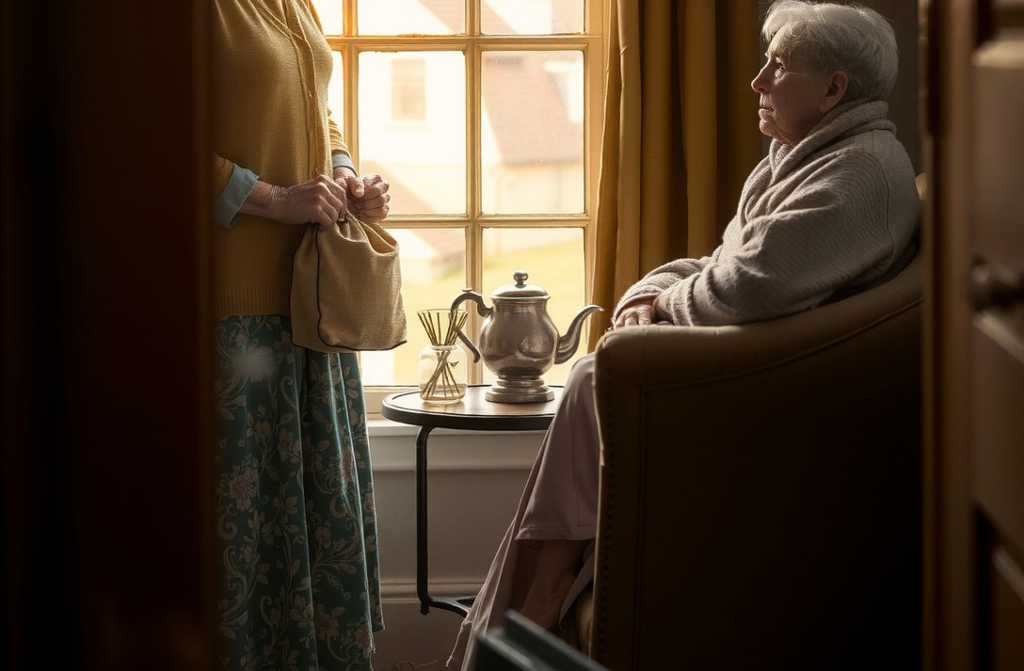
Next morning, after Dave left for work, Martha ladled leftover stew into a small pot, wrapped up fresh scones, a bottle of fruit cordial, packed them into a cloth bag, and sat for a quiet moment on her doorstep. She let out a breath, bracing herself, then got up and headed straight for Daisys yard.
She did not knock. Doors were seldom locked between neighbours.
“Lucy? Lucy?” she called.
A feeble voice replied from the sitting room, “Whos there?”
“Its Martha,” she said, peeking around the door, eyes averted, “Lucy about? Ive brought soup and some cordial. Just passing, you know.”
Daisy was perched on the bed, thin legs under her, shoulders bony in her nightdress, hair dark against her face, looking nearly blue. The air in the room was close; Martha didnt like it.
“Lucys gone for milk, should be back soon,” Daisy murmured, exhausted by the effort.
“Right then. Ill leave these bits here. You just get well, alright,” said Martha, setting down her basket.
She noticed her jam jars, untouched and dusty by the door.
“Daisy, why havent you popped the jam down in the pantry?” she said, then thought better of it. Daisy could hardly stand, let alone lug jars about.
“Ill do it, alright?”
Without waiting for a reply, Martha carried the jars to the kitchen, rolled back the mat and opened the cellar door, tutting at the sand scattered therethe place clearly never swept.
“Martha,” came Daisys voice.
“What is it?”
“Could I have a bit of cordial? Im so thirsty.”
“Of course you can,” Martha said, pouring a mug and bringing it to her.
The more Martha saw, the more she realised Lucy was failing at the job. Daisy grew even more frail. The flat needed fresh air, a good clean
“Right, put your shawl round you, Ill open the windowneed air in here. Are you getting up much?”
“Only to the loo. Hard to stand,” Daisy answered.
“What do docs say then? Hm?”
Daisy waved her off. She drank the cordial, slumped on the pillow. Martha sat beside her, determination sharpening her face.
“Right then! Call me names, throw me out if you must, but Im not leaving till youre better. If Lucys no good, Im taking over.”
Daisy barely nodded.
Within days, Lucy was gone, cast out hard and fast, Marthas sharp tongue the final word.
“Some helper! A funeral wailer, more like. Youre not dying yet, Daisyyoull be dancing at your grandchildrens weddings,” Martha laughed, bustling about.
“Thrown her out?”
“Of course. No good. Youve got me nowyoull manage fine.”
From then on, Daisys house and health felt the full force of Marthathe chores, the cleaning, the cooking. She ran Daisy a bath, coaxed medicine into her, cajoled her to eat and exercise. With Martha about, the house was scrubbed, linens washed, and meals appeared three times a day.
She boasted to the ladies of the village, “Gave Daisy a pork broth todayshe ate well. Doctor says she can have some, long as shes recovering. Shell soon be marching again!”
Daisy, blank-eyed with weariness, suffered it all. Shed eat, manage small walks, rest, agreethere was little energy for defiance. Sometimes, tears would leak out, and Martha would relent, gentling the fuss.
“Oh do stop now, Daisy. No cryingweve got enough to be going on with.”
With Martha, energy returned to the house. Michael found that gloom seemed to lift. Even her nagging gave the place a sense of purposeso he tidied the yard, weeded what he could. “How do you stand her?” hed moan to Dave.
“When the Devil cant, he sends my wife,” Dave chuckled.
Daisy herself perked up. The struggle with her legs eased; she managed to talk, dress herself, and the day doctors declared an improvement, the whole house dared hope.
One summer evening, Martha announced, “Were going for a turn outside,” tossing Daisy a knitted cardigan.
“Oh, no, Martha. Ill look a foolbesides, Im tired.”
But Martha ordered Michael and Dave to take Daisy beneath the arms and lead her to the old bench by the gate.
Martha felt pride in helping Daisy; she wanted the village to see her handiworksee Daisy alive, rounds in her cheeks, life blooming again. Let folk gossip about the miraculous recovery.
They sat beside each other, Daisy propped with pillows, wrapped in a shawl.
“Ive thought a lot these past weeks, Daisy,” Martha began. “We live, we bickerbut our houses are side by side for a reason. Our children grew up together, our husbands stick like glue. Now the kids are gone off with their own lives, its just us. Well grow old together, side by side on this bench.”
Daisy hitched her shawl closer, “Dad always said that bench ought to stand between the houses. He built it himself.”
Martha scoffed, “Your dad? It was my fatherhis hands, his hammer!”
“No, Michael told meours, from the beginning!”
“Rubbish! My Dad crafted it, and he never took money for his handiwork.”
“Well, thats what we were toldthe bench was meant for our house. Look at the fence line!”
“Oh, get on with you, Daisy!” Martha jumped up, “I saw my Dad carve that bench with my own eyes.”
“You mind your own, then,” Daisy snapped back, “the bench belongs to this sidelook, your own house is there!”
And so, the argument flared anew across Rosewick.
Behind the old shed, Dave and Michael sat, sharing a smoke as the row rose and fell.
“Ive missed this, you know,” Dave murmured, wiping away a tear of relief.
“Shes getting better,” Michael sighed, and the two shared a pleased, silent grin.
The sun, setting crimson through thin clouds, glinted off the old wooden bench where the two women sat, side by side, voices rising in argument, the air quivering with life.
Only old Patch, the mongrel, ambled by and stopped. He sniffed the air, then curled up by the bench, head on his paws, finally at home.
The sunset breeze freshened, evening shadows knitting the village together in a hush of chill and comfort. Through the prism of worn words and battered pride, something old and steadylike the benchheld Martha and Daisy together in the patchwork of English life.
And that was Rosewickthorns, and all.