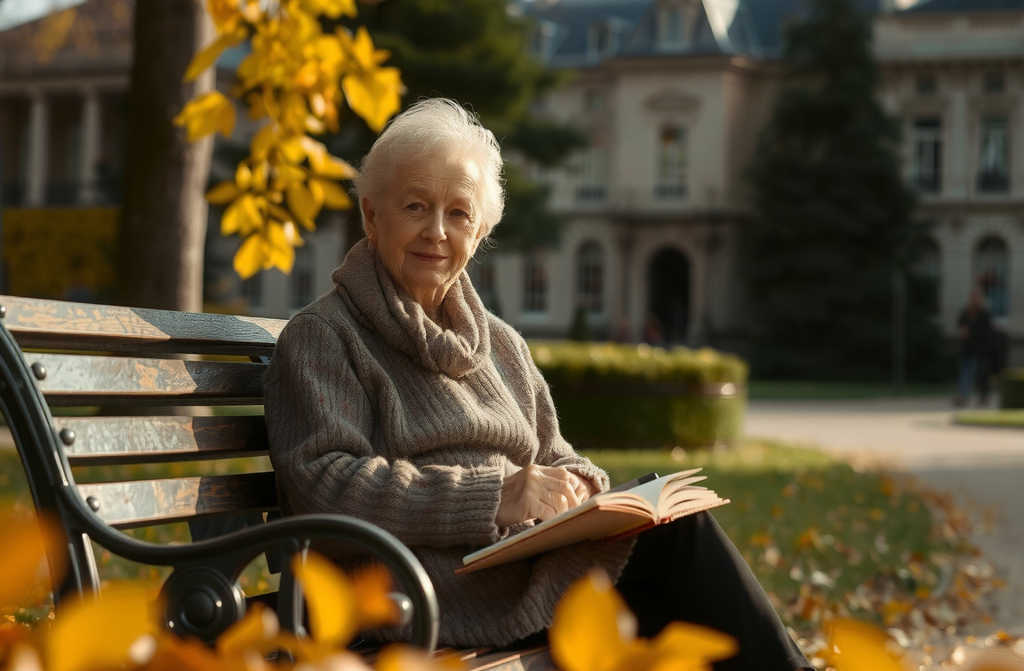
An Addendum to the Flat
You don’t understand, Alice. I haven’t come for dinner. I came to tell you something important.
Alice Catherine Harrington stood at the stove, her back to her husband. The wooden spoon hovered above the pot of soup. The broth simmered softly, sending up small bubbles from the bottom, and for a moment, that gentle noise was the only sound in the flat. Soon, even that faded to the background.
Whats so important? she asked, her tone steady and businesslike. The control in her own voice surprised her.
Richard placed his briefcase on the stool by the kitchen tablehis usual move. The briefcase, always on the stool; jacket across the chair-back. Thirty years of the same gestures. Alice knew every nuance by heart, as one recalls an old poem learned so long ago that you remember the words but not the meaning.
Im leaving, he said. No preamble, no pause. Just: Im leaving.
Alice carefully set the spoon down beside the hob. She turned around.
Richard sat at the table, still in his suit jacket. Fifty-eight years old, and somehow both familiar and entirely changed from the man she once loved. His hair was nearly white at the temples. Hands laid calmly, palms down, as if hed made this decision long ago.
Where to? she asked, though she already suspected.
To Lucy. You dont know her. Shes in my department. Thirty-four.
He said the last bit separately, as if her age were a necessary part of the explanation. Perhaps it was.
Alice picked up the linen napkin shed folded earlier while setting the tablea habit. She twisted it anxiously. Shed bought the napkins at the farmers market from a stall run by a lady from Yorkshire. Thick, pleasant fabricRichard always crumpled them carelessly, left them bunched by his plate. She always smoothed them out, laundered them, and put them away. Thirty years of smoothing and washing.
How long?
A year and four months.
Alice quickly counted back. Last summerwhen theyd gone to Cornwall for the first time in years, just the two of them. Shed thought it was a new beginning. Clearly, shed been wrong.
You have to understand, Richard began, leaning forward ever so slightly, his gaze fixed somewhere over her shoulder. Its not that youre a bad person. Its just Alice, you’ve faded. Youre part of this flat now. Do you see? Youve become like the furniture. Id come home and see the polished windows, ironed shirts, dishes arranged perfectly. Everything immaculate. But you werent therenot you, the living, breathing person.
She listened, hands twisting the napkin tighter.
With Lucy, I feel alive. She asks what I do. Shes curious. We have conversations. Theres something to talk about.
And there wasnt with me?
Alice He paused. For the past ten years, all youve ever talked about is the flat, the children, and the neighbours. Im sorry, but its true.
The children. Their son Ben lived in Manchester with his family. Their daughter Chloe had moved to Edinburgh five years ago. They rang every Sunday, sometimes visited for Christmas or birthdays. Alice missed them daily, but it was a longing you simply learned to live withlike an old scar, numb yet ever-present.
Are you going now? she asked.
No, not tonight. I need a few days to pack. I realise its inconvenient. If youd prefer, I can stay with George.
George, his closest friend. Which meant George knew. Perhaps had known for some time.
Stay here, Alice replied. Her voice was still calm, level. There’s no need to go to Georges right away. You can pack here.
She turned back to the stove and turned off the gas. Soup finished in silence.
That night she lay in her usual place, staring at the ceiling. Richard seemed to fall asleep quicklyor at least, pretended to. The ceiling above hadnt changed: still white, still the faint crack in the far corner they’d meant to plaster since the autumn before last. Alice studied that line, wondering if there was any point repairing it now. There wasnt.
The tears came at three a.m.not all at once, not dramatically, just a gentle warmth tracking down her face. She made no attempt to stop them, simply lay still until dawn lightened the sky.
Richard left after four days. He took two suitcases, his laptop, his books on finance, a few things from the bathroom. Alice sat in the kitchen while he packed, drinking tea with no taste. When the door closed behind him, the flat felt abruptly empty. Not the usual evening fullness; an emptiness as if all of the furniture had vanished at once.
In the early days, Alice went about as usual: did the dishes, dusted the shelves. On Sunday she pulled out his nine white shirts, sat on the edge of the bed with them in her lap, unsure what to do. Hed always insisted on separate washes for whites, extra starch for collars. Shed ironed these shirts every week for thirty years. Now nine crisp shirts lay before her and she had no idea where they belonged.
She put them back and closed the wardrobe.
Ben called on Wednesday. His voice was cautious, as if he already knew what needed saying but not the words.
Mum, Dad rang me. How are you?
Im fine, she said.
Fine how?
Fine is fine, Ben. Im okay.
She could sense he wanted to say moreoffer to visit, invite her up to Manchester, or hand out some advice she hadnt asked for. But all he said was:
Are you eating?
I am.
All right. Call if you need.
I will.
In truth, she hadnt eaten properly in a week. Not on purposeeach time she opened the fridge and saw his groceries: the cheese he had with breakfast, a small jar of English mustard, milk for his tea. She hadnt the heart to throw them out. Shed simply shut the fridge and left the room.
Chloe arrived for the weekend, ringing unexpectedly from Euston.
Im down in London, Mum. Can you meet me?
Alice met her near Leicester Square Tube. Chloe was so much like Alice had been: dark hair, upright, steady eyes. Only younger, and already entirely separate on the inside.
Mum, youve lost weight.
Its not much.
Its not right, this quickly. Chloe took her arm and smiled gently. Lets go home. I brought food.
She stayed two nights. Cooked, tidied, watched films with Alice. On the second evening, while they lingered in the kitchen far too late, Alice found herself speakingnot crying, not complaining, merely talking. About what Richard had been like at the start. How theyd met at the university library. The weddinga quiet one, when she was twenty-seven, he twenty-nine. Back then shed worked as an art historian at the city gallery and truly loved it. Then Ben came, then Chloe, and life changed. Not for the worse; just… changed.
You worked, Mum. When did you stop?
When you were seven and Ben four. Your father thought I should be at home. I agreed.
And you never regretted it?
Alice pondered.
Not then. Now Im not so sure.
Chloe left late Sunday. Alice watched her head for the Tube, backpack bouncing at her side. Round the corner and gone.
The flat was quiet again. But the quiet was different this timea peace, somehow, instead of a weight.
For the next three weeks, Alice simply existed. She rose, washed, brewed coffee, sometimes went out to the shops, stared from the window, ironed tablecloths that no one spilled on, watered the plants on the sill. Life circled on, indifferent to her permission.
One evening, she fished an old box from atop the wardrobeshe couldnt say why, but her hands simply reached for it. Inside she found her old dissertation, several exhibition catalogues she’d contributed to as a young curator, and a stack of photographs. In one, she was standing in the gallery beside a Flemish paintingyoung, serious, pointer in hand. On the back, her own writing: Opening night, March 1992. Shed been twenty-nine.
Alice gazed at the photo for a long time, then put it on the bedside table, face up.
Sometime in late evening, Georgina ranga friend from university days, now in Bath. Theyd shared an undergraduate degree in art history, drifted to separate towns, but picked up the conversation every few years as if no time had passed.
Alice, your Chloe told me. She wrote a message, bless her.
She did? You two conspired.
Its not a plot, were just worried. How are you, honestly?
Im here.
Thats not an answer.
No other one to give.
A pause, then Georgina: Listen, long overdue question. Do you remember Judith Merton?
Judith Merton? Alice tried to recall. From the faculty?
Noshe manages The Willoughby Gallery now, off South Bank. We went to an opening there in 98, remember?
Vaguely.
Well, she asked me to recommend someone for the gallery: exhibition advisor, and some work with visitors. Part-time. Alice, its your thing. You were brilliant at it.
Alice wandered into the lounge, kept the light off, settled onto the sofa.
George, that was twenty-five years ago.
Art doesnt expire, Alice. And neither have you. They have everything there: Flemish, Impressionist, even modern stuff. You know more than half their current consultants. Just go. Talk to Judith, one meeting. You dont need to promise a thing.
Soft silence filled the flat. Street sounds filtered in through the window.
Go, Georgina said gently, What are you actually sitting here for, Alice?
No immediate reply. Then: Alright. Pass me her details.
She didnt sleep much that night. Lay thinkingnot of Richard, but of herself. Of the woman in that photograph: young, pointer in hand, who could recite every painting in the Flemish gallery from memory, scent of varnish thick in the air, catalogue weights in her arms, and Dr. Williss voice saying, Harrington, you have The Eye. You cant learn that. Its there or its not.
The Eye hadnt gone. It simply spent too long on napkins and white shirts.
Judith turned out to be a small, sparky woman in her seventies, with bright red glasses. She immediately offered her hand.
So youre Harrington! Georginas sung your praises. Come alongIll show you the place.
Following her through the gallery, Alice felt… what, exactly? She realised a moment later: she felt as though she was breathing for the first time in years.
The Willoughby Gallery was compact but tasteful: three exhibition spacesEuropeans from the eighteenth and nineteenth centuries, a contemporary art room, and a cosy lecture hall. Pale walls, expertly arranged lighting. Alice couldnt help herself: she automatically assessed the displaythis one should be shifted left, that light was angled all wrong.
Weve trouble with this piece, Judith said, stopping before a Dutch still life. People just pass it by. Lovely painting, but its not working on this wall. Thoughts?
Alice contemplated it. It should be lifted by about half a foot and moved to the end wallit’s painted for a frontal view, but the side-light here eats up the texture. And it sits next to too strong a canvas. That overwhelms it.
Judith peered over her glasses and smiled slowly. Monday, then. Lets start with three days, see how it goes.
Alice left the gallery and paused on the pavement. March, still cold, but the air already hinted at spring. She clutched her bag and, for the first time in weeks, wasnt thinking of the flat, Richard, shirts, or napkins. She simply stood.
She phoned Georgina.
Well?
Im starting Monday.
Told you so! Georgina cheered. Properly right, Alice. You’ll see.
Well see, Alice replied, though she knew her voice had changed.
Friday, she booked a last-minute appointment at the salon shed walked past daily for years. Shed spotted a woman in the window with a short new cut and, on impulse, stepped in. The stylists name was Violet.
What are we having? Violet asked, meeting her eyes in the mirror.
Alice considered her reflection: dark, greying hair tied into her habitual ponytaila look shed kept for at least fifteen years.
A short style. And please, I want to let the grey show. Make it natural.
Violet raised an eyebrow. Are you sure? Most folk want it hidden.
Im sure.
She spent nearly three hours there. When Violet finally angled the chair, Alice stared at a stranger: neat, cropped hair, silver threaded openly through dark. Face clearer, as if a weight had lifted.
Lovely, she said.
Very much so, Violet agreed. Your bone structure… age brings such character. Young girls cant know it, you know.
Alice paid and left. In the shop window across the road, her reflection met her gaze squarely for the first time in years. No apology.
Saturday, she visited the shopping centrenot for groceries but something new to wear. She usually chose practical things: grey trousers, dark jumpers, reliable coats. Blur-into-the-background attire.
Today, she drifted into a smaller boutique and found herself drawn to a slate-blue jacket, pinstripe trousers, a linen dress. She bought the jacket and trousers, tried them on in the changing room, and realised she did recognise herselfhad simply not seen that self for a long while.
Monday at the Willoughby, Judith greeted her like an old colleague. She met young Paul the administrator, and Illya the restorer, who worked away in the frame room.
Illya, this is Alice Harrington, our new art historian.
Illya, thirty-five-ish, bearded and flecked with paint, nodded cordially. Very good, and returned to the frame.
Alices first day flowed quietly. She sorted archival catalogues, read through exhibition notes, and debated the gallery layout with Judith.
Level with me, Alice, Judith said over tea. The third roomwhats wrong?
Too much work in there. Youre trying to fit sixteen pieces into space for ten. There’s nothing at eye-level to be drawn towardsso the gaze just moves on. People forget what they’ve seen.
Judith grinned. Exactly what Ive argued for months. Youre a natural at explaining. That matters.
Evenings, on returning home, the flat was the same. But after each day at the gallery, she was a little less stagnant, as though something long frozen was thawing.
She phoned Chloe at the end of week two.
Mum, your voicesomethings different.
Is it?
It sounds alive.
Meanwhile, Richard was living in Lucys tiny one-bedroom flat in Camden. Lucy worked nine to six, yoga classes twice a week, out with friends Fridays. Richard was lost in this new routine.
All his life, there had been dinner waiting, Alice keeping the household runninga quiet orchestra of comfort. Now he came home to an empty fridge; the basics escaped him. Fried eggs and toast, but little else. At first it was almost a lark, a new adventure. Soon, the novelty wore thin.
Lucy cooked, often healthy, fashionable food using online recipes. But she didnt cook for him; she cooked for herself and occasionally shared. It bothered Richard more than he could explain.
Richard, could you pop to the shop for me? Lucy asked politely on Sundays. Ive plans with the girls.
He stood among the aisles, lost. Alice had always just known.
One evening in early April, Lucy came home excited.
Richard, our new project lead is from Londononly thirty-one. Incredible mind, you couldnt imagine!
Richard, head in a book, looked up. Good for you.
We spent lunch talking about architecture. He studied at LSE; sees things so differently
Thats good.
Lucy looked at him for a moment, something unreadable in her eyes.
Aren’t you even curious what we discussed?
Architecture. You just told me.
She retreated into the kitchen. The clang of pots echoed as Richard sat, unmoving, pretending to read.
By April, Alice had transformed the third gallery room: removed six works to storage, repositioned the rest for breathing space. Judith admired the change for some time.
Alice, you know about musical rests?
Yes.
You can create them in visual space. That’s rare.
Judith suggested a regular lecture seriesinformal talks about pieces from the permanent collection, every two weeks. Alice agreed, nerves fluttering at the thoughtshe hadnt spoken publicly in twenty-five years.
Nervous? Judith asked.
A bit.
Good. Means you care.
The first talk drew twelve visitors. Alice stood before a relocated Dutch still life, voice a little strained at first. Then steadier. She described the paintings simple itemsbread, jug, plums, a cloth at the table’s edgepainted so each seemed to breathe, as if someone had just left the room and their warmth lingered.
Afterwards, an elderly lady in navy approached.
You know, I must’ve visited this gallery five times, and never noticed that picture. You talked about warmth now I see it.
Alice walked home through a soft, warming evening. She considered her own words: someone just stepped out, and things remember their warmth. It was about the still life, but perhaps about her, too. Someone gone. Warmth remained. And it hurt a little less now.
Georgina visited in May. When Alice opened the door, she looked her up and down.
Youve gone for the short cut!
Its been a while.
Goodness. Alice, you You look wonderful. Not in a for your age way. Just wonderful.
Hush.
No, I mean it. Somethings different.
They sat up late in the kitchen, sharing wine and storiesGeorginas grown-up children, the university, Alices tales of the gallery, Judith, the lectures.
Do you remember our student trip to Florence?
The Uffizi, Georgina chuckled. You wouldnt leave Botticellis room.
Two and a half hours.
Three, Alice. I know, because my feet achedI just sat and watched you, rooted to La Primavera.
Alice laughedreal, deep laughter she couldnt remember releasing in months.
Do you hate him? Georgina asked suddenly.
Alice swirled her glass. Sometimes. Much less than at first. Funny thing is, Im more cross with myself. For not noticing I was… dissolving. He saw it, even if he said it cruelly.
That wasnt you. That was a role. Wife, mothertidy, timely, responsible.
Yes. But I chose that.
You chose part of it. You never chose to disappear.
Alice stared out into the lamp-lit street and knew Georgina was right. Disappearing had happened bit by bitnever anyone telling her to, but life getting denser, until she lost sight of herself in the fog.
At the end of May, the gallery opened a new photography exhibition. A young London photographer had captured market traders around the city. Alice curated the display with him and Illyaphysically satisfying work with instant results.
The opening was crowded. Judith thrived on such evenings, among chatting guests and gentle music. Alice stood to one side, observing: the pause, the attention, the faces opening or closing before each photograph.
Do you work here? a voice asked.
She turned. A compact, older gentleman with a continental accent (French? Belgian?).
I do, she replied.
I could tell. You look at the images like an expert, not a visitor.
Im an art historian.
He offered his hand. Jean-Pierre Moreau. Photographer.
Alice Harrington.
They lingered over a photoan elderly market woman, staring boldly from behind her tomatoes, every wrinkle a feature, not a flaw.
Excellent portrait, Alice observed. Hes not afraid of faces with history.
Moreau nodded. Precisely. Young photographers think beauty lies only in the young. This is a mistake.
They spoke another twenty minutes. Moreau was celebrated across Europe, his work shown in Paris, Amsterdam, Berlin. Hed come to London seeking women for a new project.
Im photographing women aged fifty-five and above. Faces that have truly livednot victims, but faces strengthened by experience. You understand?
I do.
You have precisely such a face.
Alice was momentarily startled.
Youre suggesting I?
Im inviting you to participate. Several sessions. Maybe an exhibition, maybe a publicationI wont promise until I see. But I rarely choose badly.
Judith joined them with a glass of wine.
Jean-Pierre, youve met our Alice? Wonderful. Shes new, and already indispensable.
Jean-Pierre handed Alice his card. Think it over. No rush.
She weighed the invitation for two weeks.
What was the hitch? Not modestyshe was far past that. Not stage fright. Something deeper. She called Georgina.
He wants to photograph you? Makes perfect sense, Georgina said, as if it were obvious.
He does. And Im dithering.
Youre hesitating because you havent quite believed you have the right, Georgina replied.
Alice sat quietly, phone pressed to her ear.
You do, Georgina said firmly. Just in case you needed to hear it.
That Friday, Alice emailed Jean-Pierre: I agree. When do we start?
Their first shoot was mid-June in a small Soho studio. Alice wore the slate-blue jacket, pinstripe trousers, no makeup beyond her usual. Jean-Pierre was easy to work with; he didnt direct but conversedabout the gallery, English painting, Florence. She answered, lost all sense of being photographed.
After an hour he showed her a few shotsher at fifty-seven, short hair, time written on her face, not as loss but as resilience. Not a suffered face, as Jean-Pierre had put it. Independent, like the trader among her tomatoes.
See? he asked.
I do.
As Alice posed for Jean-Pierre, led gallery talks, patched together a new life from long-forgotten pieces, Richard faced his own struggles.
Lucy was lively and clever, but needed energy, attention, constant conversation. Silence unsettled her. With Alice, theyd shared companionable quiet like a good libraryparallel, undemanding. With Lucy, every quiet moment was a question.
And Richard slowly realised that domestic life needs participation. Alice had rendered it invisiblelike air, granted but unnoticed for years. Now, its absence confronted him daily.
In July, Richard rang the children. Ben’s tone was cool, guarded. Chloe was direct:
Dad, dont call me to be pitied. Mums fine. Leave her be.
He wanted to object, but had nothing left to say.
In September, Judith showed Alice a spread in Aspect, a cultured London magazine. Jean-Pierres project was featuredportraits of ten women from across Europe, opened by a full-page of Alice: jacket, high shoulders, gaze set just off-camera. A face with no superfluous line, the essayist wrote.
Paul, the gallery administrator, pointed at his tablet when Alice arrived.
Youve been famous all morning, Alice.
I see, she replied.
Smashing picture. Truly.
Thank you, Paul.
That night, Jean-Pierre messaged: A Paris gallery is keen. Exhibition likely for Februaryyou willing to travel?
In her lounge, phone in hand, Alice watched the evening city through her window. The potted plants shed chosen herself had thrived through summer. For the first time, everything in the flat was hers, unobstructed by old memories.
Richards oldest friend, George, called him that day.
Heard about Alice? George asked.
No, what about?
Shes in Aspectbig piece. Important European photographer, something really serious. Shes on the front page.
Richard was silent for a while.
Alice?
Alice Harrington, your ex-wife. Thats her. Check itshe looks… well, important. Impressive.
Richard found the article online and stared at the picturedidnt recognise her immediately, not with the new hair, the new set of her face. But then he did. It was Alicethough not the woman hed left at the stove in February. Someone stronger, more self-possessedperhaps the Alice of their younger years, or maybe just someone always present, never truly seen.
Lucy left in Octoberwell, not exactly left, but they both understood it was over. She put it plainly, over dinner.
Richard, I think we both know were not quite right. I imagined you differentlymore… engaged. You always seem partly somewhere else.
It was true. He was somewhere else, though he couldnt say where.
He moved into a small, quickly-furnished studio flat near his office: bed, sofa, table, fridge. An unfamiliar silence filled the space, not a peaceful, but an empty one.
He dreaded calling Alice. Feared it, if he allowed himself to say so.
November arrived. Alice was getting ready for Parisnot just for the exhibition, but also meetings, introductions by Jean-Pierre. Judith was thrilled.
Go, she said. Bring us something fascinatingI want that Belgian artist to come to London, you might meet him.
What’s his name? Alice jotted it down.
Lucas van der Bergdoes odd, hard-to-classify work. A bit of realism, a bit of abstraction.
She made a notewho knew if shed need it.
She booked her own flight and a small hotel in the Sixth Arrondissement, close to the Luxembourg Gardens. Shed visited Paris once, as a student decades agowith friends, sofa-beds, laughter, and cheap food. This would be different.
Chloe rang before she left.
Mum, Dads messaged me. Wants to talk to you.
To me?
Yeshe said he wants a word, his phrase. I said Id pass the message. Up to you.
Alice thought a moment.
All right. Let him call.
That evening, as she packed, Richard rang. She barely picked up before he launched in:
Alice, sorry its late. Youre off to Paris tomorrow, is that right?
How do you know?
Chloe. She only told me you were going.
Right, Paris.
A pause. Alice sat on the bed, hands folded.
Alice, I wanted to talk. Not on the phone, but youre away tomorrow. I to be honest, Ive been an idiot. I realise now. Do you think Would you considercould we try again?
Try what?
A new start. Ive learned so much these past months. I’d like to talk, properly.
Alice waited. She already knew what she wanted to say.
I reckon weve both changed, he continued. You have, certainly. I can see it. I realise now how unkind I was, those things I said, like calling you furniture. I was wrong.
Wrong, she agreed.
Im not expecting forgiveness. Just… can we meet when youre back, talk things through?
Alice rose, stood at the window, looking at the November city belowthe same lamp-lit streets as always.
Richard, she said. Her tone was calm, not cold. I hear you. And I believe you mean it. But I dont want to go back.
Alice
Not because Im angry. It hurt then, yes, but thats not it now. I simply Ive grown into someone else these months. I cant fit back into who I was. Youre asking me to return to a home and a part that no longer exist.
Long silence.
I think I understand, he whispered at last.
You’re not a bad person, Richard. But weve given each other all we needed to, and taken what we could. Thats enough.
The children?
Theyre grown. They love you. That wont change.
He sighed.
You fly tomorrow?
I do.
Safe travels, Alice.
Thank you.
She set her phone on the table. Beside it sat the old photo: March 1992, the museum. After a moment, Alice tucked it into the drawernot thrown away, just put aside. It was still there. She was still there.
In the morning, Alice called a cab to Heathrowjust a single, small suitcase: jackets, trousers, her slate-blue blazer, documents, books for the journey, a notebook for the names of artists she planned to visit.
She landed at Charles de Gaulle by afternoon, travelled by taxi, watching the autumnal avenues of Paris pass by. The city felt lighter than London in November, more golden among sodden chestnuts and tiled streets.
The hotel was exactly as imagined: small, old wooden floors, windows overlooking a central courtyard. The receptionist spoke French and EnglishAlice managed in English, the French catching up bit by bit from a podcast and her old uni textbook. Enough for shopsa proper conversation would take time.
Her room was up three flights: cozy, warm, facing the cobblestoned courtyard and, across, the windows of another block. On the ledge, a red geranium. Alice placed her suitcase down, unopened, and approached the window.
The courtyard was empty save for a grey cat watching the world pass below.
She opened the windowcold air, foreign city scents of wet stone and distant coffee. She stood a moment, simply breathing, no thoughts, no schedule.
Jean-Pierres exhibition opened in three days. Tomorrow, a gallery walk-through; then a couple of meet-and-greets. After that, a week as yet unwritten.
She might stay seven days. Perhaps two weeks. She was in no hurry. Home was waiting for her: the gallery, Paul with fresh catalogues, Judith with news of Lucas van der Berg. Ben and his family due for Christmas, Chloe planning a February visit.
Everything lay aheadhers, entirely. No one could take it away.
She shut the window, unpacked, hung her blazer, washed, and slipped on a jumper.
Then she took her notebook and coat and headed out. The Luxembourg Gardens were ten minutes walkshed checked the map before leaving England. She found a bench beneath a grand plane tree, mottled bark like old stonework. The tree was so old it seemed more architecture than plantyet alive.
She jotted a few namespainters to seek at the Musée d’Orsay. Remembered Jean-Pierre mentioning a gallery in Le Marais showing 1960s photographers. She wrote the address.
Then she closed the notebook and simply sat. The autumn garden was quiet. Leaves dropped now and again; distant voices, a woman laughing, drifted from somewhere out of sight.
Alice looked upwards. The sky was solid grey, standard November, yet hinted at something brighter above. Perhaps tomorrow would bring sun.
She texted Georgina: Landed in Paris. All is well. Sitting in Luxembourg Gardens. Georgina replied at once: Enviousin the best sense. Say hello to Paris for me. Alice smiled and put her phone away.
The cat at the hotel window probably still watched the empty courtyard. The nine white shirts lay untouched in a London wardrobe. The linen napkins, folded in a sideboard drawer. And the crack in her ceiling would remain, never patched.
All these things remained behindand she, here, sat in a Parisian garden, notebook in hand, quietly alive to the chance of new beginnings.
There is a time we all must take ourselves back, must realise that the thingsor the peoplewe lose become part of who we are, but never the sum. When the dust of the past settles, it is not too late to breathe afresh. Even in November, even in a new city, life waits quietly for us to notice we are still here.