Another Persons Fault
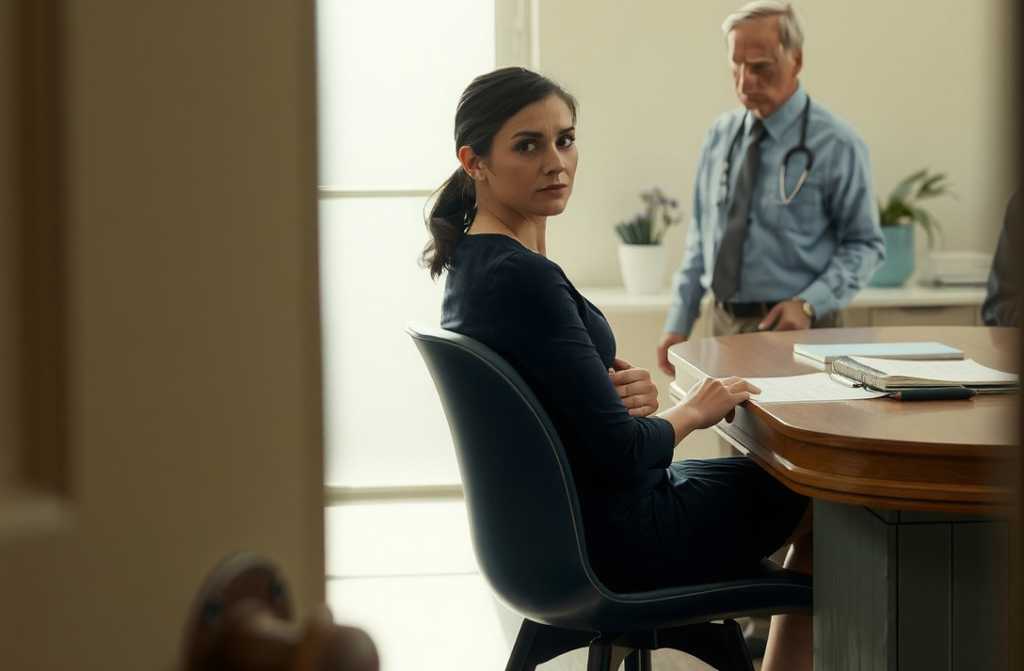
Mrs Veronica Mitchell, please do take a seat.
She settled onto the rigid chaircold and plastic enough to seep through the fabric of her skirt. The room exuded a faint clinical tang, far too hygienic for human comfort, as if someone insisted on scrubbing away anything lively or remotely interesting.
Im listening, she replied, her own voice coming out so steady and distant it startled hera voice unfurling not from herself, but from some wry observer in an adjacent parallel universe.
The doctor: Michael Somers, in his early fifties, with distinguished streaks of silver at his temples. Glasses balancing on a slight nose, hands folded on the desk with a calmness bordering on satirical. Veronica registered all this in the brief trudge from door to chairan old habit, reading a room within three steps.
I have a few questions, Mrs Mitchell. Not medical ones. Personal.
Something wriggled beneath her ribsuncomfortable without being painful, as if someone had just pressed down inside her, politely but firmly.
Personal, she echoed.
Indeed. You provided samples at our clinic a month ago. You and your husband, Christopher Mitchell.
Yes.
I want you to understand, he said, Im not pronouncing a verdict here. I wish only to unravel what happened. And why.
She studied his folded hands. Calm hands. Not drumming, not fiddling with foldersjust resting.
What do you think happened? she asked.
I believe, he said, slowly, that on the day the tests were taken, in our treatment suite, your husband’s sample was switched. Christophers blood was replaced with another mans. That man, according to the sample, is infertile.
Silence.
Street noise drifted faintly from beyond the window. A typical London autumntraffic rumbling, indistinct voices, the far-off cry of a number 38 bus. Distant. As if behind triple glazing.
And what are you planning to do? Veronica asked.
Dr Somers removed his glasses. Without them, his face was differentblunter, almost gentle.
I was about to ask you the same thingbefore I do anything at all.
***
October now, but it all began in June. Or, honestly, even earlierits just that June was when Veronica finally registered what, deep down, shed always suspected.
She returned home early that day. Dancing class had ended an hour ahead of schedulea pupil, Lily, eight, crooked plait, took a tumble and wailed, and rather than soldier on, Veronica bundled everyone home early, calmed Lily down and called her mum. Lily was, in the end, perfectly welljust rattled. But the lesson was off, and so home she went.
She eased in with her own key, quietly. Not to eavesdrop or snoopshe simply always moved that way. Years of ballet can do strange things to your footsteps.
Christopher stood in the sitting room, phone to his ear, all business. His voice, clipped and smooth, the exact tempo he used when talking money or discussing contracts.
No, Simon, listen. Two years, max. If she doesnt fall pregnant in two years, Im filing for divorce. We agreed that up front. She knew. Or should have known, frankly. Not my problem. I need a child, an heir, and Im not keeping up this charade forever. Business is business.
Veronica stood by the door.
She didnt move. If he turned around, hed see a woman in an autumn coat, bag swung over her shoulder, keys dangling in her hand. Not crying, not shouting. Just standing very, very still.
Then, quietly as shed arrived, she slipped back out, walked down the stairsdidnt bother with the liftand kept walking along the street, not caring where her feet were taking her.
Business is business.
Charade.
***
Theyd met three years ago. Veronica was thirty-one, only just retired from ballet, not through scandal or pressure, but because her body simply threw in the towel. Her left ankle, caringly nursed for a decade, finally delivered its final verdict. The surgeon said: recovery, yes, but return to the stage? Out of the question. Shed nodded, thanked him, and left.
That was when she realised she had no idea who she was without ballet.
It was a strange time. Not bad, just… blank. Like a room with the furniture dragged out, the wallpaper echoing the ghosts of chairs and dressers.
She began to teach, first at a local school, then opening a small studio of her own. Children’s ballet, basic choreography, dance for the under-twelves, girls mostly, sometimes boys. It surprised her how real it feltwatching a child learn first position, sensing that small flicker as their body became just a bit more theirs. It was alive in a way she hadnt expected.
She met Christopher by accidentone of the mums introduced him, not meaning to. Hed swung by to collect a business associates daughter just as Veronica was at the mirror, adjusting a pupils posture.
Afterwards, hed said hed fallen for her at first sight. At the time, shed believed him.
Now she reckoned he hadnt lied, exactly. Simply, what he called falling in love meant something else: hed seen a beautiful thing in a beautiful setting, and thoughtwhy not have that?
Christopher Mitchell, forty-eight, a successful property developer. The sort who could spot potential among weeds and skipspot a derelict and see a penthouse. He probably calculated Veronica: young, healthy, well-mannered, safe in company, no drama. A sound investment.
She had calculated, too, if she were honest. Stability. Surety. Someone who knew what he wanted. After the wild see-saw of the theatre world, after Andrew, that felt important.
After Andrew.
She tried not to think about Andrew too much. Sometimes she succeeded.
***
Andrew Rivers had landed in her life when she was twenty-five, he twenty-eight. A violinistnot famous, not world-class, just beautifully gooda man who loved music more than sanity itself.
Theyd lived together four years, rented a squat little flat in Hackney, window on a courtyard with a gnarled old apple tree. He practised violin in the mornings, she did barre at their makeshift rail, a bit of pipe bolted to the wall. Their life was an odd, understated happinesscoffee brewing and Vivaldi at eight a.m.
Then they found his. At first he hid itfrom her, then from everyoneuntil he simply couldnt. Infertility isnt a disease, the doctor had said, but in Andrews case, it was secondary to something rarehormones out of kilter, the fix long, and rarely complete.
She remembered the night theyd talked.
I cant give you children, he said. They sat in the kitchen, rain blurring the window.
I know, she’d replied.
You deserve kids.
Andrew
No, you do. And I wont rob you of that.
They didnt part because she wanted to. Nor, she thought, did he. They split because he decided it was right. He was always like that: impossibly principled. Sometimes maddening, mostly admirable.
Three years passed without meeting again. She heard, through friends, hed moved to Manchester, still played, lived alone. She knew nothing new about his health.
***
After that June day, Veronica floated through the following days as if underwater. She did her job, cooked dinner, answered Christophers questions with bland precision. Theyd never had deep conversations, not that she fully noticed until now.
The studio was her sanctuarymirrored walls, battered wooden floors, the sharp tang of rosin and the particular warmth of a room used for moving. Sometimes she stayed after class, played a little Debussy or Ravel, and danced, not for show, just because.
Those evenings shed tick off a mental inventory.
What she had: a flat (his, not hers), a husband who paid the bills, a car she disliked, clothes hed selected or blessed with cash, restaurants for public appearances, a smile shed learned in the theatre.
What she didnt have: real conversation, interest in her thoughts, a touch with meaning, a sense of being more than furniture.
And children. She had no children. Doctors said: all fine, just a matter of time. But she knew better. It wasnt her. Shed checked, she knew her body too well. Something didnt stack upand perhaps the fault wasnt hers.
But she couldnt be sure. Only sense it.
So here she was, staring at her reflection in an empty dance studio, thinking about an overheard conversation. Two years max. If not, divorcegoodbye and good luck. Like a failed asset, sacked without redundancy.
Business is business.
She looked at her own reflection. Thirty-four. Back straight (not habit, just anatomy), dark hair pinned, eyes tired.
What now?
***
The idea didnt arrive in a flash. First there was anger, private and quietly bristling. Then sadness. Then a cooler, steelier anger.
He meant to leave her well and truly skint. The flat: his. The car: his. What shed saved before marriage: meagre. The studio barely broke even. Shed have to start over, and though working didnt scare her, the thought of crawling from nothing, the injustice, rankled.
Hed win the narrative, too. I tried. Provided everything. She failed. Infertile. My fault? Hardly.
And thats when something snapped.
What if the story changed? What if he was to blame?
She remembered Andrewhis diagnosis, the abandoned paperwork hed left, still sitting in her flat, in a box too sentimental to toss.
It was, objectively, a rotten idea. But it was an idea.
A week later, she dug out the box. There they were: five-year-old medical notes, diagnosis, doctors stamp.
She did nothing for another week.
Then, she made an appointment for Christopher at a private clinicgood, discreet. He agreed without a murmuralmost relieved, as if hed been dying to suggest it. She offered the idea of a thorough check; he nodded, of course, long overdue.
She visited the clinic two days before the tests, on the premise of checking the timetable. She found the nurses room, found a moment. It was absurd, risky, her hands shook. But she swapped the sample container: slipped in Andrews, with the accompanying paperwork.
Afterwards, she walked to the nearest park, watched pigeons, and sat a while, thinking about what shed done. Dishonest, yesunfair, certainly.
But hed lied too. Every day, for three years.
***
The results arrived a fortnight later. Christopher fetched them himself, came home subdued and taciturn. They ate dinner in silence. Then, gaze fixed on his mashed potato, he said:
Ive gota problem, apparently. Bit of amasculine kind.
She looked up.
What problem?
Infertile, he said. Apparently since birth. I should get checked again, butwell, thats the initial conclusion.
She said nothing.
So, not you after all, he added, tone matter-of-fact.
Not me, she echoed.
He nodded, cleared away his plate, retreated to his study.
Veronica sat at the table. Her tea went cold. The light faded. She waitedperhaps for relief, perhaps for a sense of doing something justified.
Nothing came. Only a peculiar quiet.
***
Dr Michael Somers had been at the clinic for eleven years. A good doctorthat is, one who notices the things others dismiss. Not cleverer, just practiced in the art of watching.
The discrepancy took a while to gnaw at him. Something in the paperwork, a trifle not quite right. He poked, double-checked.
Soon enough, he pieced it together. The sample had been swapped. He knew whose it wasAndrew Rivers. The medical note was attached (it really shouldnt have been).
He couldve contacted the authorities, phoned Mitchell, summoned Veronica and read her the riot act.
He did none of that. For now.
He sat in his office, contemplating. Hed seen all shades of familygood, less so. Hed learned to tell when people act from strength, and (more telling) when they do so simply for lack of better options.
She hadnt done this from strength.
He asked reception for Mrs Veronica Mitchells details. Sent a formal note, asking her in to discuss results. She came.
And now, here they sat, watching each other. No one in a hurry.
Why did you do it? he asked, no hint of judgement, just curiosity.
Veronica placed her hands in her lap. Considered. Then said, He was going to blame me. Cut me adrift for not producing a baby. I didnt want the fault to be mine. Not this time.
I see, said Dr Somers.
Thats not an excuse.
I didnt ask for one. I wanted the reason.
She looked at him.
Youre going to expose me, she said, not a question, just a resigned fact.
Havent decided, he replied. Thats why youre here.
***
But there was something else Dr Somers had learnedsomething that complicated everything. A week after initial results, Christopher Mitchell himself showed up: alone, off his own bat, requesting a retest.
Somers supervised the retest personally. Fastidious this time.
The results? Christopher Mitchell, aged forty-eight, genuinely had, as the results put it, vanishingly low fertilitypretty much zero. Not sample swappingjust, apparently, reality.
Irony worthy of a Sunday night ITV drama: Veronica had fudged the test to pin the blame, but the blame, it turned out, was his all along.
He mulled over this for days. Then called Veronica.
***
He came for retesting, said Dr Somers, slowly, as if each word weighed something. Alone. You didnt know.
She didnt move.
And?
The results matched. Not your swap. The truth, as it happens.
A long pause.
Youre saying, she said, slow and faintly awed, it really was him, all along.
Thats what the medical numbers say.
So I swapped samplesbut it turns out I didnt need to.
Thats it.
She didnt laugh, or cry. Just stared out at the pewter sky.
Thats She was lost for words.
Absurd? he offered.
Yes.
Life is absurd, he said, not philosophising, just noting.
So what now?
He opened a folder. Placed overlapping sheets before her.
Theres one more thing. Your husband is clearly suspicious. Or someones tipped him off. Three days ago, the clinic received a legal inquiryhis solicitor wants to know if theres been any improper handling of paperwork.
Veronicas hands chilled.
He knows.
He suspectswhich is not quite the same. But hes gathering ammunition. Likely for the divorcehopes to leave with his honour intact.
So he wants to prove I swapped the samples.
Exactly.
If he can, he gets to play the hero. Im branded the liar, the fraudlose everything.
Thats the state of play.
She stared at the papers. Finally, she asked, Why tell me all this?
Dr Somers removed his glasses again. Without them, just a man across the table.
Because youre a young woman, caught in something not entirely of your own making. You made a mistakea big onebut not out of greed or malice. Thats clear.
You dont have to take my side.
Im not on anyones side. Im a doctor. I deal with whats in front of me.
***
The next part felt to Veronica less like a single thread and more like simultaneous streams, all blending eventuallybut not quite gracefully.
One stream: Dr Somers, acting scrupulously within medical ethics, notified both sides that thered been a retest. Verified results, official reports, to Christopher, his lawyer, and the medical register.
Second stream: Christopher, stacking his evidence, made a blundertried to bribe a junior staffer for internal clinic notes. It was discoverednot publicly, but enough that the evidence he intended to wield was rendered useless by the shady means of procurement. His solicitor told him straighta nonstarter, potentially embarrassing in court.
Third stream: Dr Somers summoned Veronica for another meeting. This time, not alone.
***
It was a Fridaygrey morning, too early in October for any kind of daylight at nine a.m. Veronica arrived at the clinic, gliding along the now-familiar linoleum corridor, through corridors scented with that bland, inoffensive, hospital nothingness.
Inside Dr Somers office, Christopher awaited her.
She paused just inside the door.
Christopher looked differentno longer self-assured, just tired. A man in an expensive coat, occupying the same plastic chair shed used last time.
Veronica, he said.
Christopher, she replied.
Please, both of you, sit, Somers instructed, his voice almost script-like.
She sat on the second chair, diagonal to her husband, the pair of them careful not to share a glance.
I called you both here, Somers began, because I think youre entitled to the entire truth. Not the versions youve spun or withheld from each other.
Christopher started to object.
Mr Mitchell, Somers cut him off, level but unhurried, youll have your say. Let me give you the facts.
Christopher fell silent.
Somers spoke for twenty minutesabout the swapped sample, about the retest, about the solicitors flawed attempt at inside info. Calm and methodical: not judging, just reporting.
When he finished, the only sound was, faintly, a phone call being muttered in the next office.
So Christopher ventured, the retest is correct.
Yes.
And the first test?
Was tampered with, Somers confirmed.
Christopher turned to Veronica, studying her for ages.
Why? he asked.
She considered. Then, I heard your call. In June. You and Simon, talking about divorcing me if there were no childrena condition of the contract, you called it.
He didnt look away.
I was talking to a business partner.
You were discussing my life, Christopher.
You werent supposed to hear that.
ExactlyI happened to hear what you really think. What youd already planned. So I panicked. And did something stupid. I own that.
He stared at heran unreadable expression shifting across his face. In three years together, she realised, shed never truly learned how to read him.
You could have told me, he ventured, at length. I would have
What? she interrupted, gently. Spoken to me like an actual human being? Shared your worries? Asked what I wanted?
Silence.
No, he said, very quietly. Probably not.
It was, she thought, the most honest sentence hed ever offered her.
Somers watched the table, offering them space.
I want a divorce, Veronica stated. Not in angeror because youre a monster. Justwe were never really husband and wife, were we? You know it.
Christopher was silent for ages.
The flat
Im not asking for it. Justdont vilify me. In public, in business, anywhere. Divorce by agreement. No war.
She mentally rolled her eyes at the word war. Not war. Justno crossfire.
And you wont spill about the sample switch, she added. If you keep quiet on that, I wont reveal your little evidence stunt.
Christopher turned to Dr Somers. Whats said here?
Stays here. If thats what both parties want, replied Somers, neutral and calm.
A pause.
Fine, Christopher yielded.
***
She left the clinic at half eleven. By now, the October sky was cracking open, letting through an apologetically pale sun. Walking along the street, she thought about her phonein particular, the number saved there for three years, never deleted.
Andrew Rivers. Manchester.
What would she even say? Sorry, accidentally used your personal medical papers in my petty schemes? I havent rung you in three years, but nowwell, here I am because…
Because life without him had been oddly colourless, she realised. Not romantic, just as if someone had dialled down the volume.
She stopped at a shop window, contemplated her reflection: a woman in an overcoat, with a straight back. A bit wan. Altogether unremarkable.
She dialled the number.
He answered on the third ring.
Veronica?
His voice was unchanged. A little lower, perhaps. Or her memory off.
Hi, its me. Bad time?
No, let me justhold on. Muffled sounds, footsteps, a door creaking. Okay, you can talk now.
How are you?
He hesitated.
Loaded question, he replied. Living. Playing. You?
Im divorcing, she said. Actually, probably half-way done already.
I see. Simply saidno fuss, typical Andrew.
Andrew, I have to tell you something. Its long, bizarre, and youll likely be cross.
Ive never been much good at being cross with you, he said. But give it a go.
She smiledfor the first time, in what felt like forever.
Could I visit? Manchester. A few days. Ill explain.
Long pausenot awkward, just genuine thoughtfulness.
Yes, he said.
***
She went home, packed a bag. Christopher was in his study, door shut. She didnt knock. She left a note on the kitchen table: Im away for a few days. Ill be in touch regarding paperwork next week. Veronica. Not Yours, not an initial. Just her name.
She slipped off her wedding ring, left it beside the note. Not as a statementjust because it meant nothing now. A sleek platinum band, chosen by Christophers jeweller, always a smidge too tight.
Her finger felt oddly light without it.
***
The train to Manchester took just over two hours. She watched the fields and fog, the grey sky over Cheshiremusings flitted: the studio shed need to notify, the girls expecting class on Monday, little Lily (now recovered from the fall).
She thought about Christopherno anger, only thoughts. Not a bad man, exactly, but one who viewed people as job descriptions. Not something one can fix. Just what it is.
She considered Dr Somersa curious man, who couldve been punitive, but wasnt. Why? She didnt know. Maybe hed seen enough, maybe he was just tired of situations where everyone loses.
She thought about Andrew.
About what shed say, how to explain what barely made sense even to her.
The city glided pastmore and more red brick, more northern light; a softer, milkier grey. Shed never lived in Manchester, but shed performed there oftenliked the citys quietly melancholic style.
***
He met her at the station. He was easy to spot, talland after three years, looked the same, perhaps thinner, or perhaps it was the coat.
Hello, she said.
Hello, he replied.
They stood, then he took her overnight bagoffhand, without asking, as if thats just how things were. She didnt object.
They walked through the station, then out onto the street. He said little, she said lessit wasnt awkward; filling the silence didnt matter.
You look he began.
Awful? she teased.
Tired, he answered, honestly. But understandable. How was the train?
Fine. Watched the scenery.
Therapeutic.
You still say therapeutic.
I still do a lot of things, he said. Youd be surprised.
They strolled by the canal. The water was a grey sheet, autumnal. A few stray gulls. Veronica lingered for a heartbeat, just looking.
Hungry? Andrew asked.
Not really. I could drink all the coffee in England, though.
Lets go, then. Odd little café nearby. They put foolish things in the coffeespices, oddments. Ive never decoded which ones, but its good.
Thats odd how?
Well, you can taste something mysterious. But trust me.
All right.
***
Over coffee, she told him, in instalments, about her marriage, about what shed heard in June, the swapped samplesyes, that shed used his paperwork.
She told most of it into her cup. Afterward, she looked up.
Andrew regarded herno anger, no pleasurejust looking.
So, you used my diagnosis.
Yes.
Without asking.
Yes.
Not very sporting of you, was it.
I know.
He nodded, sipped his coffee.
All right, he said, finally.
All right meaning?
It means I see why you did it. Im not about to scold. And in the end, it worked out.
Youre not angry?
A bit, he admitted. But its not a hot anger. Just he searched for a word, its a bit sad, that you were in a spot where that was your best option.
She said nothing.
How are youhealth-wise?
He glanced outsiderain had begun, fine and insistent.
Still working at it, he said. Slow processbetter, then tweaks again. Its going to be a long road, seems.
Im sorry.
I am too, sometimes. But you knowIve learned life isnt something you wait to begin when its perfect. Life is whatevers happening, even when itswell, this.
She watched him.
I thought about you, she said. Not every day. But often.
I thought of you too. Of us, of whether Id been right to leave.
Whats your verdict?
He stared at the wet pavement.
I still dont know. I thought leaving was right. Now Im not sure. Maybe working it out together wouldve worked. I was twenty-eight. I thought I knew everything. Now Im thirty-seven, convinced I know far less.
Thats most of us, she said.
He smiled, mouth barely turnedshe remembered that half-smile.
***
She spent four days in Manchester, put up at a small hotel of her own choosingAndrew didnt object. Each day they met: walked, talked, sometimes just strolled in silence. He showed her the canal at dusk, when city lights undulated on the water. She told him about the studio, the girls, Lilys latest hairdo disaster. He regaled her with orchestra storiesthe time their first violin snapped a string mid-Prokofiev and everyone held the final note waiting.
Day three, he asked:
Returning to London?
Yes. Studio, the kidsdivorce to arrange.
Staying up north?
No. Contracts still here for another year.
They were by the canal, a chilly eveningshe turned up her collar.
Andrew, she said, I dont know whats between us, not now. Maybe nothing will come of it. But Id hate to lose you again. Just go missing by default.
Me too, he said.
So lets not be strangers. Talk. Like grown-ups.
Like grown-ups, he agreed.
They walked on quietly.
Will you keep teaching? he asked.
Yes. Its real. Its mine.
Are you good?
I think so. She considered. At least, I love it. Love and good arent usually far apart.
Fair point, he replied.
You still love to play?
Every day, he said, no hesitation.
She nodded. There was something true in his simplicityno show, just fact: yes, every day.
***
On the morning she returned to London, they met at the same café for spiced coffee. A rare bright Manchester sun slanted through the window.
Ive one more thing, she said. About your documents. I destroyed them afterwards. No one has them now. Theyre gone for good.
Good, he said.
Youre not asking why I kept them all those years.
He looked at her. Dont need to. I know why. Same reason I never deleted your number for three years.
She was silent for a moment. Then, When will you be in London? For work, or
Decemberwith the orchestra. Concert at the Festival Hall.
Ill come, she said swiftly. If thats all right.
Id like that, he replied simply.
***
December was still to come. But for now, it was October, and she thundered back to London via trainfields, woods, and the same stubborn sky. Only now, perhaps, the sky felt a shade friendlier. Or she wanted to think so.
She pondered the mess ahead: divorce, papers, lawyers, a flat to vacate, a place to findsomething small, something hers.
The studio. By Monday, classes resumed. Lily, wobble-free. The girls whod show up week by week, learning to inhabit their limbs. That was hersnone of it changed.
She thought of Dr Somers, and realised she wanted to thank him. Not for defence (he hadnt particularly defended her), but for treating her like a personsuch a basic thing, so rare.
She considered Christopher. What would become of him? Hed find someone new, a better fit, or not. Maybe hed changeor maybe not. People do, sometimes. Not often.
She recalled her ring, left beside the note. How peculiarand lighther hand now was.
She thought of Andrew: his voice; the way hed taken her bag at the station, wordlessly; his half-smile; his illness, slow and uncertain, the long road ahead. She didnt know how it would gonobody did.
But she knew she didnt want not to know.
The train rattled past a small town, the sign unreadable, then back to fields, then the woods, dark as November, though October still lingered.
She closed her eyes, not to sleepjust because.
Her body remembered ballet. Remembered standing, holding, not balanced because both feet were on the floor, but because she knew what real balance wasone leg, arms out. Not easy, not because its painless. But because youre practiced.
***
She made it to the studio by Monday. The children turned up, as ever, at half-five. Lily was showing off a new hairstyletwins plaits this time, bows galore. Veronica said nothing about the bows, just greeted her at the door.
Miss, are we doing jumps today? Lily demanded, business-like.
We are, said Veronica. But first: warm-up.
I already warmed up at home.
Home warm-ups dont count. Go get changed.
Lily heaved the sigh of one accustomed to lifes great injustices and trudged off.
Veronica went to the hall, switched on the lights. The giant mirrors sparkled back: the studio, battered floor, barre, and herself.
She straightened. Rolled back her shoulders.
In the mirror, the door reflectedthe one the kids would soon burst through, shrieking, impatient, in pink leotards, their hair already tumbling loose.
She put on some musicnot lesson stuff, just for atmosphere. Quiet bits of Debussy, Clair de Lune, old, slightly hissy recording.
She stood a while.
Then lifted her arms and made the first move, slow and deliberate. Her body remembered.
***
November crept in quietly. Veronica found a flattiny but charming, overlooking a courtyard with a wizened apple tree. The landlady was a no-nonsense retiree whod long lost the energy to care about tenants foibles.
Will it be just you, dear? she asked while signing the lease.
Just me, Veronica replied.
Fine, the landlady said, with all the enthusiasm of a tax accountanta mere observation.
Veronica hadnt much by way of possessions: clothing, a few books, bits of the studio that were always hers. The box that once housed Andrews documents now contained old theatre programmes, photosscraps of a life before.
The divorce chugged through the lawyers. Christopher kept his wordno public fights. She left the flat, took only what shed bought herself. He even offered the carperhaps out of guilt. She refused. The car, after all, was always his.
They didnt see each other. Coordinated via solicitors. Once he texted: Hope youre all right. She replied, I am. You too. That was all.
She thought about it sometimesthat abrupt ending after years, all down to Hope youre all right. But perhaps that was honest. Better than pretending it was ever more.
***
She wrote Dr Somers a letter. Not an emaila proper letter, in a real envelope, in careful handwriting. Thanking him, not for saving her, but for treating her humanelylike someone able to bear a hard truth.
A week later, a handwritten note arrived.
Mrs Mitchell: You owe me nothing. If anything was done well in your situation, it was only that the three of you were able, finally, to speak honestlyeven if forced. Its a rare thing. I wish you all the best, in your work and in your life. M. Somers.
She put the letter on her shelf, propped between her theatre programme and a photograph.
***
In December, on a Friday night, she went to the Festival Hall. Prokofiev, first half. Shed never remember the second.
She spotted Andrew in the orchestra instantlysecond violin. He hadnt seen the crowd yet; they were tuning, some running scales.
Then the conductor entered, hush fell, and music began.
She sat and listened, remembering how little live music shed heard in recent yearsalways, before, it was functional, a prompt, a backdrop. Here, she could just listen.
During the interval, Andrew found her in the foyer.
You came, he said.
I said I would.
They grabbed plastic cups of dubious coffee. Stood, half-smiling, amid the crowd.
How are you? he asked.
Better, she told him, honestly. The flats fine, classes keep coming. Lilys jumping againmore of a victory than youd think.
I know.
And you? The treatments?
Altered regime last month. Well see. For now, steady.
Good.
They finished the coffee. Announcement for the second half.
Id better, he gestured.
Gotheyll miss you.
He stepped away, then paused.
Veronica
Yes?
Im glad you called. Back in October.
So am I.
He left. She drained the last of her coffee, binned the cup, and headed back to her seat.
The Prokofiev was long. She listened, sometimes picking him out in the massed fiddles, sometimes just closing her eyes. The music was vast, knottynot always easy to grasp, but that was OK. Not everything needs to be understood at once.
***
Afterwards, they left the Hall together. December frost, soft-echoing snow, streetlights, crowds clutching sleeves and programmes.
Walk me to the Underground? she asked.
Its miles, he observed.
Which is why I asked.
They walked. The snow was fresh, not yet trodden to slush, just white and silent.
Got plans for tomorrow? he asked.
Mornings for studio, after that, free. You?
Rehearsal till lunch. Free after.
She nodded.
If you like, she said, pop in at class. See what its like inside.
He raised an eyebrow. Crash a ballet class for tinies?
Yes.
What for?
Because its my world. Tonight I heard yours. Feels fair.
He weighed it up.
All right. What time?
Ten.
Far from me?
Forty minutes. Survival possible.
Charming.
They reached the Underground. A muted clatter. People flowing past, a city alive.
Veronica
Yes?
I dont know what were doing, any of it. Im promising nothing.
Me neither. Not expecting it.
Just so you know.
Andrew. She looked at him. Im thirty-four. Fresh out of a marriage that was a contract. Only just working out what I want from life. No need for promises. I want a person I can actually talk to.
Weve always had that, he said.
Exactly.
Snow fell, quietly persistent. Somewhere underground, trains rumbled. Just another December night in London.
Ten, then, he said.
Ten.
She rode down the escalator, glanced back once. He raised his hand. She nodded.
The barrier clicked. She was gone.
***
Next morning, five to ten, she set up at the studio: music, mats. The children werent there yetjust Lily singing to herself in the changing room.
At ten, a knock.
Come inits open, Veronica called.
Andrew appeared, looking out of placean adult in a childs space, slightly awkward.
Coat off? he asked.
Best do; its stuffy.
He hung it by the door, padded across floorboards. The mirrors caught his reflectiontall, uncertain, the outsider in a land of plaits and pink tights.
Do I sit, or?
Bench by the wall.
He perched there, hands folded, watching his own reflection, and then hers.
Its strange, he said.
Whats strange?
Seeing you here. Like this. Its very real.
This is real, she replied.
Lily burst in from the cloakroom and spotted Andrew. Froze.
Whos he? she demanded, direct as only children are.
Hes a friend, Veronica replied. A violinist. Hes come to watch.
A violinist? Like Paganini?
Andrew raised his eyebrows, surprised.
In a sense. Paganini was better, though.
Howd you know? Lily retorted. You never heard him.
Andrew opened his mouth, closed it, then grinned. True, he said.
Apparently satisfied, Lily skipped off to the barre.
Veronica watched, feeling oddly warm inside.
The other girls arrived, class began. Veronica demonstrated, corrected, sometimes silent, sometimes moving beside a child so their body could sense, not just mimic. She was too absorbed to think about Andrew, sitting at the edgeshe just taught.
But when she turned to the mirror, she caught his reflectionwatching, not from politeness but genuine interest.
She turned back to the girls.
Lily, point your toe. No, not like thatlike this. Good.
Lily pointed properly, proud of herself in the mirror.
***
After class, while Veronica tidied the mats, Andrew lingered. He clumsily helped with a mat or twoshe let it be.
How was it? she asked.
Harder than it looks. Youre not just showing them moves. Youre giving something else.
What do you mean?
He thought a moment. Youre teaching them not to fear their own bodies. That its a tool, not an enemy. Like an instrument.
She looked at him.
Exactly.
A short silence. She stacked the last mat, switched off the extra lights.
Coffee? she suggested. Theres a place nearbynot as fancy as the one in Manchester, but honest.
Love to.
Outside, yesterdays snow had compacted but still glinted white. Decembercold and clean.
She walked alongside Andrew, musing on truth. Shed lied to avoid the truth, but truth found its own way outjust not as expected. Could it have played out differently? Likely, yes. But shed done what shed done. Part of her story.
Life after divorce. It sounded like a chapter in a handbook, but really it was just life. No different, save a slight change in the aircolder, crisper, not worse. You only feel the cold if youre alive.
They went in the cafétiny, welcoming. Two coffees, two seats by the window. Outside, Saturday life bustled past: shoppers, dog-walkers, everyone on separate paths.
Tell me something, she said.
About what?
Doesnt matter. Music. What you rehearsed, what youre thinking about.
He looked at her, then nodded.
All right. Listen
And so, he began.