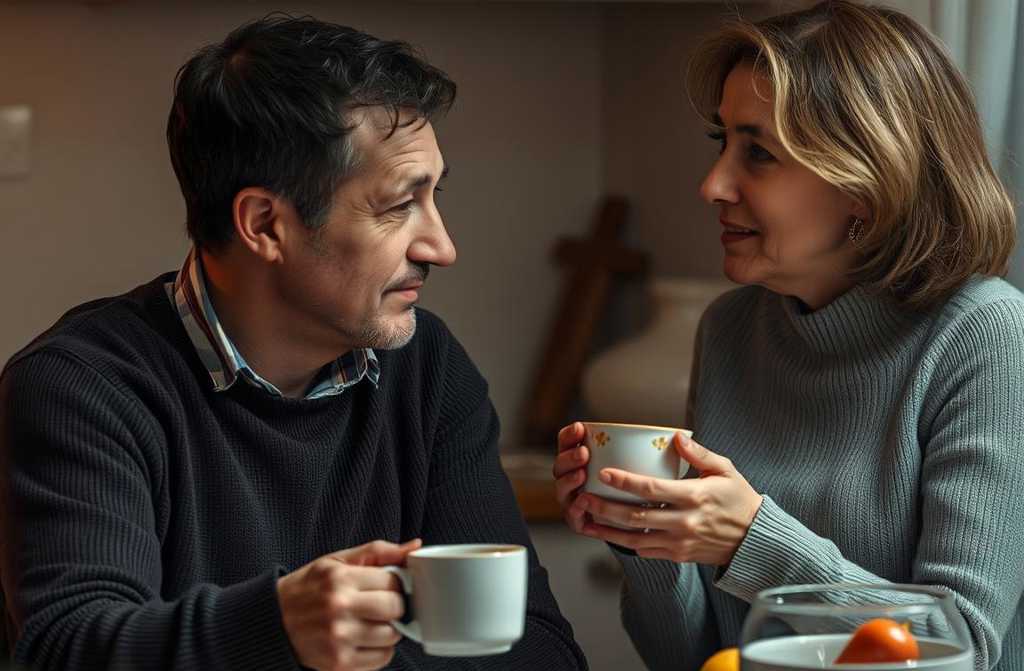
Evening steps
In autumn, when the sky was already bruised by sixoclock, Andrew lingered at the office not because the work demanded it, but because he could not see where to disappear until his night lessons began. He signed up for three courses at the towns adultlearning centre: introductory psychology, beginner design and a survey of art history. The classes were staggered, one evening each, three nights a week.
He almost startled himself when he pressed Submit. He expected no practical payoff, no career shift, no sudden urge to become a coach. One ordinary night, while he was idling in the kitchen with his phone, scrolling through headlines, a wave of fatigue washed over himanother day had blended into the next. An advert for evening courses flickered across the feed. He clicked, flipped through the timetable, and a childlike flutter rose in his chest, as if he were about to return to school, this time choosing his own subjects.
His wife, Clare, regarded the idea with a thin veil of suspicion. She stood at the stove, stirring the soup, when he said:
Ive signed up for some evening classes.
What sort? she answered without turning, shoulders tightening just a touch.
Psychology, design and art history. At the centre on the square.
Clare turned, pressed her palm against the counter.
Why bother? she asked, neither mocking nor truly interested.
Just curious, Andrew shrugged. I need to untangle my head. It feels stuck.
She stared at him a moment.
Youre already exhausted. You come home from work barely breathing, and now you want three more evenings.
Ill try, he said. If it gets too hard Ill quit.
Clare sighed, returned to the pot.
Remember, this isnt a hotel. Lessons, the shop, the binsnone of that vanishes.
Their fifteenyearold son, Danny, looked up from his laptop.
Dad, what are those classes? he asked, popping his head out of his room.
Just adult stuff, Andrew grinned. Ill be a clever man.
Psychology? Dannys eyes widened. Is it about weird disorders and quizzes? Cool!
A bit of that, Andrew replied. Its also about talking, about motivation.
Test me later, Danny said, disappearing back behind his door.
Their older daughter, Annie, lived in a student flat and visited on weekends. Andrew imagined her smiling at the fact that dad was learning, but he kept it to himself, hoping the courses wouldnt evaporate after a week.
The first evening he left the office at six, he felt his steps slow, as if the world had thickened. The streets were dim, shop windows catching the rare silhouettes of passersby. He slipped into the nearest café, ordered a plate of mushy peas with a pork chop and a tea, and perched by the window. He watched his own reflection in the glass: a forehead lined with shallow creases, thinning hair, a nose with a tiny bump. The same man who had been ten years ago, yet something in his gaze had become more cautious.
He entered the psychology room last. About ten people were already seated: a few young women, two women his own age, a lanky bloke in a hoodie. The lecturer, a slender woman with spectacles, wrote her name on the board.
Im Olivia Hart, she announced. Lets begin with a circle. Each of you says why youre here.
When it came to Andrew, his throat tightened.
Im Andrew, fortyeight, I work in procurement. Im here to understand how people are wired. Including myself.
Olivia nodded.
Knowing yourself is a fine aim. Lets see what comes of it.
He sat, feeling a gentle heat in his ears. Embarrassment rose for his job, for not being able to name it with any sparkle. Then he heard a neighbour whisper, Im an accountant, sick of numbers, I want something alive. The phrase eased him.
The first lesson drifted around attention and listening. Olivia suggested an exercise: paired, one speaks for two minutes about his day, the other listens without interrupting or advising. Andrew was paired with a thirtyyearold woman, Natasha. He narrated his morning, the commute, a spat with a supplier; she simply nodded, eyes steady. Then they swapped roles.
When the class ended, the city seemed louder, every fragment of stray conversation louder, as if he were hearing for the first time the myriad lives humming around him.
At home, Clare asked:
How was it?
Fascinating, he said, slipping off his shoes. It was about listening. I realised I interrupt too much.
Oh really? she laughed. Im the one who cuts in.
He wanted to explain the exercise, but she was already bent over the stove, so he let the story dissolve. In the hallway, Danny poked his head out.
Hows the psychologist doing? he asked.
Fine, Andrew smiled. Tomorrow youll be my test subject.
Each new session seeped into his everyday world. Psychology talked about family scripts; Andrew caught himself recalling his own father, a lifelong factory man who believed a man should shoulder silence. Design discussed composition and negative space; Andrew looked at his cluttered desk and suddenly saw not mess but a void yearning for focus. Art history was led by an elderly lecturer with a soft voice, who projected paintings and narrated not just styles but the lives, friendships, feuds of the artists. Andrew sat in the third row, halfscribbling, halflistening, feeling a calm curiosity bloom where there had long been none.
At work the changes began with small gestures. Andrew started planning his day more deliberately, ranking tasks. In morning meetings he paused before arguing, first trying to sense what the boss and colleagues truly wanted. Once, when the accounts department delayed a payment to a supplier, instead of the usual irritated call he walked into their office and asked calmly how they saw the situation. The conversation stayed quiet, and the invoice was settled the next day.
Why so polite? his colleague Sasha asked, eyebrows raised.
Experimenting, Andrew replied. Im being taught that people arent enemies, theyre partners.
Sasha snorted, yet when another dispute arose, he asked Andrew to sit in on the call.
Home life grew more tangled. Clare was used to Andrew arriving around seven, eating, washing dishes, perhaps popping to the shop. Now three evenings a week he was home nearer ten. At first she tolerated it, but after a couple of weeks the tension showed.
One night he slipped off his shoes, heard a clatter of dishes in the kitchen. Danny was in his room with headphones, the door shut.
Hey, Andrew called as he entered.
Hello, Clare replied curtly. Im alone here, by the way.
What do you mean? he leaned against a chair.
Literally, she turned, eyes sharp. I work my shift, hit the shop, come home, cook, help Danny with lessons. And you, youre now a student who arrives after everythings done.
Andrew felt a knot of guilt mixed with irritation.
I warned you this would happen, he murmured. Im not out partying. Im learning.
Does that make it easier for me? Clare raised an eyebrow. Did you ask how I feel about this?
He wanted to launch into a discussion about active listening, but instead he sat, placed his palms on the table and said:
Tell me how you feel.
Clare eyed him warily, then began. She spoke of the fear of being left alone with the house, of her own weariness, of dreaming of simply coming home and doing nothing. She confessed that Andrew seemed to drift into a new world where there was no place for her.
He listened, feeling something compress inside. He wanted to defend himself, to say it was temporary, that he had everything under control, but he stayed quiet, recalling his own lesson about fearing being stuck in a single role.
I dont want to drift away, he said when she fell silent. Im trying to figure out how to live forward. Sometimes it feels like everything is already decided, that the only thing left is retirement. The courses show me there could be another way. Im not doing this against you.
Clare turned away, wiping the table.
Im not opposed to you learning, she said. I just dont want it to replace family.
That night Andrew lay awake, eyes fixed on the ceiling, listening to Clares even breathing. The psychologists words echoed: each decade brings new tasks. At fortysomething people often reassess what matters. He saw that his own reassessment was colliding with the expectations waiting at home.
A few days later the department announced a mandatory latenight Friday to finish a report for the head office. The same Friday Andrew had a design workshop hed been looking forward to, a critique of fellow students projects. He had already begun a small kitchenlayout sketch for his dream remodel.
His boss, Victor Peterson, called him in.
Andy, you know we need everyone to stay late on Friday, Victor said over the rim of his glasses. Its a deadline I cant move.
I have classes, Andrew replied quietly. I paid for them months ago. Could I work the extra hours another day?
Victors brow knit.
Youre serious? Youre putting courses above work?
The words landed like an accusation. Andrew felt the familiar urge to concede, Alright, Ill stay, but the image of his design project, the imagined kitchen, flickered in his mind.
Both are important to me, he said after a pause. Im not asking to be excused every time, just this Friday. I can finish my part of the report early.
Victor leaned back, eyes narrowing.
Youre a reliable employee. I count on you. Youre putting a hobby above the team.
The word hobby struck a chord. Andrew understood it wasnt just a pastime; it was a signpost toward something hed long ignored. Yet he also knew the job paid the mortgage, the £1,200 monthly instalment on their terraced house.
Ill think about it, he said, standing.
In the corridor he stopped by the window. Novembers grey seeped over the courtyard, people hurrying with bags clutched tight. He watched them, realizing hed spent a lifetime being the dependable onethe good worker, the steady husband, the dutiful father. For the first time in years, something inside him wanted, just for himself, to choose differently.
That evening he told Clare about the talk.
What will you do? she asked, pouring tea.
I dont know, he admitted. If I stay, Ill miss the class. If I leave, Victor will be angry.
Clare studied his face.
What do you want?
He hesitated. The answer was simple, but frightening to voice.
I want to go to the class, he said. Im scared of what follows.
Clare was silent, then:
Youve always chosen work. Always. Maybe its time to choose another way once.
He was surprised.
You said the courses would take us away from family, he reminded her.
I said it was hard for me, she sighed. But now youre asking about work. I dont want you to look back and regret not going where you wanted. Well manage if the boss shouts at you.
She looked tired, yet there was a flicker of something elseas if she were testing whether he could truly decide for himself.
Friday morning Andrew walked into Victors office with his report completed.
Heres my part, he placed the folder on the desk. Ill be done by six, then I have to leave.
Victor examined the papers, then looked up.
So thats it? he asked.
Yes, Andrew answered, his fingers trembling slightly. Ill stay until six, then Ill head to my class.
Thats a mistake, Victor said coldly. But its your choice.
Andrew left the office feeling his heart pound like after a sprint. He knew his relationship with Victor would change; the boss might no longer see him as the goto reliable. Yet another feeling settled in himrelief at finally making a decision that wasnt dictated by anyone else.
He arrived at the design class a little early. The instructor, a tall man in jeans and a shirt, was already arranging the students projects. Andrew set his folder down, took a seat. When they began critiquing, his own kitchen sketch was saved for last.
Interesting solution, the instructor noted, unfolding the paper. Youve thought about how a person would move through the space. There are flaws, but theyre honest.
No one called it brilliant, but they treated his work seriously. After class he stepped outside, breathed the crisp air, feeling both anxious and calm. There was no turning back now; the courses had already altered him.
In the weeks that followed, his rapport with Victor grew cooler. The boss stopped inviting him to afterwork drinks, occasionally sniping about creative types. Andrew, however, grew clearer about where his duties ended. He now discussed overtime in advance rather than silently agreeing.
At home he and Clare drafted a schedule. Monday and Wednesday were his class nights; Tuesday and Thursday he stayed home, handling dinner and chores. Saturdays they sometimes shopped together, then watched a film, dissecting the characters through a psychological lens. Clare initially chuckled at his analyses, then began asking, Why does he act like that? Is it his childhood?
Andrew smiled, recalling Olivias lectures.
Danny found new topics to discuss. He talked about classmates and teachers, and Andrew tried to listen without immediately offering advice. Sometimes he slipped back into you should, but he apologized and tried again.
Annie visited on weekends. One afternoon, she said:
Dad, youve changed. In a good way. Before you were always somewhere else, now you seem present.
He laughed.
I always was, he replied.
But now youre more alive, she agreed.
Those words lingered. He thought about what it meant to be alive at fortyeightnot skydiving, not abandoning his wife, but allowing himself curiosity beyond routine.
By winters end the courses were winding down. The psychology class tackled life values. Olivia asked each student to write down five things most important to them and rank them. Andrew stared at a blank sheet. Family. Health. Work. Growth. Freedom.
He shuffled the list for a while. In the end family rose to the top, followed by growth, then health, then work, finally freedom. Work had always been first. He looked at the list and felt it wasnt a game; it mirrored his new outlook.
After the session he lingered, approaching Olivia.
May I ask something? he said.
Of course, she smiled.
Is it selfish, at my age, to start thinking so much about myself? Or is it just selfcare?
She regarded him thoughtfully.
At your stage many ask these questions. It isnt selfish if you still remember those around you. Its a way to avoid drifting through life on autopilot.
The word autopilot struck a chord. He recalled years when days merged, when he functioned merely as a gear in a larger machine.
Spring brought a new timetable at the adultlearning centre. A modernart course and an advanced design class were advertised. Andrew lingered at the notice board, torn. One voice whispered, Youve taken enough, while another urged, Why stop now?
That night he told Clare about the new options. She placed a bowl of salad on the table, sat opposite him.
What do you think? she asked.
I want to keep going, he said honestly. Im scared it will overturn everything again.
She paused, then:
Ive realised something too. At first I thought you were leaving us, but Ive seen you grow closer, because you understand yourself better. If you want to learn more, lets not freak out. Lets sit and work out how to fit it in.
A lump rose in his throat.
Thanks, he whispered.
Together they opened a notebook, pencilled days, noted who would be home and when. Danny peeked over their shoulder.
What are you plotting? he asked.
Dads courses, Clare replied. And how they fit our life.
Cool, Danny said. Maybe Ill sign up for coding or music later.
Andrew looked at his son and suddenly saw the importance of modeling a lifelong learner.
In the end they agreed Andrew would take just one new class, not two. Modern art seemed more mysterious than advanced design, so he chose it. Work stayed, family stayed, but now there was a steady evening slot where he was not just a supplier, a husband, a father, but also a person eager to discover new things.
The day his new course started, he left the office at a leisurely pace. Dawn was breaking, spring loosening its grip. He walked to the centre, thinking of the unfamiliar faces, fresh topics, possible inner tremors. A slight fear lingered, but it was a good kind of fearthe one that precedes something important.
He entered the familiar building, climbed the stairs. Posters on the walls advertised various clubs, youth and adult groups. He lingered a moment, eyes scanning the flyers that promised learn from scratch and unlock your potential. Once he would have walked past without a second glance; now he recognised a whole world behind those words.
Inside, people were already gathering.As the sunlight filtered through the stainedglass window, Andrew felt the future opening like a quiet hallway, inviting him to walk forward, step by deliberate step.