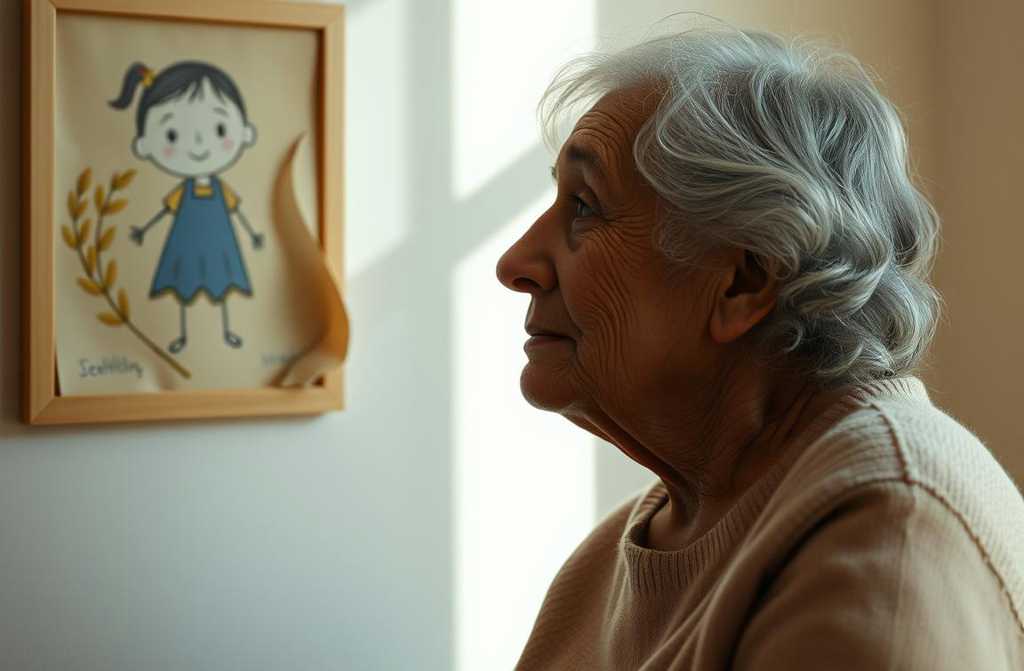
Evelyn lay perfectly still, listening to the relentless tick-tock of the clock on her roommates bedside table.
Tick-tock.
Tick-tock.
Each sound was a slow, methodical reminder that her time was running out.
Outside, September had draped the sky in a dull, unyielding grey, blending seamlessly with the concrete wall of the opposite building. It was as if the world had been painted in the colour of dont bother.
***
She wasnt a bad person, not really. Its just that, in her life, there was always something more urgent than her children.
That something was forever shouting, Now! Immediately! Youll miss your chance!
So Evelyn worked. And worked. For them.
She could still recall the markets scent: dampness, the sharp tang of cabbage, and the unmistakable whiff of rotting veg.
At the crack of dawn, while she was already at her stall, tugging holey gloves onto her shivering fingers, her son and daughter were tucked up in their warm flat.
She paid for their comfort with every hard-earned penny. Their peaceful sleep was her sacred duty, her goal, her reward.
***
Conversations with the other market women were always the same:
My kids are down with colds again, moaned plump Barbara from the next stall. Didnt sleep a wink, dosing them with Calpol. Absolute nightmare. I cant work like this
Evelyn nodded silently, counting out change.
She didnt get Barbara.
Honestlywhats more important? A childs runny nose, or the money to buy them medicine and a new pair of shoes?
For her, the answer was obvious.
***
Once, when Harry was about ten and Daisy seven, they dashed into the market on a Saturday. Evelyn, exhausted but pleased with her takings, handed them each a pasty and a steaming cup of tea from her flask. They perched on a crate behind the stall, small and beaming, gazing at her like she was the Queen herself.
Mum, can we help you? her son asked, all earnestness.
Help me, eh? Evelyn smirked. Alright, go on thenhow much change do I owe this lady?
She shoved a wad of crisp notes at him.
Harry wrinkled his nose in concentration, counting carefully. Daisy watched him with pride, as if he were solving the nations budget.
For a fleeting moment, Evelyn felt a pang of tenderness. But she quickly brushed it aside.
Thats right. She wasnt just feeding themshe was teaching them to survive! Real-life lessons, thats what.
And theyd learn. Shed make sure of it.
***
Then there was the drawing. Little Daisy ran into the kitchen, waving a piece of paper. On it: a wobbly figure with a sun for a head and two stick arms.
Mummy, look! Its you and me! Were holding hands! Daisys voice sparkled with joy.
Evelyn was at the hob, stirring a thick soup. Ten hours on her feet had left her knackered. All she could think was, Must get Harry new jeans tomorrow, his old ones are in tatters.
She glanced at the drawing.
Lovely. Off you go, play. Dont bother me or the soupll burn.
She saw the light in Daisys eyes flicker out. Her little shoulders drooped. But what could Evelyn do? Soup doesnt wait. Jeans dont buy themselves.
She stuck the drawing on the fridge with tape. It lasted a few days, until it was replaced by the weekly shopping list.
***
One evening, when Harry was a teenager, he blushed furiously and tried to talk to her about some girl from school.
Mum, Emily from Year 9 she, um, messaged me, he mumbled, fiddling with his old t-shirt collar.
Evelyn, slumped in her armchair after a long day, waved him off.
Youre too young for all that. Finish your studies, then well talk. For now, focus on your workdont end up a labourer.
She was sure shed given him sound, practical advice. She was teaching him not to get distracted, to be strong.
And he remembered the lesson.
Both he and Daisy aced every one of her lessons.
***
Harry and Daisy built solid families of their own, where sentimentality was as welcome as a wasp at a picnic. They rang their mother on holidaysMothers Day, Christmas. Short, polite chats.
Hi Mum. How are you?
Fine. You?
Yeah, all good. Bye then.
They cared from a distance. Sent a bit of money to her bank account. It was convenient. Efficient. Her own hard-won method, coming back to her like a boomerang.
***
Then came the stroke.
She woke up in hospital. Alone. The first days were a blur of doctors faces and the smell of disinfectant, but as the fog cleared, Evelyns first request was for a phone.
With trembling fingers, she dialled Daisys number.
Daisy, love, its me, her voice was raspy and weak. Im in hospital had a stroke.
Silence. Then a heavy, exasperated sigh.
Mum, really? Ive got reports due, its the end of the quarter, works a nightmare. The kids are ill. Ill pop in when I can, Mum. Ill ring the doctor, see what you need. Maybe send you some money?
Money. Always money.
No need, Daisy, Evelyn whispered, just come and see me.
Mum, I told you, I cant. Dont you get it? Ill call you. Tomorrow.
Evelyn rang Harry, her hand shaking.
Son, Im in the city hospital
I know, Mum. Daisy told me. But Im up to my neck with the house renovation. Ill send you some cash, get yourself what you need. Slip the nurses a bit, so they look after you.
Practical as ever. That was her boy.
***
The days dragged on. Mornings meant injections, then breakfast she couldnt stomach. Then endless hours of waiting.
Her roommate, an old lady with a broken hip, had a daughter who visited daily. She brought homemade food, fruit squash, read aloud. They laughed, reminisced.
Every time their laughter drifted over, Evelyn buried her head in the pillow. Anything not to hear.
It hurt more than the pain.
A month later, when it was clear Evelyn wouldnt get better, her doctora young man with tired but kind eyessat by her bed.
Mrs. Smith, he said gently, weve done all we can. Your condition is stable, but you need constant care we cant provide here. Wed like to transfer you to a hospice.
Hospice.
The word landed like a sentence. Like a stamp: unwanted.
And my children? she asked quietly. Let them decide.
Weve spoken to them, the doctor replied, awkwardness in his voice. They agree. They think its best for you. Theres round-the-clock care.
The hospice was quiet. It smelled of medicine, bleach, and resignation.
Her roommates waited for calls from family. One kept talking about her son, whod be arriving from another city any day now.
Evelyn waited for no one. She understood.
Shed built a world where children were a duty, not a joy. Where feelings were a weakness.
Shed raised two practical, resilient people who did exactly as shed taught them. Didnt meddle. Didnt burden themselves with other peoples problems.
***
She faded slowly. In her final days, she barely spoke.
She didnt see market stalls or banknotes in her minds eye
She kept thinking of that wobbly drawing with the sun for a head, the one shed stuck on the fridge and forgotten; and her sons embarrassed face when he wanted to share something important, and shed brushed him off, sending him back to his homework
And her words echoed endlessly: No practical use.
How wrong shed been!
There was use. Loads of it!
She just never saw it. She traded moments for minutes, life for survival.
***
She died early one morning. The nurse who came to give her an injection simply noted the fact. Her body was cold.
***
The children were called.
First, Daisy.
Hello? she answered, groggy.
Miss Smith? This is the hospice. Your mother, Evelyn Smith, passed away last night.
Silence. Then a dramatic, but oddly rehearsed, sob.
Oh, Mum! Oh no! How could this happen? Im supposed to be at my nephews wedding in three days tickets bought, dress ready What do we do now? The funeral
Then they rang Harry.
Yes?
Mr. Smith? This is the hospice. Your mother has passed away.
Understood, he replied, utterly calm. Can you sort it out yourselves? Ill pay. Im snowed under at work, cant get away. Send me your bank details, Ill transfer the money
***
The council buried her. In a communal grave, on the edge of the cemetery, where those with no one left are laid to rest.
A plain wooden cross. A plaque.
Someone scrawled her name and dates of birth and death
No one wept for her. No one tossed a handful of earth.
Shed spent her life ensuring her children survived, and in the end, she died as if shed never existed at all.
Because, for those shed given life to, shed become just a function, not worth the trouble of keeping.