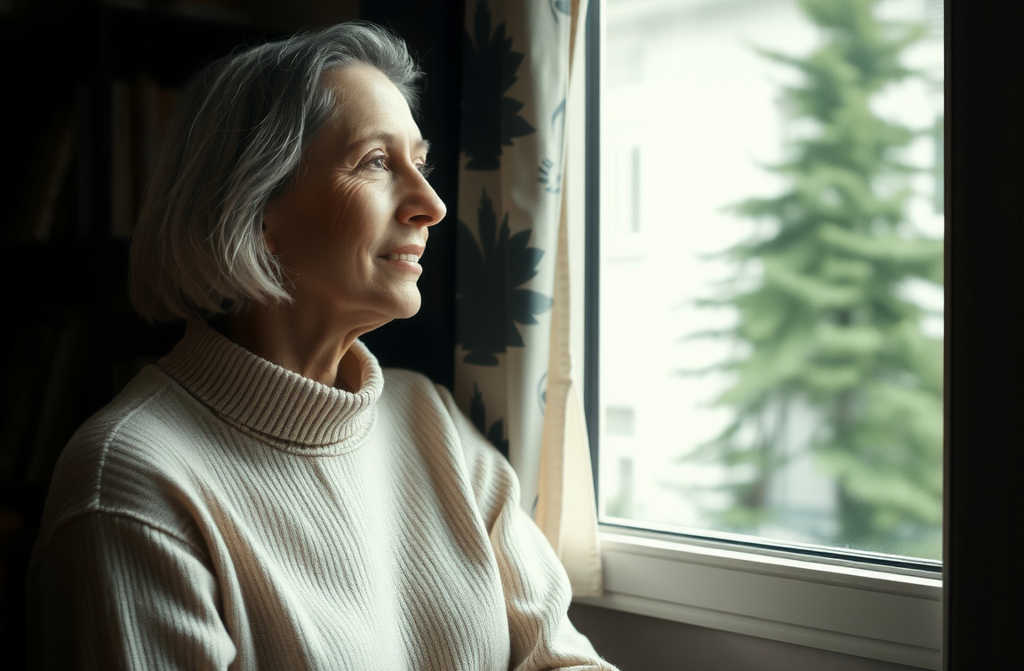
Mum, do you realise what youve done? Rebecca stood by the window, still in her coat, speaking as if shed already passed sentence. Dad can barely get out of bed, and youve hired some stranger to look after him.
Margaret sat at the kitchen table, a cup of tea growing cold in front of her. Outside, a gentle November drizzle sketched winding trails down the glass.
Shes not just some stranger, Margaret replied quietly. Her names Evelyn Carter. Sixty years old. Twenty-five years experience with neurological patients. I spoke to her for two hours.
Rebecca turned from the window. Her face was a mix of betrayal and disbelief. Does that make a difference? Dad should be with family. At home. With you.
He is at home, Margaret answered.
With you. Not someone you barely know.
Margaret cradled her cup, took a sip. The tea was icy.
Becca, Im fifty-seven. My backs been bad for years, and my blood pressure is barely under control even with medication. I cant lift someone whos thirteen stone, turn him over, bathe him. I physically cant.
Other people manage!
And who are these people meant to be?
Rebeccas mouth opened, then closed again. Her silence said enough; she never meant herself.
Youre his wife, she finally muttered.
I know who I am.
So you ought to
Margaret set her cup down gently, careful not to clatter.
Rebecca, she said, for the last thirty years, all Ive heard is ought to. I ought to quit work for the kids. I oughtnt speak up. I ought to ignore or endure things. And I did. But Im tired. I cant keep on like this.
What are you on about now?
Im saying Ive had enough, Margaret replied, her voice soft but firm.
Rebeccas face pinched tight with frustration and confusion.
Mum, Dads had a stroke. Hes paralysed. This isnt the time for old grievances.
It isnt about old grievances. Margarets voice stayed steady. Its about what I can and cannot do. I cant care for him alone. Im not ashamed to say so.
In the bedroom, something clinked quietly. Evelyn Carter was there, observing how things worked on her first afternoon. Andrew, Margarets son, was still at work. Margaret sometimes suspected George only pretended to rest when things became too much.
Rebeccas voice dropped to a murmur. Dont you care how this looks to people?
I know, Margaret said gently. To most, it must look like betrayal.
It does.
It isnt betrayal, Becca. Its about boundaries. I have a right to those, too.
Rebecca snatched her bag. The movement was sharp, final.
I’m going to ring James.
Fine, Margaret said, equally quiet.
After Rebecca left, Margaret sat for a long while, then poured her cold tea away and set the kettle boiling again.
Evelyn Carter emerged from the bedroom doorway. Would you like coffee? she offered. Or another cuppa?
Thank you, but Ill make it myself. Hows he now?
Peaceful. Blood pressures steady. Theres nothing to fret over.
Margaret simply nodded. Evelyn disappeared back down the hall. She was one of those rare people who never asked unnecessary questions.
The rain outside thickened.
James rang the next morning, just as Margaret was wrapping her scarf, about to take her first proper walk in weekssince Georges stroke had left him collapsed at the kitchen table. Today, at last, shed decided to brave the riverside for half an hour, just to breathe.
The phone trilled as she reached the front door.
Mum. Jamess voice was careful, like someone trying not to frighten a timid animal. Rebeccas told me whats happened. Id like to have a word.
Go on, Margaret said.
Is it really trueyouve hired a carer?
Yes, its done. Evelyn started yesterday.
A thoughtful pause.
Mum, I get that this is hard for you. But Dad…hes our Dad. Doesnt he deserve family support?
Margaret took a breath. Hes my husband, James. But that doesnt mean I can sacrifice the rest of my life, or my health. Evelyns a professional. She knows exactly what shes doing. Your Dad is in good hands.
But shes not family!
No, but Im not a nurse. Im his wife. I kept this house running for thirty years, I raised two kids, I worked. Now I need to stop breaking myself to pieces.
James didnt answer straight away.
Youve changed, he said eventually.
I suppose I just stopped pretending otherwise.
After ending the call, Margaret went out. The rain had let up, but a damp chill clung to the streets. By the water, she paused, staring across at the dark current. In the distance, a lone duck drifted apart from its flock. For a while, she thought of nothing at all, just standing and breathing.
It felt good.
For four weeks now, George had lain in their bedroom. His right side limp, words thick and forced as treacle. Yet Margaret, who had known his eyes for thirty years, still saw him there. They held something new, something she didnt have a name for.
The hospital doctor had been blunt: good care and rehabilitation might yield partial recovery. Without, things would worsen. Every day counted. Routine, medications, exercisesno mistakes allowed.
This was why Margaret had sought not simply anyone, but someone skilled. Evelyn came from an agency. Margaret had called right after George came home from hospital, before the children could offer their opinions.
Do you need specialist neurological care? the agency manager had asked.
Yes. Post-stroke. Paralysed down the right, speech affected. Sixty, otherwise always healthy.
We have several options. Shall we arrange a meeting?
Evelyn Carter arrived the very next day: brisk, practical, the sort who carries the experience in her hands and voice. Shed asked all the right questionsmedication, routine, pressure sores, digestion, sleep. For the first time in weeks, Margaret felt she was talking to someone who didnt expect explanations.
When can I start? Evelyn asked.
Tomorrow, Margaret answered, relief blooming.
That was the call she shouldve made to Rebecca sooner, but shed been tired of explaining. Now Rebecca had come across London only to stand by the window, cold and judgmental.
Fifteen years earlier, everything was differentor rather, Margaret had kept quiet. Shed learnt silence: when George skipped dinner, when he brushed off discussions about money, when he shrugged away the doctors warnings.
His blood pressure had crept higher at fifty, nothing drastic, just 140 over 90, nothing to worry about. The GP said he needed to treat it, change his lifestyle, cut salt and stress. George always nodded and changed nothing.
George, Margaret would say, you cant ignore this.
Sillymy mate Peters is 160 and hes still around.
Peters had a heart attack already.
Hes fine now, though.
Round and round theyd gone, months at a time. Margaret had not only spoken up; shed booked appointments, sat beside George like he was a stubborn child. She checked his pills, set reminders, bought a blood pressure monitor, begged him to check every morning. Hed do it for a week, then forget. Shed remind him; hed brush her off. Shed bite her tongue.
Eight years ago, she said it plainly: George, if you go on like this youll have a stroke. And I cant care for you thenmy health wont stand it.
Hed looked at her oddly. Youre saying youll leave me?
Im saying be aware of the consequence of your choices.
He left the room, and silence held for two days. Afterwards, things returned to normal. But the words had been spoken; she remembered them, wondered if he did.
The stroke came in October, late morning. George was in the kitchen making coffee. Margaret, reading in the lounge, heard a strange sounda stool scraping, and a near-groan.
When she arrived, he was on the floor, propped against the cabinet, face lopsided, right eye and mouth drooping. His good hand clutched at the counter.
George!
He looked at her, tried to speak.
Ambulance, he managedor something close.
She called 999, knelt beside him, held his left hand and muttered reassurances she couldnt later recall. Ambulance came in eight minutesshe made a point never to forget that detail.
At hospital, she called the children. James arrived straightaway; Rebecca appeared after collecting her own daughter from school. They sat through the hush of A&E, made small talk because the real subject was too huge to discuss.
At six, the doctor came outmajor stroke, right side affected, too soon to predict, wait and see.
Rebecca wept. James held her hand. Margaret sat, upright and silent, thinking of everything shed warned about. It was cruel, she knew, to dwell on it now, but the thought persisted.
Three long weeks followed in hospital. Margaret visited dailyapples, the paper to read aloud, sitting beside him, mostly in silence, because words were hard and George grew angry with himself. She had learnt to sit, learnt that her presence alone was enough.
Before discharge, the consultant was clear: strict bed rest then gradual movement, daily exercises for speech and limbs, medication, structure. Who would care for him?
Ill hire a carer, Margaret said.
The consultant nodded, showing neither approval nor surprise. Margaret was grateful for her neutrality.
The first two days at home, Margaret managed. Then she phoned the agency.
Evelyn proved to be everything shed seemed: reassuring, unflappable, methodical. She knew how to turn patients, help with swallowing, aid with the exercises. At first, George scowled at the intrusion; a stranger in the bedroom, watching him struggle. Over time, he grew used to her, or simply gave in.
He barely spoke to Margaret. On her visits into the roommorning, after lunch, eveningshed ask, How do you feel? Hed answer, Alright. Fine. Yes. Sometimes he looked away. Sometimes he shut his eyes to signal tiredness.
One afternoon, about a week after hed come home, when Evelyn was on her lunch break, George said:
You were right.
Margaret paused at the door. About what?
The doctors. Everything.
She sat on the edge of the bed.
None of that matters now, George.
It does, he slurred, forcing out the words. You said you warned me. I didnt listen.
Margaret watched his hand lying unmoving atop the blankethis right hand, veins thick, fingers stiff.
I hear you, she said quietly.
Are you angry?
No.
It was true. Anger, fierce and hot, had left her long ago. Now there was fatigue. Or maybe a clarity.
Im not angry, she repeated. But I wont care for you alone. Not out of spite. I just cant.
He didnt reply. Or simply couldnt.
Three days later, Rebecca phoned again. Her tone was brisk, almost business-like.
Mum, James and I have been talking. We think Dad should be in a rehab centre. Willow Lodge? You know it?
Yes, Ive heard of it.
The cares excellent. Therapy, doctors, everything. Well pay whatevers needed.
Margaret hesitated a moment.
You plan to move him there?
Yes. Its best for him.
He wont want to go.
Have you asked him?
No, but I know him. After thirty years, I know he hates institutions.
Mum, its not an institution. Its a good centre.
You can call it what you want, it doesnt change the facts.
Rebecca was silent.
You realise Evelyn is just for basic care, not rehab? Dad needs more.
Ive arranged a speech therapist to visit three times a week and a physio once a week.
Thats not enough.
Maybe it isnt. But its what we can do at home.
Or we move him to where its done properly.
The pause stretched.
Rebecca, this has been his home for thirty years.
Mum, youre hiring a carer instead of doing it yourself, and refusing a rehab centre. What do you want?
I want him well cared for at home. And I want the accusations to stop.
Rebecca hung up.
Five days later, both children visited together. James was more reserved, but determination set his voice.
Mum, we spoke to Dad, he said in the hallway.
When?
Rebecca visited while you were out shopping.
Margaret felt a new kind of tirednessa squeeze of space she thought shed had.
And what did he say?
He agreedWillow Lodge is best.
He actually said that?
He did. He said so himself. Rebecca cut in, quietly.
Margaret nodded. Alright. If thats what he wants, so be it.
Her children seemed to expect protest, tears, resistancenone came. Margaret simply agreed.
The move happened a week later. Willow Lodge was twenty minutes out, nestled among pines. Margaret helped pack, watched George gaze out the window, silent.
At the car, he looked at her. Will you visit? he asked.
I will, Margaret promised.
Afterwards, Margaret returned to the now-empty flat. Evelyn had finished and lefther tasks done. The bed was made, water glass in place, last touched that morning by Margaret. She tidied, smoothed the pillow, paused. Then, in the kitchen, she brewed real coffee for the first time in years; George had hated the smell, so shed bought instant instead.
A strange feelingnot happiness, not grief, simply fact.
Rebecca didnt contact her for two weeks, then called, perfunctory: Dads settled, adjusting. Nothing else. No how are you? Margaret wasnt surprised.
James checked in a month later, ten minutes of broad conversationwork, weather, his daughters first year at school, and Georges steady progress. Nothing about what had passed between them. Neither broached the subject.
Margaret visited George once a week, then every other week. Willow Lodge was bright, full of flowers, staff friendly. George shared a room with a gentle man recovering from spinal surgery; neither spoke much, but seemed content.
Margaret and Georges chats were brief. His voice was stronger, but words came slow. They sat by the lounge window, or out on the veranda. Margaret shared everyday talesthe neighbours, a good bookand sometimes he added a line or nodded.
One winter afternoon, he asked, Do you regret it?
Regret what, George?
How things turned out.
Margaret pondered.
I regret your illness. I regret the children being hurt. But not my choice.
He looked out at the white grass.
Youve always been stubborn, he said, without malice.
You always made it sound like a flaw, Margaret replied. But its just my way.
He grinnedstill crooked on one side, but a smile all the same.
The children faded from Margarets day-to-day life. Rebecca stopped calling. James phoned now and then, purely practical matters. Rebeccas daughter, Alice, was eightMargaret saw her less and less. Jamess Lily, now seven, she hadnt seen since the move.
It was painful, she could admit. Like a splinternot catastrophic, just an aching loss. Still, Margaret never doubted her decision. No late-night maybe I was wrong. Instead, she accepted her life had slowly become built from must and ought to, squashing out everything else. To finally say, no moreit wasnt betrayal. It was breath after too long held under.
At fifty-seven, her back ached, blood pressure tethered by pills. She was aliveand the life she had was hers, not a leftover.
In spring, she joined a watercolour class. Not from a lifelong yearningshed simply seen a notice in the park and thought, Why not? Seven in the group, mostly older than her. The tutor was relaxed, unpretentious: Try, make mistakes, see what happens.
Margaret painted, blundered. She enjoyed it.
After the first lesson, she found herself walking home, surprised at how odd it felt to do something for no other reason than wanting to.
That summer was stifling hot. She bought a fan, visited the market for greens, read on the balcony. She rang her old friend Gillian, whom she hadnt spoken to since winterGillian knew everything, because Margaret had finally told her when she could no longer bear the weight in silence.
So, hows it going? Gillian asked.
Fine. Im painting.
You what?
Watercolours. Flowers, mostly. Terribly, but I enjoy it.
Gillian hesitated. Im happy for you, you know? For years you never did anything just for yourself. Remember when you refused a seaside week because there was no one to mind the kids? And they were grown!
James was twenty-two, Rebecca nineteen.
Exactlygrown. But you still stayed home.
Margaret chuckled. I remember. Blackpool, that was. Sometimes I still think of it.
Go now. Go anywhere.
The idea stuck. Margaret mulled it over the rest of August. Shed never travelled alone. She and George had once holidayed in Cornwall, onceyears ago, when the children were grown, and money a little better. After that, George decided he didnt see the point; whats wrong with home? and the trips ended. Margaret had accepted it, as she did with most things.
In September, she bought a train ticket to Edinburgh. Five days. Alone.
George had now been at Willow Lodge for nine months. Margaret still visited fortnightly. He was walking the corridors with a stick now; the nurse in charge praised his recovery.
She told him of the trip.
Edinburghfor five days. By myself.
He looked at her, a little amazed.
On your own?
Yes. First time.
He glanced aside, lips quirking. See the galleriesyou always liked those.
I will. And Ill find a proper cafe. Good cakes.
He nodded, looking at her in that way he used tolong and measuring.
Margaret…
Yes?
He hesitated. Nothing. Justenjoy it.
She understood, or thought she did. She went.
Edinburgh was wet and coldSeptember in Scotland, after allbut the rain was saltier, tinged with the tang of the Forth, and the croissants at a nearby café made worth the wind. She wandered the National Gallery until her legs ached, not thinking, just looking.
On her fourth day, she phoned Gillian.
Gill? Why did I never do this beforego where I want, live alone, breakfast on my own?
Gillian laughed. Because you werent allowed.
I never allowed myself, really.
She returned to London changednot in sudden happiness, but with a sense that, at fifty-seven, life was far from finished. Ahead, there was something unnamed but real.
That October, James phoned. Not a routine callserious.
Mum, its Dad. Hes taken a turn.
Margaret set aside her book. Whats happened?
Pneumonia. Hes in hospital, not the centre. They called an ambulance two days ago. I was there last night.
Is it serious?
It is. Hes older, frail Theyll watch him a week. Thought youd want to know.
Thank you. Ill come.
You dont have to
Im coming, James.
He didnt argue.
The hospital was familiar: white corridors, antiseptic, the same exhausted receptionist. Georges voice was frail as she arrived.
You found me, he said, faintly.
Of course.
She sat with him for an hour, holding his hand. He dozed, woke, glanced at her. Once he murmured, Cold. She fetched another blanket.
As she left, he stirred. Youll go off somewhere again, soon?
Maybe in the spring.
Go on. Where you always wanted.
I will.
They treated his pneumonia. Three weeks, then back to Willow Lodge. Margaret visited weekly now. George moved less; the early progress now plateaued. The nurse assured her he was stable, but reserves were limited.
They continued their routinesitting, saying little but not heavy with unsaid things. Everything between them had settled, like silt clearing.
Are you happy? he asked once, suddenly.
Margaret thought. Im not unhappy. Thats enough, I reckon.
He managed a small, crooked grin.
Rebecca still angry?
Yes.
And James?
We speak. But not the same. Theres a distance.
Thats down to me.
Its everything, Margaret said frankly. Its not only about you.
Do you wish they didnt resent you?
I do. But it doesnt change what I did, and it doesnt make me regret it.
He nodded slowly.
Youre strong.
You always said that when you meant stubborn.
Now I mean it.
She smiled. Thank you.
Georges second stroke happened two and a half years later, in Willow Lodge, in the night. James called Margaret with a changed voice. Mum. Dads gone. Last night.
She sat immobile at the kitchen table.
Did you hear me?
I heard.
Rebecca and James went straight to Willow Lodge. Margaret joined them for the funeral: quiet, sparseher children, two colleagues, a handful of neighbours, distant relations. Margaret stood by Georges resting place, thinking not of what was lost but how thirty-two years had simplyended. Not snapped, but finished. Like closing a well-read book.
Rebecca kept her distance, stony-faced, offering neither blame nor comfort. James lingered at the grave after.
Mum. How are you?
Im alright, love.
He hesitated. I wont lieIve been angry. For a long while. Can you see why?
I can.
Ive thought it over and over. I dont even know whats right anymore.
Thats normal, she said softly. Some things dont have a neat answer.
Are you sure?
No. But you have to live all the same.
He nodded, choked.
Rebecca left the cemetery alone, not glancing back. Margaret watched without calling out.
Life returned, in its new way. Margaret gave up watercolour that winternot out of boredom, but because shed started a Spanish class. She muddled along: the verbs and tenses eluded her, pronunciation was comical. Yet it felt good to be a beginner again. To be unafraid of being lost.
True to her word, that spring Margaret travelledthis time to the Lake District, fourteen days alone. Ambleside, Hawkshead, Grasmere. She walked old country lanes, lunched on hot pasties beside locals and visiting families, sipped wine in sunny garden cafés, watched the fells beyond fields of sheep.
No one rang or required explanations. At fifty-eight, shed learned to answer only to herself.
Gillian wrote: I envy your freedom. Margaret replied, Join me next time. A laughing emoji and maybe I will was Gillians answer.
She returned with a tiny pottery jug and a locally-woven scarf, setting the jug on the shelf where Georges unused TV once satshed packed the old television away. Rebeccas absence stretched on. Three years since George had moved into Willow Lodge, and since the funeralonly silence. Via James, Margaret heard that Rebecca had declared, I havent got a mother anymore. It was, Margaret knew, the kind of phrase one cannot unsay.
Sometimes, especially in quiet evenings, her thoughts turned to that gap: Alicenow elevengrowing up behind a closed door. It hurt, terribly.
But she neither called nor wrote. She knew Rebecca didnt want conversationshe wanted an apology. And Margaret had none to give; shed done her best. Whether truth or a story she told herself, she didnt know. But she could live with I did all I could. She couldnt have lived with I was wrong.
One afternoon, bumping into Mrs Finch from the fifth floor in the chemist, the neighbour mentioned her husband. Shed nursed him herself for a year, ended up crippled with three spinal surgeries, barely able to manage now.
Its true, thenyou put your George in a home? Mrs Finch asked.
I did.
No regrets?
None.
Mrs Finch regarded her, not unkindly. I looked after Dave alone. Thought it was right. Now I can hardly walk.
I didnt Margaret started.
No blame. Just thinking aloud.
After she left, Margaret stood at the till, turning it over. It was not a matter of victory or defeat; simply, things were as they were.
James visited the following November, first since the funeral. Mum, Im downstairscan I come up?
He noted the changes: the jug, the Spanish books, the painting supplies. Youre learning Spanish?
For a year now.
Why?
Margaret shrugged. I enjoy it.
He sat, and she poured tea.
Mum, I want to say something. I was angry. Not just about Dad, but because you felt like a stranger. I didnt understand.
And now?
Im not sure. But I think I wasnt angry at you for doing wrong, I was angry because you did something unexpectedyou showed us a different you.
Margaret placed his cup in front, pensive. You thought Id grieve openly, perhaps?
Something like that. But you packed a suitcase for Edinburgh.
I did grieve, James. In my own way.
He thanked her for the tea.
Rebeccashe wont forgive you. You see that?
I do.
Does it hurt?
It does. Every now and then. Especially not seeing Alice grow up.
She could call, you know.
Perhaps. But she wontit would mean she thinks I was right, and shes not ready for that.
And were you?
Margaret looked at her son.
I did all I could. No more or less.
He nodded. They sipped in silence.
Hows Claire? Margaret asked.
She wants a summer holiday, if we can manage.
Do it. Dont put it offwe always think theres time.
You mean Dad?
I mean all of us.
On his way out, they shared an awkward but warm hug. Ill ring more often, he promised.
Lovely.
Margaret leaned against the closed door afterwards. Silence, then her eyes landed on the pottery jug, the Spanish book open at lesson twenty-three: Travel.
She looked outNovember again, darkness falling. A ten-year-old boy was kicking a football beneath the lamplight, playing for an imagined crowd.
She watched for a time, then sat at the table, picking up her Spanish. Lisbon is on the west coast. The city is known for
Another half year passed. Portugal beckoned; and it was everything shed hoped. Lisbons hills, custard tarts in small cafés, the pounding Atlantic at Cape Roca, the sense of standing at the edge of a continent. James rang every fortnight. Their conversations turned to lifes joys and small stories, rather than obligations.
Rebecca remained silent; they both left that door untouched.
One June afternoon, the phone rang from an unknown number.
Hello? Margaret said.
Silence, then: Its Alice.
Margarets heart twisted. Alice?
Yes. Your granddaughter. I found your number in Dads phone. He doesnt know Im calling.
I see. How are you, Alice?
Fine. I just wanted to know how you are.
Im well. I just returned from Portugal.
Is it pretty there?
Very. Hilly, lots of cakes.
Pause.
Gran, Mum says you did something bad. Ive thought about it a lot. Im not sure if it was or not. Im still little.
Youre not so little if you think things through.
Do you hate Mum?
No, love. Not at all.
Not even a bit?
Not even a bit.
Why?
Margaret gazed out the window, over the green playground where a dog poked in the grass.
Because your mum believes shes right, and I did what I felt was right. People just see things differently sometimes, thats all.
Sowhos right?
I dont know, Alice. Its not always black-and-white.
Another pause.
I wish I could see you.
I wish so, too.
But Mum wont let me.
I know, pet.
So what happens?
Margaret watched a woman leash her dog.
One day youll grow up and decide for yourself. And no one can stop you.
Thats ages away.
I know. It takes time.
A long pause. Then Alice said, Ive got to goMums coming.
Alright. Alicethank you for calling.
Pause again, just a few heartbeats.
Bye, Gran.
Bye, darling.
Through all of this, Margaret learned what true self-care meant: knowing your limits, saying no without apology, choosing your own happiness even if others judge. Boundaries, she realised, are not betrayals, but necessary lines that keep us whole. Sometimes, walking your own path does bring pain, but it also carves the space for new life to groweven at sixty, even in the rain, even after love has ended and begun again a hundred times over.






