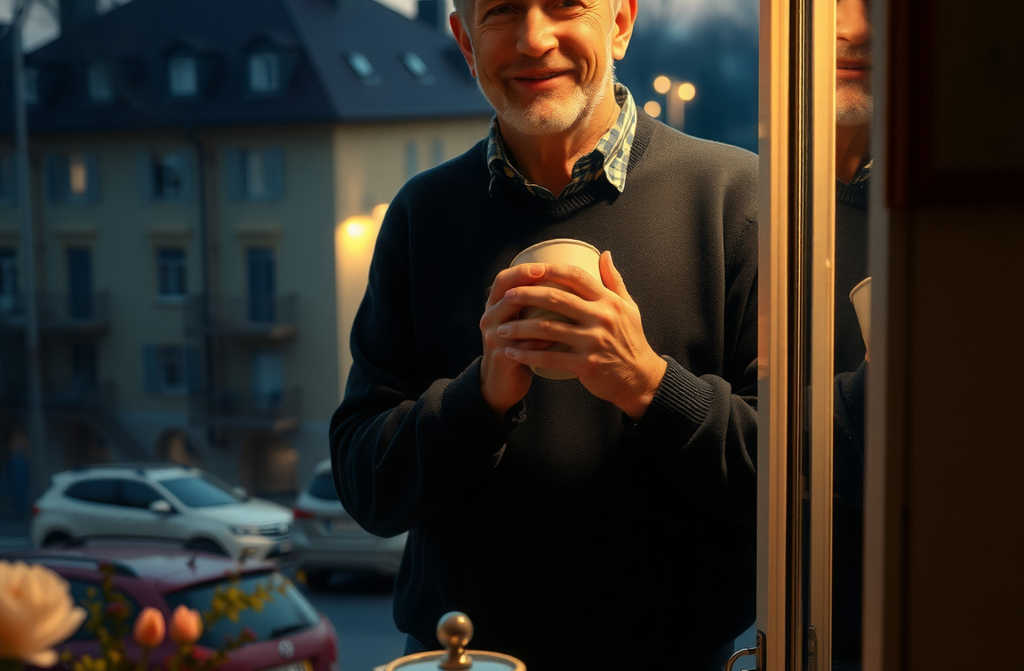
He was ten years too late
He had done everything properly. Or so it felt to him, as he climbed the creaking stairwell of the old, pebble-dashed block at number 17 Willow Avenue, up to the third floor. In the pocket of his navy wool coat nestled a tiny velvet box from “Emerald Jewellers,” and John kept touching it with his fingers, as if to check it was still there, not slipped out into some parallel existence. The ring had cost a fortune. He spent nearly an hour choosing it, the sales assistant bustling back and forth with trays, while John looked and weighed and wondered how Margaret would react. She was meant to be delighted. Ten yearsit wasnt nothing.
On the landing, the air was thick with someones stew and a whiff of cat litter. John wrinkled his nose and pressed the bell. November had swept in this year like a cruel joke, cold rain turning to slush all morning. His fingers refused to warm despite clutching the box in his pocket. He shifted on the spot, touched the box again.
There was a clink behind the door. Then footstepsheavy, undeniably a mans. John noted it, then froze.
The door opened.
Standing before him was a stranger. Mid-forties, short, well-built, in a worn check shirt and dark trousers. He regarded John without surprise, the way you glance at a postman, or at a neighbour whose face youve seen but never met.
“Can I help?” he asked, voice measured.
John blinked.
“Im here for Margaret. Is she in?”
The man nodded, unmoving, and called back, “Maggie, someone for you.”
A few seconds trickled by, stretched and sticky. Margaret appeared in the hallway. She wore a soft cream jumper, her hair up, no makeup, and she looked, oddly, better than he remembered. Not brighter or prettier, but calmer somehow, something gentle radiating from inside.
She saw John and paused for a heartbeat. Her face revealed nothingno joy, no fury. Just quiet, closed-off something.
“John,” she said. “You shouldnt have come.”
He opened his mouth, then shut it. He looked from the man in the check shirt back to Margaret.
“And he is?” he asked, though he understood already, even as he tried to keep from knowing.
“This is Peter,” Margaret said, in that same even voice. “He lives here.”
So that’s how it is. Sometimes theres no need for explanations. One plain line, said with no tremble, no apology, no tears. Just fact. “He lives here.” And you stand there on a November landing, in your long coat, a ring in your pocket, feeling something cold slither down your back even though the flat radiates warmth and smells of stew.
John could smell it clearly. Stewproper beef stew, with root veg and thyme, the exact sort shed make for their anniversaries, when hed bring wine, sit at her kitchen table, watching her flutter about, thinking: heres a woman waiting, someone whos ready, who’s sure to stay.
Hed been a fool to think so.
Shell never leave, he had told himself all these years. Where would she go, shes already thirty-five, then thirty-seven, then nearly thirty-eight. Who else would have her, if not him? He had been as sure as only someones whose faith has never really been tested.
“Maggie, justwait,” he said. “I need to talk. Its important.”
“Im listening,” she replied. “Say it.”
“Not here,” he glanced at Peter.
Peter made no move to retreat, just stood aside with the look of someone involved, but utterly unrushed, unruffled. John felt a sharp, unpleasant twistmore irritation, shaded by something like fear.
“Peter knows who you are,” Margaret said. “So talk.”
John hesitated. Then he drew the box from his coat. Deep blue, gold-stamped with “Emerald”. He held it out to her.
“Ive come to propose,” he said. “We should have done this ages ago. I know I left it late. But I want us to get married.”
Margaret looked at the box. She didnt take it. She met Johns eyes then, and what he saw unsettled himnot bitterness, not triumph, not hurt. It was something like tired pity.
“Put it away, John,” she murmured.
“Maggie”
“Please. Just put it away.”
He slipped the box back, his hand trembling, which he only now realised.
“Thats it, then?” he asked, voice rougher than intended.
“Thats it,” she answered. “Sorry it turned out this way. But you had to knowthings were bound to change.”
“You might have at least told me.”
“I told you often enough,” she said quietly. “Just not in as many words. You never listened.”
She studied him a moment, nodded slightlyas if ending an argument inside herselfthen said,
“Goodbye, John.”
The door closed. No slam, just a gentle click. There was the soft sound of a plate inside, another waft of stew, then silence.
He stood on the landing for three extra minutes. Then he went down, across the dark, rain-slicked tarmac, got into his dovetail-grey Ford Focuspride of last winterand sat, watching the slushy snow blob onto the windscreen.
The ring in his coat burned right through the wool.
For days after that, John told himself it was reparable. He was a fixer by nature, after all. At the property firm he worked atGranite Estateshe dealt in commercial lettings, could negotiate, cajole, persuade. Life had taught him one maxim: any problem can be solved with the right tool.
He just needed the right tool.
He rang her the next day. She answered at once, which disarmed him.
“We need to talk,” he said.
“We did, yesterday.”
“I mean really talk. In person, somewhere.”
“What for, John?”
“You can’t just erase ten years. After all we’ve shared.”
Pause. She said, “Im not erasing it. It happened. But I live in the present, not the past.”
“With him?”
“Yes.”
“Youve only known him six months. Six months, Maggie.”
“I knew you ten years,” she said, calm as ever. “And?”
He had nothing. She said goodbye and hung up. John sat for a long while, clutching his phone, searching for where hed misstepped. He never found it.
Three days later, he phoned “Narcissus” florists on Compton Road, ordered a massive arrangementwhite roses, lisianthus, a hundred and one blooms, enough to barely squeeze through a door. Women like odd numbers, he’d heard, there was a magic to it. He had it delivered straight to the library on Birch Avenue, where Margaret ran the lending desk. He thought, maybe, in front of colleagues, shed be moved or embarrassed; something would shift.
He added a short note: “I was a fool. Please forgive me. Give me a chance.”
She messaged that eveningone line: “No more flowers at work. Its awkward for me.”
He reread it three times. Awkward. Not “thank you,” not “touching,” not “Ill think about it.” Just awkward.
He put the phone down, made tea, and stared out at the bleak November night. The trees stripped bare, lamplight smeary, paving slick. The chill found its way into his kitchen, radiators notwithstanding.
He cast backwards, not to justify, just to remember. He’d met her when he was thirty, she twenty-eight. Friends-of-friends birthday, hed just started at Granite, all ambition and impatience, fixated on career and money. Margaret had seemed immediately intriguing. Not that it was a filmic love-at-first-sight, more that she stood outquiet, astute, with a rare talent: sharing silence contentedly.
They became an item. Never any rush on his part. She didnt press either. He assumed she liked things just as they were; maybe he never asked closely enough.
Occasionally shed say, “How do you see us next year, or in five years, John?” Hed answer vaguely”Its fine, isn’t it? Why hurry?” She would fall silent. He took it as agreement.
There were New Years, sometimes with her, sometimes skiing with mates. Her birthday came every February; hed always remember, but sometimes just call rather than visit, citing work. Shed say “all right,” and hed think: sensible woman, she gets that work matters.
Now, in his kitchen with a mug of lukewarm tea, hed started to see it differently.
Shed waited, all those years, for him to say something certain. He never did, feeling everything was obviousthat nothing needed spelling out. If he was honest, a part of him always left the door open, just in caseperhaps someone brighter came along, or life coughed up something better. He hadnt consciously held her “in reserve,” just never quite closed options. And she had waited for a decision.
While waiting, shed grown.
John only really understood this weeks later, after hed observed Maggie enough to compare. The Margaret he remembered from years past had been softer, more hesitant, eyes often questioning. Now, she looked directly, spoke briefly, explained nothing. As if somewhere inside, shed straightened out.
He rang his old uni pal Leo.
“Shes living with some bloke,” John said. “Half a year now.”
“You just found out?” Leo replied.
“Yeah,” John paused. “Did you know?”
“Heard something, offhand. Thought you were in on it.”
“I wasnt.”
“Look,” Leo said gently. “You never quite spoiled her, mate. Maybe it makes sense.”
John dropped the subject. Said his goodbyes.
Makes sense. Leo meant well. But John didn’t want logic. He wanted a solution.
The next thing he did was perhaps the most ridiculous of all, though he didnt know it then. He found her number, rang and said, “Come downstairs for five minutes. Im outside your flat.”
Long pause. Then, “Why?”
“Just, please.”
She came. In a parka and bobble hat, hands in pockets. John stood by the entrance. When she emerged, he did what hed planned: went down on one knee right there on the sodden pavement, pulled out the “Emerald” box, and offered it up.
It was about minus six. An old lady walked her dog past, stopped, watched. John caught, in the corner of his eye, a glow of sentiment, hand pressed to heart. He thought maybe Margaret would feel something too.
She looked at him a few seconds, then softly said,
“Get up, please.”
“Maggie”
“Youll catch your death, John.”
He got up. Felt the cold seep through his knee at once. Put the box away.
“You dont understand,” John said. “I mean it, Im serious. I want a family, I want you.”
“Ten years ago, did you want that too?” she askednot as an accusation, but a simple question for which she already had an answer.
“I didnt think about it then, not like now.”
“I know,” she said, that tired, kindly sort of sadness again. “John, Im not angry. Really. Its just all gone. Were living different lives.”
“And if I tell you I love you?”
She looked at him, then away to some distant spot.
“It wont help,” she murmured. “Saying I love you now, after youve lost something, isnt the same as loving while you still have it, when you could have chosen, but didnt.”
The woman with the dog vanished down the road. The porch light flickered overhead. Margaret stood before him in her dark coat, and John realised, suddenly, he didnt know her coat size, or when shed bought it, whether she liked winter at all. Ten years, and he didnt know the simplest things.
“Go home,” she said quietly. “Its late and cold.”
She turned inside. The door shut with a dull metallic clack.
John lingered awhile. Then trudged to his car.
In December, he tried her number again, multiple times. She always answered civilly, in short, neutral repliesnot rude, but leaving no opening. Once, he hedged toward nostalgiaspoke of all theyd shared, their history, their memories, and how that couldnt simply go in the bin. She agreed: theres no throwing away the past, it always remains, but she wouldnt live inside it.
Once, he laid it on heavy. Admitted he couldnt sleep, that his work had gone to pot, he didnt see a way forward.
Margaret listened. Then, “Itll pass, John. Honestly. Youll manage, you always do.”
“Doesnt much help,” he said.
“I know. But I cant help you, not in the way you want. Thats not in my power.”
Resentment pricked at him. “And this Peteris he all that? Whats he do, what sorts he?”
“I know him,” she said simply.
“Six months acquaintance.”
“John, do you think six months cant tell you what you need to know?”
He was silent.
“Or do you think ten years guarantees understanding?” she asked, quietly as ever.
He had no comeback. He muttered a goodbye, hung up.
And then he had an idea, later regretted, but at the time seemed sensible. He hired a private investigatora place called “Knight,” specialists in background checks and surveillance. It took him a while to ring, convincing himself he had every right to know who lived with the woman he loved. It was for her sake, after all.
The firm was tucked above a betting shop near the city centre. John met with a balding, tired-looking man named Clive Parsons.
“Standard job,” Clive said, jotting notes. “Work history, family, finances, criminal checks, social tiesa week or twos observation if you like?”
“Keep an eye out,” said John.
“Whats your aimdo you suspect anything?”
“I just want to know what sort of man he is.”
Clive nodded, all business. Took the deposit, asked for everything John knew: name, age, address, last seen. John gave what he could.
A week and a half later, Knight rang back. Clive was businesslike.
“Peter Jameson, forty-six. Maintenance foreman at Newton Engineeringtwenty years service. Divorced, has an adult daughter, good contact. Owns a two-bed on North Road, resides mostly at your friends. No record. No big debts. Routine life, works weekdays, weekends often spent with his daughter, sometimes together with your friend. Nothing to be concerned about.”
John was quiet.
“Nothing at all?”
“Nothing. Ordinary chap.”
John paid up and drove back to work, pondering: ordinary. A maintenance foreman. Not rich, not flashy, nothing special by Johns own benchmarks. Yet shed chosen him. They cooked stew, made plans.
He couldnt see why it hurt so much.
The following week, John called Margaret again. He didnt know why, only that he couldnt stop picking at a half-healed wound.
“He works at Newton Engineering,” John said.
Long pause.
“How do you know?” she asked, with a new edge in her voice.
John realised hed said too much, but it was too late.
“I checked him out.”
Silence, longer than usual. Then, her tone changedfirm, not angry, tough as oak.
“John, thats too much. Youve had him followed?”
“I just needed to know”
“Why?”
“To understand what it is about him.”
“Youll never know that way,” she said. “Its not in a background check.”
“Maggie”
“Dont ring me again. Please. Thats what I ask.”
“Are you serious?”
“Yes. If you ring again, Ill stop answering altogether.”
The line cut.
John sat in his car, feeling something unfamiliar. Colder than anger, deeper than offence. As though the ground beneath him had softened, gone unsteady.
Still, he called. Five days later, near New Year, the city burning with lights, tills jangling in shops, that specific last-week-in-December tension in the air. He was in the “Star” supermarket, basket full of party food, when the urge rose like a tide. He called her.
She didnt pick up.
He texted: “Wishing you a happy New Year. Sorry for everything.”
She replied an hour ontwo words: “You too.”
He didnt know what to make of itforgiveness? Politeness? Simple civility? He kept the message, read it often.
He spent New Years with Leo, his wife, and other friends. Drank modestly, joined the conversation, laughed on cue. Leos wife, sensible forty-something Karen, gave him those sideways looks reserved for troubled people everyones heard about.
At one, John stepped onto the balcony for air. January was bitingly clear, fireworks blooming over rooftops. He wondered where Margaret was then. With Peter, probablyalso marking New Year, sharing bubbly, maybe ladling up her stew.
He thought: what did I do last year at this hour? Skiing in Scotland with mates, called her late afternoon, when the hangover relented. She just said “thanks, you too.” That was all. Hed failed to notice how little it was at the time.
Leo joined him, leaned on the rail.
“You all right?”
“Sure.”
“Doesnt look it.”
“Just thinking,” John muttered.
“About her?”
“How it all happened.”
Leo was quiet, then ventured, “Ever wonder if she wanted something from you all those years?”
“Now I do.”
“That maybe it wasnt easy for her, either?”
“I know.”
“Shes good people,” Leo said simply.
“Always said so,” John replied.
They stood a while, then went back to the noise.
In January, John broke his promise and rang Margaret again. She answered, to his surprise.
“You told me before” he began, no preface, “that you wanted marriage, certainty. I pretended not to understand.”
“Yes,” she said.
“So why did you wait so long? Why not leave earlier?”
Long silence. He thought she might not reply, but then quietly,
“Because I loved you. Because I thought youd change. Because you hang onto what youve got, even when its not enough. People wait a long time before admitting its pointless to wait.”
“And then?”
“I realised I wasnt waiting for you anymore, but for a version of you that would never exist. I had to decide.”
“And you did.”
“Yes. Not right away, not easily. But yes.”
He paused.
“Is Peter a good sort?”
“No hesitation”He is. Very.”
“Are you happy?”
A pause, longer.
“Im content,” she replied. “Maybe thats happinesswhen nothing hurts, when you know someones there, not going anywhere. When you can just be, without feeling inconvenient or too much.”
Something in those words squeezed at him.
“You felt inconvenient, with me?”
“I sensed it,” she replied. “Not always, but often. When youd change plans last-minute. When you spent holidays elsewhere, not with me. When I asked about the future and you always dodged it. Little things, meaningless alone, but they add up.”
He listened. She said, “Im not saying this to hurt you, John. You asked. Youve always been a decent man. Just not mine.”
Not mine. Final, like the last line at the end of a book.
“All right,” he murmured. “Sorry to bother you.”
“Youre not, John. Youre just trying to understand yourself. Thats all right.”
He said goodbye. She did toosomething softer in her tone, not pity so much as respect. As if shed appreciated he was calling not to plead, but to ask.
He stopped ringing her, after that. Not because it stopped hurting, but because, now, he understood the boundaries. Not “clarity and all is well”, but “now I see what happened”.
He started taking time differently. Time was no longer on tap, stored like money in the bank for later. Thirtystill young. Thirty-fivestill time. Fortythink about settling down someday. While he was thinking, someone else just lived, didnt postpone. Not by wisdom, just by living. Walked up, said something simple, and was heard.
One February afternoon, driving up Willow Avenue, he automatically slowed by her block. Paused a moment by the kerb, glanced up. Nothing speciala regular council block, flaking plaster, bare poplars, empty playground beside. One window on the third floor glowed amber, a silhouette moved in the light, and he drove on.
In March, at the office, his coworker Dennis, thirty-five and just engaged, regaled everyone with stories of the proposalring, the restaurant, the celebration. John congratulated, listened, nodded. Dennis teased him about his pensive look.
“Me? Just thinking,” John said.
“About what?”
“That its best to do these things on time,” John replied.
Dennis cackled, thinking it flattery, and carried on.
Spring came early that year. By late March the city brightened, grass sprouted fast. John sat one evening with a mug of coffee, staring out at the fresh green along the curb.
He found himself thinking about keys.
Strange, but that’s how it arrived. She had a spare set to his flathed given it years ago. She never used it unannounced. Meanwhile hed never had keys to hers. Never asked. She never offered. And only that night, he realised what that meant. Not that she didnt trust himjust that somehow, he’d never really been invited, not all the way in. His place was always a little apart.
Or maybe hed made it so.
Probably the latter.
He ran into Margaret by chance in April, in the “Page & Plume” bookshop on Orchard Street. Hed popped in for a business read he’d been recommended. She stood by a shelf of novels, a pale trench on, flipping pages, looking like someone contentnot smiling ostentatiously, just at peace.
They saw each other simultaneously. She nodded. He walked over, because he couldnt not, and said,
“Hi.”
“Hi,” she replied.
They stood a moment. She didnt stiffen, didnt withdraw, just watched him amiably, like an old acquaintance with no grudge or warmth, just plain memory.
“How are you?” he asked.
“Good. You?”
“Getting by. Work.”
“Right.”
A pausenot awkward, just empty.
“Peter and I are heading to Cornwall this summer,” she said, not to provoke, but because conversation sometimes demands something real, and she happened to have it. “Never been. Be nice to see it.”
“Sounds lovely,” John managed.
She smiled faintly, took a book off the shelf.
“Well then, John. All the best.”
“You too.”
She walked to the till. John watched her for three breaths, then went off to find his business book. Paid, left.
April was golden that year, sunlight everywhere, leaves budding like a promise. John stood outside the shop, looking up and down the street. People passed by, plenty of them sporting that vague spring look, half-dreamy, half-pleased.
Margaret came out soon after, book under arm, light step, coat flaring. She caught his eye again, nodded, answered her phone with a laugh drifting back towards him as she walked to her bus stop.
He watched until she slipped behind the corner.
He pulled, not knowing why, the velvet box from his coat. He still carried it. Opened it. The ring caught Aprils gold, perfectly cut, modest, expensive. A good ring; hed chosen with care.
He shut it. Slid it away.
Headed home.
That night he sat in his flat on Kings Lane, bought four years ago. Fine flatlarge, done to his liking, everything neat and in its place. Only now it held a silence he didnt remember from before.
He considered what it meant, missing your momentnot philosophically, but in precise terms: holding something warm and living, letting go because you thought it would wait. Then it leaves. Not angrily, not with a slammed door, just gone, because all living things movegrow or dry upand Margaret had chosen to grow.
What had he chosen?
Hed chosen comfort. To have, but never really give. To sidestep risk, to not say aloud what might bind him. He thought that was clever. Now he understood it as just cowardice, of a mild and unintentional kind.
The ring lay on the table. He gazed at it, long and hard.
Then he stood, tucked it in a drawer, closed it.
Poured a glass of water. Drank it.
Outside, April sang on, bustling, insistent. Shouts of children in the courtyard. Someone blared music. The air carried the smell of soil and last year’s leaves. All close, and yet distant as through a window.
He pressed his forehead to the cold pane, closed his eyes.
So this was it. Ten years, and none of it as he’d imagined; she was the one with options, and he the one left behind, manoeuvring himself into a corner while thinking he was free. While he savoured the illusion of choices, shed claimed the real freedom: the sort you pick for yourself. And all that was left was the sound of spring in anothers life.
He didnt know what came next. Life would roll on, as life does: work, meetings, new faces, maybe someone else in time. Maybe hed learn from thisthough people always say they do, and then reinvent their mistakes. Maybe not learn, just remember.
He moved away from the window, sat on the sofa.
Margaret was home now, he guessed. Cooking, maybe, or reading that book. Peter, that calm man in a check shirt, was probably there too. He, the man whod answered the door without defensiveness or fear. He had what John never did: the confidence of arriving on time, of doing things right.
John realised, oddly, he didnt begrudge Peter. Not really. If anything, the stronger feeling was respect. For Margaret. For how shed handled everything. No drama, no public display of new joy, no scoreboard. Just quietly lived her life, grew, and chose.
He remembered her words in the cold, by the flat: “You love now, but only because youve lost. It isnt the same as loving when its easy to choose differently but dont.”
That was it. Perfectly said.
He sat in his silent, well-appointed flat and thought: I could have chosen differently. Over and over, he could have. Year three, year five, year seven. Every birthday in February; every New Year spent away instead of with her. Every time she gently asked about the future and he demurred.
Could he have chosen differently? Of course. Now he saw it, blindingly. The tragedy was that this knowledge only ever comes too late.
That, he mused, was the nature of regret. Not loud, not theatricaljust the quiet recognition that times slipped off, and you let it go, trusting it would wait.
He stood up. Made tea. As the kettle hummed, he found himself thinking he ought to learn to make stew. Silly thought, but there it was. He smiled, sadly.
The kettle clicked. He poured a mug, dropped in honeyhed read somewhere it soothed the nerves. Sat down in the kitchen. Outside, darkness, lamplight, windows across streaming their different private worlds.
He pondered keys, again. Never asked for hersnot because he didnt want to, but because hed never really let himself imagine the need. Now that door was closed for goodby something you cant pick open, not with any tool.
The mug warmed his hands, and he sat, unmoving.
He thought: some things cant be reclaimed. Not out of nastiness, or principle, just because time doesnt idle while we decide. It moves, and with it, people move, grow, change, commit. If you dawdle, you end up at a window, watching someone else walk beside the person you didnt choose, and it isnt betrayal, or unfairness. It is simply life, doing as it must.
He set the mug down.
All was quiet outside. April, kindly this yearno late frost, no biting wind. Just a mild evening, of which many more would come.
He thought: you have to live on now. Not because youre suddenly wise, or life feels lighter, but because there is no other way. Life never waits for us to sort out our own old emptiness.
And he vowed, if ever someone important came into his life again, hed never postpone. Not because hed grown into a philosopher, but because now, at last, he understood what a locked door feels like when you knock too late.
He stood. Washed his mug. Put it on the rack.
So thats that, he thought. No anger for her, or for Peter, no resentment for fate. Just a cool, honest knowledge: what happened was fair. Not for him, maybe not now, but fair.
He turned out the kitchen light and walked out.
Somewhere in his desk, the velvet box still waited. Tomorrow hed return it to “Emerald.” Or not tomorrow. When he was ready.