Friday, April 14th
For a while now, Ive grown used to the peace of our little village in Yorkshire, though peace can be a lonely thing. I sat today on the sun-warmed bench in the garden, soaking in the first real warmth of the year. Spring has finally arrived at last. Perhaps only the good Lord knows how I survived this winter I truly thought it would be my last. I told myself, Ill not survive another cold season, and, strangely, felt relief at the idea. Im no longer afraid of what comes next. Im even prepared: Ive set aside my savings, bought a nice dress for the occasion.
Nothing holds me here anymore.
Once, I had a great family my dear husband, George, tall and gentle, and our four children three sons and a daughter. We were close, helped each other, hardly ever quarreled. But one by one, my children grew up and scattered, following their own paths. My two eldest boys went off to university and then took jobs in different cities. The middle one, never fond of school, started a successful business and moved abroad. My daughter fluttered off to London and soon found a husband.
At first they all visited often, sent letters, and, with mobile phones, began to call. Then the grandchildren arrived. Occasionally, Id pack my battered suitcase and go off to babysit for one or another.
But as the little ones grew, my help was needed less and less. Calls became rare, and visits nearly stopped everyone was so busy. Work, family, their own growing children. The last time they all gathered here was when George passed away, my strong George. Who could have predicted hed go before me? After the funeral, everyone left again. Over time, even their calls to me faded. I tried ringing them myself but soon understood they had little time for their mother, so I let them be.
Thats how the last ten years have passed: waiting for someone to remember me. Whenever one of them did call, Id feel lit up for a week afterward.
One afternoon, as I sat outside, lost in thought, I heard a familiar voice at the gate: Afternoon, Aunt Mary! It was a young man, beaming. Dont you remember me? I squinted. Ben? Is that you?
Its me, Aunt Mary! he said, delighted, and let himself in.
Ben, the neighbours boy, was always about as a child always seemed a bit hungry, so Id feed him and hand down my childrens old clothes. Id let him stay when his parents were having one of their rowdy parties next door.
His parents passed away not long afterwards and Ben was taken somewhere far. I hadnt seen him since and missed him terribly.
Where have you been all these years, Ben? I asked, so happy I nearly cried.
He explained hed been in childrens care, then joined the army, then studied. Now, he was back home to revive the old village.
Theres hardly anything left, Ben, I said. Everyones gone.
Ill manage! he announced with a grin.
So, life took a turn. Ben worked for Mr. Wilkins, the villages biggest farmer, and used his spare time to fix up his little inherited cottage. He never forgot me popping in, helping around the house. I started calling him son, and for three years, it was like having family again.
One day, Ben looked apologetic. Im off, Aunt Mary. Mr. Wilkins has stopped paying decent wages, wants work for nothing. Im heading off to earn some proper money. Dont be cross!
Dont be silly, Ben, I said. Go with my blessing!
And so, I found myself alone once more. Some days Id feel so lonely I wanted to weep, but I filled my time as best I could, just waiting, wondering how much longer Id remain.
*
Today, something wonderful happened. Id just pulled myself up from the bench when I heard a cheerful, familiar voice. Good afternoon, Aunt Mary! I turned, and there was Ben grown, well-dressed, looking the picture of success.
Im back for good, Aunt Mary! he declared, coming over.
Oh, what joy! I fussed about, desperate to put the kettle on.
Ill just pop home for a moment, pick up the treats I brought didnt expect youd be here!
Half an hour later, Ben and I sat at the table, sipping tea from my nicest china. We talked and talked and couldnt stop grinning.
I was ready for the grave, Ben, I said, brushing away a tear.
None of that! Ben laughed, waggling his finger. Now youve got me, were going to make a go of life! Ive saved up Ill get my own farm going and youll stay put for years yet!
Just then, a clear voice rang out: Hello? Is anyone home? I looked out the window and saw a young woman standing in the drive in a smart coat and high-heeled boots.
Who are you after? Both Ben and I stepped out onto the porch.
Im here for Mary Smith! Im her granddaughter well, great-granddaughter. Im the daughter of Edward, her eldest son.
Ben and I exchanged glances.
I tried ringing, but your phones off. So I just decided to take my chances! she said.
Well do come in, love! I managed, a little flustered. Ben hurried to take her suitcase.
We watched as Catherine it was Catherine, one of those English names you rarely meet anymore tucked into the food we offered and chatted about herself.
I dont care much for London. Want to live in the countryside! My parents just dont understand. Grandpa Edward suggested I stay here for a few months. He reckoned a stint in the country would cure me of ever wanting to come back! He rang you, and Dad did too, but they couldnt get through. Sorry! Dont worry, I wont be a burden. Brought my own money, and Dad and Grandpa sent treats for you as well. Ill be here till my exams I study on a distance course and then Ill head back.
Stay as long as you like! I finally said, the happiness bubbling up inside. Itll only do me good!
A month later, I watched Catherine, whod quickly taken to village life, working away in the garden. Hard to believe she was a city girl.
With Bens help, Catherine cleared the overgrown plot, split it into neat vegetable beds, put up a greenhouse, and bought seedlings from neighbours. She threw herself into it with real enthusiasm.
Ben, meanwhile, began building his own modern farm with the money hed earned away. He even hired workers to fix my leaky roof and install central heating.
Never had I smiled so much. I wasnt alone anymore.
Sometimes a shadow crossed my face thinking Catherine would leave soon. Id grown so fond of her. When the time came, she packed to return to the city.
How will I manage the garden alone? I asked, slipping little pies into a bag for her journey.
Oh Gran, just keep topping up the water barrel! Ben will help with the watering. Ill be back for the weeding! Catherine smiled.
Youll come back? I asked, hopeful.
Of course I will! I cant leave you, Gran I love you dearly. And Bens asked me to marry him! The weddings this autumn. Where would I go without my farmer husband?
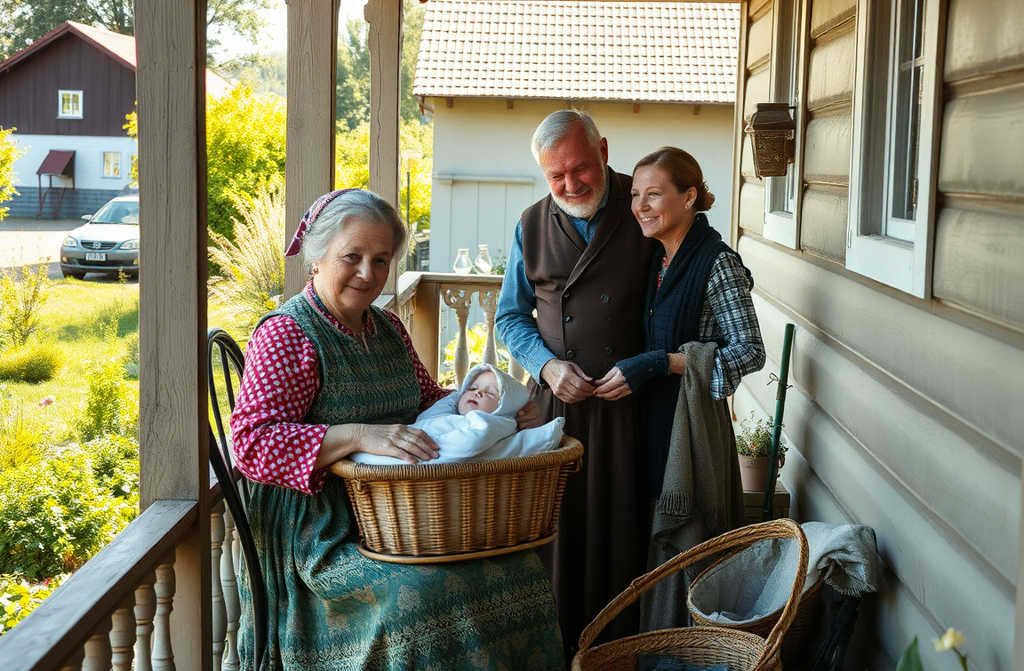
A year later, I found myself basking in the sun, rocking the pram where my great-great-grandson slept. Catherine and Ben were at the farm; together, their hard work had transformed it and brought new life to the whole village.
Looking at that sleeping child, I thought to myself,
No time to go just yet! My family still needs me.The warm breeze carried the sound of distant laughter from the orchard, where Catherine and Ben were picking apples and teasing each other like children. I leaned back, breathing in the scent of grass and springtime, listening to the heartbeat of my village: the chime of the church bell, tractor engines rumbling, a dog barking, voices calling greetings up and down the lane.
I thought of all Id lost and gained, how sorrow had hollowed me out and then made room for new joys. My heart was still a little tender, but no longer heavy. Life had come back, seeping into cracks, filling them with green shoots and sunlight. The garden bloomed, the house rang with footsteps, laughter, and, in the quiet hours between, the peaceful hush Id once mistaken for emptiness.
The baby stirred, his eyelids fluttering as if he dreamed of fields and clouds. I reached out and touched his cheek, feeling the future underneath my palmsoft and warm and assured. I could almost hear Georges voice in the breeze, telling me, Stay a little longer, Mary. Theres so much yet to see.
So I did. I stayed, not out of duty, but out of hope. And every morning, when I woke to the gentle chaos of new beginnings, I knew, at last, that I belongednot to the past, but right here, in the bright unfolding now.






