Buckwheat Instead of Truffles
I stood by the cooker, watching, as what Id worked over for hours began to split in the saucepan. My cream-and-truffle sauce for the wild mushroom risotto was meant to be velvety, smooth, nearly aliveand instead it had separated. The butter was floating on the top and the base of the sauce sat thick and lumpy at the bottom.
I turned the heat down, stirring in cold butter, rhythmically, in small cubes, moving my hand in slow circles. My arms remembered the movement better than my mind. Outside, dusk was falling and the orange street lamps of Marylebone Lane were flickering to life, the hum of distant traffic below. A typical October evening in London.
“Emma, will you be much longer? I havent eaten since two,” called James from the doorway.
He always did thisstopped just at the threshold, never quite stepping into the kitchen, like he considered it foreign territory. Hands jammed into his pockets, that unreadable expression on his face after twenty-three years together. It wasnt impatience, exactly. Something else.
“Another twenty minutes,” I answered, not looking around. “The sauce is being temperamental.”
“Twenty minutes. Right.”
He left. I heard him collapse onto the sofa in the sitting room, TV flicking on loud then almost immediately dropping to silence. Another one of his signals. I knew all of them by heart.
In the end, the sauce came out. Not perfect, but good enough. The risotto had that elusive texturejust the right cling. I plated it, garnished with delicate black truffle shavings Id bought at the market from a trader I trusted, spending on that little piece what used to cover lunch for my best friend and me in a decent café.
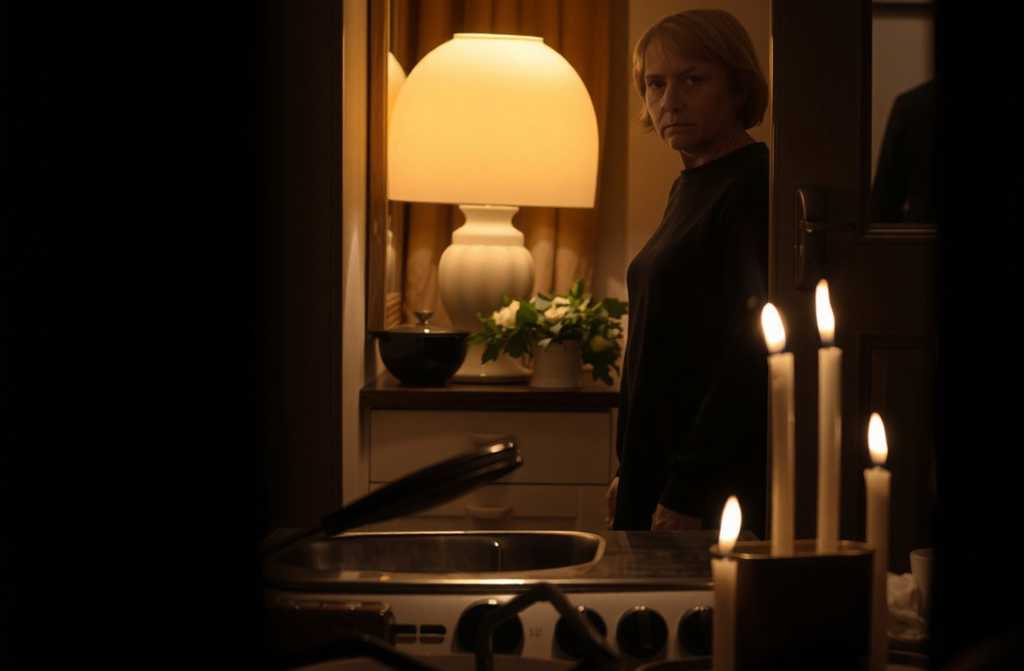
I set the plates down. I lit some candlesnot for romance, but because food always looked better by candlelight, and because I looked better too; the shadows softened the tired creases by my eyes.
James sat down, took up his fork, and stared at the plate.
Stared for a long time.
“Risotto again,” he said, at last.
“You wanted something with mushrooms.”
“I asked for mushrooms, not risotto. I had risotto last week at Toms restaurantproper risotto, made by a chef. Its hardly comparable.”
I sat opposite, picking up my fork.
“Just try it,” I said softly.
He did, chewing slowly, as if conducting some official appraisal.
“The rice is a little overcooked.”
“Its notits al dente, like its supposed to be.”
“According to you, I suppose. Alright, fine.”
We ate in silence. I watched the candles flame. He kept his gaze on the plate with that same peculiar, hard-to-name look. Outside, London carried on, oblivious to all risottos.
“The sauce is a bit rich,” he offered, when his plate was nearly empty.
I didnt reply.
“You want me to say these things, dont you? You want to improve as a cook, not just have your ego stroked.”
“I didnt ask,” I said quietly.
“Pity, really.”
He went off to watch football, and I cleared up, washed up, and scraped the remnants of the truffle saucethe sauce Id remade three times, the one that cost as much as a decent perfume, the recipe Id pored over from a French technique book bought at a £30 cookery course. The sauce Id carried in a special tub through the City to keep it from splitting.
A bit rich.
I pressed my hands to the edge of the sink, watching as water curved down the drain. Then I dried my hands, switched off the kitchen lights, and went to bed.
Just another evening.
***
Margaret arrived at three sharp on Saturday. She always rang ahead, forty minutes out, which gave me just enough time to tidy the living room and whip something up for tea. My mother-in-law had an eye for disorder but never mentioned it, only sometimes letting her gaze drift along the window ledge.
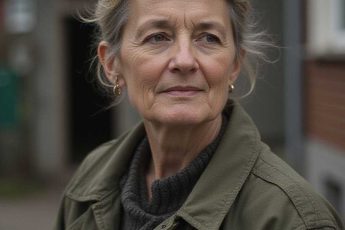
She was seventy-eight. Petite, wiry, with posture that could put a woman half her age to shame. Shed lost her husband six years ago and since then stubbornly lived alone in her Hampstead flat, refusing Jamess attempts to persuade her to move in. Id never tried. We tacitly agreed on that.
That Saturday, she looked paler than usual as I opened the door.
“Come in, Margaret,” I said. “Ive made a walnut cake.”
“Thank you, Emma. Is James in?”
“No, hes at Toms. Hell be back this evening.”
She nodded and, unusually, headed straight for the kitchen, not the living room armchair she usually claimed by the window.
I poured tea, sliced the cake. We sat across from each other.
“How are you, Margaret?”
“Im fine. Blood pressures up a little, nothing serious.”
She took a sliver of cake and nibbled. “Its lovely,” she said. And it sounded so simple, so warm, I felt a knot twist in my throat.
We sat, tea steaming between us, watching the scarlet leaves dance outside the windows, almost gone by late October.
“Emma,” she said at last, “can I ask you something? You wont mind?”
“Ill try not to.”
She studied me for a moment.
“Do you remember being a designer?”
I wasnt expecting that.
“Of course I do.”
“A good designer?”
“People said so.”
“I know so. I saw your work. Remember that house you did near Regents Park for those doctors? I was there onceit was beautiful. I thought then: heres someone who can see a space.”
I looked at her, unsure of where this was going.
“And?”
She set down her cup with the care of someone used to silencenever drawing attention, never making unnecessary noise.
“Im ashamed,” she said quietly.
I didnt know what to say. Margaret never spoke like this; she was of the generation that kept silent about everything important.
“I should have told you sooner. Maybe ten years ago, when you gave up work. But I kept quiet. Thoughtnone of my business. Maybe its what you wanted. Maybe thats how things ought to be.”
She glanced at her hands, elegant despite age, long fingers and neat nails.
“James doesnt like fussy food.”
I thought Id misheard her.
“Sorry?”
“He doesnt like it. Never has. Hes had a sensitive stomach since he was young. His GP told him decades ago, plain food was bestporridge, soups, boiled fish. Buckwheat with minceit’s always been his favourite, since he was a child. Simple mince and buckwheat with butter. He could eat it every day.”
The kitchen was silent, humming only with the distant drone of the fridge.
“Then why?” I tried, my voice sounding strange, alien even to me.
“Why foies gras and truffles and complaints about silky sauces?” she finished. “I know.”
Margaret lifted her eyes to mine, and I saw something ancient and heavyneither anger nor pity, but a footprint of some old grief.
“He liked the process. He liked to watch you try. Watch you buy and cook and labour, waiting for his verdict. He liked to tell you it wasnt enough. It gave him a sense of superiority.”
I set down my cup slowly.
“You know what youre saying?”
“I do. Ive thought about this a long time. I do.”
“And you kept quiet for ten years.”
“Thirty-eight, Emma. Since Nick started it with me.”
Nick. Nick Douglas, her late husband, Jamess father. I barely knew himhed died a year after our wedding. I remembered only a large, loud man, impressive in company.
“He was a ‘foodie,'” she said, and I heard the bitterness slip into her tone, neatly wrapped in restraint. “I cooked for him too. Jumped through hoops, heard the same complaints. Then one day watched him eat buckwheat at his mothers in the country, Emmanot just eat, but devour. Three platefuls, with butter. With bread. Silent. Smiling. No criticism. Just eating and happy.”
Rain began to patter the window.
“I understood then. But I stayed. Those were different times. James grew up learning that this was how you keep someone. As a tool. And he picked it up and used it.”
“So its deliberate.” It wasnt a question. Not any more.
“I dont think its calculated, Emma. People dont set out each time to diminish their wives. They simply live as they learned to.”
I got upnot to go anywhere, but because I couldnt sit. I stood by the window, watching rain speckle Marylebone Lane, umbrellas bobbing.
Ten years.
Ten years of cookery classesbasic, then advanced, then French and Italian. I studied books, videos, spoke to chefs online. I hunted for ingredients at special markets. I matched wines. I dreamed at night about perfect sauces.
I thought this was my new calling, since Id left design. That if not that, then this.
And all along, inside, he just wanted buckwheat.
“Why are you telling me this now?” I asked, back still turned.
“Because Im old,” Margaret said simply. “And you are not. Youre fifty-two. Thats not old. Its nearly a beginning, Emma.”
I turned and she met my gaze, unsparing, no trace of pity. It mattered.
“And because Im to blame,” she added in a hush. “Not deliberately. I raised him that way. I never showed him a different mode of living. Its my mistake. The least I can do is tell you the truth.”
I returned to the table, picked up my cold tea.
“He wont change,” she said. “I wont tell you what to do. But you must know.”
We finished tea in near silence. When she left, I helped with her coatthe buttons were stiff for her fingers.
“The walnut cake was lovely,” she said on the doorstep.
“Thank you.”
“So simple. Homely. The best cake youve ever made for me.”
She left. I closed the door and stood absently in the hallway, gazing at Jamess coats.
***
The next two weeks, I cooked as usual. Duck terrine, shellfish bisque requiring a trek to the fishmonger, a dessert from a Japanese course Id taken in spring.
James ate. He criticised. I listened, silent.
But something inside had shifted. I felt like glass had slid between me and the worldI saw myself from outside: at the cooker, grating lemon, adding saffron, setting down the plate and waiting. And in that moment, as he picked up his fork and stared at the plate before speaking, I saw it.
Satisfaction.
Not from the food, but from this ritualhis power to make me shrink, even slightly. I saw the flash in his expression before he spoke. Quick, childlike delight before pulling a string.
I remembered my design work. Walking into a space and imagining it complete, feeling what needed to change. Listening to clients, understanding their true desires beneath the words. The thrill when they paused at the sight of a finished room.
I had my own studio oncea small one, in Holborn with two other designers. We argued all evening over paint colours, drank terrible instant coffee, chose fabrics.
James said it wasnt serious work. He said I needed to choose: family or trotting around building sites. He earned plenty, so why should I have to work? Besides, clients were stressful. The family needed me.
I chose family. I was forty-two. I thought there would always be time to come back.
A decade passed.
I messaged Kate Warren, an old design partnerthese days, she ran a small firm, though we kept in touch on birthdays and Christmas, nothing more.
“Kate, hello. Been wanting to write. Could you meet for a coffee?”
She replied within the hour.
“Emma! Of course! Id love to see you. How about tomorrow?”
***
We met at a café in Soho. Kate looked much the sameshorter hair, a few silver streaks she didnt bother to dye, which suited her.
“You look well,” she said.
“Youre a bad liar,” I answered.
She laughed. “Fair enough. You look tiredbut in a good way.”
We ordered coffee. I hesitated, then blurted, “Kate, do you have any work for me? I mean, would you consider it?”
She fixed me with a serious look.
“Are you serious?”
“Very,” I said. “Ive been out of design a decade, I know, but I havent forgotten.”
She turned her cup in her hands.
“Ive got three projects onthe big one needs another pair of hands and a head. But Ill be honest: youll feel like an intern at first, Emma, not because youre any less but because the softwares changed, the clients, the processes. Are you ready?”
“Yes,” I said.
“And salary?”
“Whatever you offer.”
She looked at me, thoughtfully. She must have seen something convincing.
“Alright. Start Monday, well see how it goes.”
Monday I turned up. For three weeks, I was in nine to six most days, learning new software, making mistakes, angry at myself, but memories started returning. Like muscle memory.
At home, I cooked buckwheat.
The first time was almost funny. I came home late, shattered. There were fancy ingredients in the fridge left from some failed attempt, but I shut the fridge, found buckwheat in the larder, some tinned beef, a pat of butter.
I cooked the buckwheat, mixed it with beef and butter, and set it on the table for James.
He looked at the plate as if it were a cryptic crossword.
“Whats this?”
“Buckwheat with beef.”
“I can see its buckwheat. Are you alright?”
“Im tired. Long day. Ill cook something else tomorrow.”
He sat. Spoon in hand. I waited.
He ate in silence, no comment, nothing at all. Not even at the end.
I watched him, remembering what Margaret had said. Her village, the three plates, the butter. Someone finally at home.
He finished, stood up, and left the room. Not a wordgood or ill.
Which was an answer in itself.
***
The conversation happened two weeks later. I came home after work, thinking about colour palettes, and dropped my bag by the door.
“Where have you been?” James called, not turning from the TV. “Its eight oclock.”
“At work.”
“Still at Kates?”
“Its my job, James.”
He clicked the TV off, turned to look at me. “Emma, this isnt what we agreed.”
“Agreed?”
“You being out all day, God knows where. Were a family. The fridge is empty.”
“Theres eggs, potatoes, and sausage. You could fry something.”
He stared at me as if Id spoken in code.
“Are you serious?”
“Just telling you whats in the fridge.”
“And your precious truffles? Where are your sauces? Do you still remember how to cook properly?”
I dropped my bag on a chair, hung up my coat.
“Can we talk calmly? Are you able to?”
“About what?”
“Us. The last few years. Whats going on in this flat?”
His shoulders tensed, eyes narrowed.
“Whats going on? I work, you dont. Thats whats going on.”
“Im working now, and Im not going back.”
“So thats it. Youve decided. Without me.”
“Im trying to talk right now.”
He crossed the room, stared out the window, came back.
“Emma, whats got into you? You used to be normal. A normal family. You cooked, I gave feedbackthat was our world!”
“Your world, not mine.”
“There it is. Mums been talking, hasnt she? I knew it.”
I looked at him, the man Id lived with for twenty-three years. In the house hed inherited and never let me feel was minetall ceilings, old walls, the furniture chosen before I even met him. Id never changed a thing, though Id always seen what could be betterId been a designer.
“Your mother told me the truth,” I said. “Plain and simple.”
“What truth, Emma? That shes an old lady spinning drama?”
“That you like your simple food. That your stomach is delicate. That you always adored buckwheat and mince.”
A pause. Just a secondbut enough.
“Nonsense,” he muttered.
“You ate it in silence two weeks ago.”
“I was starving!”
“James,” I said. “Stop. Just for a second, stop.”
He did. Watching.
“I dont want to fight. I want to talk. Are you willing to try something different, something better for us both?”
“Different how?”
“As equals. You work, I work. Sometimes dinner is plain, sometimes fancy, but its not about one-upping. We both say what we mean. No games.”
Long silence.
“I never put you down,” he murmured at last, quietly. “I was just honest. Im an honest man.”
“James.”
“What?”
“You pretended not to like buckwheat while I spent fortunes and hours chasing truffles.”
Silence.
“That wasnt honest,” I added. It wasnt angerjust truth.
He didnt answer. He retreated to the bedroom, closing the door quietly, not slamming. That, too, was a signalslamming was for children, not grown men.
I went to the kitchen. Fried up some potatoes. Ate alone at the little table. Listening to him pacing in the bedroom.
***
The next few months melted slowlyno drama, not like in the films, just each day chipping away at what kept us together.
James cycled through moods. First offensedays of sulking, waiting for my apology. I didnt approach. I cooked simple meals: stew, cutlets, potatoes. Did the cleaning. Went to work. Came home.
Then he tried affection. Once he brought flowerstulips in November, from a vendor by the Tube, clearly not planned. Said he missed me, suggested a dinner out. I agreed. He was chatty and gentle at the restaurant, asking about my job. I thoughtmaybe he could change.
But the very next day he asked why I hadnt put on a special spread for his mates. Just as if nothing had changed.
“Ill make pasta and salad,” I said.
“Pasta?”
“Yes. Pasta.”
“Really?”
“Really.”
And I saw his facethe same old look. He didnt know I could see it now.
Later came the arguments. Real ones, voices raised, listing all hed done for me: the flat, money, the freedom from work, the cookery classesall investments I was now failing to repay.
“You invested,” I said calmly once. “I see that. But Im not a company, James. Im a person. It doesnt work like that.”
He didnt get it. Or didnt want to.
Margaret called every week. Never intrusive, always short, checking in. Sometimes shed say, “Hang in there,” or “Im on your side this time, truly. Ive never really taken sides before.” I understood.
In December, Kate offered me my own project. Small, a family flat in Chelsea. I had to develop a concept and supervise the work. I lost sleep, not from ignorance but from fear Id lost my touch.
It turned out I hadnt.
The clienta woman in her early thirtieswalked into the finished flat, stood in the living room doorway for half a minute. Then she turned to me.
“Youre a magician,” she said.
That feelingId missed it.
***
By February I realisedit was over for James and me. Not for lack of trying: I gave him every reason, tried to talk, didnt storm out, didnt call a solicitor, though my phone kept feeding me articles about toxic relationships.
He didnt want “new.” He wanted things as before. Not me as I am, but the old Emmawaiting by the stove for his word, reflecting his importance back at him.
Thats how you knowa manipulative partner. It isnt about your happiness, your success; its about your anticipation of their approval. Without it, they lose their footing.
James wasnt badhe didnt drink, didnt hit, paid the bills, was probably faithful. He loved, in his own way, or what he called love.
But I couldnt live with him. Not because of daily pain. But because you shrink, slowly, until you forget who you were.
I filed for divorce in March.
He didnt believe it, then tried persuasion, then anger, then persuasion again. Margaret visited and spoke with himafter that, something changed; not acceptance, but distance. Coldness.
The flat was his, always had been. I moved in with my friend Rachel, stayed three months while I rented. In June, I took a tiny flat in Bethnal Green. A two-bed overlooking the streetshabbier than Marylebone, but alive, authentic.
I did the decorating myself. Nothing drastic, just new paint and detailschoosing every element brought me so much joy, I laughed at myself. Turns out, Id always known what I wanted. Id just never dared ask.
***
Its been a year.
Now its April. Im fifty-three. Outside my kitchen window, along the street, some small white-blossomed tree is in bloomIve no idea of its name, but every morning I watch it as the coffee brews.
Coffee is simple again: good beans, no rituals.
In January, Kate made me partner in the firm. Four projects on, and Im leading two. I sleep throughsometimes waking with ideas for spaces, but its a good kind of waking. Brain ticking, not anxiety.
Margaret calls every week. Recently I brought her a cake, and we spent an afternoon drinking tea, talking about everything and nothing. She spoke about her husband, years of silence. I thought about generational painhow one unhappy life begets another, until someone says, “Stop.”
Margaret couldnt stop it for herself. But she helped me.
James lives in his flat. Rare business-like messages pass between us. I heard from friends hes attending cookery classes now. Maybe thats true. People shift when theres no one left to press against.
I dont often think of him. Sometimes I do. Every so often in a shop I notice truffles in a little glass jar, pauseand feel an odd something that is neither regret nor laughter, but the mixture of both. A decade isnt easily dismissed.
But I dont linger.
I met Andrew last September. He came as a client, wanting to redo his flat after his wife passed from cancer two years ago. The place was old, lived-in, her photos all over. “Dont take them down,” he said. “Just make it lighter. Somewhere I can breathe.”
I knew exactly what he meant.
Hes fifty-four. An engineer, designing bridges. I thought about thathe builds bridges, I make spaces. Theres symmetry there.
Hes calm, not withdrawngenuine, looks you in the eye, laughs only when something is genuinely funny. Doesnt try to seem bigger than he is.
On our second project meeting, he asked if Id like to get coffee.
We had coffee, then a walk, then more coffee. Then he invited me to a filmsome French picture, not badand I realised how much Id missed simply being with someone alive.
Weve been seeing each other sinceslowly, no rush, both of us with miles behind us.
He joins me on Fridays.
***
Today is Friday.
I got home at six, unpacked groceries: chicken thighs, potatoes, onions, carrots. Dill. Sour cream.
A chicken and vegetable bakenothing fancy, layers of potato, chicken, onions, carrots, topped with sour cream, into the oven for an hour, then a shower of dill.
I make this when I want something homely, not grandjust right.
While it baked, I changed and listened to the lovely, ordinary smella bit like my grans kitchen, a scent Id not thought of for years.
Seven oclockthe entry buzzer rang.
I let Andrew in. He set down his bag by the doora wine bottle poking out the top.
“Hello,” he said.
“Hi. Smell that?”
He breathed in.
“Something good. Potatoes?”
“Casserole. Needs another hour.”
“Perfect,” he said, putting his coat away. “I brought wine. And” he rummaged”these.”
He handed me a simple box of milk chocolates with nutsnothing fancy, just the kind in every corner shop.
“You like them with nuts,” he said.
“How did you know?”
“You mentioned it in September, outside that bakers.”
I held the chocolates, something too big for words swelling in my chest.
“You remember things like that,” I said.
“I try,” he replied, without drama.
We went to the kitchen. I opened the oven, checked. Nearly done. He opened the wine, poured us glasses, sat at the little kitchen table.
“How’s the Argyll project?” he asked.
“Difficult client,” I admitted. “Wants the world, for nothing.”
“It happens.”
“It does. But itll be goodthe ceilings are five metres high. Too good to waste.”
He nodded, watching me stir.
“Emma,” he said.
“Mm?”
“Are you happy? Right nownot in general, but right now.”
I looked up. He was serious, without any game.
“Right now?” I echoed, checking inside. “Yes, I am. Just now, yes.”
“Good,” he said, and didnt add more.
The casserole finished. I let it sit, sprinkled it with dill, and set it on the table. No candlesjust overhead light.
Andrew looked at the dish.
“That looks delicious,” he said.
“Its just a casserole.”
“It smells wonderful. Looks good too. Do you ever make ugly food?”
I laughed.
“Not intentionally.”
We ate. He asked for seconds, quietly offering up his plate. I served him more. We talked about his work, his daughter in Manchester he hoped to visit in May, my plans for a summer weekend away. He liked the idea of Scotlandpeaceful, he said.
Later, we had tea, eating the simple chocolates.
Outside, springtime London hummed with the scent of wet tarmac and something in blossom. The white-flowered trees down the street rustled in the breeze.
I thought, yes. This is it. Not a milestone, not a celebration. Just an evening. Someone warm and real nearby, food that smells of childhood, not a single moment waiting for appraisal.
Sometimes, I think back to those yearsthe truffles and shellfish bisques, the split sauces, all that effort for a half-hearted criticism. I get sad: for the time, for myself when I didnt understand. But indulging in regretthats a luxury I dont grant myself anymore.
I read somewhere about “self-esteem,” as if its a thing you have or not, like eye colour. But its something you build. Sometimes you lose it. Sometimes you start building it again at fifty-two, in a borrowed kitchen at Kates firm, not knowing the new program, angry at yourself, but not backing down. You stay. You start to see the space again.
Boundariesanother overused word. But what it stands for, I now understand. Its where I end and another begins. Not a wall. Just knowledge: this is me, and thats mine.
Perhaps happiness really is simple. Doing what you can, being with those who see you, cooking what you like, not waiting for someone else’s word.
“What are you thinking about?” Andrew asked.
I looked at himhis calm, kind face, the mug of tea in his hands.
“The casserole,” I replied.
He grinned.
“Good object for contemplation.”
“The best,” I agreed. “More tea?”
“Please.”
I filled our cups again, setting the pot back. Gazed at the white trees in the waning light.
“Andrew.”
“Yes?”
“Youd never tell me Ive oversalted, would you?”
He looked up.
“You didnt oversalt. It was perfect,” he said, perfectly serious.
“And if I do someday?”
He considered.
“Ill say, Next time maybe a bit less saltbut Ill still finish every bite.”
I nodded. “A good answer.”
“I do my best,” he smiled, reaching for the last chocolate. “Mind if I have the last one?”
“Help yourself,” I said.
Outside, the white branches swayed over Bethnal Green, the city humming quietly and indifferently, never caring about anyones sauce, truffles or buckwheat, or the years spent or left. The city simply lived. So did I. The tea was hot, the scent of casserole hung in my little kitchen, and one plant in a pot stood on the windowsill because, last week, I liked the colour of its leaves.
Just liked the colour.
So I bought it.
Thats how I live now.