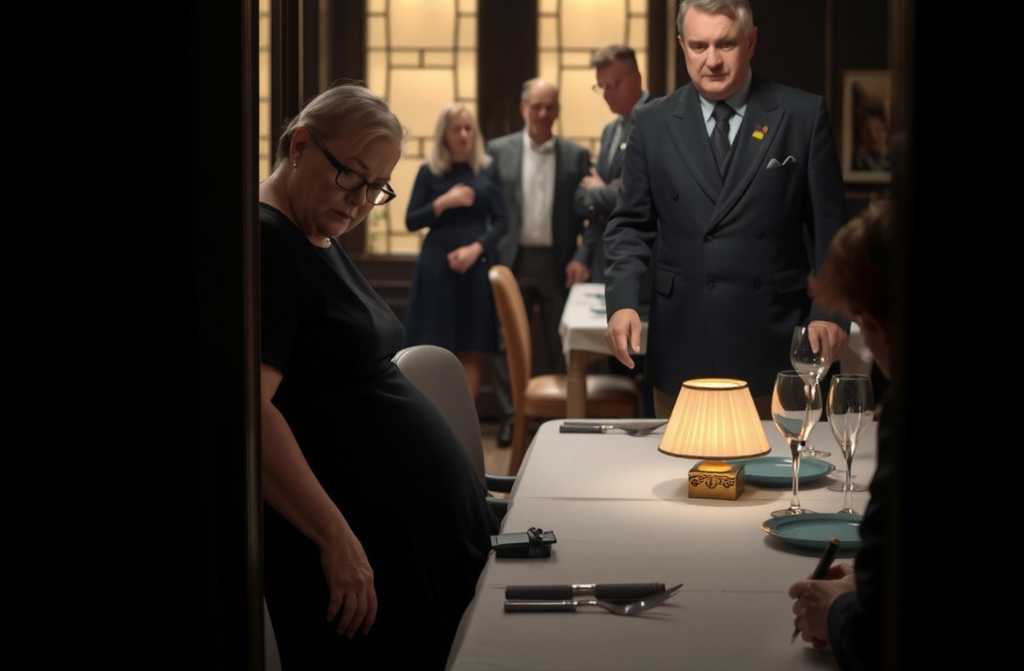
What the Dress Conceals
I just dont understand his choice, whispered the blonde in pink, gently tipping her wine glass to her lips. Hes an architect, status, money, and shes shes like a statue. Could he not have met anyone else?
Her table neighbour, a woman wearing pearls, offered the faintest hint of a smile.
They say hes been with her for three years. Three years, Rachel. Thats not a passing fancythats a condition.
Or a hero complex, interjected the man opposite, eyes never wavering from his mobile. It happens with successful types. They take up with something untypical. To feel better about themselves.
The blonde in pink, Rachel, covered her mouth to stifle her giggle. Shh, shes right there.
But Eleanor, at that very moment, was facing elsewhere. She sat slightly sideways, the chair a touch snug, chatting quietly with an older lady, invited by the grooms mother. She spoke calmly, head tilted, while the elderly woman nodded and smiled for realnot like the other guests, whose smiles were more habit than truth.
James was watching everything.
He stood by the window, removed from the lively hum, holding a glass of water and looking at his fiancée. The way she kept her back straight, the way her hands rested on the tableclothcalm and matter-of-fact. The small earrings with pale blue stoneshed given them to her a month back, after considerable deliberation, still never sure hed chosen rightly. And yet she wore them, saying nothing special, only looking at him with that gaze he still hadnt quite learned to decipher.
Beside him appeared David, an old friend and fellow architect from another firm.
How are you? David kept his voice low, though made little attempt at discretion. Is everything genuinely alright? I can askmates and all.
You can, said James.
Its onlyyou two are so different.
James turned to face him. Davids concern was so earnest, it was almost amusing.
We are, he agreed. Thats true.
And?
And nothing. Im certain.
David took a pull of his champagne. Fine. Youre a grown man.
Yes. James smiled. Thats also true.
He moved away from the window and walked toward the table where Eleanor sat. On the way, he caught snippets of conversation, caught stares. The Deer Park restaurant had been chosen by his mother, and James hadnt argued; shed poured herself into preparing the evening. It wouldve been cruel and pointless to protest when all she meant was to make it special.
The room was beautiful. High ceilings adorned with plasterwork, tall windows showing a navy October dusk beyond. White tablecloths, heavy cutlery, flowers in crystal vases. About forty guests, most of whom James rarely met, and even less often with pleasure. Colleagues, business partners, relatives who remembered him in short trousers and now looked on with that expression unique to people who dont quite understand but remain convinced they have the right to judge.
Eleanor met his eyes as he approached.
How are you? he asked quietly.
Im well, she replied, and smiled. Not a showy smile. Simply for him.
The older lady at her side, Mrs Nora Adams, family friend of his mother, patted Eleanors hand.
Youve chosen well, James. Look after her.
Ill do my best, he promised.
***
Dinner began at seven. By half past, the evening had settled the way such evenings always do: toasts, laughter, talk of property and money; someone would quarrel, someone would reconcile, and more food would be had than truth.
The master of ceremonies, hired by his mother, gave his all. He toasted, suggested party games that most guests politely declined, and every so often called for the star couple. James smiled where required. Eleanor sat beside him, quietthough not the silence of discomfort, but the calmness of someone with little need to prove a point.
Jamess mother, Anne Whitaker, sat at the head of a second table, watching events with the air of a general awaiting the next move. Shed accepted Eleanor; not loved, not dislikedjust accepted, as people learn to accept the inevitable once they sense their sons mind is made. James knew his mother had spoken to Eleanor alone a few times, and that the conversations left her more thoughtful than usual. He never asked what they discussed. Some things arent to be asked.
Jamess father hadnt come. Hed lived in another city, with another family, for yearsthe absence a fixture, like a sideboard long since removed.
Around eight, conversation grew livelier at the window table. Jamess colleagues: urbane, self-assured, used to speaking their minds because their world never truly punished words.
I heard she works in some archive, Rachel in pink said. Can you imagine? An archiveless even than a library.
What happened to her? the woman in pearls asked. She was different before, wasnt she?
Who says so?
His mum hinted something. Shed lost weight once, or maybe the reverse. Im not sure.
Probably health, mused Rachel, voice a mix of concern and curiosity. Meds can do that. Or its psychological.
Psychological, repeated the man with the phone, means shes bored and eats.
Soft laughter circled the table.
James, meanwhile, was chatting with his uncle and didnt hear. But Eleanor, just a few feet away, could see and hear the group. James realised only later: when he looked and saw her staring at her glass of still watera little longer than you would, just casually.
He excused himself and joined her.
Eleanor.
She looked up.
Im fine, she said before he could ask.
I saw you.
I know. Im fine, James. Truly.
He reached for her hand under the table. She let himbut her fingers were cool and a little tense.
We can leave.
No, she replied simply. Its your mothers big night.
Mum will understand.
I dont want to go, she said. There was no stubbornness, but a calm resolvea trait James recognised but never fully named, something like quiet preparedness. Like someone aware hardship is likely, yet determined to keep moving.
***
Three years ago, he first saw her in a hospital corridor.
It was chance, as with most important things. Hed gone to visit a colleague whod broken his leg at a building site. He got lost in the maze of hallways and found himself in a bright lounge, seats along the walls, amber evening light.
She sat by the window, reading. Heavyset, with cropped dark hair, in a simple navy jumper. No jewellery, just those little earringsthe same he would see again and again, each time thinking how well they suited her.
He asked for directions to the fourth ward. She explained clearly. He thanked her, left. In the lift, he thought he shouldve said more, but no words came, so that was that.
A week later, another visitand there she was. Different book. She was first to look up, recognising himsurprising, in a place full of faces.
Lost again? she asked.
No. I know my way now.
So what brings you here?
He fumbled for an answer. I dont know, he admitted.
She nodded, returning to her book. He lingered before leaving, then glanced backshe was watching him go. Not with interest or coquetry, just watching: as at something youve not yet classified.
The third time, he sat beside her.
She didnt seem surprised or pretend surprise.
Do you work here? he asked.
No, I visit people.
Relatives?
She paused. Not exactly.
He sensed not to push. Something in her tone signalled patience. He asked what she was reading. Chekhov. The Lady with the Little Dog. He confessed hed disliked Chekhov at school because teachers always demanded hidden meaning in what felt like plain humanity. Eleanor laughedquiet, a little surprised, as if the laughter caught her off guard.
Youre right, she said. Sometimes a persons just walking down the street.
He asked her name. She told him. He introduced himself.
James, she repeated quietly, as if tasting the sound. Its a strong name.
He remembered thatsuch a small thing, but nobody had said it quite that way to him.
***
Someone called another toast. Alan, the business partner, a man with a orators face, praised Jamess work decisions and claimed hed now made the right choice for life toohandsome but hollow words. Everyone drank.
Eleanor sipped water.
Anne stood after Alan. A petite woman, upright, hair in a sharp silver bob. If anyone could make a toast, it was her.
Ill say it simply, Anne began. Ive long waited for my son to bring home someone worthy of respect. Im glad Ive lived to see it.
She looked to Eleanor, who met her gaze.
To you both, Anne finished.
A moment of quiet. Not for the words, but the tone. Anne hadnt explained what worthy of respect meantshed just declared it, and that was enough.
Rachel leaned to her neighbour with a whispered remark. Her neighbour smiled, uneasy.
James caught his mothers eye. She gave a tiny shrugher way of saying: Ive said what I mean. The rest isnt my concern.
***
He and Eleanor didnt begin seeing each other at once. It was weeks of hospital meetings, until one day she said shed be stopping at the small café next door. Would he join her for tea? He wanted to.
The café had a battered old settee and a ginger tom curled up on the windowsill, immune to customers. They drank tea, talking at first about workhis projects, her archive, with Eleanor listening well and asking oddly precise questions. Eventually, she started to share, and James found himself listening as he rarely did.
She told him about books. About her love of old maps. About how her childhood home had an orchard she remembered more vividly than anything else. No specificsjust images: an apple tree by the fence, rain tapping on glass, the musty sweet scent of a library.
You had a happy family, James once said, unclear why, reading it in her voice.
She paused.
Yes, she said eventually. I did.
He expected morebut nothing followed.
That evening, he first drove her home. She lived on an ordinary estate, in a flat that seemed at odds with her manner, her details: discreet but lovely earrings, plain but manicured hands, a habit of speaking only whats needed, holding silences without awkwardness.
Before getting out of the car, she turned to him.
James, I ought to tell you something.
Go ahead.
Im not simple. Not in a bad way. I have a past and its changed me. Im not ready to talk about it easily yet. If you want to keep seeing me, you should know.
He looked at her serene face, her hands in her lap.
I understand, he said.
I dont think you do, she replied, without malice. But I appreciate your honesty.
She stepped out, didnt look back. He watched her go, realising he knew next to nothing, and that for some reason, he didnt mind.
***
By half nine, hushed yet audible conversation circled the table: weight, health, how does she cope?that signature type of talk, which James had come to recognise, outwardly sympathetic but tinged with something sharply different.
He stood.
Eleanor reached for his hand.
Dont, she said softly.
But
James. Quiet, firm. Please. Not tonight.
He sat. She held his hand tightlynot weakly.
You heard them?
Ive been hearing it for years, she replied. Its nothing new.
That doesnt make it right.
No. But I dont want you to fight for me. Not now.
When, then?
She looked at him with warmth but fatigue.
Never, she said. Those are my battles, James. Youre something else.
It took him a moment to understandshe wasnt saying she didnt need him. She didnt want him to be her defender, because she didnt need rescue, not as others assumed.
She was soft, she was quiet, but not weakand confusing those things was a mistake.
***
He learned her past not from her, but by accident, about a year after they started dating. By then, theyd had real arguments, honest talks, grown into the strange, quiet closeness where you cant remember when the other person became part of your daily thread.
He bumped into Peter, an old acquaintance from the council, over coffee.
Heard youve started seeing Eleanor Carter, Peter said.
Thats right. You know her?
Know of her. If shes the Eleanor Carter I think, thats quite the name. Her father, Simon Carter, hes run a charitable trust for donkeys years. Supported several childrens homes around Berkham. I once met him work-wisea proper old guard type, proper, no fuss, does the job quietly.
Eleanor never mentioned any of that.
Perhaps she doesnt want to be judged by her father. Ive met people like that. There was a story too, about eight years ago, at one of those homes. A fire broke out, spread fast. Some children got stuck. There was a young teacher, got three or four of them outwasnt certain. She was injured, long recovery. Word was she was Carters daughter.
James listened in silence. Peter spoke calmly, as of something baked into local history, known but seldom recalled.
Youre sure?
Im not, honestly. Couldve been another daughter, or someone else entirely.
Peter paid his bill and left. James sat there, the tea long gone cold, thinking of Eleanor and her hidden armsa detail hed never noticed until then. Hed thought it just Eleanors style, now he suspected otherwise.
That night, he lay awakenot out of fear or the urge to run, but realising shed borne something heavy, always carefullynever laying it at his feet, never once demanding he shoulder it too.
***
A month later, they were out walking through the local wood, leaves making slick layers underfoot, the sky full of cold breath. He hadnt planned to bring it up, but there it was.
Eleanor, theres something I found out. Not on purposejust happened.
She didnt stop, only set her shoulders a little tighter.
What?
About the childrens home. The fire. That you were there eight years ago.
She was silent for ages. They passed a bench, a lamplight, a bush studded with the last red rosehips.
Who told you?
Someone at the councilhe only knew it as a rumour.
But you knew it was true.
Yes.
How?
He stopped. She did too, turning.
Because when I look at you, he said, carefully, I see someone whos carried a burden for a long time. I just knew.
She regarded him for a long while, then looked away.
There were four, she told him quietly. Children who couldnt escape by themselves. I got them out. I was a teacher there then, second year in. I knew every kid.
How old were you then?
Twenty-five. She paused. Then more than a year in hospital, then learning to manage. My body changed. Medication, immobility Im different now to how I was.
I know.
You didnt, when we met.
No, but I knew you were different. I meannot like other people. I felt that from the start.
The park was silent but for the wind. Eleanor rested her head against him, just briefly.
I was afraid to tell you, she admitted. Not out of shame. Because once people know, its all they see. I stop being me; I become just my history.
Youre Eleanor to me, he answered. Not just your story.
She raised her head to look at him.
I know, she said softly. Thats why Im here.
***
By ten, the table by the window had grown more boisterous. Champagne had loosened their tonguesRachel in pink sharing something ridiculous, others cackling. James, in conversation with his mother, felt her take his hand, a rare gesture reserved for only the weightiest moments.
She handles herself well, Anne said quietly.
Yes.
For people like her, evenings like these are always hardthe ones who would rather be than seem. Most here are the opposite.
James looked at her. You understand her.
It took time, his mother admitted. We talked, just us. I asked her outright oncewhy do you want my son? Not cruelly, but honestly. She wasnt offended. Said she didnt know if she was what he needed, but she knew she needed him. And she wouldnt get in his way.
She said that?
More or less. Always clear. I thoughtanyone who speaks that way, respects themselves, and if someone respects themselves, they respect others. Thats rare, James. Youve no idea how rare.
James gazed at Eleanor, who was confiding in Mrs Adams. The old womans face was animated, interesteda look it hadnt worn all night.
Mum, you accepted her.
I respect her, Anne corrected. Thats different. But yes. That says enough.
***
He got to know Eleanor slowly, like learning a new city: you see the shape, then the details, and soon realise without those quirks the pictures incomplete.
She read quickly, never boasting. She cooked well, but as routine. What she did love was helping with a community garden outside townher real joy, not a show. She didnt pretend indifference when she cared, but knew how to keep silent on matters others would shout about.
Once a week, she still visited the same hospitalvolunteering with children on long-term wards. Not her children. Simply children. Shed bring books, draw, chat; shed never mentioned it. James found out from a nurse who recognised him.
You never told me, he said afterwards.
You didnt ask.
Thats not an answer.
She thought. Its not a secret. Its just mine. When you talk too much about what you do good, it changes why you do it. Id rather keep it the way it is.
Afraid of compliments?
Afraid Ill start doing it for them. Theres a difference.
He pondered itand realised not many people notice such a difference.
***
At eleven, the DJ announced the newlyweds dance, though the ceremony was set for tomorrow; tonight was a rehearsal of sorts, but Jamess mother had insisted.
He went to Eleanor and held out his hand.
Its not necessary, she whispered.
I want to, he said.
She stood. Her dress was deep navy, simple and well-cut, without embellishment. She moved carefully, somewhat reservedbecause her body, after all it had endured, made each step a conscious thing. He knew this alreadysimply how she was.
They circled slowly before the tables as a soft, classic tune playedone his mother had chosen. He held her hand, her palm on his shoulder.
Their dancing was gentle, discreet. James watched her face. She met his gaze, and in her eyes was something rare and preciousplain warmth, not joy or elation. Simply warmth.
At the window table, Rachel leaned to her companion.
I dont get it, she murmured. He looks at her like
Like what? prompted her neighbour.
I dont know, she admitted, and for the first time her voice betrayed uncertainty.
Mrs Adams, the kind-faced older woman, watched the couple. She shook her head with a faint smile. Thats what it is, she told herself quietly, so no one heard.
***
James had met Eleanors father only once, a year earlier, by chance.
Eleanor asked him to drive her to a meeting, mentioning only that it would take an hour. He took her to a modest municipal building on the citys outskirts. She left, promising not to be long.
Forty minutes later, she came out with an elderly mantall, upright, in a plain dark overcoat and carefully trimmed silver hair. They walked together; he spoke softly, she listened, eventually smiling with a flash of childlike vulnerability.
The man glanced towards Jamess car. On impulse, James climbed out.
He regarded James calmly, without hostilityjust assessment.
This is James, Eleanor said simply.
Simon Carter, the man extended a hand.
The handshake was firm, without the need to impress.
So youre him, Simon said.
Thats me, presumably, James replied awkwardly.
Eleanors told me. She doesnt talk about people often. When she doesthey deserve it.
James found nothing to say. Simon nodded and turned to his daughter, murmuring something she heard with a girls smile, unguarded.
Simon headed back inside. James and Eleanor slid into the car. That was your father, James saidnot really a question.
Yes.
Youve never spoken of him.
I wasnt ready. I suppose now, I am. She looked from the window. And that was enough for the day.
***
At half eleven, something shifted.
James noticed before understanding it. The rooms air got subtly heavierlike a winter draft, or an opened door to somewhere new.
By the entrance stood the restaurant manager, conferring with someone James couldnt see. Then the manager moved aside.
Into the room walked Simon Carter.
He wore the same overcoat as the year before, followed by three figures: two young men and a young woman, all roughly seventeen or eighteen. They clung together, hesitant among such formality.
James rose.
A hush began at the door, rippling through until conversation dulled.
Eleanor didnt turn. She simply sat, gazing at her hands. There was a quiet and a tension about her.
Simon Carter walked in, the unfussy stride of someone with nothing to prove.
He stopped by his daughter.
Eleanor, he greeted gently.
She looked up. Dad, you said you couldnt make it.
I found time.
James eyed the trio behindone boy, dark-haired, fidgeted with his cuff. The girl held a parcel in brown paper. The second youth, ginger-haired, stared at Eleanor.
She looked at him as well. And stood, slowly.
Matthew, she said, not asking.
The ginger-haired youth stepped forward.
Miss Carter, he stammered. Wewe heard about your wedding from Mr Carter. We wanted to come, if thats alright.
It is, replied Eleanor simply.
Her hands, resting on the table, were clenched.
Thats Matthew, Eleanor murmured to James. And Stephen. And Katie. The childrenthose children.
James only then grasped: three of the four from the fire.
***
The hall was still.
Not the polite hush of social etiquette but the deeper kind, when something larger enters the room.
Katie came up, offering the parcel.
We werent sure what to get as a wedding present, she said. Stephen said something practical; Matthew, something pretty. So we got a bit of both.
Eleanor took it, her fingers motionless for several heartbeats.
Thank you, Katie.
You remember us? Matthew asked with hope, despite being almost a man.
I do. Always, Eleanor answered.
Stephen looked up at last.
They said you were ill. That it was hard.
It was, Eleanor agreed softly.
We didnt know where you were. Mr Carter found you last year.
I know.
Were you hiding?
Eleanor considered. Not hiding. I needed time to be myself again. It took longer than I thought.
Have you become yourself? Matthew asked.
She looked at him, then at James, who still held her hand.
Yes, she said. I believe so.
Simon Carter watched his daughter, and James sawa father’s pride, simple and sincere.
Youll let them stay? Simon checked.
Of course, Dad.
Simon turned to James. You dont object?
Not at all, James affirmed. He meant it. He was grateful; the three had given him a picture of Eleanor before hed met her, and in their presence, he sensed something in the hall shiftthe onlookers like Rachel, the pearl woman, the man with the phone all faded into background.
***
Seats were found, arrangements made. Matthew, Stephen, and Katie sat beside Simon Carter, who took a place someone hastily offered.
By the window, Rachel watched Eleanor for a long time, then said, not to anyone:
I didnt know.
The woman in pearls gave no reply.
The phone man put his mobile away and drank, not to toast, simply because he had nothing left to say.
Anne Whitaker went to Simon Carter, shaking hands.
Anne Whitaker, grooms mother.
Simon Carter, brides father.
A pleasure, Anne said, and James heard in her voice a genuine relief.
Likewise, Simon replied.
***
Katie unwrapped the parcelinside, a small watercolour, clearly hand-painted: an apple tree in blossom, with three children beneath.
Katie paints, explained Stephen. She did it herself.
Thats you? Eleanor asked softly.
Its us. Well, as we were. I was so smallI dont really remember the tree itself, just the thought. Apple tree outside the house.
I remember that tree, Eleanor said.
Really?
Reallyit was crooked, by the old fence, tart apples that never quite ripened.
Katie giggled. Yes! We used to throw them at each other.
I know, Eleanor smiled. I got hit once.
That was Stephen! Matthew exclaimed.
I didnt mean to, Stephen protested.
Laughter ran around the tablewarm, genuine.
James watched Eleanor with her painting, a gentle look on her face. The kind of silent change you become familiar with, like the gentle dawn in a room you’ve lived in for years.
***
Later, while Matthew chatted with James by the window, Mrs Adams came to Eleanor, squeezing her hand.
Dear, I heard some of what you said earlier. About that day.
Yes, Eleanor answered.
How old were you then?
Twenty-five.
Good lord. Mrs Adams shook her head. And you carried all that alone.
Not entirely, my father always helped. I just didnt always show it.
Nevertheless, that takes Mrs Adams groped for a word, character. True character.
Or habit, Eleanor offered.
No, Mrs Adams corrected gently. Im old, dear. Ive met many; that is character. Rare character.
Eleanors gaze softened. Thank you. That matters to hear.
I say whats true. At my age, theres no need for anything else.
***
Matthew turned out to be a university engineering student, nervous yet sharp. He explained Simon Carter had helped all four childrenhousing, education, paperworknot as a benefactor, just as someone who did what was needed.
He doesnt say much, Matthew said. Just does.
And the fourth? James asked cautiously.
Arthur. He couldnt come, hes working abroad. Matthew flickered. For a long time, he struggled with all thisbeing together again and so on. His own road. Better now.
You remember that day?
Matthew nodded, his face closing.
I was eight. I remember the smoke, and Eleanor coming in. Four of us, trapped. She carried us out, twice. I asked her last year why she came back. She just said: Because you were there.
That sounds simple, said James after a moment.
Thats Eleanorshe makes it look easy. Its the hardest thing.
James looked across at EleanorKatie beside her, studying her painting.
Yes, he murmured. It is.
***
By midnight, the restaurant grew quieter. Guests began taking their leavecolleagues first, then business partners like Alan. Mrs Adams bid Eleanor goodbye with a kiss and a word in her ear.
Rachel in pink approached Eleanor, with James beside her, unexpectedly, as if impelled.
Eleanor I just I heard things today. About your past.
Yes, Eleanor said, without drama.
I wanted to apologise for what I said before. I didnt know.
Pause.
You couldnt have knownI never shared it.
Still, Rachels tone was different now, I said things I shouldnt. Regardless of knowing.
Eleanor looked at her, holding her gaze.
Alright, she said at last. I hear you.
It wasnt a forgivenessbut neither a refusal. Just: I hear you. Rachel seemed to sense the distinction. She nodded and went back to her seat.
James turned to Eleanor. You havent forgiven her.
I dont have to forgive on the spot, Eleanor replied. But Ive heard her. Its different.
Thats right, he nodded.
I dont know if it is. Its simply how it is.
***
Simon Carter found him as the young trio said their goodbyes. Katie was saying something, laughing, Eleanor joining inthe sight of which gladdened James in a way he didnt try to explain.
James, Simon said.
Yes?
I need you to hear something. Not as a father-in-lawjust as one man to another.
Go ahead.
Simon gazed at Eleanor. For years, she didnt believe shed have a regular life. That what happened was all shed ever be. You showed her otherwise. I triedbut a father cant do that. It had to be someone else.
James was slow to speak.
I havent done anything special, he replied.
I know. Thats why it worked. Just cherish her. Not from the worldshe can handle that. From herself, when she doubts her worth. Thats all I ask.
James nodded. Ill do my best.
They stood quietly, watching Eleanor squeeze Katies hand, the girl beamingyoung, hopeful, as if seeing someone shed long dreamt existed exactly as she remembered.
***
Finally, when the restaurant was almost empty, James and Eleanor remained alone at their table. Someone brought tea. No one hurried them; staff bustled softly in the distance.
Eleanor cradled her cup, both hands.
Youre tired, James said.
A bit.
Should we go?
In a moment. Lets stay a while.
He didnt rush her. They sat in peaceful silence, the hall dim, the autumn park pressing darkly against the tall windows.
My father came, Eleanor remarked at last.
Yes.
He rarely does these sort of things. He hates occasions like this.
So I noticed.
But he came.
Yes, said James, because of you.
She met his gaze, then looked at the watercolour nearbyblossoming apple tree, three children beneath.
I thought, if they ever grew up, Id just be history to them. A story, not a person.
And now?
They came here. She traced the edge of the painting. Katie remembered the tree. Stephen still fiddles with his cuffhe always did, when anxious. Matthew speaks fastjust as before. Her voice softened. They remember. Not just the event. Me.
Youre a person to them.
I am. Its a good thing.
They were both quiet.
Jamestoday was hard.
I know.
But it was a good evening.
He looked at herthe way she held her cup, the blue earrings hed pondered so long, her hands, now sometimes left uncovered in his presence, a small step shed taken alone, not for him.
A very good evening.
Outside, the autumn night pressed in. Another park, but in a sense, always the same parkjust trees and night air smelling of leaves and something else, name elusive but known to anyone whos ever come through difficulty, stopping to simply breathe.
Eleanor set her cup down, folded the watercolour, slipping it carefully into her bag.
Well then, she said. Shall we go?
Lets, he replied.
They stood. Her coat was readyhe helped her into it. Together, they walked through the mostly empty room, past cleared tables, tall windows, out into the cool hallway.
No more was said; only the gentle sound of footsteps, the warmth of his hand in hers, and a shared understanding that some things are true without needing to be named at all.
And in the quiet, James understood that what the world sees is rarely what matters: strength is often quiet; worth needs no applause; and if youre truly heard and truly seen, you already have all the understanding you need.






