The Point of No Return
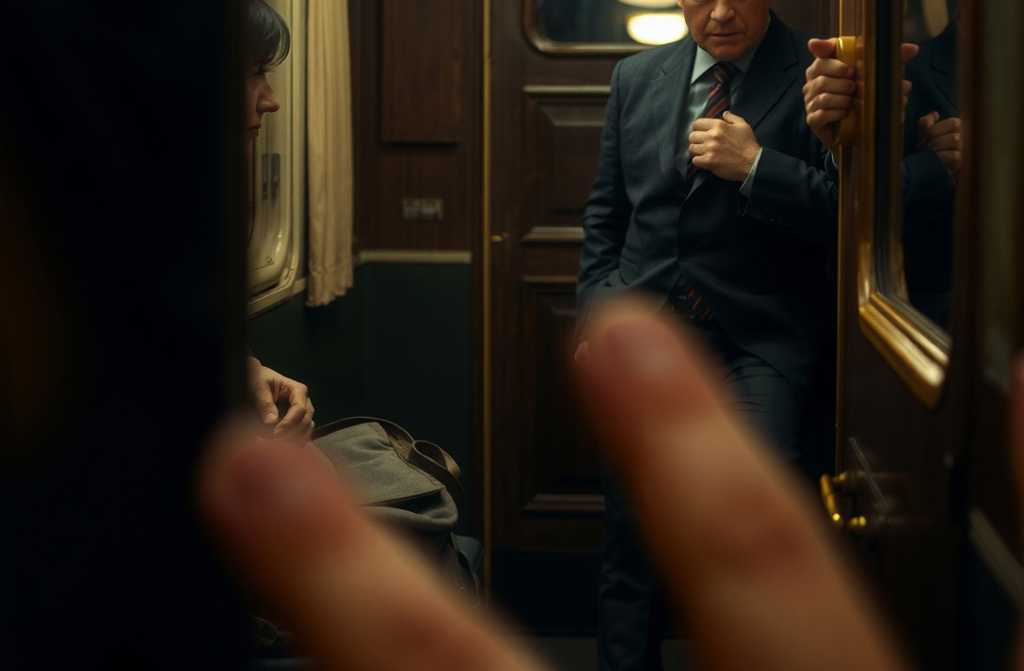
Emma, where are you going? Oliver leant in the corridor, holding onto the train compartment door with a gentle, almost tender voice. It was a voice Emma had learnt to fear over twenty years. Were not finished talking.
I need the loo, Oliver, she replied, not looking back.
With your bag?
She stopped. The train rocked and rattled over the tracks; outside, pines flickered by, dark and indifferent.
Yes, with my bag, Emma answered, and moved on.
Emma. Now his voice had that slow, squeezing note she called the python tone. Not anger worse. A smooth certainty she would come back, she would obey. Mums waiting. You remember, dont you? Were going to Mums.
I remember, Oliver.
At the end of the carriage, she locked herself in the tiny toilet and leaned against the cold metal door. The train from Ashford to Seagate had been going four hours. Through the high, narrow window, the January dusk thickened.
Inside her bag was all she owned: passport, National Insurance card, a faded photo of her parents, a small pouch of pounds, scraped together over the last half-year in fives, tens, stashed in a shoebox behind her winter boots. Oliver never looked behind the boots. Hed never had to search, not when Emma would do all the looking for him.
She fished out her phone, a battered old Vertex with a cracked screen. She opened the back, took out the SIM. A golden sliver. Twenty years of calls, texts, voicemails from Oliver and Rosemary. Emma, pick up some cheese before you come home. Emma, why dont you answer? Emma, you know youd be lost without us.
She snapped the card in half. Then again. She dropped the pieces in the bin beneath the little sink.
Her hands trembled, oddly. Inside, she felt nothing. Only silence.
Emma splashed cold water on her face and looked in the mirror: forty-eight. Her dark hair threaded with the first grey shed stopped dyeing when Rosemary said, Why bother, dear? It wont make you younger. Steely eyes, lips just so, the face of a tired woman.
She came back to the corridor, walked past her compartment without stopping, and slipped into the next carriage.
A free seat by the window waited. She sat, holding her bag tight, peering into the dark.
After twenty minutes, Oliver walked down the corridor, peering towards the toilets, not at her. Emma shrank behind a seat-back, invisible. He strode by again, face pinched, not furious but wound tight, as when things slipped beyond his grasp.
Emma watched that familiar back and wondered, after twenty years, did he want her or did he just acclimate to her existence: cooking, cleaning, working as an accountant in a construction firm, handing over her wages, muting herself, agreeing at the required moments. Life partner, people called it. Sounded modern, elegant. Really it meant: no rights, just responsibilities.
Rosemary had always been theresince day one. Seventy-five, sharp-eyed; her voice could turn any word into a rebuke. Emma, too much salt again. Emma, Oliver says youre late from work, again. Emma, you have no children; you should realise family must mean everything to you.
Emma never snapped. She seldom replied at all.
Seagate loomed ahead. Emma stared at the window: no friends in this city, never been, all she knew about it was the sea. Grey, frigid, English.
It would do.
She slipped out onto the platform with the first few, shouldered her bag, and hurried towards the grand, old brick station. The frost bit her cheeks. It smelled of fish, diesel, and something sharp and salty. She drew that air in and found, oddly, she liked it.
Inside, she scanned the yellowed noticeboard full of paper cards. Rooms to let, reasonable rent. Jotted two numbers down. Bought a mug of strong builders tea and a hot pasty in the buffet from an old woman, ate standing by the wall, warmth seeping in slowly.
The first number was no use: flat was by the month, big deposit. The second lucky: a gruff, old man on the end.
Attic flat, you say? she asked. Far from the town?
Not really a town, love he chuckled fifteen minutes from the quay. Small, but never cold. The stoves fine. I see to it myself.
Can I see it today?
Of course. Im in all day.
His name was Michael Fletcher, but he told her straightaway, just call him Uncle Mike. Stocky, white-haired, kind, the sort thats survived long enough to laugh at petty things. Sixty-seven, he said, as soon as they brewed tea at his kitchen table and he probed, where from, how long?
For the long run, she replied.
He nodded, no questions.
Job?
Not yet. Ill look.
Baker, myself, he shrugged. Small bakery out the back. Warm Loaf. Not a signwriters title, just fell into it. Need another pair of hands. Early starts, four a.m. Cant pay a lot, but well count most your rent against wages. Can you work with your hands?
Emma looked at them. Shed accounted for twenty years, but before, shed helped her mum in the kitchen, kneaded dough, made pies, salted cucumbers. Her hands remembered.
I can, she smiled.
The attic was exactly what he said: small but warm. Sloped ceilings, one round window to the street, one narrow one to the yard. Wooden boards, a woven rug. Cast iron bed with a fat eiderdown. Three books on a shelfshe couldnt read the spines that first night. Tiny table by the glass.
She sat and watched the dark street through the round window, bag at her feet. No one could call. Her mobile would never ring again: the SIM card riding a rubbish heap somewhere between Ashford and Seagate, destined for nowhere.
The quietest silence in twenty years.
First work day began at half-past three. Uncle Mike rapped at the doorbrisk, not aggrieved, not like Oliver, who woke her with a sigh, a moan, Are you even getting up or not? Mike just knockedthat was it.
Bakery was in the little lean-to, snug, smelling of yeast, vanilla, cinnamon, and warmth shed never named.
Right then, Uncle Mike said, tying his apron. Ill mix the dough, you watch. Youll shape after, but pay attentionIm not repeating myself. Not out of meanness; if I say it twice, folks fret, wonder what they missed.
She watched; then she helped. Her hands moved as needed, her head just catching up to the new rhythm.
At six, the first loaves came out steaming. Uncle Mike broke one with his bare hands and handed her half.
Eat up first hot loaf with butter at dawn, nothing like it.
She ate, burning her tongue, thinking she had not feasted like this, hot food without a knot or fearing Olivers voice any moment, in decadesmaybe since childhood, or perhaps never.
Mike was a man of few, but not too few, words. He spoke when it mattered, fell silent when it didnt. Odd, for Emma, whose partner filled silence until she could hear things best left unheard.
Within a week, Emma learnt to knead rye, to twist poppy buns, to construct flaky custard pastries. Her fingers ached, her back twinged, but this tiredness felt honest. Not that hollow, wrung-out weariness she had known, but something elsea tiredness that came from doing something true.
Evenings she sat at her round window and looked out. Seagates winter was damp, restless. Rain fell mixed with snow; the streetlights smeared rubescent pools across puddles. She bought a new SIM card, rang her sister Polly in Leicester, told her only shed left, she was fine, told her not to tell anyone. Polly paused, then said, Its high time, Em. And asked nothing more.
She met Elliot first at the Harbour Light café. A little place on the quay, she sometimes nipped in after her shift for a coffee. He sat by the window with a mug of tea, reading. Nothing remarkable; in his fifties, hair touched with grey, large hands. He made no show of not-looking, just read.
They met properly three days later: she entered, the only free spot at his table.
Mind if I…? she asked.
Not at all, he said, shifting his coat.
Youre not local? he asked, a while later, as she cupped her hands about her mug.
No. Just arrived.
No one picks Seagate on purpose, Elliot replied, not scornful, just stating a fact. Mostly, we wash up here.
I washed up, Emma agreed.
He smiled. Quietly, without flourish.
Elliot.
Emma.
Lovely name. Not so common now.
Old-fashioned, she corrected him.
And so what?
He restored old furniturechests, bureaus, whatever turned up in attics or was found rotting in abandoned houses. Fixed, repaired, remade them. His workshop was a low, stone affair at the edge of town.
Good work? Emma queried.
Patient work, he said. Thats the art. Rush, and you break what could still have been saved.
She thought it was about more than furniture but didnt say so. She hadnt learnt, yet, to voice such things.
They bumped into each other at the Harbour Light a few more times. Then one day, Uncle Mike brought Elliot into the bakery and said: Oh, Elliot, meet Emma, shes my new right-hand. Elliot nodded, Weve met.
Mike looked from one to the other; said nothing, just took the money.
By February, the air softened a touchjust enough that her cheeks didnt go numb in five minutes. Emma bought waterproof boots from a shop on Fisher Street, and after morning shifts, walked the shore. The winter sea was honest: grey, harsh, brimming with wind and pale scallops of foam. Shed stare out at it, and think this was what she needed: not cosiness, but something bracing and real.
Emma sometimes thought of Oliver, not longing but more like waiting for a bus in the wind, only to find the routes been cancellednot grief, just realising the wasted time.
She remembered how it all began. Twenty-eight; hed seemed solid, safe, said the right things. Youre clever, You understand, Youre not like the others. She knew now such words were always a little fraudulent, but at the time they felt true.
Rosemary moved in after one month. Never left. Oliver saw no problem. Youre exaggerating, hed say. Mum just cares. Youre too sensitive.
After a year Emma realised she didnt live in her own house. Not because Olivers name was on it, but because Rosemary wrote the rules, and Oliver enacted sentence.
She hadnt left because she hadnt known where to go. Had nothing to call her own. Every time she edged for the door, something would happen: hed be ill, or his mum. Or a work issue. Or hed say she had nowhere else, that shed never manage alone. And shed believe him. Not for lack of wits, but because it had been said, often and gently enough.
The psychology of it was simple, brutal. To shrink a person drop by drop, year on year, with no shouting, just quiet certaintyI know whats best for you.
One night in the attic she found a book of poems in a pile, battered and coverless. One line stuck: I thought you were a lighthouse. You were only fog. She didnt know whose. She wrote it in a blue notebook shed bought in Seagate.
She jotted recipes Mike taught her, phrases she liked, odd observations. Today, the sea was nearly emerald; a gull carried something orange in its beak. A new habitbefore, writing had stopped the day Oliver found her old diary, read it, then carefully explained she overthought nonsense. Shed stopped, then. But now she writes again.
By March, Uncle Mike started teaching puff pastry. All patience and gentle pressuredont press too hard, let the dough relax.
See? said Mike, If you force it, it fights back.
Dont force, she repeated.
Thats right. Good pastry doesnt like being bossed.
She laughed properly for the first time in years.
Mike smiled back: You look yourself again.
Myself?
The woman you must have been, once, before all this.
She didnt ask what he meant. He didnt explain.
Mid-March, Emma ran into Elliot at the markethe loitered by a table of old tools, she with a bag of fish. They nearly collided between stalls.
Oh, said Elliot. How longs it been?
Three weeks, I think.
Youre dripping fish.
She looked down: her bag leaked. She laughed, and so did he.
Want to grab a coffee? he asked. Theres a place round the corner, not Harbour Light packed, today.
They sat in a nameless café, Coffee & Bakes scrawled on a loose slip, and chatted about nothing: the fish market, the dragging winter, his roots.
Penzance ten years ago, came for a year, stayed.
Why?
He shrugged.
The sea, I suppose. And folk here dont put on airs. If its bad, they say so.
I like that too.
Emma didnt mention Ashford, twenty years, Oliver. Elliot never asked. That, too, was strange. Oliver always knew all, called it care, but it meant surveillance.
Early April, what shed half-dreaded happened.
Back from her morning walk, she saw a man waiting on the doorstep, back turned, phone in hand. Something in the slope of his neck, the tilt of his headunmistakable.
She stopped.
He turned.
Emma, said Oliver.
His voice was tired, wounded, as if he still expected the tide to obey.
Howd you find me, Emma said, flat.
Doesnt matter. He took a step closer You vanished. Gone. Mum hasn’t slept all week.
I left, Oliver.
Left where, for what? Are you mad, Emma? We have a home, a life.
You have a life, quietly I have this one now.
He eyed the house, the street, her seaside-stained boots.
Here? In this backwater? Youre working in a bakery, Emma. Youre a top-tier accountant.
I love the bakery.
Dont be silly. Another step. Come home. Well talk it through. You need rest.
No.
It came out short, sharp. Even she was surprised.
Emma, you dont understand. I still have your paperwork from the firm, remember? You signed things without reading. If they look into ityou realize? There could be trouble.
There it was, beneath the purr: threat. Before, thatd have worked. Before, her heart would have lurched; shed start negotiating, apologizing, making deals. Twenty years of that. Now, she breathed.
Which forms, Oliver? The December invoices? I signed as company accountant under legal warrant. If theres any issue, thats for the company, not me. Quite different, legally.
He hesitated.
Got clever, havent you, as if it was an insult.
Ive always been clever, Oliver. You just didnt notice.
A gate clicked. She knew by the step it was Elliot.
Miss Hargreaves, Elliot said calmly, Uncle Mike wants to know if youll be in after lunch. Theres an order for tomorrow.
He stood, not between them, just present, unruffled.
Oliver looked him up and down.
And you are? he asked Emma.
This is Elliot. He lives nearby.
I see. Olivers eyes narrowed. Emma, Im serious. Mums not well. You know how she feels about you.
Emma sighed. She knew. The sort of attachment you tie around your ankles.
Rosemary will manage, she replied. Shes got you.
Emma.
I have to go, Oliver.
Wait. He gripped her sleevenot rough, just firm.
Please let go, Elliot said. Not loud, not threatening, just spoken.
Oliver looked at him, long pause.
Who are you? Oliver pressed.
Someone whos standing here, Elliot replied. Thats enough.
Oliver let go, looking at Emma. In his eyes was something newconfusion. Powerless now that his script failed.
Youll regret it, he breathed.
Maybe, she said, but if I do, thats on me.
She brushed past, through the gate, slow, no looking back.
Moments later, watching from the attic, she saw Oliver stride toward the bus stop, back stiff, shoulders tight. She watched him leave, knowing a year ago this would have cost her days of tears, sleeplessness, picking over what shed done wrong. Now all she felt was exhaustion mixed with relief.
Half an hour later, Elliot knocked.
Come in, she said.
He glanced round the attic, uncurious, just noticing. Sat on the only chair by her little table.
You alright? he asked.
More or less, she stood by the stove, warming her hands. Thank you.
I didnt do anything special.
You stood by me. That does count.
He was thoughtful.
Will he come back? Elliot asked.
No. Doesnt do well out of control. If the outcomes off-script, hell retreat, move on. She half-smiled. Hes got years ahead and a mother to help choose the next candidate.
Cynical.
Realistic, she countered. Tea?
Please.
They drank in silence. The old silver birch outside, trunk wide as two arms, shivered in the wind. Emma looked out, and liked how Elliot could be quietthe way it didnt fill the air with pressure.
How long since Ashford? he said suddenly.
She looked at him, surprised.
Mike mentioned it, accidently, Elliot explained. You can pass, if you like.
Three months, Emma said. January.
Not the easiest time for moving.
The best, as it turns out. Winters honest. Doesnt pretend its warm when its cold.
He nodded, as if very reasonable.
Do you regret it? he asked.
She paused.
Only regret I didnt go sooner. She cradled her mug. But thats all past. No use sifting over it.
Some use, he replied softly. But you must be gentlelike old furniture. Dont bash whats still fixed, dont cling to useless parts.
Is that your trade talking? she teased.
He laughed, quiet, genuine.
Probably.
Next morning, Mike met her at the bakery looking like a man who knows more than he lets on.
Tomorrows buns are proofing, he announced. Fridge has the dough. How are you today?
Fine, she said.
Good. He handed her the tins. Elliot called in yesterday, said alls well.
He rang you?
Came in. Mike shrugged. Hes that sort. Didnt say much. No need.
She bit back a smile, set to kneading.
In April, the town transformed. Days stretched; the sea, still chill, was now sometimes blue, not just grey. First holiday-makers appeared along the seafront, early birds, the locals called them, half-mocking, half-affectionate.
Emma began baking for herself in the evenings. Tried to recreate the apple pie shed made long ago, before Oliver. First go was wooden; the second, better; third, nearly perfect.
She gave a slice to Mike.
Fine, he judged, chewing. Try cinnamon next time. And hold off sugar; applesll do the rest.
My mums recipe.
Thats as may be. Still, cinnamon.
She added as suggested. It improved.
One Saturday in late April, Elliot invited her to his workshop. Theres a special sideboard, pre-war, needs saving. Found in a loft.
She wanted to. They strolled across the town, past shops and lamp posts, to a low stone house with thick oak doors. Inside was the scent of timber, varnish, linseed, turpentine. Benches, half-assembled chairs, chests with naked drawers, shelves in varying states of neglect and repair.
The sideboard: dark, heavy, carved. Its edges battered, polish stripped clean in places.
Imagine it as it was, said Elliot.
She could: beneath all the nicks and rubbings, the dignity was intact. The balance right, the doors sturdy.
How long will it take?
Three months, if you take your time. The oaks good. Still sound, just masked. Strip back carefully, and itll almost be new.
Almost new?
Not absolutely. But genuine.
She stroked the curve. The wood was somehow warm, steadied her.
They went back to the Harbour Light for tea as darkness crept in. He spoke of sideboards and chests hed restored over a decade: all plain, all true. She found her pleasure was not just in what he did, but how he loved it, which showed in every word.
Did you love accountancy? Elliot asked suddenly.
She was surprised. No one had ever asked that.
I was a good accountant, she said at last. Love, though? No. It was just a skill.
Theyre different.
Yes. Here… she hesitated here I dont mind getting up for four. It isnt a burden.
Thats it, then, said Elliot.
What is?
What youre meant to do. When you forget the time.
She looked out at the dimming sea and thought, yes. She didnt know a name for it, but it was enough, just then, to have enough.
In May, she visited Polly in Leicester for a few daysthe first time in three months. Polly, five years younger, husband, two grown-up kids, met her at the station, crushed her in a hug.
You look thinner, said Polly.
Works physical.
You look younger, ten years at least.
Dont exaggerate.
Really. Your eyes, Em.
What about them?
They look alive.
Emma pondered this all the way back to Seagate, watching the windows flick past. Alive. So theyd been something else. She couldnt say when it shiftedover years, perhaps, drop by drop, until one day you notice the jugs empty.
Now it filled, carefully, honestly.
In June and July, Oliver didnt reappear. Sometimes, shed still flinch at the sight of a similar coat; but it faded. The body remembers, longer than the mind.
That June, Mike expanded his range: honey cakes (real ones), fish pasties, sea pies, all his own invention. Emma did the supplier accounts. Her number skills lived on, but now they were her own and fun, not a drain.
You do know youre indispensable? Mike said once, as she filed the quarterly totals.
No one is, Emma replied.
Theoretically. In twenty years, never had an assistant with doughhands and a sharp head.
Lifes broad, Mike.
Thats what I mean.
Elliot called in weekly now. Sometimes after closing theyd walk the shingle, unrushed, talking about nothing, about the battered sideboard, her failed recipe, sometimes both just silent, half-lost in the salty air.
She grew close to him bit by bit: no blinding revelation, simply noticing his presence calmed her. She stopped rehearsing her words. His quietness was neutral ground, solid beneath her feet.
Early July, she asked:
Elliot, were you ever married?
He paused. Glanced at the sea.
Once. Long ago. Split up sixteen years back. Amicably, really. Changed, both of us. Were still in touch; she lives in London, shes happy.
Nice, when its like that.
And you?
Never married. Lived together, twenty years.
For the first time she said it aloud to him, just the fact.
Long, he said.
Long.
No more said that evening.
August was kind in Seagate. Warm, not hot. The sea lost its bite, just enough to swim. Emma took her first dip late July, close to the shore, the water so shockingly real, she laughed out loud.
Mike saw her from the quay, pretended not to. Later, as she wrung her hair with a towel, he only remarked:
Seas a healer, but take care. It doesnt hand out promises.
Thats why I like it, she replied.
Her apple-and-cinnamon pie was her signature now. Every Sunday, she baked it. Mike swore customers lined up for it. She was quietly, genuinely proud.
First Sunday in August, she invited Elliot for tea first time, up in her attic. He came with a small, parcel-wrapped frame: carved wood, ancient but restored.
Might come in handy, he said.
Thank you. She set it on the shelf. Ill put a photo in.
What of?
The sea. I snapped it in March, when it was all grey. I liked it best then.
The grey sea?
Honest, she replied.
He studied the frame. Fits.
They sat by the tiny table, pie steaming between them, window open to summer. She poured tea, the scent of cinnamon mingling with the linden of old wood.
Elliot, she said suddenly, dont you ever feel cramped up here?
He looked round the attic.
No. Its the right size.
The right size?
Some need bigger rooms to breathe. Others just need the right room.
She realised he meant more than her flat.
I thought once I needed more big flat, stability, everything in its place. But all I need is this, she nodded at the window, the guessed-at quay beyond the roofs, and work that smells like bread.
Thats a lot, said Elliot.
It is, Emma agreed.
She cut him a slice of pie. He tasted.
Brilliant, he said.
Mike taught me the cinnamon.
Mikes a wise one.
He is.
They fell quiet. Something rustled outside, wind or a bird. The unseen sea perhaps shone blue. She couldnt see, but the salt hung faint in the air.
Miss Hargreaves, said Elliot mind if I stop by now and then, no reason in particular?
She met his eyes: no expectation, just asking.
I dont mind, she said.
Good.
He reached for more pie. She poured more tea.
I was scared, she blurted, unsure why. About Oliver, about April, about that day in the yard.
He didnt ask Of what? He understood.
Still scared? he said.
She watched the branches flutter outside, the distant low horn of a ferry.
Now… Im not sure. But the pie came out well.
He said nothing, just nodded.
And together, in that attic cocoon, with hot tea and cinnamon apple pie, and somewhere beyond roofs, birch and street, the cold, honest sea, which promised nothing but never left, they simply sat in silence.






