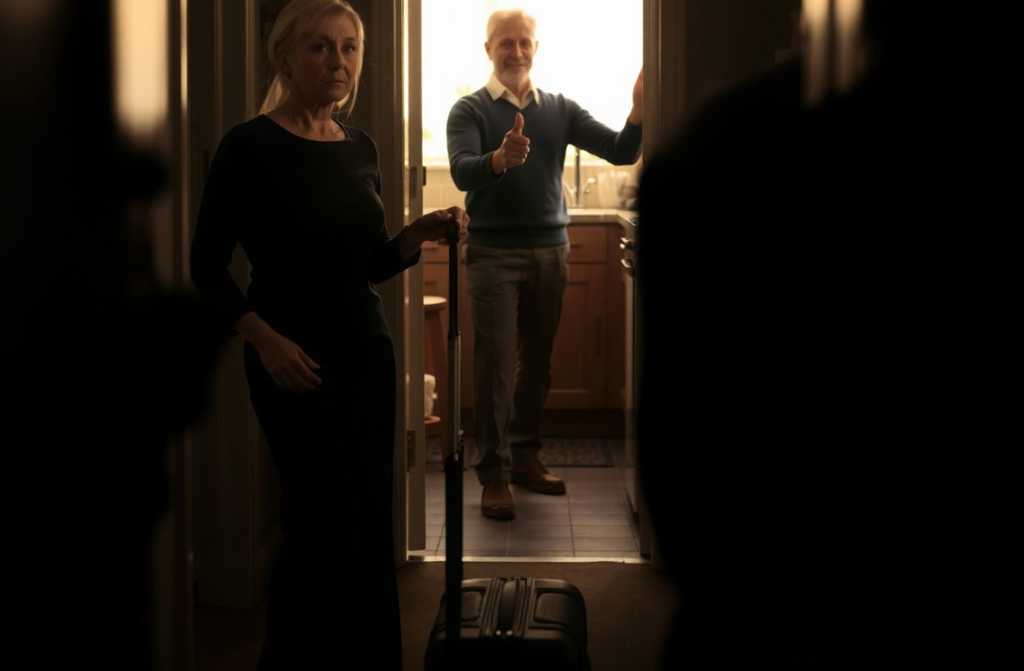
One Step Beyond
“Shall we book the next session for the same time next week? Will that work for you?” Harriet placed her pen carefully next to her notepad, keeping her professionalsome might say flawlesssmile firmly in place as she watched the man sitting opposite.
“That suits me just fine. Honestly, Id see you whenever you suggestedits like you pulled me back from the brink!” Graham straightened up, his smile genuine and warm.
He wasnt exaggeratinghe really did feel as though, after just a handful of meetings, his life was finally looking a tad less dire.
“My job is to support those who need it,” Harriet replied evenly. “Im truly pleased youre feeling some progress.”
Inside, though, Harriet barely avoided visibly shuddering. Shed been tense all day, and if she radiated calm now, it was only due to years in the job and an arsenal of carefully honed phrases that kept patients reassured while her own boundaries remained very much intact.
Graham glanced at his phoneone of those hopeful, secretive smiles flickered across his face, suggesting a rather cheery message had just pinged through. In a suspiciously sprightly hurry, he started gathering his coat and bag.
“See you in a week,” he said, pausing at the door. “Take care.”
“All the best,” Harriet replied with one of those pleasant, neutral tones only health professionals ever quite master.
The moment the door closed behind Graham, however, Harriets performance evaporated. Her poise melted. With a hefty sigh, she shut her eyes and leaned back, as if gravity had just gotten much more demanding. Half an hour until the next clienta precious interval to try and recharge enough to pass for a functional human being.
She reached for her glass of water, taking slow sips in the desperate hope it might quieten her racing heart. In her head, she counted up all the clients left that day, how important it was to stay sharp and empathetic through fatigue. But for this brief thirty minutes, she could just be herself. Not the psychologist. Not the Emotional Support Human. Just Harriet, who also desperately needed a tea break.
Three months ago, Graham had shuffled into her life. At their first meeting, he looked utterly defeatedlike hed been sent off to carry all the woes of the world while everyone else nipped to Greggs. The last six months had been a misery marathon: first, hell at work, then his mothers long illness (which required all his attention and a good chunk of his savings), and, for a grand finale, an endless series of rows with his wife that threatened to turn their family into dust.
Eventually, Grahams wife, after many solemn chats in the kitchen, had put her foot down.
“You must get help,” shed said, “or well both go down with this ship.”
Graham resisted for ages, sticking to the belief that therapists were basically well-paid agony aunts. But with enough gentle but unrelenting persuasion, plus a nudge from a colleague, he finally agreed to see Harriet.
From the start, his case set off a little spark of professional intrigue in Harriet. Yes, he was the classic Englishman mid-liferestrained, slightly prickly, but with a weariness in his eyes that made her want to help. At first, it was just another challenge: a puzzle. Howd you help someone whose life is a car crash in slow motion?
The early sessions went by the book: case history, target problems, step-by-step plans for digging out from under the avalanche. Harriet stuck to the tried-and-tested script, noting with satisfaction that Graham was, at last, starting to open up. He even smiled, sometimes. Not bad.
But then something began to shift. Harriet found herself thinking about Graham outside work. His honesty. His awkward attempts to change things. The way he could admit mistakes and still soldier on. She started looking forward to his appointments. She caught herself recalling lines from his stories at random timesalmost as if he might walk into her local Tesco and, shockingly, be not in crisis at all.
The realisation that she, a seasoned professional, had quietly fallen for her own client was not immediately welcome. At first, it manifested as fleeting daydreams to be dismissed. Later, the feelings insisted on staying for tea. Harriet did what she always told her patients to doshe tried to analyse her emotions rationally. But personal logic had clearly taken annual leave; she was swept up by a storm she had always believed was for the melodramatic.
She knew what was at stake, better than anyone. Her career, her reputation, the trust shed built with clients for yearspoof, all gone, in the time it took for the gossip to get round. Imagine the staff room at the GPs surgery! Besides, it would hurt her husband, Christiansteady, dependable Christian whod been by her side since university, built a home, weathered all the English weather together, literal and metaphorical. How did marriage get demoted to a bog compared to the excitement triggered by one complicated client?
She tried, naturally, to box it all up. On the outside, she smiled, listened, gave textbook advice and maintained boundariesnever letting the internal emotional riot peep through.
***
Christian, for his part, noticed something was up. Harriet used to regale him with work anecdotes over dinnerodd stories, tricky cases, the odd complaint about admin. Now she was remote, drifting off mid-conversation and offering only the worlds tightest, least contagious smiles.
One evening, as they sat with mugs of tea and a packet of custard creams between them, Christian gently reached across the table.
“Everything all right at work, love? Youve been a bit distracted lately.”
Harriet nearly jumped out of her chair. She looked away, buying time.
“Not exactly trouble,” she said, paddling cautiously through the conversation. “Justan unusual situation. You know me. Ill deal with it.”
She felt horribly guilty for the secrecybut the idea of telling Christian that her heart had staged a rebellion seemed utterly impossible.
“Youre amazing,” Christian said kindly. “Your clients are lucky to have you. Youre like their personal safety net.”
Those words echoed: “like a friend.” How sterile and reasonableand yet what she craved was much messier. Her mind spun up fantasies of life with Graham, more vivid every weekby now, it was like tuning in for the next installment of a soap opera starring her own wants.
Harriet knew she was sliding down a very slippery slopeignoring both professional boundaries and, worse, her own moral ones. Yet it was increasingly hard to resist. Grahams voice, his stories, his casual asidesshe replayed them endlessly, even though she knew she shouldnt.
Once, in a fit of madness, she made a fake social media account, just to check what Graham did outside her sessions. At first, it was simply curiositywho doesnt look people up these days? But soon, stalking his profile became a habit. Clicking through his photos, peeking at his postseach time matching a weird blend of guilt and thrill.
Sometimes, she took a step back and thought, “What, exactly, am I doing?” She knew it was inappropriate, but the harder she tried to restrain herself, the worse it got.
Secretly, it dawned on herperhaps she needed help just as much as Graham. Admitting that, though, felt like admitting total defeat: to herself, her marriage, her profession. So she kept up the act. Business as usual.
***
After one particularly emotional session with Graham, Harriet felt absolutely wrung outlike shed just run the London Marathon, backwards, in November. She wandered through the darkening streets of Cambridge, mostly oblivious to the passing crowd and the glow of the streetlights. It was getting harder and harder not to let the line blur.
When she finally made it home, Harriet just stood in the stairwell, procrastinating the return to family duty. She leaned against the window, staring at people hurrying about their evening, utterly unaware that her own inner world was mid-mutiny.
Just then, her phone rang. She nearly ignored itshed clocked off and, at this point, was not above throwing it in the bath. But then she saw the name: Graham. What now? Theyd only just finished a session.
She answered, trying to keep her voice calm. “Hi, Graham. Is everything alright?”
“II need to talk,” he sounded furious and barely in control. “Shes at it again! She just doesnt get it. Nobody understands what Im going through!”
Harriet gripped her phone so hard the poor thing squeaked. “She” could only be his wife; after months of sessions, Harriet had a pretty sad picture of their marriagelots of bickering, criticism, zero compromise.
“Do you mean your wife?” she asked, holding her breath. “Did you have an argument?”
“Shes doing my head in! Constant nagging, constant complaintsonly you seem to really listen!”
Inwardly, Harriet recoiled. She genuinely felt for Grahambut this was veering into territory that gave her ethical heart palpitations.
“You need to calm down and try speaking to her again, but gently. Clearly explain how youre feeling without snapping. Tell her you want support, not just criticism.”
Harriet gave her standard advice, acutely aware that it was like expecting someone to shift the Thames with a bucket. Still, she was obliged to try.
The call went on for half an hour. By the end, Harriet felt wreckedlike shed just lifted a piano up three flights. Her head ached, she was parched, and a single thought kept circling: Why is Grahams wife behaving this way? She was the one who suggested therapy, but now she seemed to be sabotaging it. Did she suspect anything? Or was it jealousy at his attempts to change?
Harriet climbed the stairs slowly, thinking the kind of thoughts that get you nowhere useful. She stopped outside her door, trying to compose herself before going in and pretending all was utterly normal.
“Darling?” Christian called softly from inside.
She turned. He was waiting in the hallway, frowning with concern.
“Why havent you come in yet?”
“Oh, just a work call,” she muttered, forcing what was probably the worst smile of her life.
Suddenly, a sharp headache drilled through her skull. Wincing, she put a hand to her forehead.
“You look dreadful,” Christian said, his voice full of worry. “Come on. You need a lie down.”
He helped her out of her shoes, quietly steered her to the bedroom, even promised to make her proper English teareal PG Tips, no cheap nonsense.
While she changed, Christian brought her painkillers and water. He tucked her in, drew the curtains, set some soft music playing on his phonelike he was running a wellness retreat rather than just being, well, brilliant.
“Have a rest, love,” he whispered, giving her hand a squeeze. “Ill be in the kitchen if you need me.”
As soon as the door closed, Harriet gave up the struggle entirely. She buried her face in the pillow and justcried. Quietly, so no one would hear.
Long after, as she listened to the comforting kitchen sounds of her husband at work (probably shelling out for an egg sandwichhis specialty), she felt the image of Graham slip inevitably back into her thoughts: the haunted expression, the way his hands clenched and unclenched during their sessions, the dashed hope that somehow, she could “save” him. But then, always, Christians face intruded: open, kind, always anxious to help.
How was she supposed to make sense of this mess? Christian had loved her for decades, supporting her with all the understated devotion of a good Englishman. He didnt demand grand gestures. He simply demonstrated love in the daily grind: taking out the bins, finding her favourite M&S biscuits, being there. Graham, by contrast, just needed herused their sessions to offload, never considering the weight she might be carrying herself. Yet it was Graham she couldnt stop thinking about.
Was it the intensity? The gratitude? Or just the unreliable chemistry of a mind overworked and desperate for novelty?
Harriet knew she was crossing linesfrom professional to personal, from moral safety to, well, emotional wilderness. There was no future in it. Even if, impossibly, Graham ever saw her as anything other than a professional, it wasnt worth the costleast of all to Christian.
She had to resolve things, but none of the options looked appealingabandon Graham as a client (leaving him in the lurch), confess to Christian (and devastate him), or just try harder to stuff her emotions back in the box (so far, not working).
Harriet sighed deeply and tried to clear her head. There had to be a way back to herselfand everyone else caught in the crossfire.
***
Christian had noticed Harriets exhaustion a while ago. At first, it was subtlestruggling to get up, skipping meals, forgetting their modest weekend plans. Soon, the symptoms got less subtle: pallor, absent-mindedness, conversations punctuated by fog.
He tried asking, he tried not asking, he offered to helpalways the same: “Im fine, dont worry, Ill handle it.”
But he did worry. He knew his wife too wellher sense of duty, her talent for lugging an entire emotional universe single-handed. He decided: enough was enough.
That evening, when Harriet arrived home, barely out of her coat, Christian was waiting. “Were going away. You need a holiday, and thats that. Ive spoken to your boss. Not over the moon, but he agreed. Your clients will be looked after.”
Harriet looked stunned. Was this the same Christian who tiptoed around her for weeks? She wanted to argue, but he put on his best no-nonsense face.
“This is NOT up for debate,” he said. “You are more important to me than anything else in the world.”
Harriet just stood there, shoes half-off, blinking. How had he arranged all this? And, stranger still, why did she feel so relieved?
“Whens the flight?” she asked, already suspecting she had little choice or energy to resist.
“Tomorrow,” he said, clearly afraid she might backtrack. “Start packing now.”
She sat down, letting it all wash over her. Maybe that was exactly what she neededan escape, a hard reset, someone else taking charge for once.
“Alright,” she said softly. “Lets do it.”
Christian grinned, coming over to wrap an arm around her shoulders.
“Thats my girl. Trust me, thisll be just the thing.”
***
Three weeks at the English seaside worked magic. The sea air, fish and chips on the pier, and the unfamiliar sensation of not having to care for anyone but herself undid monthsyearsof built-up exhaustion.
She and Christian woke without alarms, enjoyed breakfasts with a view of hedgerows, took slow evening strolls by the water. Harriet made a game of noticing things shed long ignored: the golden light on the water, the aroma from the bakery, the simple pleasure of sand between her toes. Evenings were spent talking about silly memories, plans for the garden, books she wanted to read.
And the best partblissful silence. No calls from the distressed, no Just five minutes texts, no having to be anyones rescue float.
Gradually, thoughts of Graham faded to greyscale. He became distant: a blurry background extra in the film of her life, not a main character. She stopped replaying their conversations, stopped imagining the impossible what-ifs. Instead, she saw Christian anew: the man shed chosen, who had never once let her down.
One night, watching the sunset over the waves, Harriets mind cleared: Christian was her anchor, her blessing. Shed wasted enough time on distractions, had chased restlessness instead of reality. Grahamjust a passing fever.
Back home, Harriet made her mind up: it was time for a change. She would leave therapy practice behind. She no longer wanted the stress, the responsibility, or the blurred boundaries.
Christian was frankly delighted. He hugged her with more enthusiasm than hed shown since England almost won the World Cup. “Ive been waiting for you to say that,” he confessed. “But I wanted you to decide for yourself.”
Harriet felt lighter than she had in years. Maybe she could teach, or volunteer a little. Their daughter was expectingshed be Nan soon, with purpose enough in shepherding the next generation and giving advice only when asked. Life didnt need to be dramatic.
Going home on the train, Harriet gazed out the window as open countryside flew by, feeling (for once) that she was exactly where she was meant to be: not looking for stormy seas, but quite happy with a well-tended garden, a full biscuit tin, and the person whod taken care of her all along.