Tom Harper stepped out for a loaf of bread and never came back. He left his halffinished mug of tea, his phone tethered to the wall socket, and that familiar just a sec that in our house always meant a quarterhour.
I waited the way you wait for an elevator thats stuck on the top floor: tense, but not panicking. Ten minutes. Thirty. An hour. When I called him for the third time, the ringtone echoed down the hallway.
I drove to the corner shop. The lady behind the counter recalled his blue jacket and the way hed pushed the loaf to the side, because hed forgotten his wallet. I emerged onto the pavement emptyhanded, with a strange conviction that Id done something wrong, though I had no idea what.
From then on it only got more bureaucratic: the local police station, please hold, endless forms, a photo for the socialmedia feed, a case number. That very evening I boiled water for pasta and, for the first time, couldnt eat a bite on my own.
Days turned into weeks, weeks into months, months into years. I learned to live like someone sharing a flat but using the things differently. I left his toothbrush in the cup, even though the paste had long since hardened.
I stashed his winter boots in a cardboard box, but I didnt label it with his name. I clung to a shy, stubborn hope that one afternoon the doorbell would ring and Id hear his voice, Im here, love. That hope dug a little hole inside me and settled there.
After three years I stopped turning my head reflexively at the street. After five I realised that missing isnt a temporary state but a mode of existence for both the gone and the left behind. After eight I started packing boxes: things I never use, things Im done with, things I shouldnt use if Im ever to move on.
Then a small, unassuming parcel arrived. No return address, just my name and postcode. Inside was a thin, lined notebook and a tiny metal key on a ring, stamped 12. The first page bore my name, written in Toms slanting, slightly crossedout script, and underneath: If youre reading this, I never made it back.
I sat at the kitchen table and read as if Id opened a book in the middle, lacking the strength to start at the beginning. The notebook was raw and sincereno grand declarations, just dates that jumped like stones across a stream. The first entry read: The day of the bread. I couldnt breathe.
I stopped at the crossing and thought, How on earth do I explain this? Then came a rush of jittery sentences about a debt Id gotten tangled in, so we could get through the end of the year; about a bloke who started turning up around the block; about shame that swells when you cant tell the truth. I knew if I came back Id dump everything on you. I hopped on the first bus north, as far as the sea could take me.
A later entry, weeks after, said: I thought Id return once Id settled the score. But a girl recognised me from that photo you took at the pier last summer. She asked if I was all right. I lied.
Then I became the kids saviour, the man he needed. Someone fell into the water; we pulled him out together. I stayed. Not out of love for her, but out of fear that my return would wreck everything. Youll say I ran away. Youre right. I ran away.
The notebook offered no I love you, forgive me or Ill be back on Tuesday. Its apologies were like scratches on glass: visible, but impossible to polish away. It listed a tiny coastal village and the name of a hostel where until the end of summer Ill help with the beds, then the boats. Below that, a line that stopped my finger: If you ever want to the key is for the locker at the harbour. 12. Ive weathered storms there.
I drove. I drove like someone trying to rewind a film to the scene where everything turns out differently. The seaside town smelled of fish and tar. I found the harbour and the low, weatherworn locker with the faded number.
The key fit. Inside lay trinkets: a thin rain jacket, an old pocketknife, a photograph of a boy clutching a paper flag. And an envelope addressed to Ethel my name, as Tom had always called me.
The note was short, uneven, apparently scribbled in haste. Ethel, I wanted to come back. Every day I rehearsed how to tell you so you wouldnt have to hate me. But Im a coward. I couldnt stand at the door emptyhanded and confess my foolishness. I stayed because someone needed me, and you youre better at coping on your own than I ever was. Im sorry. If you ever visit, ask for the lady at the pub The Ironside. Shell know more. Im probably not going to make it in time.
The lady at The Ironside was the same woman from the photograph. I recognised her by the hair tied back with a scrunchie and a thin bracelet with a single blue bead. She froze when she saw me, as if a character from a story no one believed in had stepped out. We sat on metal chairs that clanged against the tiles.
I knew him as John, she began before I could say a word. He came to help. First the beds, then the boats. He was quiet. He didnt drink. He didnt ask, he just listened. She smiled sadly. He wasnt my man. He was the bloke who rescued my son when a wave pulled him from the pier. He stayed because he finally felt he was useful.
I didnt ask about love. I didnt want to know whether theyd slept together. I wanted to know why he never called, even though he had my number and knew my voice.
I called once, she said after a pause, from his phone. No answer. I logged the date. I was on shift, my computer died, and I spent the whole day running up and down the flats. My call log had twenty numbers, none missing.
What happened next? I asked.
He fell ill, she replied. Nothing serious at firstjust tiredness. Then it got worse. She lifted her eyes. He begged me not to call him until he could come back on his own feet. He said if hed shamed someone enough, at least hed return on his own legs.
Was she telling the truth? Was she protecting his memory, or herself? My questions crumbled like stale bread in souptiny crumbs you can only swallow silently.
On the quay, next to locker 12, hung a notice for the drowned fishermen: names, patron saint, date of mass. His name wasnt there. Neither was John. Maybe that was a blessing, maybe a curse. Maybe it gave me the right to decide whether his story ends in death or in disappearance.
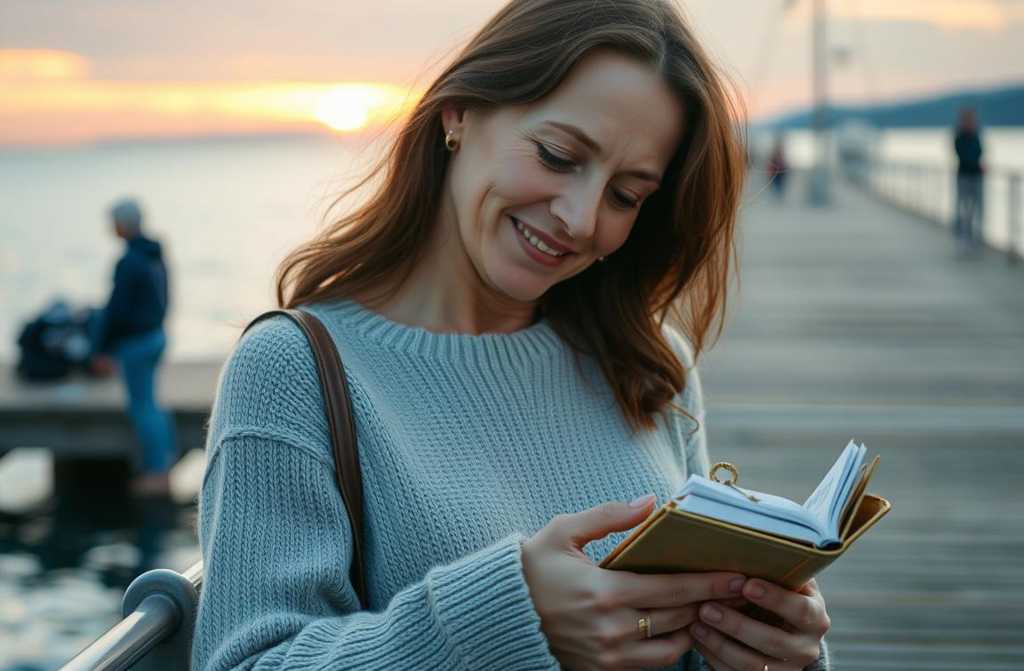
The sunset split the water in half. I sat on the pier and, for the first time in years, felt I could breathe a little deeper, even though the air hadnt changed. I ran my finger over the word Ethel in the notebook. From somewhere a childs laugh floated inperhaps the one in the picture, perhaps another who never knew us.
I walked home with the key in my pocket and a scrap of paper with the pubs number, vowing not to lose it. I placed the notebook on the table beside an empty mug. For a moment I wanted to toss it on the balcony grill, as one does with holiday letters, to stop them tempting you. Instead I slipped it into the teatin I keep for not now things.
Do I finally know why he didnt return? I know enough for every possible version to stay plausible. He was in debt, he was ashamed, there was a harbour and a boy rescued from the sea, he was a coward who couldnt stand at the door, and he had a strange sort of braverylate, halfheartedto leave me a key and some words instead of vanishing without a trace.
Im not sure what to do with that. I could go back again and chase answers that are obvious to some and impossible to others. I could write to the names on the notice and hunt for mismatches. Or I could simply close the teatin, put it on the shelf, and learn to live with the fact that not every question gets an answer.
Perhaps it was a betrayalnot in the bedroom, but in the decision not to come back. Or perhaps it was a botched rescue, painful and clumsy, but the only one he could manage. What he left me was more than a note and a key; he left a choice in how to tell his absence: as a wound, as an escape, as a tale of fear and salvation.
Now, whenever I go for bread, I linger a little longer at the bakery shelf than necessary. Sometimes I buy two loavesone I take home, the other I leave on a park bench. Not because I believe in signs, but because I want to remember that some roads can be turned around, and others cannot. Which road was ours? Im not sure. And perhaps thats why I still keep the key in my pocket.