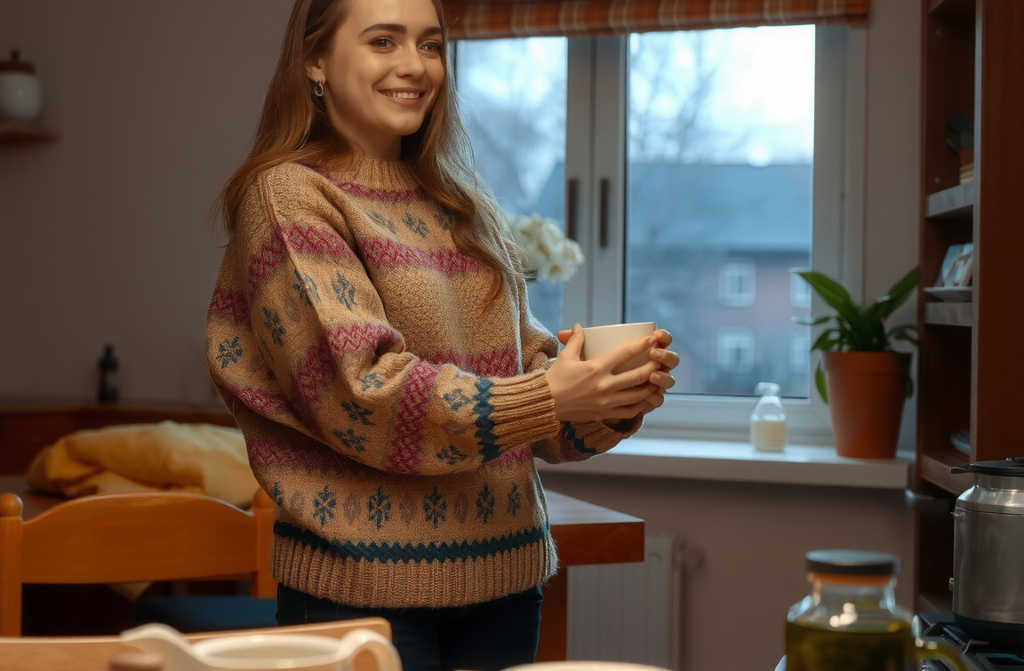
No Longer a Wife
“Colin, Colindid you check your blood pressure today? Did you take your pill?” Sarah peeked into the sitting room, drying her hands on her apron.
“Oh, for goodness sake, Sarah, can you stop going on about my blood pressure!” he grumbled, glued to his phone. “Ive got a meeting in an hour. Wheres my blue cotton shirt, that decent one? Did you iron it?”
“I ironed you three shirts last night. You said that one needed to go to the cleanersits got a stain on it”
“You always mix things up, honestly! Cant trust you with anything. Fine, just give me whatever. And make the tea strong this time, will you? That chamomile of yoursIve had enough of it to last a lifetime.”
Sarahs shoulders tensed, but she kept quiet and went to the kitchen.
Outside, November hung wet and grey over Birmingham. The council blocks opposite all had identical dark windows; only a couple glowed with lamplight. Sarah Charlotte Bennett, fifty-six, stood at the hob, watching the ancient kettle boilits enamel chipped at the spout. Shed meant to get a new one last spring. Never got round to it. Life just kept happening.
She spooned in tea leaves, made it dark and strong, how he likedno chamomile, no mint. She took the plate of sandwiches shed made at six: bread with butter and cheddar, crusts neatly cut off because his stomach was never right. She sliced a tomatothough November tomatoes tasted of cardboard, at least they had vitamins. She set it all on a tray and carried it through.
Colin Bennett, fifty-eight, sat in an armchair, scrolling through his phone. Three months ago, hed been made department manager. Before that, two decades as an ordinary engineer. But then Mr. Simmons retired, and as the departments most senior, Colin got the post. The new job meant a pay risean extra £120 a month, his own office, and apparently a completely different outlook on himself and the world.
Just put it down there, he jerked his chin at the coffee table, eyes not leaving the screen.
Sarah set the tray down. There was a moments pause.
“Colin, seriously, take your tablet. You said you had a headache yesterday.”
“I said I *had* a headache. Not today. Right, shush, Ive got a call to make.”
She left the room and stood in the hallway, by the coat hookshis overcoat, her padded jacket, and the umbrella with the bent rib hanging there. She lingered, staring into space. Then she picked up a duster and went to wipe the kitchen windowsill because she honestly didnt know what else to do with herself just then.
It had been like this for three weeks. Ever since Colin’s promotionsince that company seminar near Oxford. Hed come back different: sharper, new haircut, a gleam in his eye. Shed been pleased at first. Thought, good, hes got his spark back. Then she started noticing things.
He criticised supper. Hed always just eaten what she served, without a word; now, suddenly, the stew was too salty, cutlets dry, and tinned beans and sausage was student food, not for a manager. When she asked if she’d heard right, he looked at her as if shed said something daft.
“Sarah, you need to step it up in the kitchen. Something properroast fish, real salads, not that sad potato salad once a year.”
So she cooked roast fish. Made salads, too. He ate in silence. She thought, its fine now. But the next night he came home sullen, talking about his new mate Paul from the seminarhow Pauls wife doesnt have to work and she looks presentable.
Sarah said nothing. She could have reminded him she hadnt worked for four yearsnot since her department got laid off. That she was up while he slept, running the house, picking up his prescriptions, queuing for his heart pills and cholesterol meds, keeping tabs on their appointments, taking his car tyres to be changedbecause he was busy. She could have said all that, but she didnt. She was used to keeping quiet.
Then, two nights ago, something happened that made silence impossible.
He came home just past eight. She was just lifting chicken soup off the hoblean breast, second boil, because of his cholesterol. Two hours shed simmered it. The kitchen smelled of parsley and carrot.
“Whereve you been?” she called out from the kitchen.
“Ran late,” he muttered, pulling off his shoes right by the door, not putting them away.
“Soups ready. Come and eat.”
He came into the kitchen, looked in the pot, grimaced.
“Chicken again.”
“You know what the doctor saidyour cholesterol”
“Yes, I *know* what the doctor said. Im not a child. I just wish I didnt have to eat hospital food at home.”
She served up the soup, sliced the bread. He ate, stood, left his plate where it was. She washed up, wiped the stove, brushed crumbs from the table. Then she popped her head in to say there was still compote if he fancied it.
Colin was in the armchair, scrolling through his phone. She glimpsed something pink flash on the screen as he tilted it away from her.
“Will you have some compote?”
He looked up and stared at her a long moment, as if weighing things.
“No,” he replied. Then, after a pause, “Sarah, just look at yourself.”
She didnt catch his meaning.
“What?”
“Im saying, look at yourself. Whens the last time you saw a hairdresser? Lookyour hairs a mess. And that tartan housecoathonestly, youre like an old granny.”
In the kitchen, the tap dripped. Next door, someones TV mumbled indistinctly.
“Colin,” she said softly.
“What? Im just telling the truth. I have work dos now, socials. People come roundyour wife needs to look the part. And you Well, just look.”
“People come round?” Her voice was slow. “You havent invited anyone in three months.”
“Because Id be ashamed!” His voice was sharp, and that wordashamedhung thick in the air, like a stone in a pond. “Look at Pauls wifeshes smart, stylish. And you Youve let yourself go, wearing that old gown, not even colouring your hair”
“Colin Bennett.” She used his full namefor once. “You’ll be sixty soon. Im fifty-six. Were not young anymore.”
“Exactly!” He got to his feet as if hed proven something. “All the more reason to look after yourself! Ive joined a gym, I go. And you just sit at home all daycant even”
“Sit at home all day,” she repeated, her voice strangely steady. “All right, Colin. Got it.”
She left the room and quietly closed the door behind her. In the kitchen, she put the bread away, turned off the light above the cookermoving methodically. But inside, something had shifted. Not broken, not crashedjust moved, like furniture in a room thats been pushed about. It felt strange at first, but thenmaybe it shouldve been done ages ago.
She didnt sleep that night. Lay on her side of the bed, staring at the ceiling. He started snoring quickly, as always. She listened to his breathing and thought.
Thought about the last ten yearsliving as caretaker: up at dawn, cooking, clearing, running errands, doctors visits, taxi rides now that he’d sold the car three years back, his headaches at the wheel. Paying from her own bank card for every Uber. Reminding him about his meds: Lisinopril for pressure, Atorvastatin for cholesterol, and in spring, supplements for his jointsalmost £20 a box. Keeping notes, checking boxes, never missing a dose, because the doctor said a break in treatment was dangerous.
Now hed told her she was an embarrassment. Said she looked like a country granny. That Pauls wife was better.
Sarah lay there until one in the morning and thought a simple, blinding thought: enough.
Not Ill leave, not Ill file for divorce, not Ill make a scene. Simplyits enough doing things he doesnt notice or value. Enough being a resource, turned on and off like a kitchen tap: on when needed, off when not. Let him handle it himself now.
In the morning, she got up as usual, at six. Made herself chamomile teaher own, the one he disliked. Sat at the table with her cup and phone. She went to the website for the fancy salon at the Westfield. £40 minimum for a cut. She booked for Wednesdayfirst time ever. Found free Nordic walking classes in the park, Tuesday and Thursday mornings. Added it to her phone.
When Colin came to the kitchen at seven, only his mug sat on the stove. Bread was in the bread bin, butter and cheese in the fridge. He could help himself.
“Wheres breakfast?” he asked, looking round.
“Breads there, butters there, cheese in the fridge,” Sarah said, eyes on her phone.
He lingered, silent, made his own tea, sliced his own bread, and ate standing by the fridge. Went to work without another word.
She watched the door close after him and feltrelief. Something like it, anyway.
That Wednesday, Sarah turned up at the salon. The stylist, a young woman with a shaved side and a jumble of earrings, studied her hair.
“When did you last have it coloured?”
“Three years ago, Sarah admitted. Never got round to it.”
“Lovely growth. Well do a gentle highlight, nothing harsh, and a tidy cut.”
She sat in that chair for two and a half hours, watching the woman in the mirror slowly emergenot a young woman, but a living one. She spent £75. Stopped at Boots on the way home and bought herself a proper face cream, one for mature skin, not the bargain stuff. Stood in the aisle, thinking £15.99 was a bit much. Then thought about Pauls wife and bought it anyway.
Colin noticed her hair that eveninglooked at her, said nothing. She hadnt expected him to.
The following week, his blood pressure pills ran out. Sarah used to keep track, looking inside each packet and dashing out days before they finished. That time, she found the box empty and simply set it on his nightstand. Let him see.
Colin came home, changed, walked right past the box. She didnt remind him.
Next day, he hunted in a panic and found the empty packet.
“Sarah!” he bellowed from the bedroom. “Therere no pills left!”
“I know,” she called from the kitchen.
“So why havent you been to the chemist?”
“Youre a grown man, Colin. You can go yourself.”
A pause. A long one.
“But Ive got work.”
“Ive got things to do too.”
She didnt elaborate. She *did* have things to do, now: Nordic walking in the park with Claire and Rose, both women in their late fifties. Claire was a school governor, laughed so loud the pigeons scattered. Rose, quieter, was retired and looked after grandchildren. They strolled and chatted in the chilly air, and Sarah realised shed missed out on simple pleasures.
Colin bought his own pills. Came home with that air of a man whos scaled Everest. He set the new packet on the table. Didnt comment; nor did she.
Around then, Sarah rang her old work friend Janet, from her days in accounts.
“Jan, are you free Saturday?”
“Why, whats up?”
“Lets go outto the cinema or just for coffee.”
“Are you all right?” Janet sounded suspicious: going to coffee shops wasnt their routine, not for years.
“Better than usual,” Sarah told her.
On Saturday, they met by New Street station. Janet gaped at Sarahs hair.
“Sarah, what have you done! Looks fabulous!”
“Just a trip to the hairdressers.”
“At last! I kept thinkingjust when will she”
“Well, nows the time.” They went to a café. Ordered lattes and cake, took a table by the window. Large, lazy flakes of the first real snow drifted past the glass, melting in the street.
“Go on, then,” Janet prompted.
So Sarah told her. About Colins promotion, the seminar, the new him. The stew, the remarks, the bit about look at yourself and ashamed. She didnt cry. She spoke with a certain distance, as though narrating someone elses story.
Janet listened, holding her mug.
“So what have you decided?”
“Ive not made some grand decision,” Sarah replied. “Ive just stopped doing what he doesnt appreciate. Not out of spite. Justbecause theres no point.”
“No point,” Janet repeated. “I get it. Youre doing the right thing.”
“I dont know if I am or not. Its justI cant go back to how it was.”
Janet nodded, scooping up cake.
“Did he even notice?”
“Me not running round after his tablets? Yes. Me not ironing his shirts every day? That too. Yesterday he wore a wrinkled one he dug out himself, left without a word.”
“Didnt shout?”
“No. He seems not to know what to say. Hes used to me just silently taking it. But now Im quiet in another way.”
Janet gave her a searching look.
“Have you thought of divorce?”
“I havethough not yet. First I need to figure out who I even am, without his meds, his stews, his shirts. I havent seen myself for years.”
They stayed longer, ordered another coffee, parted in the dark, snowy night with an embrace at the station.
At home, Sarah found the kitchen as he’d left it: dirty mug, empty plate from a fried egg hed made himself. She looked at them. Once, shed have washed up straight away. Now she left them.
“Whereve you been?” he asked, not looking up from the television.
“Out with Janet.”
“Long time.”
“Yes.”
She washed her face, applied her new cream. Looked into the mirrora not-young face, but living, with crows-feet and a crease at the mouth. Hair now laced with soft highlights. Not a country granny. A woman.
December brought brisk cold. Sarah bought herself decent winter boots, real leatherno more cheap wellies shed worn for years. £90, but worth every penny.
Something was changing at home. She still cooked, but now made what she fanciedproper stew with rich meat, chicken and potatoes, shop-bought tortellini now and then, because why not? No more steamed, tasteless diet cutlets for him. The doctor had explained his diet. He could take care of his own needs.
His shirts got washed with the rest, no special cycle or gentle spin. Once, shed kept his clothes separate, careful not to crease them. No longer.
He noticed. Stayed quiet. Occasionally made snide remarks:
“Tortellini? Again?”
“Yes, tortellini,” she said, voice even.
“Have you stopped cooking completely?”
“Hardly. There was soup yesterday. And a roast on Sunday.”
He left the room in a huff, but had no answer. What could he saywhy arent you dedicating your life to me? It would have sounded absurd, even to him.
Sarah continued her park walks on Tuesdays and Thursdays. Got closer with Clairewho recommended a good doctor, so Sarah finally booked a long-overdue check-up. She also joined a free watercolour class at the library on Wednesdays. Not because shed always wanted to paintbut just, why not? Two hours where there was nothing to do but move a brush over a white page.
Mid-December, Colin started working late. In the past, Sarah would have worried, called, kept dinner warm. Now, she ate when she was ready and went to bed when she felt like it. Hed arrive at nine, ten, once even at half past eleven. She didnt ask; he didnt explain.
She figured out there was another woman, not by panicked text messages but by the strong, unfamiliar perfume he brought home one night: sweet, cloyingnothing like the office or a pub. She smelled it in the hallway and thought, so thats how it is.
Strangely, it didnt hurt. She waited for pain, but it never came. Only a tired curiosity, and something elsesomething she recognised after a moment: relief from responsibility. If he left now, that would be his decisionnot her failure.
She said nothing. Slept well that night.
The pattern held for three weeks. He went to work, stayed out, took calls from the bathroom. Once, Sarah caught part of a conversation through the door: “Im saying, Eliza, Saturday” Eliza. Fine.
During those weeks, she thought a lot. About sharing thirty-two years with this manraising their son Matthew, now living in Sheffield with his wife and two children. She recalled how, in his youth, Colin had been different: cheerful, playful, would take Matthew fishing. When did he become like this? She couldnt name the yearlike water seeping into a cellar, slowly, then too late to bail out.
She thought about how shed poured herself out for him, and let herself be neglectednot just on the outside, but within. Music, books, travelwhat did she like now? Her own preferences had been drowned for years in a sea of stews and medication timetables.
The watercolour class turned out to matter more than she expected. The teacher, Mrs. Fletcher, in her early fifties, showed how to blend colours, how to soften the outline of an apple. Sarah hadnt touched a paintbrush since Year Six. Discovering that the yellow and green could bleed together so prettily was, in its small way, a revelation.
One Wednesday, Mrs. Fletcher told her, “You have a good eye for colour, Mrs. Bennett. Truly.” She said it casually, but it mattered more than Sarah could say. Colin hadnt offered a kind word like that in years.
In early January, Eliza seemed to have reached the end of her story. Sarah learned of it not from Colin, but in the way his routine changedhome by seven, glued to the news. No more bathroom calls. He looked older, coughed more.
She brewed soup; he ate it in silence. One afternoon, he sat beside her in the kitchen, while she drank her tea, and muttered to no one in particular:
“Cold out today.”
“Yes. They said minus twelve.”
“Mm.”
Nothing more.
Later, an old friend, Alan, rang about their shared allotment, and in passing said, “Heard about Colin and some young ladyshe dropped him in the end, I heard.” Sarah said, “I heard something,” and Alan cackled, changing the subject.
Sarah pieced it together: the woman probably fancied herself with a successful manager, expected meals out and excitement, and got a fifty-eight-year-old chap with high blood pressure and cholesterol, fussy about his tea and shirts, and no doubt whingeing on about his health. No wonder it hadnt lasted.
She didnt pity him. She felt only what you feel when an old toothache finally ceases: not joy, just the sweetness of absence.
By February, his health had worsened, predictablyhe was no longer meticulous with his meds. Sometimes he missed a dose, sometimes doubled up to make up for it. She noticed the muddle: packets out of order, two pills at once after a missed day. She kept quiet. The GP had told him often enough.
His blood pressure yo-yoed. He looked pale, sometimes complained of ringing in his ears, would wake up dizzy. One morning, he admitted, “Bit woozy this morning.”
“Best see your GP,” she said.
“Youll book me in?”
“Ring yourselfphone numbers on the NHS card.”
He looked at her, seeing she wouldnt budge.
“I dont remember the system.”
“Colin, youre a department manager. Youll manage.”
He booked himself in. Came home with a new prescription. Brand new medication, to be taken alongside the others.
He put the piece of paper on the table. “Here.”
“Very well,” she said.
“Youll go buy them?”
“Im passing the chemist tomorrow. Give me the money.”
That stopped him short. Shed always used the household cash and kept the receipts. Now it was strictly quid pro quo.
He handed over the money; she bought the pills, set them out with the rest. Didnt write out a schedule, as shed done for years. Let him cope.
March saw a thaw. Snow retreated in greasy puddles; the terrace kids chased rainbows in the gutter. Sarah took to walking just for the sake of it, sometimes without her Nordic poles, buying herself a new spring coatnot a tent, but something neat with a belted waist, pale beige. She checked herself in the shop mirrorshe hadnt bought something just because she fancied it in years.
That month, Matthew and his wife Emma came down for a stay. Matthew, their tall, gentle forty-year-old, looked more like Colin’s younger self, but was softer in manner. Emma was easy company; they brought her a jar of honey and a box of biscuits.
At supperpotatoes roasted, a bit of pickled herring, her own mums brawnColin was subdued. Matthew chattered about work and the kids, Emma quizzed Sarah about her art class.
“You paint, Mum?”
“Learningwatercolour.”
“Brilliant. Will you show us?”
She brought out her practice sheetsan apple, a vase of tulips, the view from the library window. Matthew studied them, Emma said they were lovely.
“Mum, you look years younger!”
“I just went to the hairdressers, at last,” Sarah laughed.
She could tell Matthew cast glances at his dad, but he kept his questions for later. While Emma was out shopping the next day, he joined Sarah in the kitchen as she was making tortellini.
“Mumis everything all right?”
“Why?”
“Dad seemsflat. Is he ill?”
“Blood pressures not great. Hes seeing the doctor, looking after himselfhes a grown man.”
Matthew toyed with a bit of dough.
“You havent, you know, fallen out?”
“No,” she said, and it was truethey hadnt rowed. They just orbited the same house on separate paths.
“Mum, youd tell me, wouldnt you?”
“Matthew, Im fine. Truly.”
He seemed convinced, and she realised with a start that she meant it: she *was* fine.
They left Sunday. The flat grew quiet once more. Sarah cleared the kitchen, washed up, wiped down. Colin watched television.
Late that night, he shuffled in and poured himself a glass of water, gazing out the window.
“Matthews looking well,” he said.
“Yes, very.”
“And the kids”
“Yes.”
He finished his water and left. Sarah stood by the window, watching the last snow fall over the estate, under the orange streetlamp, silent and muffled.
April started with a crisis. Colin got up and felt so giddy he had to sit in the hall. He called out for Sarah.
“Sarahsomethings wrong.”
She came out, saw him slumped against the wall, face ruddy, sweating.
Come on, lets get you to bed.
She helped him up, fetched the blood pressure monitor. It read 185 over 110dicey.
Take your captopril, its in your drawer. Lie down, dont get up. Ill check on you in a bit.
“Where are you going?”
“In the kitchen.”
She listened for him while the kettle boiled. She heard him rustling about for his tablet. An hour later, his pressure had eased, down to 160 over 95better.
“Just stay in todaydont go to work,” she said.
“I should go in”
“Phone, say youre ill. Itll keep.”
He stayed. She brought him some tea and dry toast. Not because hed askedjust because. Theres a difference between refusing to be put-upon and watching someone suffer.
He stared at the ceiling.
“Sarah” he muttered after a long silence.
“What?”
“I I suppose Ive acted like a bit of a prat these last few months.”
She didnt answer straight away. She sat at the edge of the bed.
“Yes, Colin,” she said levelly. “A bit of a prat.”
“Well,” he said, “that promotion… it went to my head, I suppose. Felt things ought to be different. That Id finally made something of myself.”
“And you did. Head of your department.”
“Right. And you” He trailed off. “Wasnt what I meant.”
“I know what you meant,” she said quietly.
She got up, took his mug, and went back to the kitchen. It wasnt a reconciliation, no grand hugs or dramatic words. He said he’d been a prat; she agreed. That was all.
April rolled by, then May. She kept up her walks and painting. Claire invited her to the theatreshe hadnt been in years. They saw a play at the city drama house, good seats in the stalls. It was lovely: to just sit quietly, sipping an orange juice, watching other peoples lives unfold on stage.
At fifty-six, Sarah was just realising it was not the ending of anything, but the beginning of something altogether different.
She and Colin still shared a roof but lived in gentle parallel. He no longer criticised the food; didnt mention Pauls wife. Sometimes they made small talk about ordinary things. Sometimes in the evening, hed be in the living room watching telly while she read a book Claire had recommended. It was peaceful enoughfamiliar, but with a new texture: she no longer felt she owed him anything.
One evening he asked if she could do an online pharmacy order for his pillsit worked out cheaper.
“I dont know how to do that,” he admitted. “Youre better at these things.”
“Its easy. Type in the name, add to the basket, pick your nearest pharmacy.”
“Well, youre just youre cleverer with all that.”
“I am. You can learn too.”
He learned. Spent ages fiddling with his phone, called her over once to ask which button to press. She showed him. He finished it himself.
She realised this was important too: not to do things for others that they can do themselves. Once, shed thought helping meant doing everything. Now she knew that was not help at allit was erasing another person.
June brought heat. She bought herself a new summer dress, floral, light. Looked in the mirrorlooked good, not like any country granny. Just a woman in a nice dress.
Shed seen couples her age cope all sorts of ways: some fought, some were best friends, some just endured each other. She and Colin had found a fourth way: neither war nor friendship, nor indifference. Just two people, keeping house together.
She didnt know what the future held. Sometimes she remembered Janets question about divorce. It wasnt off the table. But first, shed get to know herself again.
Summer drifted by. She went alone to visit Matthew in Sheffield for two weeksfor the first time in years, Colin stayed home. He cited work. She packed a case, cross-stitched a pillow for her granddaughter Emily, something shed learned off YouTube, and went.
Two weeks with Matthew and Emma, with little Sam (six) and Emily (four), were the best two weeks she’d had in ages: walking the boys to school, making porridge in the mornings, reading them stories at night. This kind of looking after was differentfreely given, not wrung out or demanded.
Matthew often asked, “Are you really okay, Mum?” She always answered honestly that life was oddbut she was.
She returned tanned and rested. Colin met her at the door. “Youre back then,” he said. He carried her bag. It wasnt a lot, but it was something.
August was clammy. She set up a tiny fan in the bedroom, bought herself half a watermelon from the marketate most of it herself, but cut a bit for him too. He ate it and, for the first time in years, said, “Thank you.” For the food, even. It felt odd.
In September, with chill mornings and golden leaves outside, the inevitable happened.
On a Friday night, Colin came in about eightgrey-faced, moving gingerly. She was sitting in the kitchen with a book.
“Sarah,” he said at the door, “Im not well.”
“What is it?”
“My pressure, I think. Heads pounding. And here he pointed to his chest, theres a weight.”
She stood. Looked him up and down.
“How longs it been like that?”
“Since lunch, Id say. Thought it might pass.”
“Take a pill?”
“Took one at three. Didnt help much.”
“Sit down.”
He sat at the kitchen table. She fetched the blood pressure monitor: 190 over 115. Worse than in April.
“Colin, this is bad. You need an ambulance.”
“Oh, no, not an ambulance. Maybe another pill?”
“No. 190 and chest painyou cant fix that with a second tablet. You need a doctor.”
“Will you call, then?”
She paused. She stood there, monitor in hand, studying him.
She saw a frightened man with an ashen face, clutching his chest. She felt compassionnot apathy, not detachment, but genuine pity. He was unwell and scared. That was undeniable.
But she also saw clearly: for a year hed looked through her. Said things that could never be unsaid. Shed ceased to be a person to him long before she stopped fussing over him.
She knew what she wouldand wouldntdo.
“Colin,” she said, voice calm, “you have your phone. You know the number for ambulance services.”
He stared at her, bewildered.
“What?”
“Call 999. Say your address, say its high blood pressure and pain in your chest. Theyll come.”
“Sarah” His voice was small, almost childlike. “Arent you going to help me?”
“Ive helpedyouve had your pressure taken; I told you to get a doctor. Now its your turn.”
“But I”
“Colin.” She set the monitor down. “You can ring for an ambulance. Youre a grown man, a manageryoull manage.”
She left the kitchen, walked down the hall to the sitting room, and half-closed the door. She didnt slam or lock itjust left it ajar.
From the kitchen, she heard his voice, faint and shaky.
“Hello Yes, ambulance please. The address is”
She made herself a cup of chamomile teahers, the one she likedtook it and her mug past him as he sat on the phone. He glanced up. She stood at the window, looking into the darkness.
The street below was empty. The orange glow of the lamp cast patches on the wet tarmac. Leaves from the big plane tree were heaped, rain-dark, at the kerb. The bench outside the block was empty.
He finished on the phone and there was a silence.
“Theyre on their way,” he said.
“Good,” she replied.
“Sarah, will you come with me to the hospital?”
She looked round from the window. An ill man, hand pressed to his heart, frightened. And she felt sorry for himsincerely. He was an older, ailing man in trouble. There was no malice, no triumph in her.
“No, Colin,” she said gently. “I wont go. The doctors will see to you.”
“Sarah”
“Theyll come soon enough. Its their job.”
She took her mug and went back to the sitting room, door softly drawn. She sat by the inner window, and gazed outat the streetlamp, at the shadowy skeleton of the plane tree, and the distant flats across the road. In the kitchen she could hear rummaging, then quiet, then the lifts rumble.
The ambulance came within twenty minutes. She heard him open the door, heavy footsteps, brisk professional voices: “blood pressure, monitor, may need to come in.” He spoke, meek as a schoolboy.
Then: “Is your wife home?”
And Colins voice, awkward, “She is. But shes not coming.”
A pause, the doctors neutral, “All right, sir. Wrap up warm and come along then.”
The door closed, the lift rattled down, and then there was silence.