A Second Family
I woke at three in the morning because the house was too quiet.
Not just quiet, but that strange, unnatural sort of quiet that comes when something familiar vanishes. You cant put your finger on it, but theres an emptiness in the place where something ought to be.
Ben wasnt sleeping beside me.
I lay there for a minute, just listening. Rain whispered against the window, a car passed far off on the main road. The clock on the nightstand read 3:14. I reached across the bed to his sidethe sheet was cold.
Hed been gone a while.
This wasnt unusual in itself. Sometimes Ben struggled to sleep and would sit up in the kitchen or stand outside on the patio, saying he had too much work on his mind. Id got used to it. In twenty-two years of marriage, you get used to a lot.
I got up, threw on my dressing gown and went to the kitchen for a glass of water.
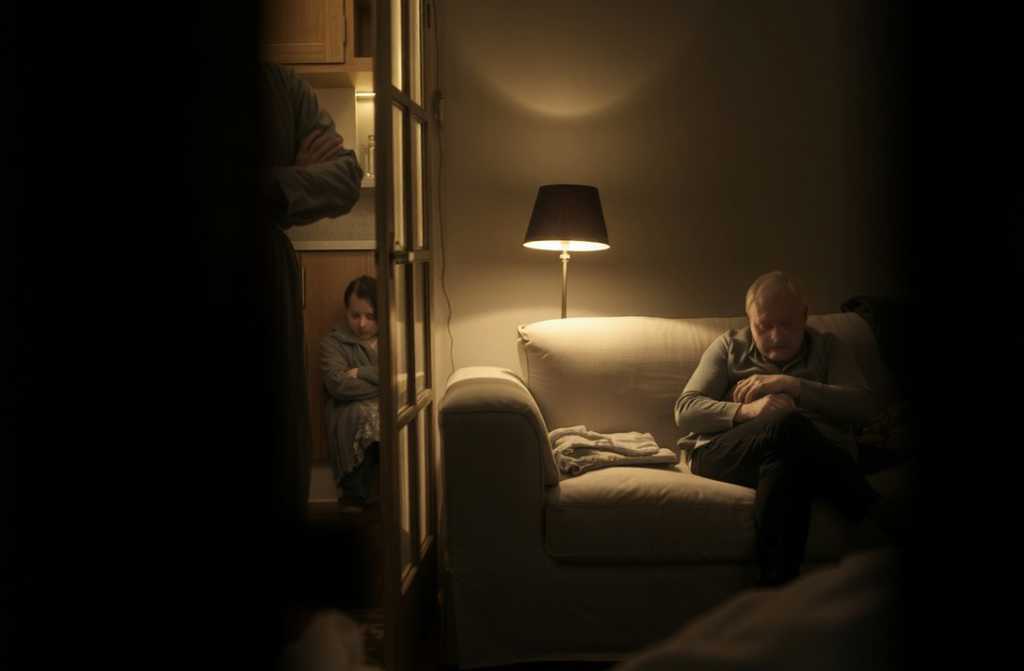
It was dark in the hallway, but a thin sliver of light crept under the living room door. I moved quietly, in case Ben was dozing on the sofa. As I got closer, I heard him talking. Softly, almost a whisper, but clear.
I understand. But I cant talk now. Shes at home.
A pause.
Dont. Its alright. Ill sort it.
Another pause, a little longer.
Matthew asleep? Good. Tell him Dad will be there soon.
I stood in the darkness of the hall and didnt move. The words dropped inside me, slow and heavy, each one adding its weight.
Matthew. Dad.
Ben is fifty-four. Our son, Oliver, lives in Londonhes twenty-eight. There is no Matthew in our lives. There never has been.
I didnt go into the living room. I turned back to the bedroom, lay down, and closed my eyes.
Sleep didnt come.
I lay on my back and stared into the darkness where the ceiling should benot quite knowing where to look. My thoughts didnt whirl or tangle as they usually do in the dead of night. Instead, they were sharp, cold, lined up in order.
Matthews asleep.
Dad will be there soon.
Shes at home.
She. Thats me. I was she. Not Lizzie, not wife, not love. Just “she”. An obstacle, something to be warned about.
I heard Ben return to bed. He undressed quietly and lay beside me. I didnt move. I could feel the heat radiating from his body, but now it felt foreign.
After a few minutes, his breathing settled and I realised hed fallen asleep.
I didn’t close my eyes again until morning.
I am Elizabeth Grace Harper, fifty-six. I teach English Literature at a teacher training college. We live in Oxford, in a three-bedroom flat on the fifth floor of a red-brick building on St Annes Road. Twenty-two years ago I married Ben Harper, a design engineer. We have a son.
That was my lifethe whole of it, until last night.
Ben got up at seven, as usual. He shaved, ate breakfast, and asked if any of yesterdays stew was left. I told him there was, and warmed it up. He ate in silence, reading something on his phone. I sipped my tea and watched him.
I watched and thoughtwhat do I actually know for sure? One conversation, a handful of phrases. Maybe its a nephew? A friend? Maybe all this is something else?
But Im a literature teacher. I know how to read between the lines. And shes at home didnt read as anything else.
What time will you be home tonight? I asked.
The usual. Ill be back by eight, maybe half past.
Alright.
He left. I stood by the window and watched as he walked to his car. Straight back, confident steps. The grey coat Id chosen with him three years ago in John Lewis.
I didnt cry. I thought I should, but the tears werent there. There was something else, something like the feeling when you struggle too long with a puzzle then suddenly see the mistakenot joy, not relief, just clarity.
I picked up the phone and rang work. Told them I was unwell. For the first time in years, I called in without any real reason.
Then I began to think.
Ben worked for a design firm. He travelled often for workManchester, Birmingham, sometimes London. Sometimes a week, sometimes two. I never asked for details. I trusted him.
I logged into our shared email. Wed set it up years ago for household bills and such. Ben hardly used it, but I checked it from time to time. Only messages from the cleaner, offers from shops, nothing of interest.
Then I remembered his work email. The password was written in a little blue notebook he kept in his desk drawer. Id never looked in that drawernot out of laziness but on principle. Everyone needs their own space.
I opened the desk, found the notebook. The password was there, neat and careful.
I logged in.
For two hours I went through his emails. For the most part, they were as boring as I expecteddrawings, paperwork, correspondence with clients, all completely professional. I was beginning to think maybe Id imagined it all.
Then I found a hidden folder, Archive.
Lots of messages, all from the same address. Over several years.
I read them slowly, all the way back to the beginning.
Her name was EmmaEmma Ward. Fourteen years younger than me. Theyd met eight years ago at a workshop in Manchester. Matthew, the little boy Id heard about, was born six years ago.
Six years.
I sat at Bens desk and thoughtsix years. Six years Id made dinner, washed shirts, gone on family holidays, celebrated wedding anniversaries, worried when he was ill, planned next summers plans. Six years. All the while, the man beside me had a child.
I didnt drop my cup; I didnt leap up. I just went on reading.
Emma wrote wellconfident and lively. She loved him, clearly. And the Ben in those letters was someone elselighter, openly affectionate. Hed never written me letters like that. In truth, we barely ever messaged unless it was running late or can you buy bread.
The last one from her was three weeks ago. Shed written that Matthew had started nursery, that she missed Ben, that she wanted certainty. She underlined it, right there in the email.
He hadnt replied. Or if he had, it wasnt in this inbox.
I closed the laptop, got up, and made tea.
While the kettle boiled, I stood at the window and looked down at the courtyard. A small brown dog ran across the grass, tugging at its lead, dragging a kindly old man in a blue jacket along.
I thought, I should talk to Oliver. Then, noI need to think this through myself first.
I poured my coffee and made myself think methodically. What did I actually want? Not what I felt, not what I ought to feelwhat did I want?
The answer came quickly and surprised me with its simplicity.
I wanted the truth. Not explanations or excusesjust the truth, said out loud. I didnt want to be the audience in a play, applauding unawares, while Ben danced between two lives.
But before I asked, I needed to be certain Id understood everything.
Over the next few days, I lived in two realities.
In one, I was ordinary Lizzie Harpergoing to work, marking books, asking Ben how his day was, cooking, smiling, giving nothing away. Oddly, it wasnt hard. Perhaps because hed never really looked at me closely anyway. Maybe because I had always blended in.
In the other, I gathered factsslowly, the way Id prepare for a difficult lesson.
I found Bens other phone, a cheap old thing, in a sports bag he used for trips. I didnt read every message, just photographed a few. For myself. For proof.
I memorized the address from one emailManchester, Cheadle Road. I never went there. I didn’t need to see their life. I knew enough.
Then I phoned a solicitor. Booked an appointment with Rachel Beaumonta sharp, no-nonsense woman in her mid-thirties with a neat bob.
Tell me whats happened, she said, opening her notebook.
I laid it outsuccinct, factual, emotionless.
She listened, making notes.
Who owns the flat? she asked.
Both of us, equally.
Any other property? Car? Cottage?
The cars his. No second home. We have a little savings account together.
Alright. She put down her pen. Are you sure you want a divorce?
It was an interesting question.
I want to talk to my husband first. But I want to know my options, so I can speak honestly.
Thats sensible, she nodded, Lets go through it step by step.
We spent nearly two hours talking. I left with several pages of notes in her perfect handwritingand the understanding that I had choices. That alone was valuable.
I liked having choices.
I planned to talk to Ben on Saturday.
Not because it was convenient, but because four more days would let the facts harden in my mindso they were less sharp, more like handled stones.
On Friday evening, I phoned Oliver.
Hes been in London for five years, working at an architects office, and had just started seeing a woman named Sophie. We usually spoke Sundays.
But I called Friday.
Mum? Everything okay?
Yes, love. I just wanted to talk.
A pause.
You sound… off.
Im having a serious conversation with Dad tomorrow. I wanted you to know.
What about?
I hesitated.
Ill tell you after. But I want you to knowwhatever happens, you are our son and we both love you. That wont change.
Long silence.
Mum, are you getting divorced?
I dont know yet. Thats the truth.
Whats happening?
Later, Olly. Ill call Sunday and explain. I just wanted you to know Im alright.
He was quiet for a moment, then said gently, Okay. Im here, if you need me.
I know. Goodnight, love.
Saturday dawned grey and colda typical November in Oxford. Ben rose late, as he did on weekends. I made breakfast. We ate in silence. He flicked through The Times; I stared out the window.
At last he said, Ill go wash the carits filthy.
Ben, hang on. We need to talk.
He glanced up, calm, unruffled. What about?
I stood, put the dishes away, and came back to face him.
About Matthew. About Emma Ward. About Manchester.
There were a few seconds where nothing happened. He just looked at me. Then he set the newspaper aside.
How did you
It doesnt matter. I know. Ive known for days.
Silence.
Hes six, I said. Not a question, just a statement.
Lizzie
No, Ben. You first. Im listening.
He got up, walked to the window, stared out. After a moment, he turned back.
It wasnt planned. It just happened. I never meant it.
I see.
When I knew about the baby, I wanted to tell you. Really. I tried, a few times.
But you didnt.
No.
Eight years, Ben. Thats not just happened. Thats a choice.
He said nothing.
Do you want to be with her? I asked.
He didnt answer immediately. He stared at the floor for a long time, then, “I dont know.
Probably the most honest and most useless answer he could have given. I dont know meant eight years living between two women and never choosing either. Emma was waiting for certainty. Id been living an illusion.
You have a son, Benhes growing up without his father.
I see him.
I know. I read the emails.
He looked up.
You read my mail?
Yes. Sorry if it upsets you.
I wouldnt have said that at another time. It came out almost wry. I didnt want irony, but there it was.
He turned back to the window.
What do you want from me?
One thing: choose. Honestly, finally. Not because I ask, but because you owe it. To me. To Emma. To the child. To Oliver, in the end.
Does Oliver know?
No. Ill ring him today, after this.
He said, Lizzie, I never meant for you to
I know you didnt. But here we are. And now we both need to decide what happens next.
I got up, set my cup in the sink. Faced away from him.
Ive already seen a solicitor. Just so you know. I understand my rights. I dont need anything extra. The flat is in both names. Ill stay or you willwell sort it. But Im not waiting while you make up your mind. You have two weeks.
Two weeks for what?
To give me your decision. Stay and try to make it workor leave. Theres no third option.
What is there to fix, Lizzie? You know
I dont know what I know, Ben, thats for you to work out.
I walked to the bedroom, closed the door behind me, and sat on the edge of the bed.
And that was itthe conversation Id dreaded, done. Colder, more matter-of-fact than Id ever pictured. No tears, no accusations, none of the scenes Id rehearsed in my head.
I didnt cry. I just wanted quiet.
I lay down, closed my eyes.
An hour later I got up, washed my face, and called Oliver.
The next two weeks, Ben remained at home but we hardly spoke. Not because we were fighting, but because there was nothing to say. We ate at different times, slept in different rooms. He took the sofa in the living room. I didnt tell him to go to a hotel or a friend. Let him feel what its like to live with the consequences of his decisions.
On the third day, he said, Have you eaten? Ive made some dinner.
Thank you. Ill eat later.
He hesitated. Lizzie, we cant go on like this.
Like what?
In silence.
Were not silent. Youre thinking. Im waiting.
He was quiet for a while. I am thinking.
Good.
Oliver came down the next weekend. I hadnt asked him to, but he did. Called Friday evening: Mum, Im coming tomorrow. Is that alright?
Of course.
He arrived alone, without Sophie. In the hallway, he hugged me tightthe sort of hug you give when words feel pointless.
How are you?
Im alright, truly.
Is Dad here?
Yes, in the kitchen.
He went in. I could hear their voicesfirst careful, then louder, then quiet again.
Half an hour later Oliver sat beside me on the sofa.
He says he wants to stay.
I know. He told me.
And?
I looked at my sona grown man, so like Ben as a young man, the same eyes, the same set to his shoulders.
Love, this is my decision. Not yours. I know you want things back as they were. But they cant be. Not anymore.
Why not? People things happen.
Yes. But there are lines you cant just rewrite and forget. Your dad has a child. A child needs a present father, not one who visits between trips.
So youre telling him to go?
Im sayingthere are no pretty solutions. Whatever he does, someone will be hurt.
Oliver was quiet. I hate thinking about this.
I know. So do I. But youll be alright. Youre strong.
And you? Will you be alright?
I thought for a moment. I already am.
Two weeks later, to the day, Ben sat across from me in the kitchen.
He said hed stay. Hed spoken to Emma, and theyd agreed. Hed be part of Matthews lifethat was his responsibilitybut he and Emma were finished.
I listened, watching him.
Is this really your decisionor is it just easier?
He looked confused. What?
Do you want to stay, or do you just not know where else to go?
Lizzie, come on
Ive only one request, Ben. Be honest. Now, always. If you stay, Ill accept it. If you leave, Ill accept that. But dont say whats easiest for you to saynot now.
He was silent for a long time, then said, I want to stay. Thats the truth. But I understand if you dont believe me.
No, I said quietly. Not yet, I dont.
We tried.
It wasnt easyI wont pretend. Some things you can understand in your head but they still catch you by surprisewhen hes late home and hasnt texted, when he takes a call in the next room, when hes silent at supper and you can’t tell what hes thinking.
We went to a counselloronce. Ben said it wasnt for him. I didnt push.
Three months later he had to go to Manchester again, for work, he said. Maybe it was true. I didnt check. Alone in bed that night, I realisedI couldnt do it. Not because I couldnt forgive, but because I couldnt not know. Every trip, every late call. I couldnt live inside the question mark.
It was unfairon both of us.
When he returned, I told him: Ben, we need to talk.
He looked at me, and I think he knew at once.
You want a divorce.
Yes.
He sat. After a long pause he said, I went to see himMatthew. Youre right about a child needing a father. He asked me when I could live with him.
How old is he now?
Six and a half.
Thats an important age.
I know.
We sat in silence.
Youre not angry? he asked.
Nonot anymore. We dont need to drag this out now.
The divorce took four months. Rachel managed everything quickly, without fuss. We agreed to sell the flat and split the money. I found a smaller place nearbytwo bedrooms, third floor, a lovely view of the green. I did the decorating for myself, for oncewarm white walls, a soft green sofa Id wanted for years, a little armchair under the window, a shelf for my books.
It was the first time a place I lived felt truly mine.
Oliver came to see it. Mum, its nice here.
I know.
Ben moved to Manchester in March. He took a flat near Emma. Called to say he’d settled in. We talked politely, as people do who have known each other long and now wish each other wellfrom a distance.
How are you? he asked at the end.
Im good, I replied. And that was true.
A year passedquickly, or maybe just differently. Time moves in its own way when you live alonenot faster, not slower, but without all the empty spaces you used to overlook. Evenings belonged to me now. Not the television Ben liked, not waiting for him to come home. Just quiet I could choose for myself.
I began reading againnot for work, not for a reading list, just for pleasure. Reread Hardy, then moved on to Larkin. Bought a couple modern novels Id heard colleagues mention.
I started walking on Sundays. Oxford is beautiful for wandering, especially this part of town near the parks and river walkslovely, especially in autumn.
At work, people noticed a changenot that I looked different but that I felt more certain. Id always been the one to smooth things over. Now, I did that less.
My colleague Margaretwhod known me twenty yearssaid after a staff meeting, Lizzie, youve changed.
In what way?
Not sure, really. Like youre more yourself.
I thought about it. She was probably right.
Oliver called every week, sometimes more. He talked about Sophie, about work. Once, carefully, he asked, Mum, dont you feel lonely?
Sometimes, I answered honestly. But its a different kind of loneliness. Not the sort that weighs you down. More like… a space.
A space for what?
For myself.
He was quiet.
Youre strong, Mum.
Im ordinary. I just had enough time to think.
Ben rang in Octoberseven months after leaving.
Lizzie, its Matthews birthday. Hes seven. I just thought you should know.
I wasnt sure why he was telling me.
Wish him happy birthday from me, I said.
Do you mean that?
“Yes. Hes not to blameand youre Are you living with them now?
Yes. I am.
Thats good, Ben.
A pause.
How are you?
I am well. Truly.
Im glad, he replied. And I believe he meant it.
We hung up, and I realised I felt no resentment. Not for nobilitys sake, but because resentment takes energyI needed mine for other things.
November camea year after that night I stood in the hall, hearing a strangers conversation. I woke at three in the morning.
The flat was quiet. Quiet as it should be. My quiet, in my walls.
I lay there a while, at home with the silence. Then I got up, put on my slippers, and made my way to the kitchen.
Outside the first snow of the year was fallingbig, slow flakes reflecting the yellowish glow of the streetlight. In that light, snow looked almost golden.
I put the kettle on, picked up a novel Id begun last weeka book by a French writer about a woman who, at fifty, moved to the sea. I hadnt finished it yet; I didnt know how it ended.
I made my coffee. Opened the book.
Outside, the snow kept falling.
On Sunday, Oliver rang.
Mum, hi. How are you?
Reading. Its snowing.
Here too. Sophie wants to meet youcome to yours. Is that alright?
Of course. Id love to.
Next week?
Next week sounds perfect.
Pause.
Mum are you really alright?
I glanced at the window, the snow growing thicker, turning the car park below slowly whitea blank sheet, as if someone were gently covering everything anew.
Yes, love. Im alright.
Are you sure?
Im sure. Come round. Ill bake a pie.
With apples?
With apples.
Its a deal, he said, and I heard something in his voicerelief, maybe. Or something else. The sort of feeling when youve looked at someone long enough to see theyll be truly alright.
I love you, I told him.
I love you too, Mum.
We said goodbye. I put down the phone, picked up my coffee, and watched the snow, a fresh start falling gently from the dark sky.
I turned to my book, found the page Id left off on.
The woman was standing at the shore, looking out to sea. The author hadnt written what came next. Maybe shed go back. Maybe shed stay. Maybe shed think of something new entirely, something no one else could imagine.
I turned the page.





