MOTHER
Sarahs pregnancy stirred a storm of gossip in the village.
“Shes got no shame, that one! Parading that bump around with a grin on her face! Id never have the nerve to show myself in public,” declared Mrs. Martha Brown, shaking her head.
“Morals have gone right out the window these days!” sniffed Catherine Whitworth, fanning herself.
“And whos the father, then?” Mrs. Mary Naylor piped up, popping a toffee into her mouth.
“We all know, dont we? Remember those builders from London, fixing up the church? There was that handsome, dark-haired architectshe ran off with him, didnt she? Turned out he was married, the scoundrel. Off he went back to the city, never heard from again!” Mrs. Brown waved her hand dismissively.
“Should have checked his wedding ring, thats what!” Mary muttered.
“You hens! Such a cackle!” grumbled old Thomas Beckett, passing by.
“Cackle? Hens cackle! Were having a civilised discussion!” corrected Catherine.
“While youre busy discussing everybody elses life, your own chickens are running riot in my veg patch!” Thomas pointed an accusatory finger at Catherine.
“That wicked bird! Ill have her for dinner, see if I dont!” Catherine huffed, storming off towards her house.
Not everyone judged Sarah; some pitied her, some hoped things would work out for her.
“My dear, youre thirty now. No husband, likely never will be. Best to have a childat least then you wont be alone,” her father said, blessing her.
“Well bring him up. Its not wartime, after all,” her mother reassured her.
Jack was born with the villages mark of shame: born out of wedlock, fatherless. Still, Sarah carried her motherhood with her head held high.
They gave Jack his grandfathers middle name. In the father section of the birth certificate was a dash, like a scar from something cut away.
Jack was eleven when his grandmother died, and his grandfather followed a year later, unable to bear his loss.
Jack had always been quiet and withdrawn; after that, he retreated even further into himself.
Watching her son mourn, Sarah would have taken on all his pain if she could. “Lord, send difficulties my way instead, just spare my child from suffering,” she prayed. Granddad Arthur Beckett wasnt just a father figure to Jackhe was his truest friend.
Sarah saw little of the man whod abandoned her in Jacks looks, but the boy had certainly inherited his fathers gift for building. He made dollhouses for the neighbour girls out of old crates, helped Granddad build the shed and fix the fence.
“Hes a born architect! The Lords given him a rare talent,” Granddad would say, holding up a proud finger.
Sometimes, Sarah felt guilty for raising Jack alone. Maybe thats why he seemed so distant.
“My boy,” Sarah would try to hug him.
“Mum, dont! Please, dont,” hed mutter, drawing away.
Jack struggled at school, scraping barely passing grades in every subject except P.E. and art.
“Im not sure what will become of him, Mrs. Beckett,” fretted his form teacher. “He wont study, refuses to apply himself. What university will take him with marks like these? I asked them to write about their favourite book, and he wrote three jokes! Have a look!” She waved his exercise book in front of Sarah.
“Hell do his time in the army, then well see. The village always needs strong hands,” Sarah answered, always quick to defend her son.
She never scolded Jack for his mistakes; she only ever said, “Always be a good person, my boy, no matter what life throws at you.” She loved him for who he was, because that was the only way she knew how.
When Jack was called up to serve, the whole village came to see him off, celebrating for two days straight.
“Serve us proudcome home a hero!” bellowed old Thomas, shaking his fist under Jacks nose.
At the recruiting office, just before they sent the boys away, Sarah burst into tears.
“My darling boy, forgive me.”
“Take care of yourself, Mum. Write to me, even if its just nonsensetell me about Daisy the cow, any village gossip, just write,” Jack hugged his mother with such fierce tenderness, it felt like a final farewell.
Sarah wrote letters religiously, nearly every day, just as Jack had asked. She wrote about Daisy, about village rumours, about how empty the house felt, how she missed him and longed to hold him again. And always, always she reminded him: “My dear boy, just stay true to yourselfbe a good person, whatever happens.”
From Jacks letters, his mother heard about his service, his new comrades. She was glad hed found a loyal friend, Will. “Mum, hes like a brother!”
In one letter, Jack recalled when his mother stroked his cheek as a five-year-old, and hed pulled a face, saying, “Your hands are so rough!”
“Forgive me for that, Mum! I know you werent hurt; you only laughed, Why should they be soft, son? I do everything with these handsdigging, mending, managing the house. Oh Mum, I wish you knew how I miss your hands! Kind, gentle handseven if they scraped my face raw, Id give anything just to feel them against my cheek again. I wish I could hold you, Mum. Take care of yourself.”
That was the last letter. The news of Jacks heroic death came like a black bird through Sarahs window.
“Private Jack Arthur Beckett, though wounded, armed himself with grenades and charged straight into an oncoming gang, sacrificing himself with them,” she pressed her lips to the photograph in the black frame printed in the local paper, “For courage and heroism, awarded the Kings Medal for Valour (posthumously),” the article ended.
“Oh, Sarah, such grief, such loss,” villagers said.
But Sarah accepted their sympathy as she had accepted her motherhood, the shame, her parents deaths, all things in lifewith gratitude. Those who never complained now saw her silent, tears only wiped with her handkerchief, aging in a single night.
They didnt open the coffin. Sarah never saw her son dead, never held him one last time, so sometimes she let herself believe theyd made a mistake, that he was still alive. Soldiers sometimes did come home after the official notices. She would find herself watching out the window, waiting for her son to walk up the path.
“Jack, my darling!” shed cry suddenly, startling even the birds on the branches.
“Are you Mrs. Sarah Beckett? Sorry to come so late. Im not Jack, Im Willhis mate, the one he wrote to you about,” the young man stammered on the doorstep, twisting his cap in his hands.
“Oh, its me who should be sorrymy heart leapt; in this light, you looked so much like my boy.” She bustled, embarrassed. “Oh, dont just stand there. Come inwas about to have supper. Its just some stew, hope thats all right?”
“Please, Mrs. Beckett, call me Will. Im no different from your son.”
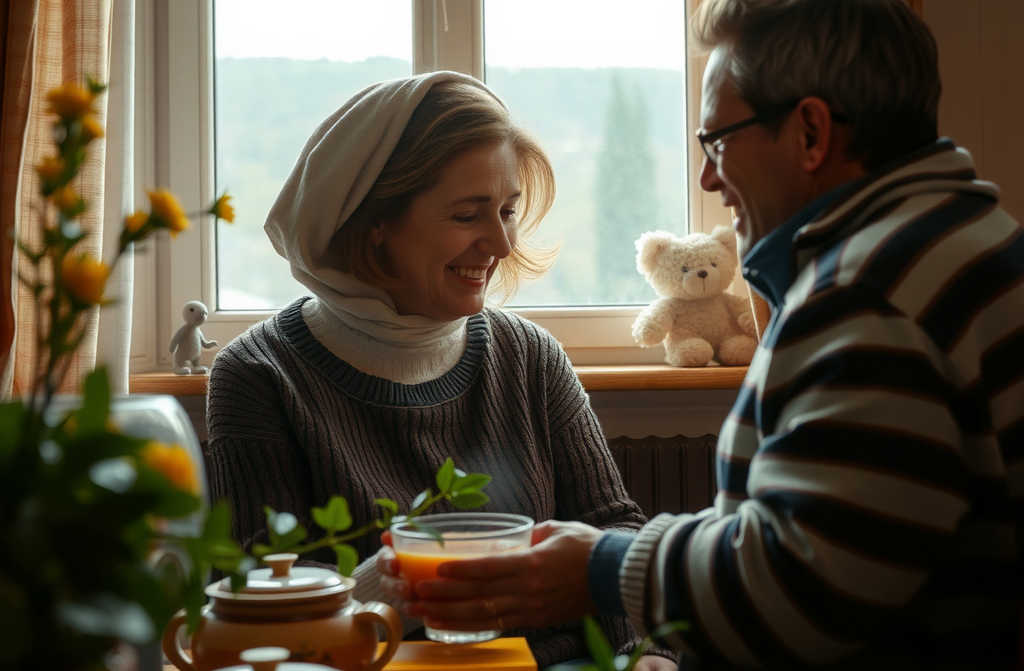
Sarah was deeply comforted by Wills visit. They talked through the night, crying, laughing, reminiscing.
“Once, Jack dozed off, and our dog Duke started licking his face. Jack just grinned in his sleep and murmured, Mum, Mummy, my darling. We nearly died laughing! He told me once youd kiss him goodnight after hed fallen asleep, so it mustve felt so real to him.”
“Oh, I couldnt help myself! He never let me hug him awake, so Id steal kisses on his little hands and eyelids as soon as he was asleep. I believed, as all mums do, that a sleeping child is wrapped up in love,” Sarah chuckled.
“He was proud of you, you know. He loved you more than anything,” Will assured her.
Sarah pulled out the old photo album:
“Heres his first bathlook at those skinny arms and legs! His first steps. Grandma spoilt him rotten. Thats him with Granddad Arthur, chopping woodsee how he squints? So funny. Theyre together now, he loved his granddad so. He struggled so much after his passing.”
Listening to Wills memories, Sarah knew her son had grown to be brave, just, and honest.
“Our captain kept telling us help was on the way, just a couple more hours to hold out. When only a few of us were left, and all hope was gone, I was hitshrapnel took out my leg. Those bandits were making sure none of us got out. At the end, with no bullets left, some lads charged with grenades, taking themselves and the enemy outJack too,” Will struggled to finish, fighting back tears.
“And he wrote home as if nothings wrong,” Sarah whispered, nodding quietly.
Will stayed a few more days. He fixed her fence, mended the roof. But the time came to part.
“May I write to you?”
“Do, my dear, Id be so glad,” Sarah smiled, not wanting to let him go.
“You know, I have no one myself. Grew up in care. An orphan, really,” Will admitted, trembling. “People think we end up as thieves, crooks. I was embarrassed to tell you.”
“Oh, you silly boy! Where will you go from here?” Sarah exclaimed.
“Well, Ill be all right”
“Stay here, then. Im alone, as you can see, and so are you. Stay as long as you want; doors always open for you. My hearts taken you in as if you were my own.”
Soon, the village chatter started againtalk that Sarah wasted no time finding a replacement for her dead son, that shed taken in some imposter who was only going to use her.
But not everyone condemned Sarahsome pitied her, some, as ever, hoped things would turn out for her.
Work was found for Will; the local blacksmith took him on and never regretted ita talented apprentice, Will quickly became a master at the forge.
Before long, Will brought home a cheerful, kind-hearted young wife, Beth, who became like a daughter to Sarah. She loved them as she would her own children. All she asked was, “If a boys born, let him be named Jack.” Instead, the stork brought the first granddaughter, and another arrived a year after.
“Sarah looks happy now. Sons doing wellgood with his hands, built a new house, even got a car. Lovely daughter-in-law as well!”
But only Will saw how often Sarah wept at night.
Sarah lived to a ripe old age, but near the end, she took to her bed. The villagers marvelled, “Not every daughter cares for her mother the way Will and Beth cared for old Sarah.”
Her adopted son did not shy away from any task; he emptied her chamber pot, washed her soiled sheets.
Before dying, Sarah reached up as if to embrace someone: “Jack,” she whispered, and was gone. Her granddaughters and daughter-in-law wept for her. In Wills heart was both sorrow and peace.
“What are you smiling for? Your mums dead and yet you smile?” Beth questioned, worried.
“Now shes with her son, at last. Her sufferings over; theyre united, holding each other again. Time can heal much, but no medicine cures the ache of losing a child,” Will sighed.
To love unwaveringly, to the very last breaththat is a mothers strength, and that love is the greatest gift one can give and receive in this life.