The Anchor Rose
November that year arrived without any warning. Not gradually, as it sometimes does, with leaves on the horse chestnuts slowly yellowing in the square, nights turning chilly, and the rains coming longer and darker. No, that year, November fell overnight: one morning, Alice Mary Whitmore woke up, peered through the window, and there it wasa sky as grey as tin, slick wet pavements, and trees wrung bare of colour and life.
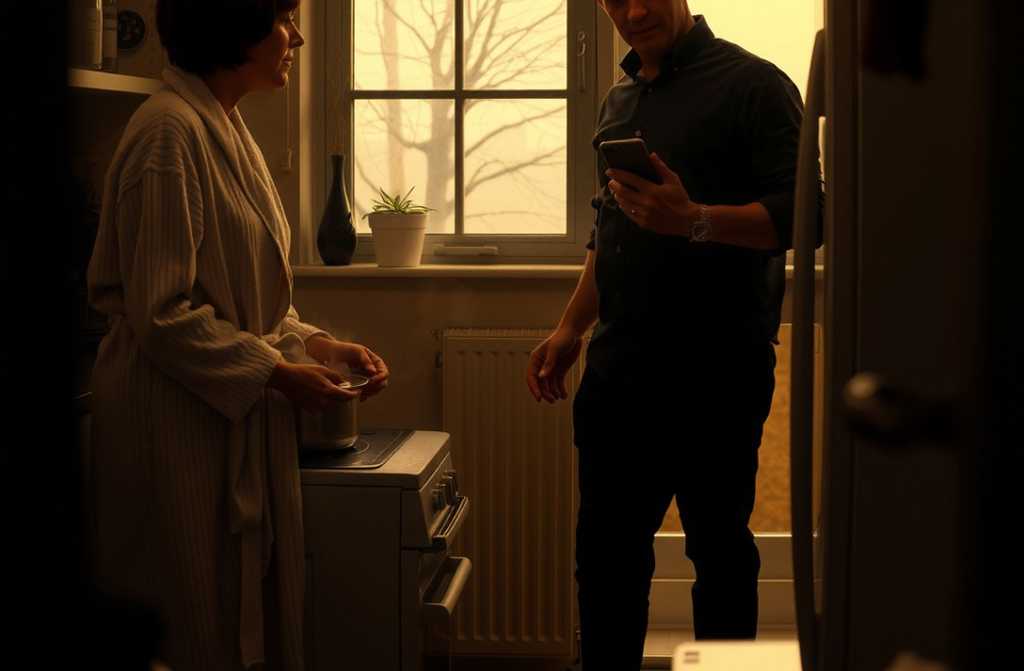
She was forty-seven. Forty-seven, and she stood in front of the hob in her flannel dressing gown, stirring chicken soup, listening through the thin wall as Richard made yet another call in the next room. His voice, always low and businesslike, threaded through the wall. It was a voice he reserved for important people: partners, clients, sometimes his manager. With her, it was differentsofter, shorter. Sometimes not at all.
The soup was for Richard. Alice diced the carrots into tiny cubes because he didnt appreciate chunky pieces. She watched the potatoes, making sure they didnt get mushy, and reminded herself not to forget about putting his shirts in the dryer. He preferred them light-coloured, cotton, out immediately to avoid creasingthis she knew as certainly as her times tables.
Richard was fifty-two. He was the commercial director for a mid-sized construction company, Albion Developments. A good job, decent money, business trips only when necessary. Alice had been running his home for eight years: first as help, then she took over everything, and eventually stopped noticing she was doing it alone. Thats how it is sometimes: you take a little bit of someone elses life, then a bit more, and then one day you realise theres little left of your own.
Shed once had her own career. Senior accountant at a small accounting firm, then she started moving toward analytics, took tax courses, read professional journals. But after she moved in with Richard, her hours dropped for his business trips; then, with his promotion and their move across London, she left work entirely. The commute was too much bother. She told herself shed find something nearby. She never did. The year blurred by, and then another, until she couldnt quite fathom where she would even return, let alone why.
The conversation in the next room ceased. Alice turned the hob down, put the lid on the saucepan. Richard entered the kitchen, went to stand by the fridgenot settling in, not reaching for a mug. He just stood watching her.
She turned.
His face, the one shed seen only a handful of times, always presaged something important. Not anger. Something more contained, and worse for it. Resolve.
Alice, we need to talk.
Soup will be ready in ten minutes.
Its not the soup.
She set the spoon on the rest. Turned. Outside the kitchen window, a streetlamp glowed yellow in the wet. The rain on the glass blurred its light into a muted smudge.
Im listening.
Richard was never hasty. When he had news, he would pause, as if setting each word in line first. Once, that had impressed Alice. Now, she found herself waiting.
Im leaving. Not for a trip. For good.
There was a soft bubble from the saucepan.
All right, she said.
You dont understand. Let me explain.
No need.
Alice, its better for both of us if I speak plainly. Youre an anchor to me now. Do you see? Not in a bad way, youve been
In what way is anchor ever not a bad thing?
He fell silent.
You keep me fixed. Im not moving forward. Every day is the same: soup, shirts, a bit of telly, your questions about my day.
And thats bad?
Its not what I need now. I want something else. I need a different sort of life. A different level.
Alice gazed at the blurred yellow light outside. Then back at him.
A different level, she repeated. Not as if asking, just stating.
Theres someone else. You dont know her.
A colleague?
Yes. She works in investments. Shes smart, driven. We
Thats enough, Alice interrupted.
I didnt want it to happen this way.
But it has.
Alice, its not your fault. Ive changed. I need something else.
Youve made your point. Different air, different level, different person. When are you taking your things?
Richard blinked. It clearly wasnt a response he expected.
I this weekend, if that suits you.
Id prefer tomorrow. Ill be out between three and five. Leave the key on the shelf in the hall.
Alice
Ill turn off the soup. Help yourself if you want.
She took a dish towel, dried her hands, and left the kitchen. She walked to the bedroom, shut the door quietly, not slammingjust a click. She sat on the bed. The room was the same: bedside cabinets, a lamp by the wall, his jacket on the back of the chair. But something was shifted. As if all the furniture had moved half a centimetre, just enough to unsettle the eye.
Alice sat a long while. Her hands lay still in her lap, absolutely calm. Deep within, beneath her ribs, she felt cold and heavya feeling like standing in the wind for too long and the chill finding its way through all your layers. Not sharp pain. Something dull and weighty.
She heard nothing from the kitchen. Later, the front door went.
She didnt cry. She was forty-seven, and she didnt cry.
In the morning, Alice rose at half past six. Washed, brewed a coffee, drank it standing at the window. The square below was empty and glistening. A solitary pigeon perched on the playground rail, watching its own reflection in the puddle as if pondering something considerable. Alice watched it for a good while.
Then she washed up. She washed carefully, more methodical than usual, scrubbing each mug more than once, checking for the markings left by tea. His mug was set aside: large, navy blue with a white slogan half-faded from the side. Alice held it in her hand. Only a few letters of the slogan remained. She set it alongside the others.
That day, she didnt bother going out at three as planned. Instead, she sat in the living room, gazing at the wall, feelingnot pain now but a kind of heaviness, as if set fast in stone. Her thoughts circled without destination or outcome. Eight years. Soup. Shirts. Anchor. Different level. Different air.
By evening, a quiet anger arrived. Not the sort that yells or demands, but like a coal that glows low long after the fires gone.
Richard collected his things on Friday. Alice made sure to be out, visiting her friend Charlotte who she hadnt seen in over eighteen months. Charlotte brewed the tea, set out a cake, looked her in the eyes and said,
Sotell me.
Not now, Alice replied.
When, then?
I dont know. When theres something worth the telling.
Charlotte didnt press. They spent three hours chatting about everything and nothingCharlottes kids, the redecoration, the new cheese market on Islington High Street. As Alice left, Charlotte hugged her by the door and said simply,
Ring me, will you?
I will, Alice promised.
Back home, on the hall shelf, was Richards key. She picked it up, turned it through her fingers, and dropped it into the desk drawer. In their bedroom, his jacket was gone; the bedside was empty except for a dark square where his lamp had sat.
Alice stood and stared at that square.
Then she went to the kitchen and threw the navy blue mug in the bin.
The first few weeks, she lived by enough. Eat enough, sleep enough, step outside at least once a dayno more. Something inside ran on minimal settings, conserving resources. She didnt know whether to be angry or forgiving, to cling to her rightness or surrender it. None of these questions felt like hersthey belonged to some other life.
Yet, she began sorting. First, Richards belongingsnot much, a couple of books, an old umbrella, tools under the sink. Then, her own. She went through boxes on the top shelves, folders in the wardrobe, and there, under layers of old bills and magazines, found her old workbooks. Three fat notepads scribbled tight with her neat hand: notes from finance courses, tax code extracts, sample reports.
She opened onebookmarked at a section on debtor audits: how a business checks what its owed, which debts are real, and which are just numbers on the page. Alice read her own writing. Neat, brisk, impersonal. She barely recognised herself. Or perhaps, she recognised exactly the person she had been before.
She closed the pad, put it on the shelf, and went to bed.
That night, she thought about money. Her money: not much, a little set by over the years; Richard had paid for most things, shed run the household. She had cash for herself, but hadnt drawn a salary in six years. The flat was hersleft to her by her mothera bit of security, but she needed to live. She needed to live somehow.
The following morning, she brought those workbooks down from the shelf, spread them out on the dining table, and opened her laptop. The first thing she typed into the search bar was, auditor requirements 2024 UK.
She read slowly, start to finish, not skimming.
The finance sector had moved on in six years: new reporting standards, new legislation, software shed never heard of. She took stock of the gap between what she knew and what was needed now. The gap was widebut not impassable.
Alice signed up for a retraining course: paid, three months, with an exam and certificate at the end. Lessons in the evenings, online, three to four hours, four nights a week. At the end of November she found office workas a bookkeeper for a tiny company needing a pair of hands, not a CV. The pay was poor, the work simple, but she was back with real numbers every day. That mattered.
Charlotte called in December.
So, how are you?
Im working, Alice replied.
Already? Where?
Doesnt matter yet. Ill tell you in time.
And honestly? Not workhow are you?
Alice considered.
Busy, she said. It helps.
She took busy seriously. Up at half six, working by eight, home at six, then the course. She typically slept after one, sometimes later. Her mind kept on going after bedtime: figures, formulas, scenarios. Sometimes she woke at three with an idea for a ledger entry and lay awake for an hour until it faded.
She lost a stone the first month. Not intentionally. Just forgot to eat at the right timesgrabbed whatever was handy, often standing at the fridge, because to cook properly would sap time she didnt have. Once she caught herself chewing crackers over a textbook, staring at the screen rather than the platesomething shed never done before.
Back then, she would have worried about his soup.
The thought didnt sting. It was simply there, cold and precise, like a column on a balance sheet.
In January she passed her first checkpoint exam: ninety-one out of a hundred. Her tutor wrote, Strong foundation, experience shows. Alice read that comment twice. Not because it was especially glowing, but because it was the first assessment shed received in a long while that judged her worknot the cosiness of home, quality of her lunch, or getting coffee in on time.
She printed out the result and pinned it above her desk.
In February, her tiny company hit problems: the owner and landlord fell out, and it was clear the doors would shut soon. Alice didnt wait. She crafted a resumehonest, methodical, with a six-year career gap she didnt hide but explained: Career break for personal circumstances. Currently retraining in financial analysis and audit. Which was true.
The first interview was a busther gap grilled bluntly, she answered plainly, the HR manager smiling with that polite pity that means Well get back to you. The rejection followed in a week.
The second interview went better. More focus on tasks, less on her hiatus. Alice responded thoroughly, with examples and numbers. She was offered a role as a financial analyst in a medium-sized group called Wellington Capital, on a three-month trial. Twice the salary of the previous job.
She accepted.
Wellington Capital managed assets: in short, the firm invested in businesses, tracked performance, and decided whether to keep, sell, or revive them. Alice worked in the financial control team. Her boss was Thomas Richard Newton, a man in his mid-forties, reticent and exacting, a man who didnt explain things twice and never praised idly.
In her first week she botched her figures twice, but caught both errors before submitting the report. Newton noticed.
Double-checking?
Always, Alice said.
Good habit, he replied, and left.
That was their first real exchange. She considered it positive.
The work was tough, but in a good way. It pulled her upwards, a steady climb that left her legs singing but alive. Each day she absorbed something different: a new analytic tool, a fresh report format, another model. Her course often proved helpful at work, or vice versaa problem at work unlocked a principle from her study.
Sleepless nights became her routine. She stopped fighting them. If she couldnt sleep at two in the morning, she simply got up, read for an hour, then returned to bed. Sometimes she drifted off straight away, sometimes not. But these thoughts were work thoughts now: numbers and diagrams, never about the past.
Richard rang late in February. His name flashed on the screen; Alice looked at it for a few seconds before picking up.
Hello?
Alice. How are you?
Fine. Why are you calling?
No real reason. Just wanted to check in.
You have. Im fine.
Are you working?
Yes.
Glad to hear it. Truly.
Richard, Im busy. Goodbye.
She hung up. Sat still for a moment, then opened her laptop.
In March she took her courses final exam. Ninety-six. She printed the certificate, filed it next to the earlier result. She even pulled them both out and laid them side by side: ninety-one, ninety-six. Not a huge leap, but steady.
She put them away.
At work, her probation ended early: after two and a half months, Thomas pulled her aside.
Whitmore, youre on permanent staff from the first. Salary at the new rate.
Understood. Thank you.
Dont thank me. Get on with it.
She did.
By April, thinking of Richard wasnt daily anymore. Sometimes she noticed as you notice a dry patch in the weatheronly in retrospect. He was now just an old line in a diary: once there, pages since turned, the diary going on.
Her anger remained. Not goneshe doubted it would ever totally leavebut it had changed shape: solid, smooth, fitting between her ribs, not choking her. Shed learned to wield it. When weary, when tempted to stop, that anger told her, No, quietly but firmly. So she didnt stop.
That summer, Wellington Capital underwent major restructuring: shuffling departments, reassessing responsibilities, creating fresh roles. A vacancy opened for senior analyst in financial control. Thomas told her himself.
Ready for more responsibility?
Yes.
No second thoughts?
Im certain. Yes.
He nodded.
Prepare a presentation on the Eastline Project portfolio. One weeks time. Board meeting.
She prepared four nights in a row. Slept five hours. Ate erratically. Redid the presentation three timesnot because the earlier effort was poor, but because she could now see how it should be tighter, cleaner, more convincing. The night before the board, she stayed up till two, checking every number, every slide.
On the day, she donned a grey blazer, drank her coffee, took her folder.
The presentation lasted twenty minutes, the questioning another forty. She replied without notesshed learned it all by heart. One older director, sharp-eyed, peppered her with three questions in quick succession. She answered each.
Afterwards, he said something quietly to Thomas, who glanced at Alice. Said nothing.
She got the senior analyst post three days later.
That autumn something happened at Wellington Capital called a strategic acquisition. They were eyeing construction and property firms struggling financially. Simply put: someone had mismanaged, gone deep into debt, and the group could buy them cheaply, turn them around, or sell them. Alice handled the analysis for several such candidates.
One was Albion Developments.
She paused when she saw the namejust a few seconds. Then read on.
The numbers were clear. Debt had risen the past two years, revenue dropped, major clients had moved on. The leadership had made a string of poor choices: invested in failed projects, took out loans on bad terms, missed out on key tenders. The company wasnt dead but was sinking steadily.
Alice drafted her report: brisk, precise. She recommended the acquisition.
Thomas read her report and looked up.
Certain?
Yes. The core assets are sound. The management is the issue. With a leadership swap and proper restructuring, break-even is doable in eight to ten months.
Good. Prepare an integration plan.
In October, the board approved the takeover of Albion Developments. By November the deal was closed. Alice was now deputy director of financial controlone rung below vice-president. She stepped up at the end of October, when the previous VP moved on, and Thomas himself proposed her name to the board.
The conversation was short.
Whitmore, you know what this means? New scope. Different responsibility. Others looking at every decision you make.
I understand.
And?
Im ready.
He considered her for a moment. Then,
I thought so.
The vice-presidents office was on the eighth floor. Panoramic windows looked over the street. The first day she entered wearing the new badge, the weather was as dreary as a year beforefine rain sliding down the glass, as if time had gone round in a circle except everything else had changed.
Alice set her folder on the desk. Looked around. Sat. Opened her laptop.
There was work to do.
The Albion Developments integration meant that some staff were moved within the group, others made redundant, management replaced entirely. Alice oversaw the process alongside HR. Lists, titles, pay bands, skillsthe process was painstaking.
At the end of November, precisely a year after that evening with the chicken soup, her secretary buzzed:
Miss Whitmore, theres a Mr Richard Barrett here. Says its a personal matter. No appointment.
Alice picked up her pen. Turned it between her fingers.
Book him for three oclock today. Tell him to wait.
Yes, Miss Whitmore.
She put the phone down. Looked at the rain. The wind lashed the bare branches below.
At three sharp, the secretary buzzed again.
Mr Barrett is here.
Send him in.
The door opened.
Hed changed. Alice could see it with a strange detachment. He seemed smaller somehownot his height, but his presence: his shoulders didnt fill his jacket the way they used to, a certain tiredness pulled at his face. He watched her, uncertainly. Eventually, she recognised it: bewilderment. He was baffled.
Hello, Alice.
Good afternoon, Mr Barrett. Please, sit.
He sat, looked at the desk, her laptop, the folders. At her.
You work here.
Yes.
Ididnt know you
I understand. Go on.
He paused. Folded his hands on his lap, a gesture shed never seen before. A new habit.
Alice, I I understand this is odd. But I have nowhere else to turn. I was made redundant three weeks ago, when the integration began. I dont know who decided on the redundancies, I never imagined you
It was me.
A pause.
I see, he said.
Go on.
Id like to ask you to keep me on. Any job. I know not at my old level. I realise…things have changed. But I know construction, I know the market, I could still help. Justgive me a chance.
Alice listened. Looked him in the eye without expression. He spoke evenlynot pleading; she respected that.
Hows Sophie? she asked.
He waited before replying.
We split up. In August.
I see.
Thats not why Im here. This isnt about that.
I know, Alice said.
She reached for a folder, opened to vacancies in project support to be rolled out as part of the Albion integration: middle management, coordinators, specialists.
There is a lead project support position. The pay is half your old package. Four months probation. If it works out, terms can be renegotiated. HR handles the paperwork. Not me personallyits normal procedure.
He looked at her.
Youre serious?
I dont do things by halves.
Alice
Miss Whitmore, she corrected, no malice, simply matter-of-fact.
He accepted this, nodding.
Miss Whitmore. I accept.
Good. She noted it down. Bring your papers in tomorrow before noon; Karen in HR will process you.
He stood and took his jacket. At the door, he turned back.
You were right, he said. I was unfair a year ago.
Alice laid her pen down. Looked at him.
Mr Barrett. You said I was an anchor. That I held you back. You were right.
He looked at her, not understanding.
An anchor can keep you from growing. Im not an anchor anymore. As you can see.
He said nothing. Opened the door and left.
Alice sat still a minute. Maybe two. Then she closed the folder, checked her phone. There was an email from an investment partner: a meeting next week, new asset in logistics. She replied, Wednesday, 11:00, confirmed.
She stood up. Took her coat. Told her secretary:
Karen, Im finished for today. Mr Barrett will be in tomorrow for paperwork, see him to Karens desk.
Yes, Miss Whitmore. Anything else?
No, all good. See you tomorrow.
The lift took her to the ground floor. She crossed the lobby, pushed open the glass doors.
Outside, not a drop of rain.
The sky above the city was a pale wash, almost whitethe colour November only manages for a moment between showers. The sun was setting flat along the horizon, casting long shadows of trees and lamp-posts on the pavement. Alice paused on the steps. The air was cold but dry, clean. She breathed in. Then again.
Somewhere round the corner, a car passed by. Then it was quiet again.
She descended the steps and walked to her car waiting in the car park. Her phone, with Wednesdays meeting on the calendar, was in her handbag. Her mind was already lining up the questions shed need for her partners: asset structure, debt, key staff. It was good work. Her work.
She unlocked the car, set her bag on the passenger seat.
A slim band of the pale November sun lay across the windscreen. Alice looked at it a moment longer before starting the ignition.
And, as I drove home that evening, it finally struck me that being unanchored wasnt all emptiness or loss. In letting go, I regained a sense of who I once was. Sometimes, only when the weight is gone do you realise you know how to swim.