Get Out of My House
Ellen, why are you still slaving away in the kitchen after all this time? You made meatballs, salad, and soup this morning. He wont even notice.
Joan Evans sat on her favourite stool by the fridge, her hands wrapped around a mug of tea. She always liked that vantage point: just off to one side, still able to keep an eye on everything. Seventy-five years old, but nothing ever got past her.
Mum, give it a rest. Im not overdoing it, just making dinner. Its completely normal.
Completely normal, Joan set her mug on her knee. Thats just it. Every evening is normal. Every Friday its the same. Its been like this for twenty years.
Seventeen.
What?
Its been seventeen years, not twenty.
Seven, twenty, whats the difference. Have you ever counted how many meatballs youve served him in all that time? How many shirts youve washed? How many times youve cleared the table?
Ellen flipped a meatball over in the pan. The sizzle of oil and the smell of fried onions and beef filled the kitchena comforting, almost nostalgic scent, reminding her of home and a sense of things being right in their place.
I havent counted, Mum, and Im not about to start. This is my family. This is just how I live. I dont find it hard.
Joan repeated, slower this time as if tasting the words, You dont find it hard. Ellen, have you actually looked at yourself in a mirror recently? I mean properly, not just a quick glance? Youre exhausted. Dark circles under your eyes. When was the last time you really just sat and did nothing?
Last weekend.
When you were darning his socks, you mean.
Ellen chuckled, catching herself off-guard. Oh, Mum, now youre just nit-picking.
Its called being observant, my love. Its a perk of old age.
It had grown dark outside. End of Octoberby half five it was already dusk. Ellen particularly loved the flat at this hour, when the kitchen light glowed, the pan sizzled, and she could chat to her mother about nothing in particular. Joan had been staying with her for three weeks; repairs at her place on Maple Avenue had turned chaotic after a pipe burst and flooded half the flat. The housing association said itd be a two-week job; it was well past that now. Ellen didnt mind. She liked having her mum around. It felt familiar.
A straightforward two-bedroom council flat up on the fourth floor. Not a palace, but hers. Shed inherited it from her grandmother back in 93, just after Right to Buy came in. Gave it a proper makeover, made it hers, married David, and just carried on with life. David had moved in since hed only had a poky room in a shared house and sold that in the endthe money disappeared into one of his get-rich-quick schemes.
Is he home soon? Joan asked.
Shouldve been back by six. Its near twenty past seven now.
Has he called?
Ellen didnt say anything. David rarely called when he was late. His theory was: if he didnt have his own office, he was always out on business, and there was no need to check in.
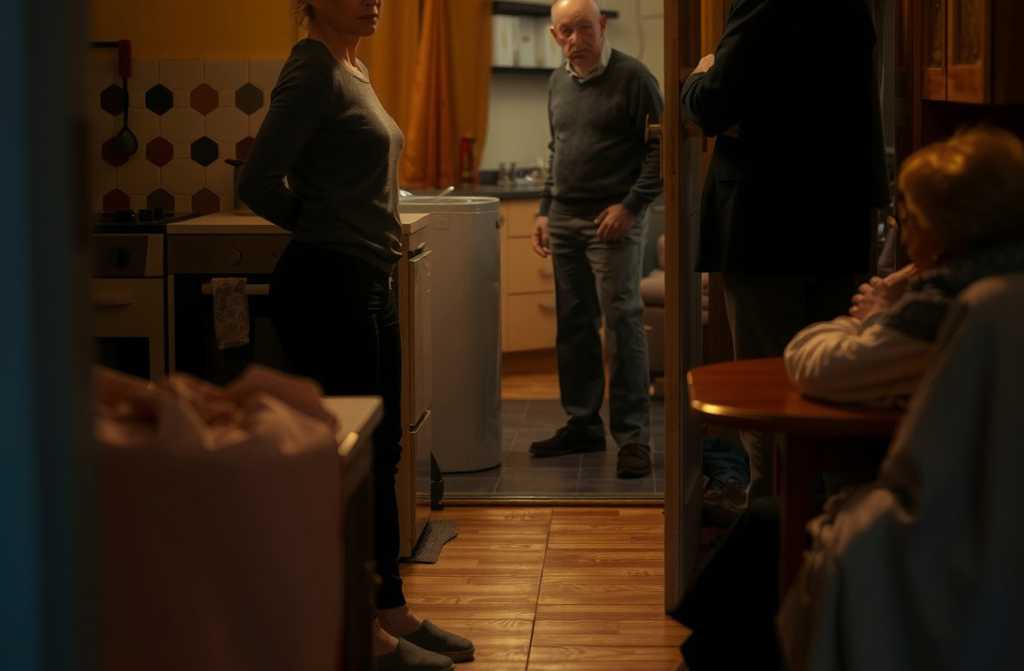
She was just setting the table when the front door slammed in that familiar, unmistakable rhythm: key in first, then the door flung wide, and footsteps in the hall. But tonight, there were extra footstepsmore than one person.
Ellen, you home? David shouted down the hallway.
In the kitchen.
Oh, good. Listen, bit of a situation…
He wandered in, and behind him stood two people: a woman in her late forties with a short jacket, a crossbody bag, and a worn, defensive look on her face. Next to her, a gangly lad with headphones around his neck, eyes glued to his shoes.
Ellen kept her tea towel in hand, just watching.
So, David gestured at them like he was showing off a new lamp from John Lewis, you know Victoriaand this is Jamie, my son.
Ellen had met Victoria before, but only in passing. Davids ex-wife, the one from before Ellen. As for Jamiehe must be about fifteen now. Hed been round a few times for birthdays: nice enough lad, quiet, always half in his phone.
Good evening, Ellen said neutrally.
Hello, said Victoria, the tone matching her expression: forced and not particularly pleased.
Ellen, Vics had a right disaster with her pipes, bit like your mum actually. The flats soaked, totally unlivable. Hotels too dear, you know? So I said they could stay here for the weekend.
Joan placed her mug down with the faintest of clinks.
For the weekend? asked Ellen.
Yeah, Friday to Monday, maybe Sunday. Well see.
David. Weve got two bedrooms. Ones ours, the others Mums, and shes been here for three weeksthey havent even finished her plumbing yet.
I know, thats exactly why I suggestedmaybe you and your mum could stay at hers for a couple nights? Workmen must nearly be finished, surely? Vic and Jamie can have your room for a bit.
The silence was so thick you could hear the lorry four floors down on the main road.
Sorry? said Ellen.
Just for a couple nights, you and your mum could crash at hers, then…
I did hear you. Just repeating it because I want to be sure. Youre actually asking me to move out of my own home with my elderly mother so your ex-wife and her son can have the place?
Dont put it like that, Ellen. Vics Jamies mum. Jamies my son. I cant let them sleep rough.
David, Joans voice was soft, but with that undercurrent that made men turn around, my flat has no hot water, the floorboards are up, and theres a hole in the wall. Im here with Ellen because theres literally nowhere else for me to sleep.
I know, Mrs Evans, but…
So you’d send us back there to make way for your ex?
Only for a few nights. Theyve nowhere to go, but at least you two have walls.
Theres no floor, David, Ellens voice was cold, steadier than even she expected, its damp and full of dust. Mums seventy-five. Heart problems and arthritis.
Stop making a fuss. Its only for two days. Get a mattress, make the best of it.
A mattress. On the floor. For my mum. Seventy-five.
Victoria flinched, maybe embarrassed, or just tired of standing by the door.
Ill just have a look at the rooms, shall I? Victoria ventured.
No, said Ellen.
There was something final about it. Victoria didn’t move.
Ellen put the tea towel down by the sink, turned, and looked at David. She took in his familiar faceseventeen years of those crowning bald spots, the little nervous rub of the back of his head when he was in the wrong but wouldnt show it. That hint of guilt mixed with entitlementhe always landed on his feet, why wouldnt he again?
Seventeen years: shed made soups and darned socks, handled the bills because he forgot. Dealt with the council when the roof leaked. Took days off to wait for the plumber. Bit her tongue over holidays that never came. Called it family and told herself this was how it worked.
And here he was in her kitchen, surrounded by her things, asking her to leave, as if she were at a café and someone needed her table.
David, she said quietly, I think its time you, Victoria, and Jamie got your things and left. Right now.
He stared at her as if shed just spoken Finnish.
What?
Leave. All three of you. Get them a hotel, rent a flatwhatever you like. But theyre not staying here.
Ellen, are you even listening to yourself? Hes my son!
Im not against your son. Im against you turning up and telling me to get out of my home. Theres a difference.
I didnt say get out. I just
You did. Word for word. Say it again if you like, Ill listen.
He went pinkhe always flushed with anger, not shame, ears first.
Stop making a scene.
These are my people, Ellen replied, me and my mum. Yours, she nodded at Victoria, are standing at the door, and they werent invited.
To Victorias credit, she kept her head down. Jamie just frowned at the floor.
Listen, Davids voice turned hard, Ive lived here too. Im on the agreement.
Youre registered here. The flats in my name, and you know it.
Doesnt matter. Were marriedjoint assets, and
David, Ellen interrupted, this was my grans home. Left to me before we even met. You know that.
Lawyers will decide.
Fine. Let them. For now, please leave.
Ellen!
Out.
A long silence. David stared. Ellen stared back. Joan barely breathed on her stool.
Then David spun round, muttered something, grabbed his coat, and headed for the hallway. Victoria and Jamie followed, and the door banged twice: the bedroom, then the front.
Ellen didnt move from the hob. The meatballs had turned cold ages ago.
There you go, said Joan, finally. Now, thats more like it.
Mum, please dont.
Quiet as a mouse.
Ellen sank onto the edge of a chair. Her hands felt icy. She studied them a moment, placing them neatly on the table.
Hell come back in the night. Hes got a key.
And what of it?
Nothing. Just saying.
Joan put the kettle back on. Ellen, do you have the locksmiths number? The one who changed Mrs Carters lock on the third floor?
Ellen looked up. Mum…
What?
I think so, somewhere in my contacts.
Find it. Its Friday, not yet eight. He might still be working.
Ellen scrolled through her phone.
The locksmith came just before ten: older man, bit gruff, toolbox in hand. Changed the lock in forty minutes, took his payment, and left. Ellen tipped him, simply because words felt too small for what she wanted to say.
David came back at half eleven. His key didnt work. He knocked. Rang her mobile. She let the screen light up with his name, didnt answer. Texted instead: Key wont work. Lawyers details tomorrow. Hit send and put the phone away.
Mum was asleep in the other room. Ellen lay in the dark, wide awake, knowing tomorrow would be dreadfulphone calls, arguments, shouting. David could shout when things slipped from his grip. She wasnt scared, though. It was a strange, almost hollow feelinga void where she used to panic about avoiding conflict.
She finally slept close to two.
The next few weeks were grim. David tried ringing, texting. Then he got in touch via mutual friendsnot that they had many. Then through his own mum, an older lady from Surrey, who called Ellen in tears, saying, Hes not a bad lad, love, things just… happened. Ellen said, I understand, and was politely cold.
Next came the solicitors. Well, a letter first: David wanted a share of the flat, claiming joint marital propertynever mind whod bought it, or when. Ellen read that letter three times, tucked it away, read it again. Sour worry settled in her stomach.
She worked as head accountant for a small construction firm. Good job, steady money, decent colleagues. She was careful with her finances, but solicitors were pricey and shed no clue how all that legal business worked.
Her friend Sally said, Get down to the Citizens Advicetheyve got free legal help. Ellen didnt believe it, but she went anyway, needing to replace some documents post-lock change and check what paperwork was needed for divorce.
The queue was longNovember, everyone wrapped up in coats, some wearied, holding folders. Ellen took a ticket, sat on a drab plastic seat. Next to her sat a man in his mid-fifties, glasses, a bit stooped, reading something on his iPhone. He put it away and watched the numbers roll up on the screen.
Ellen found the solicitors letter and read it again, lips moving silently as she tried to untangle the legal gibberish.
Sorry, the man said. Couldnt help but notice your letterits about a property claim?
She tucked the letter away.
Sorry, didnt mean to stare. Just caught my eye.
Its fine, she replied, bluntly.
Im a solicitorcivil law, mostly family disputes. If you like, I could have a glance. Wont cost a thing.
Ellen scrutinised him. Just an ordinary man: specs, neat hands, unmemorable.
No, thank you.
He shrugged. Silence. A few minutes later, she pulled the letter back out, frowning over a particular phrase.
Jointly acquired only applies to whats been bought during marriage, he said quietly. If you owned the flat before marrying, its not marital property.
Hes saying there are special exceptions, something about investments?
Solicitors ploy, that. Theyll argue he put in toward improving the property, trying to show joint benefit. Needs serious proof, not just hearsay.
She put the letter away and looked at him more directly.
James, he said, nodding.
Ellen.
He wasnt pushy. When called up for his appointment, off he went, but came back afterwards. She thought that odditd be easier just to leave. He explained simply:
Im not in a rush. You look like someone whos been handed a baffling machine but not the manual.
I dont look helpless.
Not helpless. Just a bit… lost. Theres a difference.
They spoke nearly forty minutes. James patiently explained how property disputes workwhat to look for, what to keep. And no jargonjust clear facts.
On their way out, he handed her a card. Plain-white, name and mobile.
If you want a proper consultation, call me. First ones on me.
Why?
Because I hate seeing people bullied by paper and words they cant understand. Its not fair.
Ellen took the card. Called a week later.
James visited her on a Saturday. It felt odd, inviting a man over, but he insistedeasier to go through the documents where they lived. Joan, still staying over, let him in, then tactfully excused herself to the kitchen.
James spent three hours going through docs, especially the inheritance letter, the privatisation contract gathering dust in the closet, and her grans old signature still legible.
This is the clincher, he said, holding it by the edges, your gran bought this place in her name in 1993, left it to you in her will. You took ownership in 98. You and David married
2006.
Eight years later. So its definitely pre-marriage property.
He keeps going on about the renovations. We did those together, so it counts…
When?
2009. Half DIY, half workmen.
Got receipts?
Some. At a guess.
Dig them out. If you paid mostly with your pre-marriage funds or personal wage, it won’t stand as a joint asseteven spending together during marriage only counts if both incomes are proven. How much did he work?
On and off. Usually not much.
James peered over his specs.
Tax returns, income statements, bank records. Its basic, but a pain.
Youll do it?
After a pause, he nodded.
Yes. Lets sort the details.
His fee seemed too fairless than the going rate. Ellen didnt ask why, just thanked him, and signed the agreement.
The court case landed in Februarya bleak, grey month. The windows faced a brick wall. Ellen sat on a hard seat: a judge, David with his solicitor across the way, and James next to her, calm as you like. David had lost his bounce; there was something ugly and uneasy showing now. Sometimes he stared, maybe wishing to see the old Ellenthe one who apologised, compromised, gave in.
She wasnt there any more.
James presented the paperwork: inheritance, privatisation, her salary receipts, the records showing the renovation was paid from Ellens account. Evidence of Davids flaky work record, her own steady wage. Every attempt by Davids lawyer to claim moral contributions or joint efforts fell flat.
The judge didnt take long to decide: the flat was Ellens separate property, not marital, and David got nothing.
Outside the court, a sharp February air nipped at their faces.
See? James said. Told you.
You did, she replied. She hesitated. Thank you.
No worries. It was straightforward, in all honesty. You kept your paperwork in perfect nick.
Thats just being an accountant.
And a very good one, he answered, half teasing. Fancy a coffee? Theres a nice spot round the corner.
They went for coffee. So normal it felt strange. Later she realised she hadnt simply done normal in yearsa coffee, a conversation, a walkwithout agenda.
The decree absolute came in March. Quick and quietshe signed, David signed, the judge stamped the papers, done.
Riding home on the tube, Ellen thought she ought to feel somethinggrief, relief, pride. Instead, there was just tiredness, and a sense of curiositylike facing a new door she wasnt afraid to open for once.
That spring came early. In April, the weather turned warm; Ellen threw open every window and decided she wanted to redecoratenot because she ought, or for her husband, or to impress, but simply because she fancied it. Cream-coloured walls, new curtains, nice tiling in the bathroom.
She called a few firms, settled on one, wrote up the budget herselfaccountant instincts. The builders arrived on May Dayfitting, she thought.
By then, Joan was back at her flat. Her home had been sorted by December, spruced up and as good as new, and shed left Ellens, saying she felt like she was leaving a spa retreat. Before she left, they sat with tea in the kitchen, her mother said:
Im not worried about you anymore, Ellen. Used to be, but not now.
Why the change?
Because you finally look like yourself.
Ellen didnt ask what shed looked like before.
The redecorating lasted two months. Ellen coped as only women who see order in chaos can: cooking on a camping hob, checking on the builders, choosing tiles herself. On weekends shed roam past showrooms for fun.
James popped in now and thenno longer on the job, just friendly. He always brought something for tea, asked about the work. Bookish but easy company, and when Ellen started reading on his recommendation, she surprised herselffinally time to enjoy things, to debate gently with someone who didnt mind disagreement.
One balmy evening in May, they strolled by the Thames. James was talking about a novel set in postwar Europe; Ellen just enjoyed walking, unhurried, nowhere to be.
What are you thinking? James asked.
That I havent done this for agesjust walked for the sake of it.
Just walked?
No to-do list, no rush. Just water, sky and a bit of breeze.
He was silent, then said, Thats harder than it sounds.
I know.
Sometimes, the best part was just sharing a long silence.
Come June, the work was done. Ellen spent days putting everything righther reset ritualnew curtains, shelves, white and grey tiling in the bathroom, a green mosaic backsplash shed thought risky but ended up loving.
She sent a photo of her new home to her mum, who replied, Ellen, its gorgeous! Ill come round for tea. Then phoned for every detail.
In July, something good: the chief accountant at work took retirement, which everyone saw coming, and the boss called Ellen in. Offered her the job, outrightno hints, no pressure. She asked for a day, then agreed; it was more money, more responsibility, but she knew what she was doingshe always had, just never noticed.
Summer passed easy. Augusts heatwave saw her and James go out to friends places beyond the M25big gardens, lazy afternoons. And slowly, Ellen learned that it was alright to just sit back and watch the wind move the apple trees leaves, feeling no guilt for doing nothing.
She and James didnt hurry. Hed been divorced for years and had no bitterness about his past; Ellen liked that. She wanted steady, gentle progress.
By the time autumn rolled in, life felt dense in a new waynot perfect, but her own. It felt like there was finally enough air to breathe.
She bumped into David late one September afternoon, arms full of shopping: bread, cheese, yoghurt, and a tiny cactus. A cold snap in the air, leaves sticking to her trainers.
David loitered by the chemist, thumbing his phone. He looked up and spotted her. For a moment, there was an awkward flicker across his tired face.
Ellen…
David. Hi.
Hi. You look… really well.
She didrested, fed, no longer shrunk by anxiety and fatigue.
Thanks.
Where you off to?
Home.
Pursed lips. David shifted from foot to foot.
So, um, how are you?
Im good.
Work going alright?
Fine.
He so clearly wanted to say moreshe could see him searching her face for a reaction, a way back in.
Listen, Ellen. Maybe we could… meet up, talk? You know, properly. Its been seventeen years, after all.
She held both shopping bags; one handled a blueberried yoghurt shed bought because she liked it, the other some bread, cheese, and a little cactus bought mostly for a laugh.
She simply looked at Davida crumpled man holding onto a phone as if it might anchor him in her past. Someone she was supposed to soothe, apologise to, offer a return ticket to their old routine.
We dont need to talk, David.
But
Really. Everythings sorted. Youve got your life. Ive got mine. Alls well.
Right, he said. Quietly. Alls well.
He stood there a minute longer, then nodded.
Bye, David.
Ellen kept walking. Leaves crunched underfoot, the bags pulled at her arms, and she didnt look back.
Somewhere behind, all of it faded: seventeen years of dinner and laundry, seventeen years where family was both an idea and excuse. A single Friday when everything changed.
She expected to feel somethingan ending, resolution. She just kept walking, the city golden with autumn, thinking about ringing James, the cactus tickling through the carrier bag.
She pulled out her phone and texted: Are you free Wednesday?
The answer came quickly: Yes. Where are we going?
Cinema. That French one you mentioned.
Perfect. Seven?
Seven.
She put her phone away and walked another block, and then another. The breeze spun russet and gold leaves down the path. One clung to her sleeve; she left it there, carrying it home.
Outside her door on the fourth floor, she set down the bags, used her new gold-tagged keythe one made that October nightto open up.
Home smelt of new timber, fresh paint. Plants lined the kitchen window, something she allowed herself now no one could moan about cluttering up the sill. Green, dusty, alive. She set her cactus among them. It fit.
She put the kettle on. Opened the window a crack to hear the quiet city night, autumn breeze cool and edged with the scent of burning leaves.
She sat down, waiting for the tea to brew, listening to her own street, her own October, her own future.





