Youre Free Now
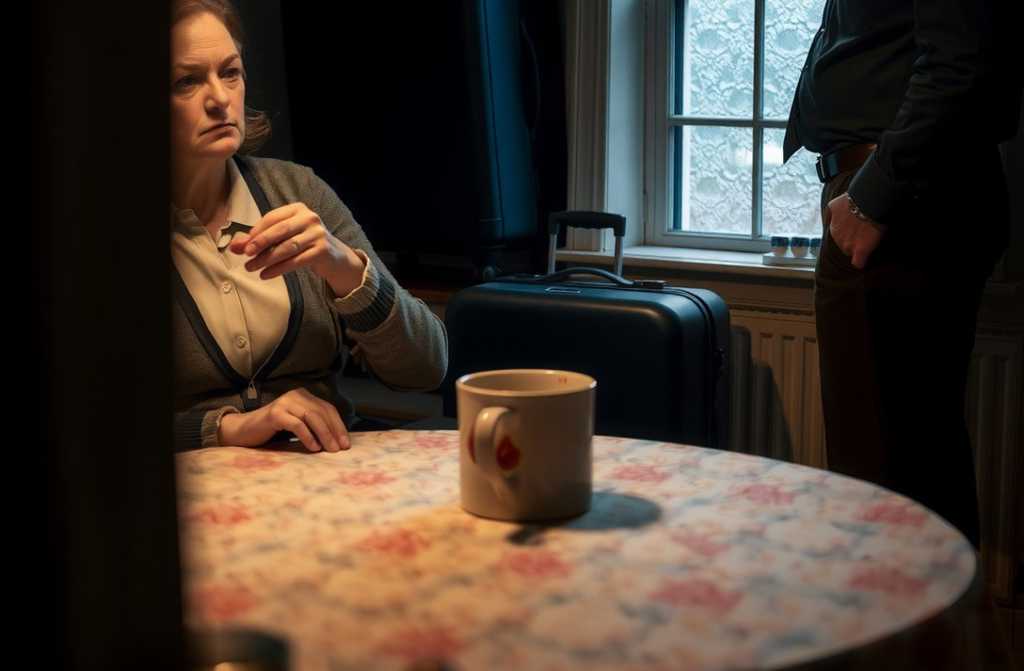
I put my mug down on the kitchen table a bit too hard, and the tea slopped onto the tablecloth, leaving a wet patch. I stared at the stain, not moving. Behind me, I could still hear Mark talking, but the words came through muffled, as if over a crackly old phone with a bad line, not from two metres away in our kitchen, next to our fridge, under the pendant lamp wed chosen together in John Lewis, not three years ago.
Lydia, are you even listening?
Im listening.
I dont want to hurt you, I really dont. Its just… Ive realised we cant keep doing this. We both need something else.
We?
WellMe. I need something else.
At last, I turned round. Mark was standing by the window, looking away. He was wearing that blue shirtId bought it for him on his birthday last year. Id ironed it that morning, never realising it was for this. For this moment.
Youre leaving for Sophie, I said. It wasnt a question.
Lyd
Mark. Just say it.
He didnt answer. That said it all.
Twenty-three years. I didnt count it on purpose; the number just appeared. Twenty-three years in this kitchen, with this fridge, this lamp, his shirts, his scent in the morning, his cough at night, the way he left his mug with dregs of coffee right by the edge of the sinknot in the sink, but teetering on the edgeit always got on my nerves, and now I realised Id never see that mug there again, and that was a ridiculous thing to think, but it was what stuck in my mind.
I want you to know, he started again, voice oddly formal, rehearsedas if hed practised this speech, that Im not your enemy. I hope youll be all right. You deservefreedom. Real freedom. Youre free now, Lydia. You should be glad.
I blinked.
Glad?
Wellyes. I mean, youre your own person now. No obligations. You can do as you like. Isnt that a good thing?
I looked at himat his dear, familiar, already unfamiliar face. The way he tried to smile. The way he was already half-absent, already with Sophie, already in his new life and the new shirts that, soon enough, she would be buying him.
Go, I said.
Lydia, please, cant we just talk?
I said go.
He left that same evening. The suitcase was already packed, it turned out, behind the winter boots in the cupboard. So hed planned it, knew all along. While I was making soup and washing his shirts and watching telly with him in the evenings, hed already decided.
The door shut.
I stood in the hallway and listened to the silence.
Afterwards, I went back to the kitchen, poured away the cold tea, rinsed my mug, put it away. Wiped the tablecloth. Turned off the light.
Went to bed.
That was Friday.
On Saturday, I didnt get up.
No, I didnt just lie there crying into my pillow. I just couldnt see a reason to move. To get up was to start the day. The day meant doing something. Doing something meant living. And living, in this flat, this quiet, with this fridge full of food Id bought for two, now felt pointless.
I lay and stared at the ceiling. Plain white, a little crack in the corner Mark had said hed fix two years ago and never did.
On Sunday, my friend Susan rang.
Lyd, whereve you got to? We missed you and Mark at Tamaras birthday last night.
I couldnt come.
Oh, feeling ill?
Something like that.
Pause.
Whats happened?
Marks left.
Another pause. Longer.
Whered he go?
To Sophie Harris.
Sophie Harris? Which one?
The one who sang at last years Christmas party.
That blonde with the loud laugh?
Thats the one.
Susan was quiet for a bit, then sighed.
Ill come round.
No need.
Im on my way.
I couldnt argue. I didnt have the strength.
Susan came over with a cake and three kinds of tea. Shes short and sturdy, a cropped haircut, and the kind of voice that could marshal a factory floor. She came in, set the cake on the table, and said, Go and wash your face. Five minutes.
I did.
We drank tea in silence. Then Susan asked, How old is she?
Thirty-eight, I think.
And hes fifty-four. Of course. Classic.
Dont.
All right. I wont.
He told me Im free now. That I should be glad.
Susan looked at me hard.
Free, is it?
Exactly. Said it just like thatYoure free now, Lydia. Be glad.
What a bastard.
Susan
No, I get it, you still love him, you dont want me saying nasty things, but thats it, isnt it? Just wrapped up in nice words. Freedom. As if hes doing you a favour.
I stared into my mug.
Maybe he even believes it.
Of course he does. Makes him feel better.
Susan stayed till evening. She washed up, wiped the shelves, found something going off in the fridge and chucked it out. As she was leaving, she gave me a proper hug, tight, and said close to my ear, Ring me if you need to. Even in the middle of the night.
I nodded.
I was alone again.
The following weeks blurred together, like the pages in a dull book. I went to work, because not going wasnt an option. I worked as an accountant in a small building firm, and numbers demand attention. The good thing about numbers is, they dont ask how you are; they just sit in columns, waiting to be added or subtracted.
My colleagues noticed something was off but didnt pry. Mrs Norton, the office manager, once asked, You all right, Lydia? I told her, Just a headache. And she nodded, Ah, right, and left it at that.
Home was the worst.
The silence became a thing in itself. Not just absence of noise, but something solid, as if absence itself had taken up residence. Id catch myself speaking aloud, because for twenty-three years, thered always been someone to talk to. Walking into the kitchen, I found myself saying, Bit chilly today, or Raining again, before remembering there was no one to hear it.
I hardly cried. Once, on the third Wednesday, I found an old cinema ticket in my jacketone we never used in October, because Mark worked late that day. I held it awhile, and something inside gave way, and I cried, sat on the hallway floor with my back to the cupboard.
After, I washed my face, threw the ticket away, and made dinner.
Mark texted from time to time: Lyd, insurance paperworks in the top drawer. Or, Dont forget to renew the broadband in March. Brief, business-like messages. I replied the same way.
Once, he texted, How are you? I replied, Fine. He sent, Good. That was it.
Wed bought the flat in the ninetiesin my name. That mattered now: no arguments, no lawyers, no strangers poking round your things. It was a small, bitter relief.
March passed. April arrived with its long daysalmost unbearably long, because I had to find a way to fill them.
One evening, wandering the flat, I ended up in the spare roomthe office, though wed never really used it as such. Old desk, dusty computer, a couple of shelves. In the corner, behind some folders, a sturdy old canvas bag.
I stopped.
I knew what was in that bag. Hadnt thought about it in years.
I pulled it out, untied the cord. Inside: battered tubes of acrylic paint, a few brushes in a cardboard cup, a little wooden palette, dried and flaked. Four small unstretched canvases, rolled up together.
I hadnt painted in fifteen, maybe sixteen years. In my twentiesbefore MarkI went to art classes at the local community centre. It wasnt a career or even a proper hobby; it just made me happy. Then came Mark, then the wedding, house renovations, work taking over, and painting just faded away. The paints followed us through the moves, tucked in the corner, untouched.
I picked up a tubetitanium white. Tried the cap. It wouldnt budge. Almost certainly dried solid.
I put everything back and went to bed.
Next day, on my lunch break, I popped into the stationers near the office. Just to look. I came out with new paints, three brushes, a small sketchbook, andthough I hadnt bought any pencilsa pencil sharpener.
At home, that evening, I opened the sketchbook. Found a pencil in the old desk drawer. Started to draw. Lines, just lines at first. Then a window with rain. Then an empty chair.
I drew for two hours. When I stopped, it was nearly eleven, and I hadnt noticed time passing.
It felt odd. A bit frightening.
But the next evening, I opened the sketchbook again.
A week later, I went to a big art shop across townthe sort you dream about, with racks of canvases, oils, acrylics, brushes in every size. Wandering the aisles, I felt something slowly stirnot happiness, but interest. A wish to get home and try.
I bought a 30 x 40 canvas, a pot of white gesso, new paints, five brushes.
At home, I set the canvas on the windowsill (no easel) and primed it carefully, taking my time. Then I stared at the blank white, unsure what to paint.
In the end, I painted what I saw. The view from my window: the drizzly roof of the neighbours house, a pigeon perched on the TV aerial, a linen-grey sky.
Awkward, to start with. The pigeon looked like a potato. My perspective was off.
I stepped back. Then went back in with the brush and fiddled a bit.
Around the same time, in early April, Mark moved in with Sophie. He withdrew his half from our joint account, letting me know in advance. I didnt mind. It was all above board. He was nothing if not precise.
Sophie lived in a shiny new block, two bedrooms, everything spotless and modern. It felt, at first, like a second honeymoona new place, a new woman, the fresh start hed dreamed about.
For the first few weeks, that was exactly how it felt. Sophie was fun, impulsive, dragging him to restaurants and gigs, lying in late, making coffee with a little Italian pot every morning. Good coffee. Good company.
But then little things cropped up.
Sophie barely cookedfried eggs, pasta from a packet. They ordered in most nights. It got expensive. Mark wasnt used to takeaway dinners and those costs. Id always cooked from scratch; itd been as natural as the heatingthere, keeping you warm, something you only noticed once it was gone.
Sophie left things wherever she liked. Scarves over chairs, make-up all over the bath shelf, her mobile buzzing at any hour, her calls brash and never-ending.
Mark was a creature of routine. Twenty-three years of everything in its place, seven oclock dinners, socks paired in the drawer. Hed called that dull before. Now he missed it, keenly.
But he never said it aloud. Not after calling his old life a prison.
April, May, June.
I painted every evening. At first for an hour, then two, sometimes looking up to find it was gone midnight. I signed up for an online painting coursenot expensive, but solid. The tutor was an artist from Bristol, quiet, bearded, sensible. He didnt hand out easy praise but didnt chastise, either. He explained, demonstrated, asked questions. I did my homework, posted in the chat.
After three weeks, another student sent a private message: I love the way you use colourhonestly! I fumbled for a reply, settled on, Thank you. But I thought about it all night.
In May, I bought an easel. Not a fancy onejust sturdy enough, from Argos. Mark had come for his desk from the office, leaving an empty space, so I set up in there, covered the floor with a dustsheet, tried to make it a studiomy studio.
In June, I went to my first real-life class. The studio was in a basement nearby, smelling of turpentine and damp. Eight in the group: two retired men, three women my age, three younger girls who treated painting like a trend. The teacher, Nora, was a tiny older lady with permanently paint-smudged hands.
Nora approached me at the end of the session.
Been a while since you painted?
Fifteen years or more.
I can tell. But your hand remembers. Keep it up.
So I did.
Soon, I began to recognise faces at the classes. Not friends yet, just acquaintances to chat to about canvases, brushes. It helped keep loneliness at bay.
Susan still visited every two weeks. Shed look at my work, always honest: Thats good, or, That skys rather wonky, dont you think? I appreciated both.
Id started looking different, toothough not deliberately. When you stop organising someone elses shirts and timetables, you focus on your own. I got a new haircut, shorter because I fancied it. Bought a few pieces in colours I never worelinen in tea green rather than my usual greys and navy. It suited me, to my surprise.
In summer, Mark had money problems. He didnt mention it to me. Living with Sophie was pricier than hed bargained for. She earned plenty, but spent even more. Their joint budget never quite worked. Mark, for the first time in years, found himself out of his depth.
In July, Sophie suggested a foreign holiday. Mark balked at the cost. Sophie was bewildered. They had their first argumentnot a row, exactly, but something shifted. Sophie looked at him with mild puzzlement; this wasnt the man shed thought she was getting, free of constraints. The baggage hadnt gone, it had just changed address.
In August, I completed my biggest pieceforty by sixty: a city courtyard at dusk, a lamp on, a lonely bench. Space, blue-grey air, warm light from windows. Nora looked at it for a long time and said, Now, thats a conversation, not just an exercise.
The woman from the online course whod PMd about colour was called Pamelafifty-eight, retired factory supervisor from Birmingham. We became pen pals, swapping pictures and advice, chatting by phone now and then. Pamela was sharp, humorous, straight-talking, never unkind.
One day, Pamela messaged, You know you can sell these? There are sites for artistshave a look.
I did. I found Art Platform, where amateurs put up their work. I registered, snapped four paintings, uploaded brief descriptions, priced them as Pamela advised: not too cheap to seem worthless, not too dear to scare buyers.
In September, somebody bought one.
A small square paintingtwenty by twenty. A woman from Leeds messaged: Could you do something similar, but with more autumn colours? I did. Got paid. Not loads. But actual moneyfor something Id made.
I called Susan.
Sue, someones bought one of my paintings!
No!
Yes!
Pause.
Lydia, thatsyou know what, Im proud of you.
I didnt jump for joy. But I sat on the sofa, quietly warm inside, something solid and mine.
Meanwhile, Marks life got harder. Sophie found a job in Manchester and asked if hed come. He didnt want to. His ties were herework, his son from his first marriage. Sophie claimed to understand, then gradually reminded him she owed nothing to this city. That she was young and deserved her own choices.
Mark listened, and knew hed heard these words beforeexcept, he realised, hed been the one saying them last time.
In October, they split. Sophie moved out. Mark stayed behind, in a rented flat he now had to pay for alone. He hated it.
I didnt know. My phone was silent. Mark messaged me only about the odd document.
Winter went by. In November, Nora invited me to show three paintings at the studios group exhibition. I said yesand then agonised over it. An exhibition! Real people would be looking! Proper artists, all their lives, not just months.
I told Pamela.
She answered, Oh, stop it. You think therell be Turners there? Its an amateur studio. Theyre just like you. Go.
So I did.
About thirty people came: students families, Noras friends, a couple of school-run journalists. One hovered over my courtyard painting, then asked, Is this yours?
Yes.
May I use a photo in my article?
I nodded.
And a few words about you?
I said a little. The article was small but got shared a few times. My Art Platform followers ticked up. A woman who decorated a local café in Camden got in touch and asked if I took commissions.
This was December.
I accepted.
Spent January on itthree paintings, all holding the same mood: city evenings, warm windowlight, empty streets that didnt feel lonely, just peacefully quiet. The café owner took them immediately: Exactly what I hoped for, though I couldnt have explained it.
The café was called Clouds, and it became a soothing place to sit.
In February, Mark messagednot about business. He wrote, Lyd, can we meet? Just to talk.
I stared at the phone for a long time, then replied, Not now. Im busy. It was true.
He messaged, I see. Said no more.
I didnt dwell on it. Instead, I went to the studio, then the market, then home to my easel. There was plenty to do.
Spring brought a surprise. There was going to be an arts faira makers market they called it. Nora suggested our studio book a stand for anyone interested. I wanted to. I brought eight pieces, displayed them. It was a sunny Saturday, the place heaving. By two oclock, Id sold three worksexhilarating.
At four, I saw Mark.
He was walking from the far side, not seeing mecoat, a bit thinner, on his own. Slow, aimless, as though he had nowhere particular to go.
Then he noticed me.
He stopped.
We looked at each other. I thought I should say something neutral and easy, then Mark came over.
Hello, he said.
Hello.
He looked at my stand, at all eight paintings. Did you do these?
I did.
Theyre beautiful.
Thank you.
A pause; he shifted his weight.
You look well, he said.
So do you.
A white liehe looked drawn, somehow smaller. Not in heightjust in presence.
Lydia He hesitated. How are you?
Im alright. I work, I paint. You can see that.
I can. Another pause. ISophie and I split up.
I didnt know.
Happened in autumn. She moved to Manchester.
I nodded. I studied him, feeling none of what I was supposed tono gloating, no pity. Just calm.
Lydia, he started, his voice going somewhere familiar, Ive thought a lot. About us. About how things went. I was probablyI mean, you know.
I do.
I miss you. Really.
We stood quietly. All around, people talking, someone laughing, stallholders calling out. Life going on, as it should.
Mark, I said at last, Im glad you came over. Truly.
Glad?
Yes. Remember what you said to me last March, before you left? Youre free now. Be glad.
He grimaced.
I remember.
Well. I want to thank you.
He looked up.
What?
I mean it. Because, if you hadnt gone, Id never have reached this point. I nodded at my stand. Id never have picked up a brush again, never joined the studio, never met the people I know now, never painted for a café. You gave me wings, Mark. You didnt mean to, I know. But thank you all the same.
He stared in silence.
I dont want to go back, I said gently. Not out of spite. Im simply not the same. Not better or worsejust different.
Lydia
Its alright, Mark. It really is. Go on. Youll find your feet too.
He lingered, then said softly, Youre not the person you were.
I know.
He nodded and walked away. I watched until he merged with the crowd. Then turned back. A woman and her small daughter were at my stand. The girl was pointing at a painting and asking her mum something.
Hello, I said, would you like a closer look?
Please. My daughter loves this one. Is that a cat in the window?
Yes. I added it at the last minutenot sure why.
Im glad you did. The woman smiled. How much is it?
As we talked about the picture and price, as I wrapped it carefully for her, her daughter clutching the package with both hands, more people came over. Nora wandered by, checked everything, and murmured, Lydia, Julia wants you at the next stand. Someones asking for you.
Im coming, I said.
I wove my way between stands, the April sun shining somewhere over my shoulder. People all around, looking at things made by someones hands, laughing, talking. So alive and real.
Somewhere at the end of the market, Mark stood by the door, reading the schedule, not sure where to go next. His flat was empty. Dinner had to be ordered; he couldnt cook. On weekends, the quiet was deafening.
He bought a coffee in a paper cup and wandered down the street. Taking his time. With nowhere to hurry.
Hi, Julia, I said, reaching the next stand. Whos asking?
Julia nodded at a woman, mid-forties, short auburn hair. This is Mrs Freeman. Art therapistshes looking for an artist to collaborate.
Lovely to meet you, I said. Tell me more.
Mrs Freeman started her pitch. I listened, really listened. Outside the fair, April was tumbling on, a different April from last years.
That question Id asked, standing over the tea stainwhat is freedom, really? Gift or curse? Is it good, is it bad? I still didnt know. I was just living. Which, I realised, was enough.
Mrs Freeman talked, I nodded, the sunshine streaked the canvases, people wandered to and fro. Somewhere in the city, or just down the road, Mark was walking with his coffee cup, and now we each had our own version of April, not knowing what came next.
Perhaps thats the whole truth of it.