My House Is Not My Own
Helen dropped the shopping bags just inside the front door, didnt bother with her shoes, and walked straight into the living room. Something was wrong. She felt it at once, from the thresholdlike feeling a cold draught before you know exactly which windows been left open.
The blue vase was out of place.
Small and painted with white flowers, bought at a market in York years ago, it always sat on the right end of the windowsill. Always. Helen had put it there herself, so she could see it from her favourite armchair in the evenings when she read, and that calming blue would soothe her. But now the vase sat in the middle, turned slightly, and beside it, between the vase and the wall, was a damp cloth.
Helen froze, still clutching the kettle, staring at the windowsill. Her throat suddenly dry.
Michael? she called, voice low and steady.
Her husband appeared from the kitchen, a tea towel slung over one shoulder, chewing something.
What is it?
The vase. Its not where I left it.
Michael glanced at the sill. Then at her. Then back again.
Yeah, its moved. So?
Its always on the right. I put it there myself. Michael, whos been here today?
Mum dropped by, he said, meaning Aunt Valerie. Hed been calling her Mum since moving in with her after his parents died, when he was fifteen. She watered the plants. You asked her to keep an eye out while youre at work.
I asked her to look in on the cat. Not to touch my things.
Helen, she just wiped the sill. Thats all.
Fine, Helen replied, and went to move the vase back.
Michael stood in the doorway a moment, then returned to the kitchen. The aroma of frying potatoes drifted in, along with the sizzle from the pan. Helen put the vase back at the far right, straightened it, checked it. She picked up the damp cloth with two fingers and carried it to the bathroom.
Nothing dramatic. She wiped the sill. It happens.
Except Helen had never asked Valerie Anne Oakley to look after the cat.
They didnt even own a cat.
***
Valerie Anne had always been in their lives. She was there from the moment Helen first met Michael at a friends office do, twenty-six years ago. Helen was 26, Michael was 28, and within minutes hed spoken of Aunty Valerie with such warmth that Helen decided, there and then, this woman was probably a saint.
She met Valerie a few weeks later.
Valerie was a petite, meticulous woman with a curly perm, eyes that smiled and weighed you at the same time. She welcomed Helen into her flat, served tea and jam, complimented her cardigan and hairstyle, and, when Michael nipped out to call someone, asked, with a level voice: And how long have you been working, dear? As an accountant, is it? Thats good. Reliable work. Not like the university or engineering…
Helen thought it was awkwardness, the sort you expect from the older generation. Just an attempt at conversation.
Michael told her later Valerie was just a bit blunt, but kind. Very kind. Helen believed himbecause she loved Michael and wanted to believe it.
They married a year later. Bought a flat on a new build just outside Reading, not far from Michaels job at the factory. Valerie lived over in Tilehurst, forty minutes by bus. The distance felt safe. Helen thought things would be fine.
The spare keys appeared in their third year together. Michael came home and dropped them on the hall table.
Why? Helen asked.
Just in case. Mum gets anxious. If somethings wrong and were not home…
What sort of thing?
Helen, shes not as young as she was. Its for her peace of mind. You understand, dont you?
Helen nodded. She grew up in a small town, where trust meant everyones spare key hung on a hook by the door for neighbours. She understood the logic, though shed no idea then that logic and spare keys rarely overlapped.
They muddled on for over twenty years. Valerie came on Sundays, sometimes Wednesdays, bringing shepherds pie or Victoria sponge, and Helen kept herself busy. Shed read in the bedroom, catch up on work. She just avoided the kitchen when Valerie was therethe kitchen always felt too cramped, even if it was just the two of them.
But something had changed over the last few months. Helen couldnt say what, at first. She just knew something wasnt right.
***
Her earrings vanished in early October.
Small silver studs with flecks of amberher mum had given them for Helens thirtieth, three years before she passed away. Helen always kept them in the little blue trinket box on her dressing table. Not out of fear of losing them, just habit.
She opened the box on Friday eveningand the earrings were gone.
She checked everywhere. The drawers, under the dressing table, robe pockets, the old button tin. Nothing.
Michael, have you seen my amber earringsmy mums ones?
His eyes stayed on the telly.
Nope. Where did you put them?
In the trinket box. Where theyve always gone.
Maybe you put them somewhere else?
Ive kept them there for twenty years. Where else would they be?
He got up, went to the bedroom. They checked the room together. No luck.
Well, could you have lost them somewhere? Worn them out lately?
I wore them last week. To the play, remember?
Well, maybe you dropped them there.
Id have noticed.
Michael shrugged. Not meanly, not irritated. Just the detached indifference of someone who doesnt have an answer and barely registers the question.
Helen hovered in the bedroom. Then went to make tea.
On Sunday, Valerie visited. She brought apple cake, chatted about her neighbours disappointing daughter-in-law, the price of bread, blood pressure. Helen listened, nodded, and glanced more than once at Valeries brown leather handbagbig, shiny clasp. Plenty could fit inside.
She scolded herself for the thought. Sliced the cake, played the gracious hostess.
Three weeks later, the earrings turned up. Helen found them in the pocket of her winter coat, tucked in a scrap of old pillowcase.
She stared at them for a long time. Then put them onthen started on dinner.
She had never, in her life, put earrings in a coat pocket.
***
In November, a photograph disappeared.
Well, not disappearedjust moved. It was a small black-and-white photo in a frame: Helens mum, in her twenties, grinning in the sunshine. Helen cherished it above the others. It always stood on the bookshelf, placed between a volume of Dickens and a carved wooden elephant.
One evening, Helen got home to find the photo gone. The elephant had shuffled over; Dickens had moved too. The space between was empty.
She hunted the shelf. Then all the shelves. Then the whole room.
Michael, did you move Mums photo?
He frowned.
Which one?
The black-and-white. In the frame. It was on the bookshelf.
No. Why would I?
Its gone.
He looked at the shelf, then scratched his head.
You must have put it away and forgotten.
Michael, its stood there for twenty years. Id never move it.
Maybe knocked down behind the bookcase while cleaning
They pulled out furniture. Checked behind the wardrobe, under the bed, under the sofa. Nothing.
Helen caught herself thinking shed call Mumthen remembered. No. Mum was long gone. It was panic, instinct, clutching at anything safe.
She found the picture herself a week later, in a box of Christmas baubles on top of the wardrobe. Face down, covered by newspaper.
Helen cleaned the glass and put it back: Dickens, then the photo, then the elephant. She sat for ages in her armchair, watching her mum laugh at some forgotten joke in the sunlight.
Her throat achednot with tears, but something else.
***
The proper conversation happened at the end of November. Helen had rehearsed it for weeks, rearranged the words in her mind like furniture before guests.
They sat after supper. Outside, the first snow of the year drifted past the window. Michael flicked through the news. Helen held her mug with both hands.
Michael, can we talk a minute?
Mm, he mumbled, eyes not leaving the paper.
Michael, no, Im serious. Please put the paper down.
He set it aside, looked up, saw something in her facebecause his became suddenly attentive.
Whats up?
Valerie comes over when were not here.
You know that. I told you.
She moves my things. Hides them. My earrings turn up in my old coat, the photo ends up in a box of ornaments, the vase
Helen, he said, his voice sliding into that soft, stubborn tone shed learned to recogniseand hate. Mums just trying to help. She cleans up, moves thingsthinks its for the best
She thinks hiding my mums photo in the loft is for the best?
Maybe it fell, and she put it away to stop it breaking
Michael.
What?
Helen put her mug down. Slowly. Steadily.
I feel like Im losing my mind. Do you understand? I put things away, and they turn up somewhere else. I remember putting that photograph on the bookshelf; you say I probably moved it myself. Thats not me. Im carefulyou know that.
Helen, nobodys saying you Its just, Mum organises things a bit differently. Its what shes used to. She means well.
She can mean well in her own house.
It sounded harsher than shed intended. Michael looked away.
She raised me, Helen.
I know.
Shes got no one else but us.
I know, Michael. Im not saying you shouldnt see her. Im saying Im uncomfortable with someone coming here when were not home, touching my belongings.
Shes not a stranger.
She isa little bit, Helen whispered. Im sorry. But she isnt my mum. She matters to youI get that. Shes not mine. And I dont want her touching my earrings.
Silence.
You think she took them? Michael asked, cautious.
I think she moves things. Why, I dont know.
Helen, thats thats a serious thing to say.
Im not accusing her. Im telling you whats happening.
Michael stood, walked about. Stopped at the window, watched the snow.
Ill ask her not to touch your things, he said finally.
Thank you.
But, Helen, maybe, you know end of the week, youre tired, put something away, forget
Helen stood, took her mug and retreated to the kitchen. She washed it, longer than needed.
Outside, the snow kept falling.
***
Helen wasnt present for the talk with Valerie that Sunday. She stayed in the bedroom with her book. She heard voicesfirst Michaels low steady tone, then Valeries, calm at first, rising, then on the verge of tears.
Then silence.
Then footsteps. Michael came to the doorway.
Will you come here?
Helen went to the kitchen.
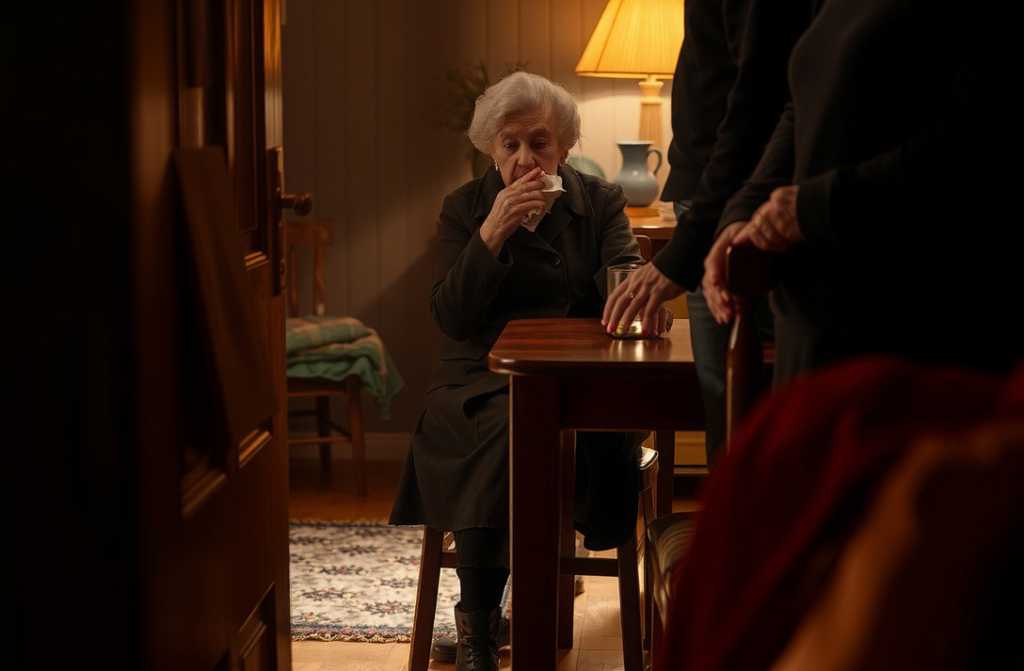
Valerie sat at the table, looking as if some great tragedy had befallen her. Her eyes were dewy; she was twisting a tissue in her hands.
Helen, dear, she said, genuinely shaky. I was only trying to help. I just wanted to do the right thingdust a bit, tidy up while youre out. I never realised it bothered you. Youre like a daughter to me
Helen looked at herat her moist eyes, her tissue, her hands.
Mrs Oakley, she answered evenly, I wouldnt like anyone moving my things without asking. Its not personal.
Of course, of course. Valerie nodded, eager. Youre right, Helen. Im set in my ways. Im sorry. It wont happen again.
She rose, kissed Helens cheek. The scent of old perfume and antiseptic clung to her.
Dont be cross with an old dear. It was all meant for the best.
Helen smiled. It was easyjust a muscle memory.
When Valerie had gone, Michael hugged Helen from behind, burying his face in her hair.
You see, all fine. She just didnt think.
Yes, Helen agreed.
She believed it only as much as she had, as a child, believed stories about foxes just wanting to help.
***
Decemberthe brooch vanished.
By now Helen kept a quiet tally in her head. Not on paper, but mental: vase, earrings, photoand now brooch. Small, enamelleaf-shaped, dark green with gold edges. Her mums, bought in Bath, 1973, a keepsake from her student days.
It had lived in the same blue trinket box with the earrings. Helen saw it the previous Tuesday. By Friday, it was gone.
Helen said nothing to Michael, just searched the flat quietly, methodically, as though looking for something precious. No luck.
In her notebook, she wrote: Mums brooch. Last seen Tuesday, 5 December. Missing by Friday, 8th.
She sat on the bed, staring at the wall.
Between Tuesday and Friday, Valerie had come by on Wednesday. Michael mentioned it at dinner: Mum popped over, brought some pickled onions, put them in the fridge.
Helen ate those on Thursday. Theyd been delicious.
***
The idea came to her at three in the morning.
She lay awake, watching the ceiling, listening to Michael breathe. Turning it overnot anger, not even injustice. Just: how to know for certain?
A tiny camera.
Shed seen them onlinethumbnail-sized, easy to hide anywhere, recording secretly onto a memory card.
Helen rolled onto her side. Michael murmured in his sleep, pulled the duvet tighter.
She thought, Maybe sometimes I do move things and forget. Maybe its work fatigue. Or maybe Valerie is just an awkward old lady. Emotional abuse in families starts with that special doubt: perhaps its me.
But then she remembered her mothers broochthe green enamel, the gold edge. Bath, 73.
At six in the morning, she turned on the computer and ordered a camera from Amazon, next-day delivery.
***
The camera was even smaller than she expecteda black cube, lens the size of a pinhead. She charged it, put in the card, then spent ages choosing a place.
She settled on the bedroom shelf, nestled among wool baskets, pointed at the dressing table and wardrobe.
She didnt tell Michael.
Not because she wished to deceive him. But she knew: if she did, hed tell Valerieout of honesty, not malice. He could never hide things from those he loved.
Three days passed, nothing unusual. On the fourth, Michael messaged from work: Mum dropped by, took my coat for dry cleaning, bless her.
Helen put her phone away, concentrated on her quarterly accounts for the rest of the dayworking, not thinking. That was her form of escape.
That night, after Michael dozed off, Helen fetched the camera and loaded the footage onto her laptop.
A series of clips, triggered by motion.
The first three were just the neighbours ginger cat somehow perched outside on their windowsill. Helen nearly smiled.
The fourthValerie.
She entered at middaybrisk, confident. She took in the room, then crossed to the dressing table, opened the trinket box, rummaged, took and moved something. Then the top drawer, then the next. Then she went to the wardrobe, opened it, and systematically sorted through the shelves, moving piles, peering behind them.
Leaving the room, she lingered at the bookshelf, picked up the wooden elephant, turned it this way and that, then set it downand left it three centimeters off.
Then she left.
Helen stared at her laptop screen.
No triumph. No relief. Just a heavy, steady sadnessconfirmation of what shed hoped wasnt true.
There was a fifth clip.
Valerie in the kitchenjust the sound of cupboards opening, then her footsteps. She reappeared in the bedroom, holding a mugHelens favourite, the one with the cartoon cat in a hat, bought last year on a whim. Helen had her morning coffee in it.
Valerie looked at the mug, sniffed. She said, quite clearly, although the flat was empty, Old crockery goes straight in the bin.
Then she walked back to the kitchen. A moment later: the unmistakable clang of the rubbish bin.
Helen closed her laptop. She sat in the dark. She lay down in bed beside Michaelnot touching himstaring at the ceiling until dawn.
***
In the morning, she made coffee in a different mug. The cat mug had vanished. Of course.
Michael sipped his tea and scrolled through the news. Helen, across from him, watched his facea good face, heavier with years but so familiar. He caught her gaze.
Whats up?
Nothing. Eat your breakfast.
She waited until evening. Michael came home from the factory near eight. A bit tired, but cheerful. They ate together, chatted about going to the market for Christmas bits at the weekend. Helen made soup; Michael praised it. Everything ordinaryexcept inside, something waited, quietly.
Afterwards, she brought in her laptop.
Michael, I want to show you something.
He looked at her, serious.
Is it important?
Yes.
She opened the laptop, found the clips. At first, she thought to explain, but decided to stay silentjust pressed play.
Michael watched.
At first impassively, mild confusion on his face. Then, as the chest of drawers appeared, his brow furrowed. By the mug, and the comment about the bin, he straightened, looked away.
Silence.
You set up a camera, he said quietly.
Yes.
You didnt tell me.
No.
Why?
Helen paused.
Because youd have told her. Not on purpose, butbecause youre close.
He didnt argue. That was answer enough.
They sat for ages. Eventually, Michael stood, paced, stopped at the window. The December night was dark and snowy. The street lamps gave a yellowish glow.
So the earrings he started.
Were found in my old coat pocket, yes.
And the photo
In the Christmas decorations box.
He rubbed his face, hard. Then lowered his hand, looked at her.
Helen, I
Dont. She stopped him. Just talk to her.
***
The confrontation with Valerie was next day. Helen stayed put in the bedroom. The door was open a crack.
Valerie arrived with a cake, carrying on as if nothing had changed. In the hallway, she chirped about the weather and her blood pressure, the neighbours misfortune. Then Michael said something quietly; Valerie stopped.
Voices shifted to the kitchen.
Helen caught snatches. Valerie, first shocked, almost indignant: What camera? Then something lowerprobably Michael explaining. Valerie again, flustered: But I only…, It wasnt malicious…, I thought
Long pause.
Then another voicechoked, nearly sobbing.
You dont love me, do you? Twenty years Ive been like a mother to you, and this Cameras! Shes turned you against meshes always hated me…
Mum, Michael said, voice calm but firmone Helen had almost never heard. I saw the footage. You threw out Helens mug.
It was old crockery, I thought
Mum. The keys.
Silence.
What about the keys?
I need you to give them back.
The silence thickened. Helen barely breathed.
Youre throwing me out, Valerie raspedcold, unfamiliar. Your own mother. Out of your house.
Youre my aunt, Michael said.
I am your mother!
Mum, the keys. Please.
A pause. Then the sound of a handbag being thrown open, sharp and upset.
Then the scrape of a chair, heavy footsteps, and suddenly a sound so strange Helen didnt recognise it: the slow slide of someone collapsing into a chair, or even to the floor.
My heart, Valerie gasped, her voice frail and thin. Michael… my heart, love. I dont feel well…
Helen came out.
In the kitchen, Michael stood beside Valerie, who clutched her chest, her face ashen. Or perhaps it seemed so.
Ambulance? Helen asked.
Yes, Michael replied.
They called. Twenty minutes later, a tired, young paramedic arrived. Blood pressure high, irregular heartbeatnothing critical, but Valerie needed observation. Michael went with her to the hospital.
Helen stayed home. She washed up, wiped down the table, sat for ages staring at the bookshelf where the wooden elephant stood.
It was still in the wrong place. Three centimeters to the left.
Helen stood, moved it backand for some reason, that tiny gesture made her throat tighten with tears.
***
Valerie was to stay in the general ward for a few nights. The doctor, weary, said it wasnt seriousbut, procedures. Michael went every day. When he came home, he was quiet, thoughtful, ate what Helen cooked, thanked her. He barely spoke of Valerie. Helen didnt ask.
On the third evening, Michael sat with her on the sofa and took her hand.
Helen. I want you to knowI believe you. I should have believed you sooner.
She said nothingnot out of anger, but because sometimes the right words take a while.
I dont want her coming here anymore, he said. Not unless were home. I have her keys.
Helen looked at him.
How are youreally? she asked.
He paused.
Lousy, he admitted. I love her. She raised me. But that doesnt make this… this okay. I know it in my head. But He placed a hand on his chest. Not right here. Not yet.
I know, Helen said.
They sat quietly. The telly played on in the background. She felt his hand steady on hers.
Mums brooch is still missing, she murmured. Ive searched everywhere.
Well find it, Michael said. Not convincinglyjust because youre meant to say something.
Maybe.
Next day, Michael went to the hospital again, but was delayed. Helen made supper, chopping veg, waiting. He rang at seven: Ill be a bit late, Helen. His voice odd. She asked, Is everything okay? Yes, Ill explain later.
He arrived around eight, hung up his coat, took off his shoes, sat in the kitchen. Helen set down his plate.
He didnt touch it, just stared at the surface.
Michael?
He met her eyes, hesitated. Then said, quietly and tiredly:
I overheard her on the phone with Gillyher friend. Walked by as she was talking. She didnt know I was there.
Helen stiffened.
He took his time, as if judging the memory.
She said: I made up the whole hospital thing. Let the ungrateful brat sweat a bit. Hell give the keys back and fall in line.
The silence pressed against them.
Word for word? Helen asked.
Word for word.
Helen put down the knife. She washed her hands, carefully, folded the towel, replaced it. Routine. Precise.
And what did you do?
Nothing. Just stood there. Then walked away. She didnt see me.
They fell silent. Supper grew cold.
Im sorry, Helen said at lastnot for herself, her earrings, or the lost mug. For him. Because it hurts, when someone you love is not what youd hoped.
Michael nodded, then began to eatslowly, probably not tasting a thing.
***
Next day, he visited again. Helen didnt ask why. Sometimes you have to see things outfinish them, even when things are clear.
He returned after two hours. Sat in the kitchen, asked for tea.
I collected her things.
How is she?
Fine. Blood pressures normal. She can go home tomorrow. Gilly will collect her.
Helen poured tea, set the mug in front of him.
Did she say anything?
Plenty. He gripped the cup. Cried. Told me Im a stranger now, that youve turned me against her. Said shes done so much for me. That Im ungrateful.
And?
I listened. Then I said I love her. That Ill always help, money if she needs it. She can always ring. But she cant come hereand she cant have the keys.
He grew quiet, staring into his tea.
She said Id betrayed her. Chosen a stranger over family.
Helen had nothing to add. Some things need no response.
Ive sent her some moneyenough for a few months. Ill top it up.
Youre kind, Helen said.
I dont know. I just cant do otherwise. Its been twenty years.
They sat in a new silencea gentler one. Like the peace that follows after a storm, the sky still clearer, the air fresher.
***
The brooch wasnt in the flat. Helen let it go, though it hurtgreen enamel, gold leaf, Bath, 1973. A scrap of her mothers youth, lost to time. Shed only heard about those years from stories, or that black-and-white photo.
She phoned Gillya tough, awkward call, but she made it.
Gilly sounded anxious, apologetic. Swore she knew nothing of the brooch. Promised to ask Valerie. Maybe it would turn up.
A week later, Valerie rang Michael. Her tone was clipped: she hadnt taken any brooch. Helen had lost it herself, and blamed her out of spite.
Helen made a note in her diary, by Mums broochmissing:
Not coming back.
Some things never return. It doesnt mean you have to forget them. It just means they remain, somewhere out of reachin 1973, Bath, in a fragment of youth that isnt yours.
***
In January, Michael suggested they see a counsellor. Helen was taken abackhe wasnt the type. Usually, hed say, itll blow over or dont make a fuss.
Are you sure? she asked.
I am. Chatted with Colin at work. His wife went. He said it helped. Someone neutral.
Do you want us both to go? Or just you?
Both, if youre up for it.
Helen was. If the word counselling sounded a little urban, a little young for themthen so what? What did they have to lose?
They found someone through friendsa gentle woman around 45, Dr Irene Porter, in a plain consulting room in a nondescript block, nothing intimidating. Thursday afternoons.
The first visit was odd. Helen didnt know where to begin; Dr Porter let her take her time. Just watching, patient.
Then the words came.
They went four times in two months. Not weeklyjust when they needed to. Dr Porter didnt give advice, just questions. Once, she asked Helen: What do you need from your husband now? And Helen, surprising herself, answered: Just to believe me the first time. Not after the video.
Michael sat beside her, silent. Then said, I understand.
Something shifted. Small and unseen by othersbut vital to them.
***
Gradually, life at home changed.
Helen noticed it in February, coming in one evening, boots off, realising the flats air was hers. Entirely hers. No unease, no edge, no waiting for someone elses presence. Just home.
She hung up her coat, walked in. The blue vase, precisely right on the sill; the wooden elephant in its place; the black-and-white photoMum, laughing in sunlightbetween Dickens and the dictionary.
Michael still had his off dayssometimes mentioned calls from Valerie, his voice heavy. Helen never rushed himjust stayed close. Sometimes thats what matters most.
Dr Porter had explained, Gaslighting in a family doesnt always come from malice. Sometimes, the person doesnt even realise. But its no less destructive. Helen nodded. Yes. That was it.
Doubt about her own memory lessenedno more whispering, youre just tired…youre exaggerating Not altogether gone. But quieter.
And Michael began to find it easier to say no. Not just to Valerie, but in daily life. Hard for himbut he tried.
One day in March, the neighbour rang, asking them to take a parcel in. Michael replied, Sorry, not today. And hung up. He looked at Helen, faintly surprised by himself.
Helen laughed.
What? he asked.
Nothing. Well done.
He blushedbut seemed pleased.
***
In early March, Helen tackled the loft at lastshed been putting it off for ages. Boxes down, sorting, some to keep, some to pass on or bin.
Deep in the last box, under old cards and papers, was a tiny paper bundlea piece of that old pillowcase, the one that once wrapped her earrings.
Inside: the brooch.
Green enamel. Gold edge. Leaf.
Helen sat on the floor, brooch in her palm, holding it up to the light. The enamel, slightly worn on the edgeshe remembered.
She sat there ages. Then went to the bedroom. Opened the trinket box, laid the brooch beside the amber earrings. Closed the lid.
Paused.
Opened it, took the brooch, and pinned it to her jumperright there, right then.
She checked her reflection in the mirror: a woman of fifty-two, tired eyes, her mums brooch on her chest. Lives in Reading, works as an accountant. Values order, comfort.
Shed made it through.
***
Saturday dawned pale and grey, that soft light you only get in early March when the snow lingers, spring almost, but not quite, here.
Helen was first up. She put on the kettle, set out two mugs. Not the cat onethat was long gone. But her blue mug with white spots was just as lovelybought later on, loved as much.
Michael shuffled into the kitchen, dressing gown on, hair wild, eyes squinting.
Snowing?
It is, Helen confirmed.
Melting fast, he observed, sitting.
Not as quickly as Id like.
He took a mug, sipped. Winced.
Still hot.
You always rush.
Im an optimist.
Helen smiled, poured herself teajust right, cooling the way she liked.
They sat in companionable silencea good kind.
So, Michael said, nudging the mug. Plans for the weekend?
I dont know. What do you fancy?
Could pop to the farmers market. Theyve started selling seedlings. You said you fancied growing something on the balcony?
Cherry tomatoes.
Thats it! Shall we go?
Lets.
He glanced at her jumper.
You found the brooch? he asked, softly.
In the loft. Same old cloth.
He nodded, said nothing. Sometimes, thats enough.
Beautiful, he said at last.
It was Mums, Helen replied.
They were quiet again.
You know, Michael said suddenly, looking out the window, I was thinking… maybe we should get away somewhere in the summer. Not to visit familyjust the two of us. The sea, the hills?
You hate hills.
The beach, then. Or Yorkremember where you got that vase?
Helen glanced at the windowsill, the blue vase with white flowers in the morning light. Sun had not quite appeared, but the vase gleamed anyway.
I remember, she said. It was lovely there.
Lets do it.
Michael topped up his mug, grimacedit was still too hot. Helen shook her head in amusement.
Youll never learn.
Get off! he laughed.
March was doing its work outside. The snow still lay, but differentlyalready holding the promise of change. Not spring yet, but not quite winter anymore.
The kitchen smelled of tea, of morning, and something elsesomething nobody has a name for, but everyone recognises: the scent of home, of a place thats, finally, truly yours.
Helen held her mug in both hands. Blue with white spots, calming and bright.
Nothing was as simple as shed hoped; everything had taken more from her than she expected. Some losses shed never recoverher mothers youth, the trust shed rebuilt piece by piece, weeks when she doubted her own memory.
But there was this morning. This quiet. This man opposite her, who had finally learned to listen.
It was enough.
For now, at leastit was enough. And maybe thats how it should be: not perfect, not easily forgotten, but alive. Properly alive.
Hey, Michael said suddenly, with a grin.
What?
I was just thinkingthat camera you bought. Wheres it gone?
Helen raised an eyebrow.
Put it in the drawer.
Oh. We could use it on the balcony. Keep an eye on those tomatoes.
Subscribe to make sure you dont miss the next chapter.