Things Instead of Love
Grace, are you serious? Another tea set?
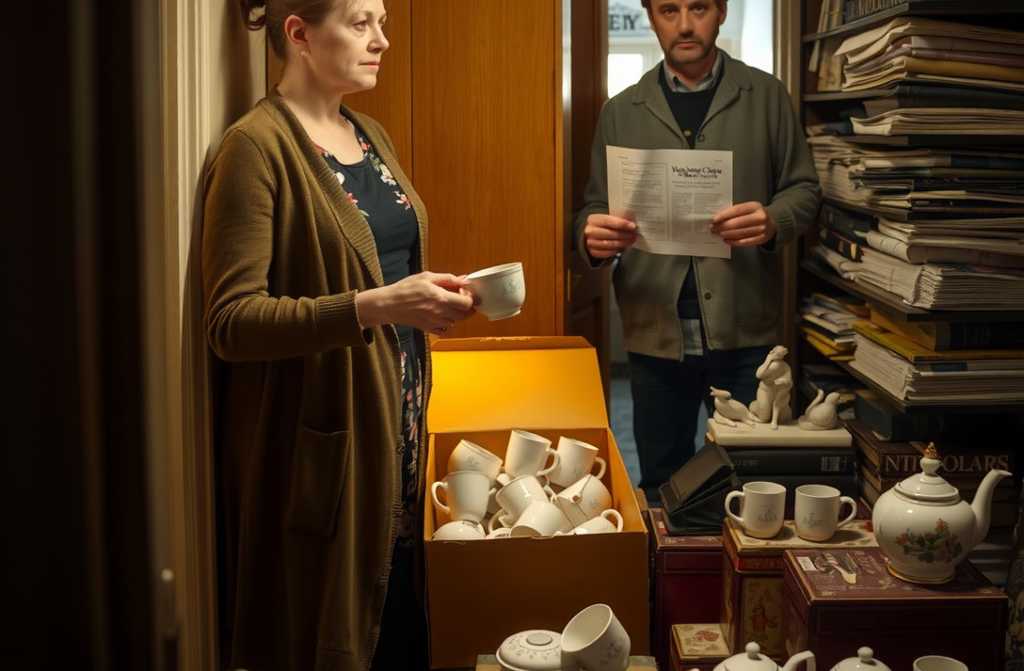
I was standing in the doorway of our one-bedroom rented flat in Croydon, an envelope with a letter from the landlord in my hand. Grace was hurriedly stuffing a newly bought box into the crowded wardrobe. A lid poked open, revealing painted teacups.
Edward, its Winter Rose bone china, the latest collection! Look at the little blossoms… And it was such a bargain at British Home Giftsreally, there was a huge sale.
A bargain, I echoed flatly. Grace, the landlord wants us out. By the end of the month. Shes selling.
She froze, her hand on the cupboard door. Something tinkled insidethe plates touching each other. There were already three untouched dinner sets in that wardrobe, still in their boxes, wrapped in newspaper.
Again?
Again.
Grace slowly closed the door and turned towards me. At forty-seven, she sometimes seemed older, especially in moments like this. The fine wrinkles at her eyes, her tired shoulders, her hands moving automatically to smooth her hair.
This is our seventh move in twelve years, she said, with a note I hadnt heard in years. Not anger, not frustrationdespair.
I know.
Are we going to spend our whole lives drifting from place to place?
I looked at her, then at the eviction notice still trembling in my hand, then all around our tiny lounge. Twenty-two square metres. A sofa that doubled as a bed. A wardrobe bulging so full its doors barely closed. The overhead shelf crammed with boxes from her latest shopping. Porcelain figurines stood on the window sill, three decorative plates hung on the wall, and a pile of Womans Weekly and Good Housekeeping magazines from the past five years stacked against the door.
Grace, I started gently, if only we didnt…
Dont start, she interrupted, please, not today.
I fell silent. We both knew what wasnt being said. About the money, slipping through our fingers every month. About how saving up for a home at our age was impossible if half the paycheque went on pretty things, on rare finds, on the last edition. About how we could have bought a modest place in Norbury eight years ago, but then there was that antique kettle, and then the crystal chandelier, and then…
Mum rang, I changed the subject. Wants us round tomorrow. Said she needs to discuss something.
Is Hannah coming?
Not sure. Didnt ask.
Our daughter, Hannah, now twenty-five, had been renting her own room in a shared house for three years, working as a trainee manager in some firm. She rarely visited. Last week, Grace tried to give her a set of embroidered Turkish towelsbeautiful ones. Hannah thanked her, but didnt take them. Said her room was already too cramped.
She resents me, Grace said in a barely audible voice, sitting down on the edge of the sofa.
She doesnt. She just… has her own life.
She does. I can tell from the way she looks. At all this stuff, she gestured around the room. As if Im… not quite right.
I sat beside her. I wanted to tell her it was fine, just a hobby, everyone collects something. But I couldnt bring myself to lie. It wasnt collecting. Collectors specialise, research, arrange. Grace just bought. If it was pretty, or on sale, or described as the last one, she bought it.
Tomorrow well go, I said. See what Mum and Dad want. Then well start looking for somewhere new.
She nodded, eyes lowered. Then she went to the kitchenour tiny kitchenwhere another box with a new tea set sat waiting for its own place.
—
My parents, Harold and Dorothy Evans, lived in an old council house on the edge of Sutton. My father, once an engineer, was now a heart patient in retirement. Mum, a lifelong accountant, had kept their two-bedroom flat pristine. No clutter. Everything in its place.
When Grace and I arrived, Dorothy was already setting the table. Hannah sat at the kitchen, scrolling her phone.
Oh, youre here, she said without looking up.
Hannah, love, Grace tried to hug her, but she slipped by, heading to wash her hands.
Harold was in his armchair, glued to some television programme. He nodded at my greeting, but didnt rise.
Sit, sit, fussed Mum, tea will be ready in a moment. Ive made a Victoria sponge.
We gathered around the table. An uneasy silence. Hannah looked out the window. Grace fiddled with her napkin.
So then, Dad said, walking in, lets have it, son.
Mum poured tea, sliced cake, and waited. Then she folded her hands, looking at Dad.
Ed, he started, do you remember my cousin, Margaret?
Vaguely, I said. She lived in Epsom?
Yes, that one. She passed away last month, quietly in her sleep. She was eighty-six.
Rest in peace, Grace murmured.
Left her flat, Dad went on, two bedrooms, all to me in her will. No direct heirs.
The cup slip from my hand nearly fell.
You mean… youve a flat, now?
What would we do with it? Mum interrupted. Weve our own. Im not getting involved with estate agents and all that faff. Too much paperwork. Full of scams these days. Besides, its family property.
Anyway, Dad cleared his throat, weve decided. Well sign it straight over to you. As a gift.
The silence was so deep I could hear the old wall clock ticking.
You… what?
Its yours. Second floor, 1972 build, not exactly Knightsbridge, but fifty-two square metres. Our gift.
Dad, Mum, I felt an ache in my chest, thats…
A roof over your heads, Mum finished for me. At last. Life without a home of your own isnt much of a life.
Grace sat still, tears sliding down her cheeks, not even trying to wipe them away.
But why… I began.
We have enough, said Dad simply. Pensions are fine, weve saved. You two need this. Youve struggled too long.
There are just two requests, Mum added, glancing at Hannah.
I tensed.
We want to see Hannah more. Shes our only grandchild, and we see her every two months. Families should stick together. She comes here, we visit youmore often.
Hannah looked up, then returned to her plate.
And second, Mum said. When its time, you know, our funerals should be proper. No embarrassment. We worked all our lives not to go out like paupers.
Mum, not now…
It has to be said. Were old. Heart trouble, Dads high blood pressure. You have to understand.
Well do everything decently, Grace promised, voice trembling. Thank you, really.
Mum nodded.
And here are the keys, she handed me a chain. The flats empty, most furnitures old. Margaret couldnt keep up the last few years, but its yours now.
The cold keys weighed heavy in my palm.
When can we see it?
Tomorrow, if you want. The address is here, Dad handed me a slip of paper. Second floor, flat number twelve. The lift works, I checked.
We stayed for tea. The talk kept circling back to the flatpaperwork, estate agents, solicitors. Hannah said little. As we left, Mum hugged Grace.
Just make it nice, she whispered. At least like normal, will you? Margaret started hoarding these last years. But youll tidy up, Im sure.
Grace nodded.
On the train home, we sat in silence. Hannah got off before us. She glanced back, just before the doors closed.
Congratulations, she said. Finally, somewhere for all that stuff.
She was gone before Grace could reply.
—
We decided to see the flat that Saturday. I booked a day off, Grace got cover at the school where she had been teaching maths for twenty-three years. She had never loved the job, but it was steady.
All week, Grace slept poorly. At night, she imagined how she would arrange the furniture, the curtains shed buy, where all her dinner sets would go to best display them. Maybe a glass-fronted cabinet, like a museum? So guests could admire the collection.
Well need to redecorate, she mulled out loud. New wallpaper, fix the floors. Maybe laminate, or is vinyl nowadays as good as they say?
Lets see what were dealing with first, I replied.
The block in Epsom was a run-down concrete numbergrey, peeling, with a drooping awning above the steps. Surprisingly, the lift worked. We rose to the second floor. The hallway reeked of damp and stale cabbage.
Flat twelve was at the end of the corridor. I turned the key, pushed open the door.
And we both stopped in our tracks.
The flat was full of thingsnot just full, but packed, crammed, bursting at the seams. The hall was barely a path between stacks of newspapers, magazines, and cardboard boxes. Along the walls stood bags, plastic carriers, bundles. It smelled of dust and mildew.
Oh my God, Grace breathed.
We pressed on. The main room was even worse. A bed sat in the centre, surrounded by mountains of clothes and blankets. The walls were covered in frames, calendars, shelves buckling under the weight of old books and boxes. The floor was covered in piles of tied up magazines. Womans Own, Family Circle, health pamphlets, dating back to the seventies.
Maybe the other rooms better? I suggested.
It wasnt. The smaller room was more of the same: a bulging wardrobe with clothes spilling out, a table loaded with boxes and little containers, chairs with plates and pots heaped high.
Grace turned slowly on the spot, her face pale.
Well have to throw all this away, she whispered. Get rid of it all.
Or sort it, I said, opening a box. Maybe theres something valuable.
Inside were glass jars. Empty. Dozens of them, all sizes.
We moved to the kitchen, tinysix square metresevery cupboard and shelf rammed with crockery, tins, packets of flour and pasta all a decade out of date.
How did she live in here? Grace asked miserably. How can anyone?
I didnt answer. I stood by the window, looking down into the small communal green below where kids played and a neighbour walked his dog. Ordinary life carried on, while up here was a different reality: a fortress of accumulated stuff.
We should get a clearance company. Dump the lot in skips. Well get it done in a week.
Grace said nothing, staring at a shelf. Bone china cups, painted with rosesthe very same Winter Rose pattern she bought last week.
Edward, she said quietly. Look at these.
I joined her.
The same, she said, her voice small.
We stood there, silent for a long minute. Then Grace wandered into the main room, perching on the edge of the strangers bed amongst all those things. I followed.
Mum always said Aunt Margaret was odd, I ventured. That she hoarded. But I never imagined like this.
She lived alone?
Yeah. Husband died ages ago, no children.
Grace smoothed the dingy blanket with her palm.
Why did she keep all this? Why would anyone need so much?
I shrugged helplessly.
Maybe fear thered never be enough? Her generation kept memories of the war, rationing. Perhaps it was survival instinct.
But she didnt use any of it. That dinnerware, all boxed up. Clothes in bin liners. Why?
I could offer no answer. I watched my wifeperched on a bed in a foreign room, surrounded by the slow, silent evidence of another lifeand realised what she was thinking. She was looking at the future she dreaded: herself, alone, surrounded by pointless things.
Grace…
Dont, she cut me off. Lets go. Please.
We left the flat, closing the door behind us. Grace leaned against the wall, eyes shut.
What now?
I dont know.
Maybe we should refuse it? Tell your parents we cant cope?
We cant, Grace. They tried so hard for us. The paperworks already started. We cant just…
How do we clear all this junk out?
Well hire help. Rent a skip. Everythings possible with money.
What money, Ed? Were broke. We still owe back rent on this one, remember?
We sat in silence.
We could do it ourselves, I said quietly. Weekends. Well get through it, bit by bit.
She opened her eyes, looking at me.
You really think we can clear out a whole lifetime in two months?
I stayed silentbecause she meant more than just the flat.
—
The paperwork was sorted quickly, thanks to Mums friend, the solicitor. The Epsom flat now officially belonged to Grace and me. My parents were delighted, even rang to say they were proudfinally, we had a place of our own.
Our landlady agreed to wait an extra month while we sorted things. Every Saturday and Sunday, we trekked out to Epsom with bin bags, gloves, and face masks.
On that first day, overwhelmed, we just stared at the chaos.
Lets start with the hallway, I suggested. At least clear a path.
We hauled out sacks of newspapersdozens, most dating back thirty years. Daily Mail, The Times, every conceivable broadsheet, tied and stacked for no obvious reason.
By the end of the day, wed filled seven rubbish bags; the corridor felt slightly more open. Our arms ached, our backs throbbed as we slumped on the landing, water bottles in hand.
At this rate well be here forever, Grace said, exhausted.
I tried to smile but couldnt muster it.
The next weekend, we tackled the main roomold coats, faded dresses, threadbare but carefully folded.
Look, Grace held up a flowery dress, Just like the ones my mum wore in the seventies.
Should we keep it?
She paused, then shook her head.
No. Out it goes.
Still, she lingered over it before putting it in the bag.
By midday, half the room was clear. Beneath the clothes were more boxes. I opened one; inside were photographs, black-and-whitethe past: family, children, weddings, Christmases.
Maybe these should go to someone? Relatives?
Who? She had no children. Besides, we barely knew her.
So, to the tip?
Grace lifted one photo: a young woman in white beside a man in a suit. A wedding. Margaret and her late husband, probably. They smiled shyly at the camera, impossibly young.
Throw it, Grace whispered, and dropped it back in the box.
Third weekend. Then the fourth. Slowly, the rooms emptied. Grace grew more distantbarely spoke, would gaze out the window for long spells. Once, I found her on our own kitchen table back home, crying.
Whats wrong?
Nothing. Just tired.
But I knew it wasnt just fatigue.
One weekend, as we sorted through a box in Margarets flat, Grace discovered an old diarya battered school notebook filled with tiny handwriting. She read aloud:
Bought a tea set at the Oxfam. Blue flowers. At last, real bone china. Brian says I dont need it, but one day, well have people round and everyone will see how lovely our home is.
Grace turned the pages, voice unsteady.
Bought another set, though Brian disapproves. I cant resist. With beautiful things around, I feel safer. Like I have a backup. Like Im protected.
She snapped it shut.
She wrote that in 1962, said Grace. She was twenty-five.
And?
She lived like this for decadesbuying, hoarding, waiting for a day that never came. And died alone, surrounded by things no one wanted.
I sat next to her.
Grace, what are you getting at?
She stared at me.
That Im like her. I keep buying dishes we never use, trinkets piling up. I fool myself that when we have our own place, everything will be better. But it wontthis is about me. I cant stop. I see something pretty, feel I must have it or Ill miss out. Then, within a week, its unwanted. And I go shopping again.
I listened, at a loss. She was right. For years I watched, helpless to break that circle of buying, debt, never having enough for a home of our own.
Do you know what frightens me most? she continued. That this will be my ending. Me, alone, in a flat smothered with junk no one will ever want.
Youre not alone, I whispered, Im here.
For now. One day, youll get tired. Or Hannah will stay away for good. And Ill be leftin a sea of stuff.
We sat quietly as dusk fell, everything growing gloomier in the failing light.
Maybe we should speak to someone? A professional, I mean?
Maybe, Grace nodded. But lets deal with this flat first. Lets clear it. Then… well see.
—
After three more weeks, wed nearly finished. Tons of rubbish and clutter gone, the old furniture left for now. The flat looked stark, raw: paint chipped, floors creakingbut it was ours. Our own.
I stood in the big empty room, staring at bare walls.
Well need new paper, I said. Paint the skirting. Maybe new flooring.
Grace didnt answer. She was at the window, looking out over the playground below.
Grace?
I dont think we need this flat, Ed.
What?
This place… its not what we needed. We thought inheriting a home would fix everything. But nothing changes if you stay the same inside. The real problem isnt about not having a place of our own, its about how we live.
I stepped up beside her.
What do you mean?
I mean, if we move in here, redecorate, lay out all my tea sets, what will change? Will I stop buying? Will Hannah visit more? Or will we just have more space for our old habits?
Are you saying we should turn the flat down?
Im saying we should be honest with ourselves, and maybe with your parents tooshare the money, maybe, start again. Because what we need isnt a flat. Its… everything else.
Mum and Dad will feel hurt.
Maybe. But its time to be honest. Were grateful, but we need to work things through. Figure out what to dowith this flat, with ourselves.
They may never understand.
Then at least we tried. Its better than pretending.
We left the flat, closing the door behind us. It was already dark, a chilly evening settling in Croydon. I fumbled for my cigarettes, lit one. Grace didnt smoke, but leaned into me on the step.
Im scared, Ed.
Me, too.
But its got to be done, hasnt it?
Yes.
We waited, then trudged off to the station. Behind us, the council blockour answer to everythingstood silent. But our real problems werent behind a locked door.
—
Telling my parents was painful. Dad couldnt believe it; said we were ungrateful, that people spent their lives chasing such a gift. Mum cried, said she only wished to help, that we were breaking her heart.
Were grateful, I repeated, but we just need time. Were not refusing forever. We just have to sort ourselves out.
Sort what out? Dad growled. Youve a place, move in!
We cant just move in, Dad. Its not that simple.
Fine, do as you pleasebut dont expect more help, he snapped. Mum just hugged Grace and whispered:
Just keep things in order. Promise me.
Surprisingly, talking to Hannah was easy. The three of us met in a café. She listened, then nodded.
About time, she said quietly. At least youre talking about it.
Are you upset? asked Grace.
No. Im glad youre facing up to it. I couldnt bear visiting. All those knick-knacks, Dad pretending everythings fine. I just didnt know how youd change.
I want to try to change, Grace said, taking her hand.
Do it for you, Mum. Not for me or Dadfor you.
Six months passed. Grace started seeing a counsellor. At first, it was hardadmitting the problem, speaking out. Gradually, it got easier. She realised buying had become a way to fill a childhood voida lack of love, self-worth. Each new thing gave her an illusion of security and hope.
Things rule our lives only when we let them replace emotions, her therapist explained. When were topping up emptiness with stuff.
Grace began clearing our own clutternot everything in one go, but steadily. She gave things away, threw them out, or sold what she could. Each step was painful, every object felt meaningful, but she pressed on.
I supported her, quietly. One night, I admitted Id been wrong.
It was easier to simmer in silence than make a change, I said. Im sorry.
We hadnt moved into Epsom. Nor had we sold it. Sometimes wed visit, but it just stood there, waiting.
Gradually, Hannah started coming by more often. Wed talk, drink tea, sometimes even laugh. They were fragile steps, but we were slowly becoming a family again.
—
Eight months after the keys were handed over, we returned to the Epsom flat. This time, with Hannah. We climbed to the second floor and opened the door.
It was empty. Bare walls, echoing floors, one antique wardrobe left in a corner.
So, Hannah asked, moving in now?
Grace and I exchanged looks.
I dont know, Grace replied honestly.
We wandered through the flat. Hannah opened a window to let in the fresh spring air. I checked the radiatorsstill working.
Back in the main room, we stood together, silent.
Why did we ever want this place? Grace suddenly asked.
I stared at her.
To have something of our own, I offered. Isnt that enough?
Is it? For happiness? For security? Or just to have something?
I had no answer. Hannah stood by the window, watching us.
Maybe, she said, its not about why you wanted this. Its about whats inside you both. A house is only bricks and mortar. Living happens inside you.
Grace nodded, slowly.
Im scared, she admitted, If we move in here, will I start collecting, buying again? In ten years, will this place be as bad as before?
And if we dont? I asked. What then?
Maybe we sell. Maybe we save it for you. But I need to know if I can really stop. I need to be sure I wont end up like Margaret.
Hannah hugged her mother.
You wont, Mum. Because you see the problem. Margaret never did.
We lingered a moment. Then I suggested:
Lets not rush. Leave it empty for now. Well visit, air it out. Sort things out in our own time.
Grace agreed.
We left. Hannah went ahead down the stairs. I locked up. Grace stood looking at the flat door, number twelve.
Ed, she said softly.
Yes?
Do you think well manage?
I walked over and took her hand.
I dont know. But well try.
We made our way outside. April had arrivedthere was the scent of spring in the air. Hannah was waiting, scrolling on her phone.
Coffee somewhere? she asked as we caught up.
Why not, Grace replied.
If my life has taught me anything, its this: you can cram your walls with endless things, but itll never fill the spaces inside you. When you learn to let go, you free up roomfor those you love, and for yourself. In the end, it isnt things you need. Its love, honesty, and the courage to change.





