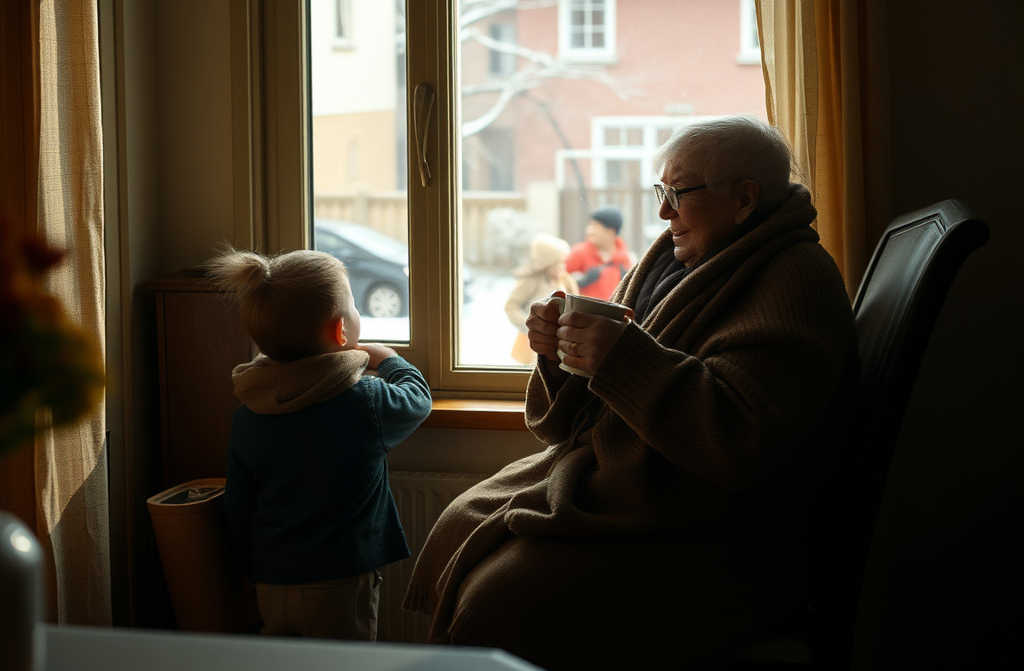
The Spare Chair A box of Christmas decorations had been sitting on the kitchen table for three days. Nadine ran her palm over the lid as she walked past, heading toward the kettle. She turned on the gas, leaned her hip against the sink, and caught herself thinking, yet again, that she wanted to shove the box back into the loft cupboard. She and Victor used to bring it down at the beginning of December. He’d grumble about the early start, but would still climb the stool to untangle the dusty strings. There was a bauble wrapped in newspaper, a Father Christmas figurine with a broken nose, tinsel that clung to sweaters. Now, the stool stood empty against the wall. In the spring, her son had carried the box down when he visited for the fortieth day; since then, it hadn’t moved. The kettle grumbled and Nadine turned off the gas. She dropped a teabag in her mug and flicked on the light above the cooker. The kitchen was instantly filled with harsh yellow and felt smaller. Four chairs around the table, just like always. Victor’s warm flannel shirt still hung on the chair nearest the window—it had been there since April. Nadine hadn’t done anything about it. Folding it away seemed like betrayal. Leaving the chair bare felt even worse. Her phone buzzed on the windowsill. A message from her son: a photo of her granddaughter at nursery, the children building a snowman from cotton wool. “Mum, how are you? We’ve got a rehearsal for the holiday play, I’ll call later.” Nadine stared at the screen until the letters blurred. She answered briefly, like she’d learned to do these past months: “I’m fine. Just keeping busy. Don’t worry about me.” Keeping busy was simple. Yesterday, a young woman from the council had dropped in with utility bills and a paper about recalculating. Nadine needed to go to the council office, sign a form. She was almost out of pills for her blood pressure. The doctor had warned her not to skip a dose. She knew all this, but getting herself out the door was harder than washing curtains had ever been. The doorbell rang. She flinched, set her mug down, and went to answer. Rita, her neighbour from the landing, stood outside, woolly hat on, carrier bag in hand. “Nadine, hello! I just popped down the shops—they had a deal on tangerines. I bought too many, thought I’d bring you some.” She handed over the bag, the fruit scenting the air with winter’s sweet-sour. “Oh, you really shouldn’t,” Nadine sighed. “I still have some left.” “I won’t eat them all anyway, please take them. How are you… holding up?” Rita glanced down, as if startled by her own question. “I’m living,” Nadine said. “Thank you. Do come in for a minute?” “Oh, I’d better dash, the kids at home, homework. Call if you need anything, won’t you? I changed the bulb on the landing, anyway, so it’s not so gloomy. It’ll be easier for you in the evenings.” Nadine nodded, though she almost never went out in the evenings. She closed the door, leaning her back against it. The bag of tangerines chilled her hand. She returned to the kitchen, set the fruit beside the Christmas box, sighed, and pulled Victor’s chair closer. Sitting down, the chair creaked, the wooden back pressed against her differently now. She used to sit opposite, facing the window. Now she stared at the blank wall where last year’s paper garland used to hang. The thought of hanging a garland again felt awkward, almost shameful. Like throwing a party without the person who made those celebrations matter. Doctors and friends kept saying she should carry on, that time heals. Right now, time just reminded her of all the things in the house better left untouched. Three weeks remained until New Year. In the yard, the snow had turned to grey heaps, firecracker burns smudging it. Every morning, Nadine watched the caretaker labour with his shovel, then made porridge and switched on the TV—just for some voice in the flat. She couldn’t watch long. TV hosts shouted about bargains and miracles until she felt sick. Her friend called. Sue was never delicate, but she stuck by Nadine. “Nads, I’ve booked tickets for the concert at the community centre, the thirtieth. Come with me. You can’t just sit alone…” “I’m not sure, Sue. I have all this paperwork, my medicine…” “The paperwork will wait. At least get out for an hour, see some people.” She gave a doubtful answer; Sue promised to call back and ‘finish winning her over’. After the call, Nadine looked at Victor’s jacket, still draped neatly on the chair. She slipped her fingers in the pocket, though she knew it was empty. Just the lining and an old crumpled bus ticket left since the spring. By evening, she brought the box of decorations into the living room, set it on the floor, and opened the lid—the musty smell of old wadding and glass floated up. She ran a finger over a sparkling bauble’s ribs, remembering Victor’s complaints when she hung them too close to the window, “so it looks nice from the street!” It all came to life so sharply that she had to close the box again and nudge it to the wall. Let it stay there. The pills finally ran out in the morning. Nadine checked drawers for an old blister pack—nothing. She had to wrap up, pull on her coat, hat, gloves. Victor’s winter parka still hung beside hers; she looked away as she zipped up. Outside, the wind stung. Breathing the chill felt different, like it had changed over these months. Nadine walked slowly along the building, past piles of snow, toward the bus stop. The pharmacy was three blocks. She decided to walk. The bus rattled past at the traffic light; glancing in, she saw familiar tired faces. The pharmacy was crowded—everyone remembered their ailments before New Year. Inside smelled of iodine and cheap perfume. Nadine joined the queue, clutching her bag. On one side, a man coughed; on the other, a young woman scrolled her phone. “Pressure pills too?” asked someone up ahead. She looked up. A short, grey-haired man in a green coat held a slip with the drug’s name. “Yes,” Nadine replied. “I take them all the time.” “I’ve just started,” he said, sighing. “The doctor says age creeps up. I still think it’s odd. Only yesterday I was playing street hockey.” She smiled faintly, her eyes serious. “Oh, yesterday,” she said, lips twitching. “I’m sixty already. Yesterday I was dropping my son at nursery, now I’m waiting here every month.” “Well, we live, don’t we,” said the man. “If we’re still waiting.” The queue moved, the conversation faded. While she was at the till, she heard his voice behind her: “You’re from our block, yes? You look familiar.” “Yes. Second entrance.” “I’m in the first. Well—see you round, then.” She nodded and left. Neither asked names. No more was needed. But walking home felt a touch lighter. As if someone wiped the glass between her and the street. Days melted like snow on the window ledge. She never went to the council office, though the paper lay on the hall stand. Sue called several more times, coaxed her about the concert. Nadine eventually claimed she wasn’t feeling great—which wasn’t far from the truth. Her chest burned, her head pounded like with flu, though the thermometer showed normal. On New Year’s Eve, she woke early. No special plans. Her son had rung the night before, offering to buy her a ticket and bring her along for the holidays, but he had his own concerns, and Nadine insisted the winter travel was tough—she’d come herself in March. It mattered that she wasn’t just a suitcase shuttled back and forth, wrapped in care. She cooked macaroni, sliced half a sausage, opened a tin of green peas. The salad was tiny, just enough to fit a cereal bowl. They used to make a whole basin, eating leftovers till the third. She covered it, put it in the fridge. Left the tangerines untouched. They glowed in the bowl, bright as ornaments. The clinic called, reminding her of a postponed doctor’s appointment. She scribbled the date in her January diary. Then she opened the package of a new tablecloth, bought before spring, and spread it out. Her fingers quivered as she approached Victor’s usual place at the table. Now, there was just emptiness. By evening, messages dinged in her app: an aunt from another city, the allotment neighbour, a cousin. Templated Christmas cards with trees and greetings. Nadine replied with short “thank you” and “you too.” One stung: “this will be the best year of your life.” She muted the phone and left it on the hall dresser. From the next flat came laughter, dishes clattering, the scent of roasting meat wafting into the hall. Half the block watched TV, judging by the steady rumble. Nadine walked her little circle from room to kitchen, checking switches though she knew everything was off. The kettle cooled; an extension cord lay curled on the stool that used to hold the decorations box. Ten to midnight she sat on the sofa. Turned the TV on mute. Hosts danced, confetti flew, people waved mini flags. The new year sidled closer, unasked. She looked at Victor’s chair with the shirt, at her empty mug. Closed her eyes. The simple truth crept up: the clock will chime, the fireworks go off, everyone will call, wish her well as if nothing’s changed, expect her to sound cheerful. The corridor light clicked on, someone stepped onto the landing. Voices, elevator doors thudding. Nadine stood up abruptly, grabbed the rubbish bin, checked the knotted bag on top. She pulled on her slippers and cardigan. No logic—just the need to step out of the circle between TV and chair. She opened her door just as the first fireworks cracked over the city. Sound reverberated through the building, rattling windows. On the landing stood Rita, her husband in joggers, and—surprisingly—the greying man from the pharmacy. They leaned over the windowsill, watching colourful bursts over the courtyard. “Oh, Nadine!” Rita turned. “Happy New Year. Off to the bins? Come watch with us—good view here.” Nadine felt awkward, clutching her bin bag. “I just… wanted to throw this out.” “Do it after,” said the man in green. “This show’s too good to miss.” He shifted, making room at the sill. Nadine set the rubbish down, joining them. Outside, the fireworks crackled. Down by the playground, someone shouted “hurrah,” someone whistled, lights from mobiles flickered in the dark. “That’s my brother, Alex,” said Rita, nodding at the man. “He’s staying over for the holidays.” “Hello,” he said. “We met in the pharmacy.” “I remember,” replied Nadine. The five stood tight together, shoulder to shoulder. The landing smelled of fried food from Rita’s flat, cold draught from the window, and tangerine peel from a plate on the sill. Someone played the clock chimes on their phone. Rita hurriedly poured a dash of cheap champagne into plastic cups. “Let’s have a sip,” she said. “Just for luck.” Nadine wanted to refuse, but her fingers gripped the cup. She took a small sip. The wine was sweet and icy, but the warmth filled her chest. “So,” Alex said. “To… us living, in our own way.” The phrase hung awkwardly, but no one tried to clarify. They clinked plastic rims; someone said “happy new year.” Nadine found herself bracing—waiting to hear mention of Victor, or how tough things must be. But Rita just touched her elbow. “If you need anything, come over,” she whispered. “Even just for tea. We watch old films in the evenings.” “Thank you,” Nadine nodded. Fifteen minutes later, she was heading back to her flat, bin bag dispatched. In the hall, she shed her slippers and hung up her cardigan. She didn’t bother turning the TV on again. Outside, the fireworks faded, as if someone had turned down the world’s volume. She took the salad from the fridge, spooned some into a bowl, tasted. The peas crunched as always. She ate slowly, looking at the chair with the shirt. At one point, she got up, approached, and took the shirt away. Folded it gently, pressed it to her chest. It smelled of old washing powder. She hung it in her wardrobe, not with distant things, but right beside her own jumpers. Back in the kitchen, she picked up the chair, moved it carefully to the window. The wooden legs scraped over the floor. She checked how it sat in its new spot. The view was different: she could see the nursery, glowing windows in other flats. Nadine imagined having tea here in the mornings, watching the first cars pull out. The thought that she would now sit here in his place was both painful and calming. The chair was no longer monumental, frozen in the past; it was simply a chair by the window. After the holidays, the city fell quiet again. Shops cleared away their loud banners, people shed their huge bags. Nadine finally made it to the council office, queued for her pension form. On the way home, she stopped for vitamins. There was barely a line at the pharmacy. The assistant behind the counter paged through a magazine. At the tea shelf, a woman in a puffer coat examined boxes. “Excuse me,” she said, turning. “Have you tried this chamomile one? What’s it like?” “Normal,” Nadine answered, stepping closer. “I drink it at night. No miracles, but it’s fine.” The woman smiled. “Nothing’s a miracle these days,” she said. “My husband died last year. I kept searching for something to make it easier. Nothing does. Except forcing yourself up in the morning and buying more tea.” She spoke plainly, without tears. More a matter of fact. “Mine too,” Nadine replied softly. “In the spring.” They looked at each other, their gaze holding a second. “Let’s both get the chamomile,” the woman suggested. “That way, somewhere else, someone’s drinking just the same.” “Let’s.” The conversation lasted a minute. No names, no numbers, no promises. But outside, the air pricked less sharply. Nadine realised she was thinking not about going home to lie on the sofa, but about popping into the shop for bread, picking up some greens for soup. At home, she unpacked on the kitchen table, automatically glancing at the chair by the window. Her own wool shawl hung over the back; the latest newspaper lay on the sill. She sat down, arranged the groceries, tipped tangerines into a bowl, threw out the old ones. Her phone pinged quietly in the other room. A message from Sue: “So—survived? I’ll pop round next week, agreed?” Nadine smiled and tapped a reply: “I’ll be home. Come by. I’ll make apple cake.” She opened her diary, wrote the date for the doctor’s appointment in “January.” Just below, she added: “Tea at Rita’s.” Rita had invited again in the lift, said she had too many cabbage pasties and an old war film to watch together on TV. Nadine hadn’t refused. Her flat was quiet as ever. Silence no longer frightened her the way it had that April morning she first woke up without Victor’s snoring nearby. Now, it made room for rustling pages, knife tapping on the board, muffled TV sounds from next door. She stood up, took the newspaper and put it on her window chair. Brewed a cup of chamomile and set it there too. Sat, tucked her slippers under her feet, and gazed outside. The yard was grey, the low snow an even sheet. On the playground, two boys in bright hats shaped a lopsided snowman, one trying to stick on a carrot and laughing when it fell. Beyond them, a woman strolled her dog. Someone shook a rug in the window across. Nadine sipped her tea. It was smoky and simple. She felt the deep fatigue, but the kind you could live with: waking, going to the pharmacy, accepting guests, answering messages. Victor’s memory lingered. The empty place at the table remained. Now, beside it, stood the chair at the window, the one she sat in. She turned the newspaper’s page, pausing on the TV listings. Tonight was a classic film they’d watched together long ago. Nadine thought she might call Rita, or just watch herself, wrapped in her shawl. A whole year stretched ahead. No guarantees, no special joy like in holiday postcards. Just a lot of days to visit the doctor, shop, see friends, invite them in. And sometimes, returning home, not being afraid to switch on the light. She set her mug on the sill and nudged the chair closer to the radiator. Heat radiated through her feet. Nadine felt the tight knot inside her relax—a little, not dissolving, just growing softer. Outside, someone threw a snowball against the entrance glass and ran off. The clock in the room ticked quietly. Nadine stroked the smooth, wooden chair back and thought that tomorrow, she’d walk in the yard among the snowdrifts and stop by the pharmacy for more chamomile. Just in case—so as not to sit idle. And then come back here, to this chair by the window, and keep living—as she knows how now.

The box of Christmas decorations has been sitting on the dining table for three days now. I barely notice it as I walk past, brushing my hand over the battered lid before heading to the kettle. I flick the switch for the gas hob, rest my hip against the sink, and once again catch myself thinking how easy it would be just to shove the box back up into the loft.

It used to be that David and I would bring it down together at the very start of December. Hed grumble about it being too early, but hed end up clambering onto a kitchen chair anyway, fussing about with the dusty string ties. The memories tumble out: a bauble wrapped in yesterdays broadsheet, a Father Christmas with a chipped nose, tinsel that stuck to your jumper. Now the chair stands empty against the wall. Our son brought the box down after the funeral, and its not moved since.

The kettle rumbles to the boil. I spoon a teabag into my mug and flick on the lamp above the oven. The harsh yellow glare makes the kitchen feel even smaller. Four chairs are clustered around the table, the same as always. On the one by the window still hangs Davids favourite, thick, checked shirt untouched since April. I cant bring myself to hide it away in the wardrobe. Removing it and leaving the chair bare feels even worse.

My phone buzzes on the sill: a message from my son. He’s sent a picture of my granddaughter at nursery, the children building a snowman from cotton wool. Mum, how are you? Weve got the Christmas play rehearsal today Ill call later. I stare at the screen until the words blur, then reply as Ive learned these past months: Im fine. Keeping busy. Dont fuss.

My business is simple. Yesterday, a woman from the council knocked with utility bills and a form for pension calculations. I need to get to the civic centre to sign it. My blood pressure tablets have run out, and the doctor always said not to skip a dose. I know all this, but gathering myself and leaving the flat sometimes feels harder than pulling down the curtains for a wash.

The doorbell rings. I startle, set my mug down, and open up. On the doormat stands Rita, my neighbour across the landing, in a chunky wool hat, a string bag dangling from her wrist.

Hello, Mrs Hughes, she says, I was at the greengrocer theyre doing satsumas on offer. I bought too many, thought Id bring you some.

She hands me the bag. A sweet, wintry scent wafts up.

Oh, you shouldnt, I sigh. Ive got some left.

I wont eat them all anyway. Go on, take them. How are you… keeping?

She darts her eyes away, almost frightened by her own question.

Im living, I reply. Thank you, Rita. Dyou want to pop in?

No, Ill dash kids home, homework. Give me a ring if you need anything, alright? I replaced the bulb on the stairwell so its less gloomy when you walk at night. Thought youd appreciate it.

I nod, though Ive barely left home after dark lately. I close the door, lean against it, cold bag of satsumas in hand.

Back in the kitchen, I set the fruit beside the decoration box with a sigh. I drag Davids chair towards me and sit. It creaks, the wooden frame pressing into my shoulder blades in a new way. I always sat opposite, facing the window, but now, all I see is the bare wall where last years tissue-paper garland used to dangle.

The thought of putting up the garland again fills me with a shy shame. Making merry without the one who made it meaningful feels odd. Doctors and friends say I should carry on, that time heals. So far, time only marks the things best not touched.

Its three weeks before Christmas. The snow in the close lies dirty-grey, churned up by childrens fireworks. Some mornings, I watch through the window as the caretaker huffs and shovels. Then I make myself porridge and switch on the telly, needing voices in the silence. The adverts blare about deals and miracles; eventually, I turn away, almost sickened by their forced cheer.

My friend Sarah rings up. Shes not one for subtlety, but shes stubborn about not leaving me be.

Nance, I booked two tickets for the concert at the community centre on the thirtieth. Come with me. You dont want to sit home alone…

I dont know, Sarah. All the forms and tablets

The paperwork wont run away. Just pop out for an hour and see some people.

I murmur something non-committal. She promises to ring in a few days and wear me down. After we hang up, I wander to the bedroom. My gaze lands on Davids jacket, still neat on his chair. I poke inside the pocket, though I know it’s empty. My fingers brush only the lining and a crumpled bus ticket he left back in the spring.

That evening, I take the Christmas decoration box into the lounge, set it down, and open it. The musty scent of old cotton wool and glass floats up. I pick out a few baubles, tracing their glittering ridges with my finger. In my head, Davids grumble is clear as day: No, nearer the window it looks lovely from outside! I have to shut the box again and nudge it against the wall with my foot. Let it stay there.

I put off the pharmacy until Ive used the very last tablet. In the morning, the box is empty. I rummage through two more drawers, just in case theres some left. Nothing. I wrap up in my coat, hat, gloves. On the peg next to mine still hangs Davids winter coat. I find myself glancing away as I zip mine up.

The wind bites my cheeks immediately. The cold feels different sharper, or maybe its just me. I stroll slowly along the street, weaving past piles of snow, til I reach the bus stop. The pharmacys three blocks away. I walk there, letting the noisy bus rattle past, catching a glimpse of tired faces through the steamed windows.

Inside, the queue is long. Seems everyone remembers their aches this time of year. The place smells of antiseptic and cheap perfume. I clutch my handbag, waiting. To my left, a chap coughs into his scarf; to my right, a young woman scrolls through her phone.

Pressure tablets, too? someone ahead asks.

I look up. A short, grey-haired man in a green jacket, clutching a prescription slip.

Yes, I say. On them for ages now.

Ive just started, he says, sighing. Doctor says its age creeping up. Hard to believe really. Was kicking a football on the green only yesterday.

I give a small laugh, though my eyes are serious.

Yesterday! Im sixty already. Feeling like I was dropping my son off at nursery only yesterday, now Im here every month with the pills.

So were still going, then? he says. If were here, queuing.

The queue moves and the chat fades away. As I pay at the counter I hear his voice again:

You live on our close, dont you? You look familiar.

Yes. Second house.

Im in the first. See you around, then.

I nod and leave. Neither of us ask for names. Theres no need. But heading home feels lighter, as if a pane of glass between me and the world has been wiped clean.

Days slip away like melting snow on the sill. I still havent made it to the civic centre, though the form sits ready in the hall. Sarah calls me again, coaxing me to the concert. At the last minute, I use the old excuse: not feeling well. Thats not far off the truth. My chest burns, my head pounds like a cold, but the thermometer says Im fine.

On New Years Eve, I wake early. No plans. My son called yesterday, wanting to buy a ticket to bring me over for the holidays, but hes busy with his family. I told him honestly: easier for me to visit in March, less fuss. It matters to me not to be the suitcase shuttled back and forth, swaddled in concern.

I cook pasta, slice up a little ham, open a tin of peas for a salad. It fits into a tiny bowl; we used to have a great basin of it, eating leftovers for days. The bowl goes in the fridge under a plate. I dont touch the satsumas; they lie in their dish, as bright as ornaments.

Just past noon, the surgery rings to remind me of next weeks GP appointment. I scribble it in my diary. Then I unwrap a new tablecloth, bought months ago, and spread it on the table. My hands tremble near the space where Davids plate always sat. The spot is empty now.

By evening, the messages begin. My aunt from up north, the neighbour from the allotments, a cousin all sending the same digital greetings. I reply as simply as possible: Thanks, same to you. Once, the bitterness hits; someone writes, Thisll be the best year of your life. I mute the phone and leave it on the dresser.

From next door come peals of laughter, clatter of dishes, smells of roast beef drifting through the hall. Half the street must have their TVs on. I pace a little circuit: bedroom to kitchen, kitchen to bedroom, checking that everything is off though I already know it is. The kettle cools, and the extension cord sits coiled on the stool where the box used to rest.

Ten to midnight, I sit on the sofa and switch the television on, no sound. Dancers, bands, waving flags. The new year approaches without asking permission.

I stare at Davids shirt on the chair. At the empty cup in front of me. I close my eyes. The simple thought creeps in: soon the chimes, then fireworks, then the calls and messages, as though everything is unchanged, and Ill be expected to respond brightly.

The light flickers under the front door; someones heading onto the stairs. Voices echo, the lift clunks shut. Suddenly, I stand up, grab the rubbish bin, and check the bag is knotted. I slip on my slippers, throw on my cardigan. Theres no real reason, just a strong urge to step outside the closed circuit between telly and chair.

I open my door as the first fireworks crack across the town. The pane shakes. On the landing stand Rita, her husband in tracksuit bottoms, and, to my surprise, the grey-haired man from the pharmacy. Theyre leaning out the window, watching the bursts of colour over the gardens.

Oh, Mrs Hughes! Rita turns to me. Happy New Year! Off to the rubbish chute? Come see best view from here.

I hesitate, clutching my bin bag.

I was just going to throw this out.

Do it later, says the green-jacketed man. Youd be daft to miss the fireworks.

He shuffles over, giving me space at the window. I step up, set the bin down. Outside, the sky is bright with cascades. People shout hurrah on the playground, others whistle and wave phone torches.

Thats my brother, Alan, Rita says, nodding towards the man. Hes down for the holidays.

Hello, he nods. We met at the pharmacy.

I remember, I say.

We stand close together, five of us, shoulder to shoulder. The air is rich with fried food from Ritas flat, cold from the window, and the spicy tang of satsuma peel from a bowl by the radiator. Someone plays the New Year chimes on their phone. Rita pours a splash of champagne into plastic cups.

Just a sip, she says. Tradition, after all.

I want to refuse, but my fingers take the cup. I sip. The wine is sweet and far too cold, but it warms on the way down.

Well then, Alan says, Lets… keep going, as best we can.

His words hang there, untidy. No one tries to clarify. Our plastic rims touch, someone mutters Happy New Year. I half expect someone to mention David, to speak of how hard its been. But Rita simply touches my elbow and murmurs,

Pop over if you need, love. Even just for a cuppa. We were watching old films last night.”

“Thank you,” I nod.

Fifteen minutes later Im heading back into my flat, bin finally tossed. I hang up my cardigan, slide off my slippers. No desire to turn on the telly now. The fireworks hush outside, as if someone has turned down the loudness of life.

I take out my little salad, scoop some onto a plate, and try a bite. The peas crunch, the taste is almost as I recall. I eat slowly, glancing at Davids chair. At last, I get up, take his shirt down, fold it, and press it to my chest, the fabric soft and scented now only of detergent.

I bring the shirt through to my bedroom and hang it with my own jumpers, not at the back, just among them. Coming back into the kitchen, I grip the chair and drag it gently from the table to the window. The floorboards groan. I sit a while, seeing how the view looks. From here, I spot the nursery around the corner, glowing windows in other peoples flats. I imagine morning tea, watching the first cars leave the drive.

The thought of occupying his place wounds me a little, but brings comfort too. The chairs no longer untouchable, a piece carved from the past, but just a chair at the window.

After the holidays, the bustle fades. The shops pack away their bold posters; people stop hauling oversized bags. I finally trudge to the civic centre, queue for ages, sign off my pension form. Afterwards, I swing by the chemist for vitamins.

Barely any queue. The pharmacist leafs through a magazine behind the till. By the tea aisle, a woman in a puffy coat squints at the boxes.

Sorry, she says, Have you tried this chamomile? Any good?

Its fine, I say, coming closer. I drink it at night. Nothing magical, but goes down all right.

She laughs, a dry kind.

Nothings magical these days, she says. My husband died last year. I kept looking for something that would make it easier. Nothing does. Except getting up and buying tea some mornings.

She talks plainly, no tears, more like discussing the weather.

Me too, I murmur. In the spring.

We look at each other. Our gazes hold, just briefly.

Lets both get the chamomile, then, she smiles. That way we know someone else at home is drinking the same brew.

Lets.

The conversation lasts barely a minute. No names, numbers, promises. Yet as I step out, the air stings less. I find myself thinking not of rushing home to collapse on the sofa, but of popping into the bakery for bread and nipping back for some herbs for soup.

At home, I set my shopping down and glance instinctively at the chair by the window. My own woollen shawl is slung over the back, todays paper sits on the sill. I unpack, tip the leftover satsumas out, bin the wrinkled ones, put the rest in a dish.

My phone squeaks: a message from Sarah. Still alive? Im coming over next week, agree now so you cant wriggle out. I smile, typing back: Ill be in. Come round. Ill bake apple cake.

I jot my GP appointment in my diary for January, and, just below, Tea at Ritas. Rita called again in the lift yesterday, inviting me round for cabbage pasties and a war film. I told her yes, for once.

The flat is quiet, as always. But it’s no longer the frightened hush of April, my first morning without Davids snore beside me. Now this silence holds the rustle of paper, the tap of a knife, the heartbeat of a faint TV next door.

Purposefully, I move the paper onto the window chair, brew the new chamomile, carry my mug over, and tuck my feet into warm slippers. I look out.

The close is grey, snow lying smoothly. On the playground, two boys in bright bobble hats sculpt a crooked snowman. One presses a carrot nose, bursts out laughing when it tumbles off. Across the way, a woman strides by with her dog. Above the garages, someone shakes out a rug.

I sip my tea. Its plain and earthy. Im tired, but its a fatigue I can manage. Enough to wake, fetch prescriptions, welcome visitors, reply to messages. Davids absence hasnt vanished. The empty place at the table remains. But now, next to it, the window chair waits where I sit.

I flip a page in my newspaper, pausing at the TV listings. Tonight, theres an old film marked, one we used to watch together. Maybe Ill ring Rita to join; if not, Ill watch alone, wrapped up in my shawl.

An unremarkable new year stretches ahead. No promises, no postcard joy. Just days filled with errands, doctors, bits of company or guests at mine. And sometimes, when I come home, I might not mind flicking on the light.

I set my mug upon the sill, edge the chair closer to the radiator. Warmth flows over my legs. I feel, inside, that tight knot loosening not unraveling, but less rigid.

Outside, a snowball pings against the entryway glass. In my kitchen, the clock ticks. I stroke the back of my chair and think: tomorrow, first thing, Ill walk out to the shops, wander between the snow mounds, and pick up another box of chamomile. Just in case I dont feel like sitting idle.

Then Ill come home, sit at my window chair, and keep living the way I know how, now.

Rate article
Add a comment

;-) :| :x :twisted: :smile: :shock: :sad: :roll: :razz: :oops: :o :mrgreen: :lol: :idea: :grin: :evil: :cry: :cool: :arrow: :???: :?: :!:

The Spare Chair A box of Christmas decorations had been sitting on the kitchen table for three days. Nadine ran her palm over the lid as she walked past, heading toward the kettle. She turned on the gas, leaned her hip against the sink, and caught herself thinking, yet again, that she wanted to shove the box back into the loft cupboard. She and Victor used to bring it down at the beginning of December. He’d grumble about the early start, but would still climb the stool to untangle the dusty strings. There was a bauble wrapped in newspaper, a Father Christmas figurine with a broken nose, tinsel that clung to sweaters. Now, the stool stood empty against the wall. In the spring, her son had carried the box down when he visited for the fortieth day; since then, it hadn’t moved. The kettle grumbled and Nadine turned off the gas. She dropped a teabag in her mug and flicked on the light above the cooker. The kitchen was instantly filled with harsh yellow and felt smaller. Four chairs around the table, just like always. Victor’s warm flannel shirt still hung on the chair nearest the window—it had been there since April. Nadine hadn’t done anything about it. Folding it away seemed like betrayal. Leaving the chair bare felt even worse. Her phone buzzed on the windowsill. A message from her son: a photo of her granddaughter at nursery, the children building a snowman from cotton wool. “Mum, how are you? We’ve got a rehearsal for the holiday play, I’ll call later.” Nadine stared at the screen until the letters blurred. She answered briefly, like she’d learned to do these past months: “I’m fine. Just keeping busy. Don’t worry about me.” Keeping busy was simple. Yesterday, a young woman from the council had dropped in with utility bills and a paper about recalculating. Nadine needed to go to the council office, sign a form. She was almost out of pills for her blood pressure. The doctor had warned her not to skip a dose. She knew all this, but getting herself out the door was harder than washing curtains had ever been. The doorbell rang. She flinched, set her mug down, and went to answer. Rita, her neighbour from the landing, stood outside, woolly hat on, carrier bag in hand. “Nadine, hello! I just popped down the shops—they had a deal on tangerines. I bought too many, thought I’d bring you some.” She handed over the bag, the fruit scenting the air with winter’s sweet-sour. “Oh, you really shouldn’t,” Nadine sighed. “I still have some left.” “I won’t eat them all anyway, please take them. How are you… holding up?” Rita glanced down, as if startled by her own question. “I’m living,” Nadine said. “Thank you. Do come in for a minute?” “Oh, I’d better dash, the kids at home, homework. Call if you need anything, won’t you? I changed the bulb on the landing, anyway, so it’s not so gloomy. It’ll be easier for you in the evenings.” Nadine nodded, though she almost never went out in the evenings. She closed the door, leaning her back against it. The bag of tangerines chilled her hand. She returned to the kitchen, set the fruit beside the Christmas box, sighed, and pulled Victor’s chair closer. Sitting down, the chair creaked, the wooden back pressed against her differently now. She used to sit opposite, facing the window. Now she stared at the blank wall where last year’s paper garland used to hang. The thought of hanging a garland again felt awkward, almost shameful. Like throwing a party without the person who made those celebrations matter. Doctors and friends kept saying she should carry on, that time heals. Right now, time just reminded her of all the things in the house better left untouched. Three weeks remained until New Year. In the yard, the snow had turned to grey heaps, firecracker burns smudging it. Every morning, Nadine watched the caretaker labour with his shovel, then made porridge and switched on the TV—just for some voice in the flat. She couldn’t watch long. TV hosts shouted about bargains and miracles until she felt sick. Her friend called. Sue was never delicate, but she stuck by Nadine. “Nads, I’ve booked tickets for the concert at the community centre, the thirtieth. Come with me. You can’t just sit alone…” “I’m not sure, Sue. I have all this paperwork, my medicine…” “The paperwork will wait. At least get out for an hour, see some people.” She gave a doubtful answer; Sue promised to call back and ‘finish winning her over’. After the call, Nadine looked at Victor’s jacket, still draped neatly on the chair. She slipped her fingers in the pocket, though she knew it was empty. Just the lining and an old crumpled bus ticket left since the spring. By evening, she brought the box of decorations into the living room, set it on the floor, and opened the lid—the musty smell of old wadding and glass floated up. She ran a finger over a sparkling bauble’s ribs, remembering Victor’s complaints when she hung them too close to the window, “so it looks nice from the street!” It all came to life so sharply that she had to close the box again and nudge it to the wall. Let it stay there. The pills finally ran out in the morning. Nadine checked drawers for an old blister pack—nothing. She had to wrap up, pull on her coat, hat, gloves. Victor’s winter parka still hung beside hers; she looked away as she zipped up. Outside, the wind stung. Breathing the chill felt different, like it had changed over these months. Nadine walked slowly along the building, past piles of snow, toward the bus stop. The pharmacy was three blocks. She decided to walk. The bus rattled past at the traffic light; glancing in, she saw familiar tired faces. The pharmacy was crowded—everyone remembered their ailments before New Year. Inside smelled of iodine and cheap perfume. Nadine joined the queue, clutching her bag. On one side, a man coughed; on the other, a young woman scrolled her phone. “Pressure pills too?” asked someone up ahead. She looked up. A short, grey-haired man in a green coat held a slip with the drug’s name. “Yes,” Nadine replied. “I take them all the time.” “I’ve just started,” he said, sighing. “The doctor says age creeps up. I still think it’s odd. Only yesterday I was playing street hockey.” She smiled faintly, her eyes serious. “Oh, yesterday,” she said, lips twitching. “I’m sixty already. Yesterday I was dropping my son at nursery, now I’m waiting here every month.” “Well, we live, don’t we,” said the man. “If we’re still waiting.” The queue moved, the conversation faded. While she was at the till, she heard his voice behind her: “You’re from our block, yes? You look familiar.” “Yes. Second entrance.” “I’m in the first. Well—see you round, then.” She nodded and left. Neither asked names. No more was needed. But walking home felt a touch lighter. As if someone wiped the glass between her and the street. Days melted like snow on the window ledge. She never went to the council office, though the paper lay on the hall stand. Sue called several more times, coaxed her about the concert. Nadine eventually claimed she wasn’t feeling great—which wasn’t far from the truth. Her chest burned, her head pounded like with flu, though the thermometer showed normal. On New Year’s Eve, she woke early. No special plans. Her son had rung the night before, offering to buy her a ticket and bring her along for the holidays, but he had his own concerns, and Nadine insisted the winter travel was tough—she’d come herself in March. It mattered that she wasn’t just a suitcase shuttled back and forth, wrapped in care. She cooked macaroni, sliced half a sausage, opened a tin of green peas. The salad was tiny, just enough to fit a cereal bowl. They used to make a whole basin, eating leftovers till the third. She covered it, put it in the fridge. Left the tangerines untouched. They glowed in the bowl, bright as ornaments. The clinic called, reminding her of a postponed doctor’s appointment. She scribbled the date in her January diary. Then she opened the package of a new tablecloth, bought before spring, and spread it out. Her fingers quivered as she approached Victor’s usual place at the table. Now, there was just emptiness. By evening, messages dinged in her app: an aunt from another city, the allotment neighbour, a cousin. Templated Christmas cards with trees and greetings. Nadine replied with short “thank you” and “you too.” One stung: “this will be the best year of your life.” She muted the phone and left it on the hall dresser. From the next flat came laughter, dishes clattering, the scent of roasting meat wafting into the hall. Half the block watched TV, judging by the steady rumble. Nadine walked her little circle from room to kitchen, checking switches though she knew everything was off. The kettle cooled; an extension cord lay curled on the stool that used to hold the decorations box. Ten to midnight she sat on the sofa. Turned the TV on mute. Hosts danced, confetti flew, people waved mini flags. The new year sidled closer, unasked. She looked at Victor’s chair with the shirt, at her empty mug. Closed her eyes. The simple truth crept up: the clock will chime, the fireworks go off, everyone will call, wish her well as if nothing’s changed, expect her to sound cheerful. The corridor light clicked on, someone stepped onto the landing. Voices, elevator doors thudding. Nadine stood up abruptly, grabbed the rubbish bin, checked the knotted bag on top. She pulled on her slippers and cardigan. No logic—just the need to step out of the circle between TV and chair. She opened her door just as the first fireworks cracked over the city. Sound reverberated through the building, rattling windows. On the landing stood Rita, her husband in joggers, and—surprisingly—the greying man from the pharmacy. They leaned over the windowsill, watching colourful bursts over the courtyard. “Oh, Nadine!” Rita turned. “Happy New Year. Off to the bins? Come watch with us—good view here.” Nadine felt awkward, clutching her bin bag. “I just… wanted to throw this out.” “Do it after,” said the man in green. “This show’s too good to miss.” He shifted, making room at the sill. Nadine set the rubbish down, joining them. Outside, the fireworks crackled. Down by the playground, someone shouted “hurrah,” someone whistled, lights from mobiles flickered in the dark. “That’s my brother, Alex,” said Rita, nodding at the man. “He’s staying over for the holidays.” “Hello,” he said. “We met in the pharmacy.” “I remember,” replied Nadine. The five stood tight together, shoulder to shoulder. The landing smelled of fried food from Rita’s flat, cold draught from the window, and tangerine peel from a plate on the sill. Someone played the clock chimes on their phone. Rita hurriedly poured a dash of cheap champagne into plastic cups. “Let’s have a sip,” she said. “Just for luck.” Nadine wanted to refuse, but her fingers gripped the cup. She took a small sip. The wine was sweet and icy, but the warmth filled her chest. “So,” Alex said. “To… us living, in our own way.” The phrase hung awkwardly, but no one tried to clarify. They clinked plastic rims; someone said “happy new year.” Nadine found herself bracing—waiting to hear mention of Victor, or how tough things must be. But Rita just touched her elbow. “If you need anything, come over,” she whispered. “Even just for tea. We watch old films in the evenings.” “Thank you,” Nadine nodded. Fifteen minutes later, she was heading back to her flat, bin bag dispatched. In the hall, she shed her slippers and hung up her cardigan. She didn’t bother turning the TV on again. Outside, the fireworks faded, as if someone had turned down the world’s volume. She took the salad from the fridge, spooned some into a bowl, tasted. The peas crunched as always. She ate slowly, looking at the chair with the shirt. At one point, she got up, approached, and took the shirt away. Folded it gently, pressed it to her chest. It smelled of old washing powder. She hung it in her wardrobe, not with distant things, but right beside her own jumpers. Back in the kitchen, she picked up the chair, moved it carefully to the window. The wooden legs scraped over the floor. She checked how it sat in its new spot. The view was different: she could see the nursery, glowing windows in other flats. Nadine imagined having tea here in the mornings, watching the first cars pull out. The thought that she would now sit here in his place was both painful and calming. The chair was no longer monumental, frozen in the past; it was simply a chair by the window. After the holidays, the city fell quiet again. Shops cleared away their loud banners, people shed their huge bags. Nadine finally made it to the council office, queued for her pension form. On the way home, she stopped for vitamins. There was barely a line at the pharmacy. The assistant behind the counter paged through a magazine. At the tea shelf, a woman in a puffer coat examined boxes. “Excuse me,” she said, turning. “Have you tried this chamomile one? What’s it like?” “Normal,” Nadine answered, stepping closer. “I drink it at night. No miracles, but it’s fine.” The woman smiled. “Nothing’s a miracle these days,” she said. “My husband died last year. I kept searching for something to make it easier. Nothing does. Except forcing yourself up in the morning and buying more tea.” She spoke plainly, without tears. More a matter of fact. “Mine too,” Nadine replied softly. “In the spring.” They looked at each other, their gaze holding a second. “Let’s both get the chamomile,” the woman suggested. “That way, somewhere else, someone’s drinking just the same.” “Let’s.” The conversation lasted a minute. No names, no numbers, no promises. But outside, the air pricked less sharply. Nadine realised she was thinking not about going home to lie on the sofa, but about popping into the shop for bread, picking up some greens for soup. At home, she unpacked on the kitchen table, automatically glancing at the chair by the window. Her own wool shawl hung over the back; the latest newspaper lay on the sill. She sat down, arranged the groceries, tipped tangerines into a bowl, threw out the old ones. Her phone pinged quietly in the other room. A message from Sue: “So—survived? I’ll pop round next week, agreed?” Nadine smiled and tapped a reply: “I’ll be home. Come by. I’ll make apple cake.” She opened her diary, wrote the date for the doctor’s appointment in “January.” Just below, she added: “Tea at Rita’s.” Rita had invited again in the lift, said she had too many cabbage pasties and an old war film to watch together on TV. Nadine hadn’t refused. Her flat was quiet as ever. Silence no longer frightened her the way it had that April morning she first woke up without Victor’s snoring nearby. Now, it made room for rustling pages, knife tapping on the board, muffled TV sounds from next door. She stood up, took the newspaper and put it on her window chair. Brewed a cup of chamomile and set it there too. Sat, tucked her slippers under her feet, and gazed outside. The yard was grey, the low snow an even sheet. On the playground, two boys in bright hats shaped a lopsided snowman, one trying to stick on a carrot and laughing when it fell. Beyond them, a woman strolled her dog. Someone shook a rug in the window across. Nadine sipped her tea. It was smoky and simple. She felt the deep fatigue, but the kind you could live with: waking, going to the pharmacy, accepting guests, answering messages. Victor’s memory lingered. The empty place at the table remained. Now, beside it, stood the chair at the window, the one she sat in. She turned the newspaper’s page, pausing on the TV listings. Tonight was a classic film they’d watched together long ago. Nadine thought she might call Rita, or just watch herself, wrapped in her shawl. A whole year stretched ahead. No guarantees, no special joy like in holiday postcards. Just a lot of days to visit the doctor, shop, see friends, invite them in. And sometimes, returning home, not being afraid to switch on the light. She set her mug on the sill and nudged the chair closer to the radiator. Heat radiated through her feet. Nadine felt the tight knot inside her relax—a little, not dissolving, just growing softer. Outside, someone threw a snowball against the entrance glass and ran off. The clock in the room ticked quietly. Nadine stroked the smooth, wooden chair back and thought that tomorrow, she’d walk in the yard among the snowdrifts and stop by the pharmacy for more chamomile. Just in case—so as not to sit idle. And then come back here, to this chair by the window, and keep living—as she knows how now.
When are you finally going to disappear?” — whispered my daughter-in-law at my bedside in the hospital, not knowing that I could hear everything, and the dictaphone was recording everything”When are you finally going to disappear?” — whispered my daughter-in-law at my bedside in the hospital, not knowing that I could hear everything, and the dictaphone was recording everything




