She Wasn’t There
I remember the scent of fried onions when he came in. That is what I remember most from that eveningnot his words, not the look on his face, not the way he tossed his jacket over the back of the chair I had restored myself, reupholstering it in deep navy velvet. I remember the smell of the onions because I was just taking the pan off the hob and he walked in that exact second, and something inside me clenched and froze.
Hey, Ive got news, he said, not even bothering to remove his coat. His briefcase hit the floor, his tie was half undone. Tomorrow, Croft will make it official, but I already know: Im being offered the Head of Development role. Do you get it? Director.
I get it, I said.
Its a different wage, Clare. Its a different level. Ill be invited to meetings with the shareholders now. Ill have to buy a decent suit, not that old Outreach number, but something proper.
I set the pan down on the trivet. Switched off the other hob. Turned to him.
Its my forty-fifth birthday today, I said steadily. And ten years since we got married.
He looked at me for maybe three or four seconds.
Clare, as I saidIve been made Director. This is important.
I heard you.
Good. Will you eat? Im not hungry, we had sandwiches in the meeting.
He headed into the bathroom. I heard the tap run. Heard him humming something to himselfsoft, barely audible, but humming. Something he always falls back into when hes in a good mood.
I stood by the stove, looking at the onions, which had already browned, turned soft, almost translucent. I was making chicken and vegetableshis favourite. Not mine. I wouldnt touch it that evening.
The cake waited in the fridge: Red Velvet, which Id ordered from Sweet Treats three days earlier and collected myself, since my husband had left earlier than usual that morning. Forty-five candles, shaped like stars, were tucked in a little box in the dresser. Id put them there that morning, while he was getting ready, with every intention of setting them out later.
Anna came in half past seven, dumped her rucksack by the door, and walked straight through to her room. Past me. Past the kitchen with the subtle scent of lemon drizzle cake and cinnamon. Past. She didnt stop. Anna was fifteen thenan age when a mother is no longer a person, just a function.
I didnt shout. Didnt cry. Wasnt even hurt, not in the usual way. I just stood there with a clarity you get from reciting times tables, feeling invisible in my own home. Not that anything was wrong, not a conflict or misunderstanding. Simply: I didnt exist. There was the function: hands that chop vegetables and clear bags from the hallway, that check maths homework and drive to Art Club. A voice that says, Dont forget your coat. But Clare Bennett herself hadnt been in this house for a long time.
I realised that with a calmness that unnerved even me.
When Andrew came out of the bathroom, Id already plated up his food.
Theres chicken if you want it, I said.
Im not hungry, remember?
All right.
Shall we talk about the suit tomorrow? Well go to Morgansgood selection there.
Fine.
He picked up his phone and went to the lounge. I heard him ring someone, his voice animated, cheerful. A colleague, maybe. Or a friend. No doubt about his new title.
I took the cake from the fridge at half ten, after everyone had gone to bed. Cut a slice for myself, set it on the kitchen windowsill, and lit a single candlea long white one I dug out from the desk drawer. I sat in the darkness watching the flame. Then I made a wish. For the first time in years, a real wish, clear and uncompromising.
I wanted to leave.
Not run, not vanish in a wave of drama. Not run away, but leave, as someone who has thought it through and planned it. Quietly. With dignity. For good.
When the candle burned down, I threw it away, rinsed the plate, put the rest of the cake back in the fridge.
In the morning, I was up first as always. Woke Anna, put the kettle on, sliced bread. Andrew came in wearing a burgundy tie with a small patternI hadnt seen it before, so he mustve bought it himself. When did he find time?
Theyre making it official today, he said, buttering his toast, might be journalists. Updating the company website. Clare, do you think you can fix that white shirt by Friday? The buttons hanging by a thread.
I can.
Brilliant. Anna, dont be late today.
Dad, Im never late.
You have been before.
Once. Last year.
I listened to their chatter and buttered another piece of bread, although the first was already on the plate. I just needed something to do with my hands.
That evening, I dug out my old laptop, kept on the top shelf with Annas childhood scribbles and a stack of design magazines Id stopped buying back in 2012. Before Anna, Id worked as an interior designer at Spaces for three years. Then Andrew had said we needed a child, not two incomes. You want to, right? hed said. And I had. Or I thought I did. Or thought it was right.
I wrote an email to Vera Cooper. Wed been at art college together. Vera had stayed in the field, started her own studio. Id seen her projects online, only by chance. Elegant work. Clean lines, a good sense of space. We hadnt talked in seven years.
Vera, I wrote, its Clare. Not sure if you remember me. Any chance you have openings in your studio? Ive been away a long while, but I still have my student portfolio and have done a few private projects. Strange to ask after so many years, I know.
I hit send. Closed the laptop. Went to check Annas history homework.
Vera answered two days later: Clare! Of course I remember. Come over for tea, lets talk. With her studio address.
I visited on a Wednesday and told Andrew I was seeing the beautician. My first lie in ten yearssmall, neat.
The studio was in a quirky old house on South Street, second floor, wooden floors, three offices and a shared workspace. Smelled of coffee and paper. On the walls: mood boards, printouts, fabric samples. The scent caught in my throat.
Clare, Vera said, lifting herself from the desk. You havent changed a bit.
She hadmore put together, shorter hair, thin-rimmed glasses. Successful.
I have changed, I said. Just not in ways you can see.
We drank coffee, and I talked. Not everythingnot about birthdays or candles. But I said Id never quite dropped design, kept up with magazines, redesigned our flat three times, followed trends, always felt I could come back if given a chance.
We have a position, Vera said, stirring her coffee. Not senior. Assistant designer. The pay isnt great, but the projects are. Three months probation.
Ill take it, I replied, faster than I meant to.
She looked at me searchingly.
Clare, are you all right?
Not really, I said. But I will be.
She nodded, didnt press further, and for that I was grateful.
On the way back, I stopped at Nest Estates, an agency Id passed every day but never really seen. They showed me a few places to rent. Studio flat on Quiet Lane: third floor, faces the courtyard, newly redecorated, basic but enough. It smelt a little unfamiliar, but that would pass.
I got the keys four days laterpaid with the money Id siphoned off the housekeeping each week for three years. Not much, but enough: fifteen or twenty pounds here and there. Andrew never checked what bread and milk really cost.
The flat on Quiet Lane became my secret. Id visit once a week, sit by the window with tea from a flask, look into the courtyard. Little by little I brought things over: books that remembered me before marriage, sketchbooks, a couple of favourite mugs that had been at the back of our kitchen for years, my green throw, which Mum gave me for my thirtieth. Id said it was at the cleaners or had gone missing. Andrew never asked after it. My art materials. My sewing kit. The process was slow and meditativeevery item moved was a small yes to myself.
I started at Veras two weeks after that afternoon. Told Andrew I was brushing up on skills with a course, just to keep my hand in. He just shrugged: If you want. Anna asked what I was learning. Design, I said. Cool, she replied, and went back to her phone.
The first week at the studio, I was so tense my shoulders ached. New programs, new terms, new tools. But spatial thinking doesnt leave youit had sat there, waiting, like clothes folded at the bottom of a suitcase.
Clare, look over this plan, Natasha, the young designer I was paired with, would say. What do you think about the flow?
Id look, and answer. Natasha sometimes nodded, a little surprised. I had the kind of experience with living space that a twenty-five-year-old cant have. I knew how people actually lived in homes. Not theoryreality.
Slowly, I started feeling something I hadnt had words for before. Eventually, I found them: a sense of my own weight, as if after years of drifting, my feet were finally on the ground. At first it hurt a little, but it was real.
At home, nothing had changed. I cooked, I cleaned, I listened to Andrews stories of work and checked Annas homework, asked about her day. No one noticed anything different. Perhaps because no one had been looking closely enough to notice any change for years.
Some nights, lying awake, I thought about what I was doingleaving my family, my husband of ten years, my daughter. The last bit clutched at my chest so hard I sometimes got up, stood by Annas bedroom door, listening to her breathing, thinking I couldnt go through with it.
Then Id remember the pan of onions. The Red Velvet cake in the fridge. The white candle Id lit for myself in the silent kitchen.
And Id realise: Id already done it. The decision had been made that night. Words just came later.
Anna wasnt a bad childI want that clear. She was just a normal teenager, lost in her own world, her phone, her friends. Not cruel or cold on purpose. Only, shed grown up in a house where her mum was invisible, like airneeded, unnoticed. Who ever really notices air?
One night in October, Anna walked into the kitchen late and caught me with my laptop open, sketching out a room layout for one of Veras clients.
Mum, what are you up to?
Working.
But arent you studying?
I looked up. She glanced at the screen, then at me.
Im a designer, I said. Interior. I used to work in it years ago, and now Im back.
She was quiet.
It looks nice, she said, eyeing the plan. Whose place is it?
A clientsa young couple, first home.
Is it hard?
Its interesting, I said.
She got a glass of water and left. But I felt something shiftjust slightly. Shed looked at me a little differently.
By November, most of my own things were at Quiet Laneimportant documents, my degree, work stuff, personal belongings that remembered me as a human, not a helper. Everything left in the house was shared: photos on the wall, crockery, furniture. That was for a different life.
By then, I already had my own story at Veras studiothree projects during my probation, good reviews, one home that made it into Home & Style magazine under the team name. Not much, but real.
Vera made my job permanent at the end of November. Slight pay riseenough for rent and living. If I left now, Id manage. Not luxuriously, but well enough. Enough to properly exist.
I never once thought about maintenancenor mentioned it. Not because I didnt know my rights, but because I wanted to leave with what was mine and only take what I neededno haggling, no justifications no one would really listen to.
Vera put me in touch with a solicitor: Helen Marsden, late fifties, firm and precise as a well-sharpened pencil. I met her mid-November with my documents.
Children? she asked.
A daughterfifteen.
Will she live with you?
Not at firstI want her to choose for herself. She needs to know she always has a home with me.
Helen looked at me with a kind of respectnot pity, but genuine respect.
Understood, she said. Well prep the usual package. Assets division?
The flat is hishe bought it before our marriage. I want the carits in my name. The savings are jointIll take half. The rest is his. Thats it.
Your prerogative, she noted, making a few notes.
Papers were ready by early December. I hid them in the bedside table at Quiet Lane.
The date chose itself. In late November, Andrew announced he wanted a party to celebrate: colleagues, Croft, a couple of friendstwenty or so. At home. I was to do the catering, naturally. What else am I for?
That was when I decidedthis meal would be my last.
Not for dramas sake. Not to make a scene. Just logical: Id bow out the way Id come infeeding everyone, clearing up, looking after things. The final farewell. One last bow.
I would say what I needed to say. Not for the audience, just for myself. Ten years, not once had I told the truth, out loud, so someone might actually hear it.
On Friday before, I asked Andrew, Give me the numbershow many are coming?
Twenty-two. Ill send you the list.
Please do.
Clare, are you sure youll manage? We could order in.
Ill manage, I said.
And I meant it. I always managed. Hed never doubted that.
The meal was scheduled for Saturday. Friday night, I started with the starters and anything needing time: marinades, pastry, canapés. Anna came in at ten, peered in the kitchen.
Mum, all this for tomorrow?
Tomorrowyour dads celebration.
I know. Am I coming?
If you want. You can go to Sophies if it gets dullgrown-ups and all that chatter.
Well see.
She drifted off. I went on chopping, mixing, kneading. At some point I realised my mind was emptyjust my hands working. It was calm, almost relaxing. For the last time.
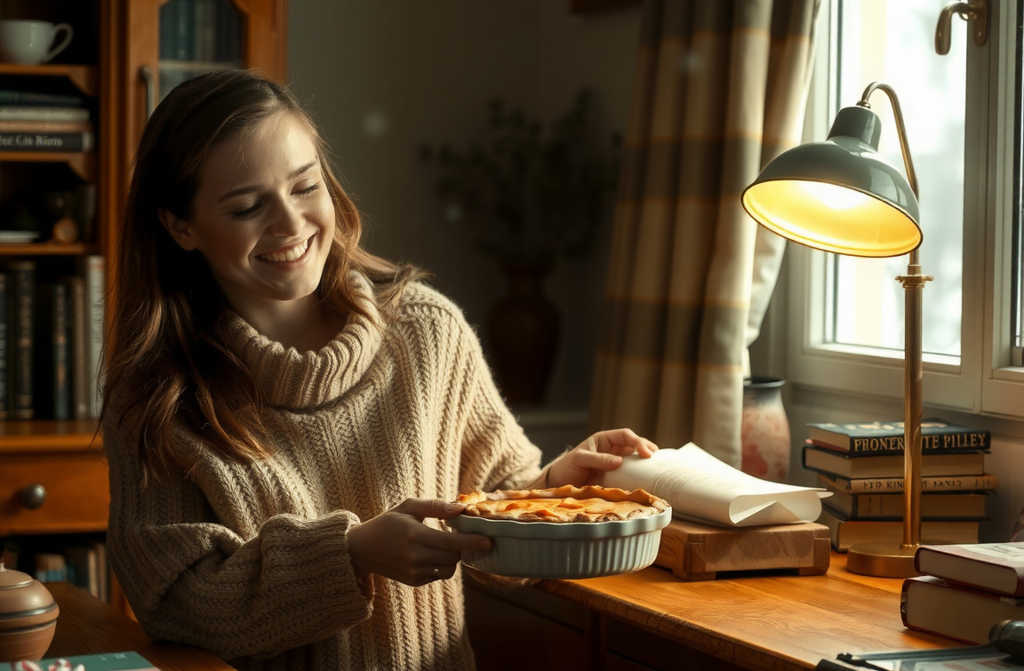
Saturday morning, I was up at seven, prepping mains. Duck with oranges, Andrews favourite since university. Roasted salmon with herbs. Three canapés. Pumpkin soup for the vegetarian guestCrofts wife, I remembered though no one had told me. Two desserts: chocolate fondant and my signature apple and cinnamon pie. Fresh bread from The Good Crust, still warm.
While things simmered, I showered, did my hair, and pulled out an emerald dress. Id bought it three years ago, a rash buy on High Street and never once worn it. I’d always thought: not yet, save it for something. This was itthe occasion.
The dress fit well. Emerald always suited me; Andrew used to say so years ago, then stopped commenting altogether.
I put on the real emerald earringsMums gift for my thirty-fifth birthday. For the first time in years, I dabbed on my treasured perfume, Evening Garden, sharp and floral.
I looked in the mirror for a long timeno judging, no comparing to my twenty-five-year-old self. Just looking. Forty-five. Woman. Designer. Me.
Guests started arriving at seven. Andrew greeted them at the door, lively in his new suit from Morgans, the one wed picked three weeks beforewell, Id picked, told him what suited, what didnt. Hed asked, This all right? Id said, Looks great. As always.
I took coats, offered drinks, guided guests. Smiling. Clare, you look wonderful! said Crofts wife, Natalie, the vegetariansweet woman, wed met just a handful of times.
Thank you, Nat. You look great, too.
Lovely dress. Andrew, look at Clares dress!
Andrew turned, glass in hand.
Yeah, he said, nice. Then turned back to Croft.
I tucked my smile away and went to the kitchen.
Anna arrived for dinner, jeans and a neat jumper. She glanced at me in the emerald dress a touch longer than normal. Said nothing. I expected nothing.
Dinner went well. The guests praised the food, asked for recipes, called me a genius in the kitchen. I smiled and cleared plates. Andrew held the spotlight: talking, laughing, explaining business strategies. He was good at it, as always.
After the main, Croft stood with his glass.
Friends, Id like to say a few words about someone our company is delighted to see in this new role. Andrew Bennett, Head of Development. In five years, hes grown from a junior manager to a leader who advances our strategy. Lets raise a glass to him!
Everyone toasted, applauded. Andrew beamed, a little flushed.
Friends, he began. Thank you, Croft, for believing in me, my team, all of you for being here. I want to especially thank my mother for always saying, Do your work well and youll be noticed. As it turns out, she was right. Cheers, everyone.
More applause.
I sat across, emerald dress, glass of water untouched. Listened. Waited. My name didnt come upnot a word. Not a hint. The woman whod fed twenty-two people that day, cleared twenty plates, cooked for three days, managed the home so he could climb this fardidnt exist in his speech.
I set my glass down.
Stood up.
Andrew, I said, my voice steady. May I say a few words?
He looked mildly surprised.
Clare, what are
Just a minute, I said, scanning the table.
Twenty-two faces looked back. Croft, expectant. Natalie, attentive. Mike, Andrews mate, one eyebrow raised. Anna, down the table, watching me like shed watched that sketch on my laptopwith a focus like shed only just seen a person.
I want to mention something, I said. My voice was calm, surprisingly so. Last month, on the nineteenth of October, I turned forty-five. The same day was our tenth wedding anniversary. The coincidence always struck me as lovely.
The hush was so total I could hear Andrews fingernail tap his glass.
That evening, I made chicken and veg. The kitchen was lit by candles. A cake waited in the fridge. I said nothing out loud, hoping someone would remember. No one did. It wasnt a shockit just confirmed what I already knew. That I havent actually been here, in this house, for a long time. Theres a housekeeper, a cook, a helper, a driver, an organiser. But Clare? Shes not been part of this home in years.
Still calmno theatrics, just the truth for people whod never heard it, including myself.
I left my field thirteen years ago. Voluntarily, yes. But voluntary then meantbecause it was expected, because someone had to hold the fort, and because I thought my turn would come later. That turn never arrived. I never asked for it; I assumed someone would notice. No one did.
Andrew sat rigid; I noticed a muscle knot in his neck. Anna didnt look away.
I want you all to know, as witnesses to this life: my things are already out of this flat. Papers with the solicitor. Ill be living on Quiet LaneIve been renting a place there for two months. I work as a designer at Vera Coopers studio. Im happy there, and there, I exist.
Silence. Sharp as cut glass.
This is my final dinner as lady of this house. Im glad you enjoyed it. The food was good.
I picked up my handbag, set ready under the chair.
Anna, I said, you know my address and number. Ill always be here, wherever you are.
Anna gazed at meher face unreadable, so much at once.
I walked out. In the hall, put on my coat hung conveniently on the hook, not the wardrobeplanned ahead. Grabbed my bag. Fished out the keys to Quiet Lanean ordinary ring with a little metal bluebird Id bought in a corner shop. No special meaning; I just liked it.
I left. Closed the door behind me. Inside, twenty-two people and ten years remained. And Andrew, who still didnt understand what had happened. And Anna, who perhaps was starting to.
It was Decembercold, snow just beginning, light and tentative. I headed to my car thinking I needed a new lamp for the living roomthe flat was too dim in the evenings.
I thought about the lamp, because if I thought about Anna, Id have to stop. Not go backjust stop in the snow and not move. But I had to keep moving.
I bought the lamp two days later. White, with a fabric shade. Put it in the corner. Flicked it on. The room was instantly changed.
The following days were strangeneither bad nor heavy, just unfamiliar, like those first weeks in a new job when everything is half-new and half-your own. I woke up without the alarm. Or rather, with it, as work started early, but my first thoughts werent: Has Anna eaten? Wheres Andrews jacket? Whats for tea?
First thought: coffee. Then: get ready. Then: work.
Simple thoughts, a simple order. But they were mine.
Andrew rang the next morning. I answered.
Clare, what was that?
You heard what I said.
You made a scenein front of everyone. Croft. All of them.
I told the truthin front of people. Very different things.
What truth? If you had issues, you couldve just talked to me. Normally. Not this drama.
I waited a second.
Andrew, weve been married ten years. In that time, youve asked me about my life, not just You all right?, but about my feelings and wants, maybe three times. Id have kept count, if I thought such a talk was possible.
Youre exaggerating.
Maybe so.
Clare, is there someone else?
I closed my eyes, then opened them.
No, Andrew. No other man. I left for myself. I know you cant really understand. The documents are with Helen Marsden. Her numbers in the folder I left on the desk drawer.
Clare
Is Anna with you?
Yes. Shes locked herself in her room.
All right. If she wants to see me, tell her she can. Dont keep her from me.
This isnt normal, Clare.
Perhaps not, I agreed. Goodbye, Andrew.
I hung up. Poured a second coffee. Switched on my laptop.
I had a projecta small country cottage for a young family, wanted it spacious and warm. Id thought about it for weeks and knew what to do.
The first month was all shades of differentintense, unfamiliar, at times lonely in that specific November-Sunday way, when its dark before five. Id pick up my phone, think about calling Anna, but didntwaited for her to come to me. She needed time.
She called after three weeks. Sunday, half ten in the morning.
Mum.
Hi, Anna.
How are you?
Im well. Working, living. You?
Pause. I could hear her breathing.
Mum, Dad cant cook soup.
I didnt laughthough I wanted to.
Hell learn.
He bought one of those instant ones. Just add hot water.
That counts.
Silence.
Mum, can I come over on Sunday?
Of course. Ill be here.
Are you cooking?
This time, I laughed. Just a little.
Anna, I cook every day. Come round.
She showed up the following Sunday with a little rucksack. Rang the bell, though Id said: youll have your own key. I answered, dressed in joggers and a jumper, not an emerald dressjust me. She looked as if shed expected someone else.
Come in, I said. Take your coat off.
She entered, looked around. The Quiet Lane flat was only small: hall, kitchen facing the shared garden, main room with the new lamp and shelves of books. Id put up a few illustrations I love. It looked like a little studio.
Its cosy, Anna saida bit surprised.
I try.
Did you pick that lamp yourself?
I did.
Its pretty.
We had tea and apple piemy signature. Anna ate quietly, then said,
Mum, why didnt you ever say anything? That you were unhappy?
I thought before answering honestly.
Because I wasnt sure Id be heard. And because I hadnt quite realised how bad it was myself. When you only notice bit by bit, its hard to say.
She noddednot agreeing or disagreeing, just taking it in.
Dad says there must be someone else.
Thats his view, I said calmly. Not mine.
I know.
You do?
She looked at me directly.
Mum, I saw you. Lately. Something changed. It wasnt about anyone elseyou changed inside.
I was forty-five, and my fifteen-year-old had just said something more insightful than my husband had in all our years together.
Yes, I said. Inside.
The year passed both quickly and slowlythe way it does when you live for yourself rather than following someone elses plan. By spring, Vera offered me a senior designer roleher suggestion, not mine. I ran two big projects alone, another with Natasha. Clients were pleased. One riverside flat for an elderly couple made the finals of the regional Space of the Year awards. We didnt win, but that was enough.
I got to know the neighboursa man with a tawny dog called Muffin (a ridiculous name for such a dignified animal), Mrs. Parker from the ground floor, who walked her cat on a lead each evening, Because they need the fresh air too, she said, and a student upstairs who played guitar and once asked me to help rearrange her room. I went over, moved her desk to the window. She was ecstatic. Five minutes for me, a week of joy for her.
I learned to treasure small things. I never had before, or allowed myself, or noticed. Good coffee for breakfast, with nowhere to rush. A book to read for pleasure, not out of duty. A hot bath on Saturday. The new green plant in the windowshiny-leaved fig.
Anna and I met every Sundaynot always at my place, sometimes at Grain & Bean coffee shop, occasionally the cinema. She talked about school, friends, wanting to study architecture. Thats a bit like your work, Mum, isnt it? she asked once. A bit, I said. Do you enjoy it? Yes. I do. She considered. Good. Then Im making the right choice.
The divorce took half a year. Andrew stalled, at firstThink it over. This is big. Helen Marsden fielded everything firmly, patiently. I never met with Andrews lawyer. By summer, it was all final. I got the car, my half of the savings. He kept the flat, its contents.
He rang just once afterwards. I answered, out of courtesy.
Clare, I want to understand. Did I do something terribly wrong?
It was a genuine question. He really didnt know.
Andrew, you didnt do anything awful. You just didnt see me. For a long time. At all.
I worked. For us.
I know.
Then whats the problem?
I paused.
The problem is, I was working tooinside the home. I wasnt seen either. Thats work without days off, without parties, without promotion. And on the day my birthday and our anniversary fell together, you didnt see me. Not even then.
Clare, I was tired. That doesn’t mean
I know you were tired, I said. I was tired for thirteen years. Every day. No holiday.
He was silent.
Take care, Andrew, I said. I mean it.
I hung up. Opened the window. It was Augusta warm evening, someone downstairs watering the flowers. Damp earth in the air. I stood there thinking: thats it. This chapters closed. The next one begins tomorrow.
I didnt feel triumphant, or grieved. It was something elsepart relief, part seriousnessthe feeling you get after a tough exam, knowing theres still plenty ahead.
By the end of summer, Anna came more oftennot just on Sundays, sometimes Friday evenings after school. Wed eat soup or make pasta, and shed help with the washing-up, not because I asked but because she now sawit was just me, doing it all. Once, she just started washing the mugs left from breakfast. I watched her from behind and thought: hereheres where shes starting to understand.
Mum, she said in October, almost to the day a year later, Dad never knows where to put things. He tidies up, but then cant find what hes put away.
Hell get the hang of it, I said.
Hes got a cleaner now, weekly.
Thats sensible.
He pays her more than he ever gave you for food and bills.
I smiled. Anna looked at me with gentle irony, not bitterness.
Its normal, I told her. Thats how it should be.
I know. Just funny.
A bit.
Nineteenth Octoberexactly a year since that nightI woke early. Made coffee, opened the window. The courtyard below was waking: Mrs Parker and her cat, Muffin out with his master, the student upstairs hurrying out. The usual.
I took the Red Velvet cake from the fridgeId ordered it yesterday, for myself, on purpose. Set it on the windowsill. Put in the candlesforty-six this year, bought in the corner shop. Lit them all. Watched the flames.
Made a wish.
My phone rang. Anna.
Mum, happy birthday.
Thank you, love.
You remember, it wouldve been your eleventh anniversary today, too. Formally.
I know.
How are you?
Im fine. Ive got cake.
Already? Its eight in the morning.
Best time, I said. No one here to object.
She laugheda genuine laugh, not polite.
Mum, Ill come over this evening, all right?
Of course.
Need me to bring anything?
Just bring yourself.
Pause.
Mum?
Yes?
Are you happy? Really?
I looked at the candlesall forty-six, burning steady, calm. The courtyard outside went on with its day. In the living room, my own lamp shone softly. On the walls, art Id chosen. On the table, a project waiting after breakfast.
Yes, I said. Yes, Anna. I am.
Good, she said simply. Good, Mum.
And it was true. Unconditionally, with no caveats. Simply true.
I blew out the candlesall forty-six.
Outside, light snow was falling, just as tentative as the year before. But this time, I was at my own window, in my own flat, with my bluebird keys on the hook by the door. Not rushing anywhere. Just watching the snow settle on the courtyard trees, the bench, the old dovecote someone built long ago and that I saw every morning.
Then I went back to the table. Poured myself another cup of coffee. Opened my laptop.
Work was waiting.